

Every Tet holiday, I go to Vietnam.
At nearly 70 years old, Yasushi Ogura, a Japanese human resources expert, has scheduled a trip to Vietnam to celebrate Lunar New Year at a friend's house in My Duc District ( Hanoi ). He has no Vietnamese wife or any personal ties to Vietnam, but for the past 22 years, he has visited for about two weeks each month, and every year he makes time to celebrate the Vietnamese New Year.

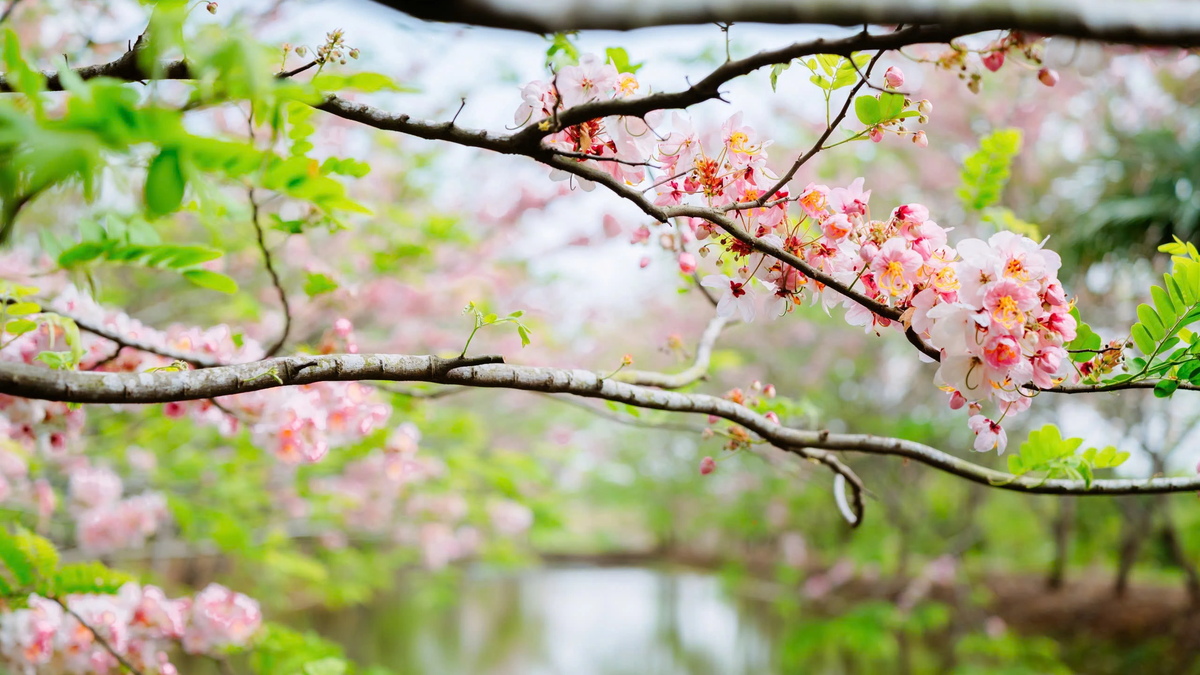
Peach blossoms bloom brilliantly in the Dong Van Stone Plateau (formerly Ha Giang province ), captured through the lens of Yasushi Ogura.
Photo: Provided by the interviewee
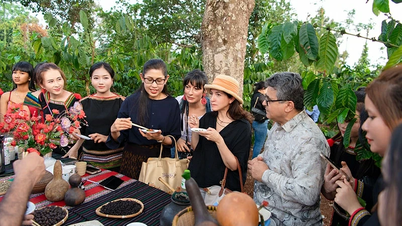
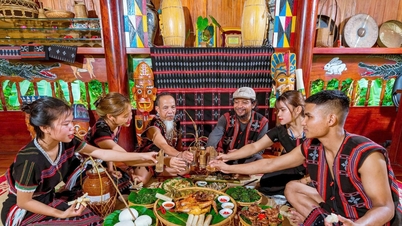
Mr. Ogura said he particularly loves Ha Giang because it is home to 22 ethnic groups. "There were days when he could eat meals with people from three different ethnic groups. It was this cultural diversity that captivated him," recalled cultural researcher Do Quang Tuan Hoang, an acquaintance of Mr. Ogura. Not stopping at just experiencing it, Mr. Ogura also sponsored the opening of a coffee shop in Lo Lo Chai village, the northernmost point of Vietnam, to help local people run their businesses. From his passion for Vietnam, he completely shifted to tourism , regularly leading Japanese tour groups to explore the northern mountainous region, averaging one to two groups per month.

Yasushi Ogura is Japanese but loves the Vietnamese Lunar New Year; he has celebrated it for 22 years.
Photo: Provided by the interviewee
According to researcher Do Quang Tuan Hoang, General Director of Gori Vietnam, a company specializing in organizing local knowledge tours, the trend of international tourists celebrating Tet (Vietnamese Lunar New Year) in Vietnam is becoming increasingly popular. The model of experiencing Tet in the local area has been implemented for over a decade, focusing on allowing tourists to directly participate in the preparation and celebration of Tet with the locals, from slaughtering pigs, wrapping banh chung (traditional rice cakes), and making gio cha (Vietnamese sausage) to daily life during the first days of the year. However, in the Northern Delta region, due to customs and beliefs, people are often hesitant to welcome strangers during Tet. Therefore, most experiences are organized before Tet (around the 22nd-26th of the 12th lunar month) or after Tet, when the festive atmosphere of the first lunar month is vibrant with village festivals, folk games, rituals, and community activities. "In Duong Lam, before Tet, there are very interesting clan rituals such as the ceremony of welcoming boys born in the year into the clan. Tourists, especially cultural researchers, really enjoy such experiences," Mr. Hoang said.
Tourists participating in local Tet tours usually come from Australia, Canada, and Japan, mostly middle-aged or older visitors who want to delve deeper into the culture rather than just sightseeing. Mr. Hoang said that this year, a group of more than 10 international tourists came to his hometown near Huong Pagoda (Hanoi) to celebrate the Vietnamese Tet holiday for three full days. "Many people have made it a habit. Some foreign tourists have lived in Vietnam for many years and come back every year to celebrate the Lunar New Year with their local families, gradually considering each other as relatives," Mr. Hoang shared.
In the southern region, Mr. Tran Thanh Thai, Director of Mekong Smile, said that this year's Tet holiday saw an increase in international tourists, but not a sudden surge, because this is a rather unique product line. "For Tet tours, the focus is on daily life and the festive atmosphere of the local area. Most tourists are informed in advance about the inconveniences during Tet, such as shops closing and the slower pace of life, so they don't feel bothered and even consider it part of the cultural experience," Mr. Thai said.

Foreign tourists learn how to make Vietnamese savory pancakes (banh xeo) in a class on Yersin Street, Ben Thanh Ward, Ho Chi Minh City.
Photo: Provided by the interviewee
One of the highlights of this year's Tet holiday is the "Westerners Celebrating Tet in the Mekong Delta" experience program organized by Vietluxtour, welcoming a group of Polish tourists to Dong Thap (including the former Tien Giang area) on February 5, 2026. Instead of "experiencing Tet" through performances, tourists directly participate in wrapping banh tet (traditional Vietnamese rice cakes), making coconut jam, receiving auspicious calligraphy for the new year, paying respects at ancestral altars, and sharing a Tet meal with local people.
According to Vietluxtour, the spiritual and family elements, which are the "soul" of Vietnamese Tet (Lunar New Year), are thoroughly presented with clear explanations of the cultural context. In 2025, the "Westerners Celebrating Vietnamese Tet" program brought many emotions to international tourists with everyday yet profound experiences. Mr. Tran The Dung, General Director of Vietluxtour, excitedly announced that in recent years the company has continuously received positive feedback from tourists after their Tet experiences in Vietnam. "We maintain this activity annually to enrich our tourism products and at the same time give foreign tourists beautiful impressions of Vietnamese culture," Mr. Dung shared.
I love Tet, I love Vietnam.
In the early days of the new year 2026, Hoi An ancient town witnessed a bustling crowd pouring onto both banks of the Hoai River. The pedestrian streets were vibrant with colors, lanterns, spring flowers, and the sounds of the festival, creating a festive atmosphere that was both ancient and lively. Foreign tourists not only strolled and took photos but also actively immersed themselves in the Tet atmosphere, helping locals decorate their homes, learn about customs, participate in community activities, and await the New Year's Eve moment in a truly "Vietnamese" way.

Foreign tourists receive lucky money and enjoy Vietnamese Tet cuisine in a program organized by Vietluxtour Company.
Photo: Vietluxtour
According to local statistics, in 2025 alone, Hoi An recorded approximately 1.6 million ticket purchases for tours of the ancient town and surrounding craft villages. Many tourists choose to stay longer during Tet (Lunar New Year) to fully experience the slow pace of life, community spirit, and family reunion atmosphere.
This appeal was further confirmed when the global travel platform Tripadvisor announced Hoi An in the top 10 of the Travelers' Choice Best of the Best Destinations 2026 ranking (the world's best destinations as voted by the travel community). Notably, Hanoi ranked 2nd globally while Hoi An came in 7th, further affirming Vietnam's prominent position on the international tourism map.
Unlike other awards that are purely promotional, Travelers' Choice Best of the Best is compiled from millions of real-life traveler reviews and experiences over 12 months, with a very rigorous selection process. The fact that many Vietnamese destinations are included in the top group shows that international tourists are not only captivated by the scenery, food, or services, but are increasingly drawn to the depth of local culture and identity.
Many travel businesses affirm that the traditional Lunar New Year is becoming an important emotional anchor, helping Vietnam retain international tourists for longer periods. The atmosphere of togetherness, community spirit, respect for family, and tradition are the values most clearly expressed during the Lunar New Year. This is a unique factor that not many destinations in the world possess.
When tourists not only come to Vietnam but also choose to stay to celebrate the traditional Lunar New Year with the Vietnamese people, it's as if the holiday is no longer just a vacation but becomes a cultural bridge, helping international friends understand Vietnam more deeply and for the long term.
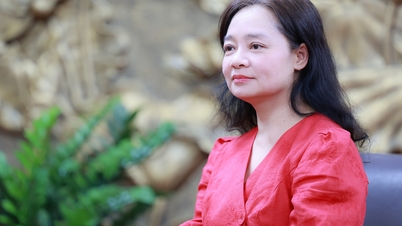
Cultural researcher Do Quang Tuan Hoang
Source: https://thanhnien.vn/du-khach-hao-huc-cho-an-tet-viet-185260203195500063.htm














































Comment (0)