Japanese tourists "rediscover the warmth of Ho Chi Minh" at Sen Village.
Báo Dân trí•18/05/2023
The elderly Japanese tourist stood silently for a long time in front of the wooden platform in the thatched-roof house in Sen Village. He expressed a wish that astonished and moved the tour guide...
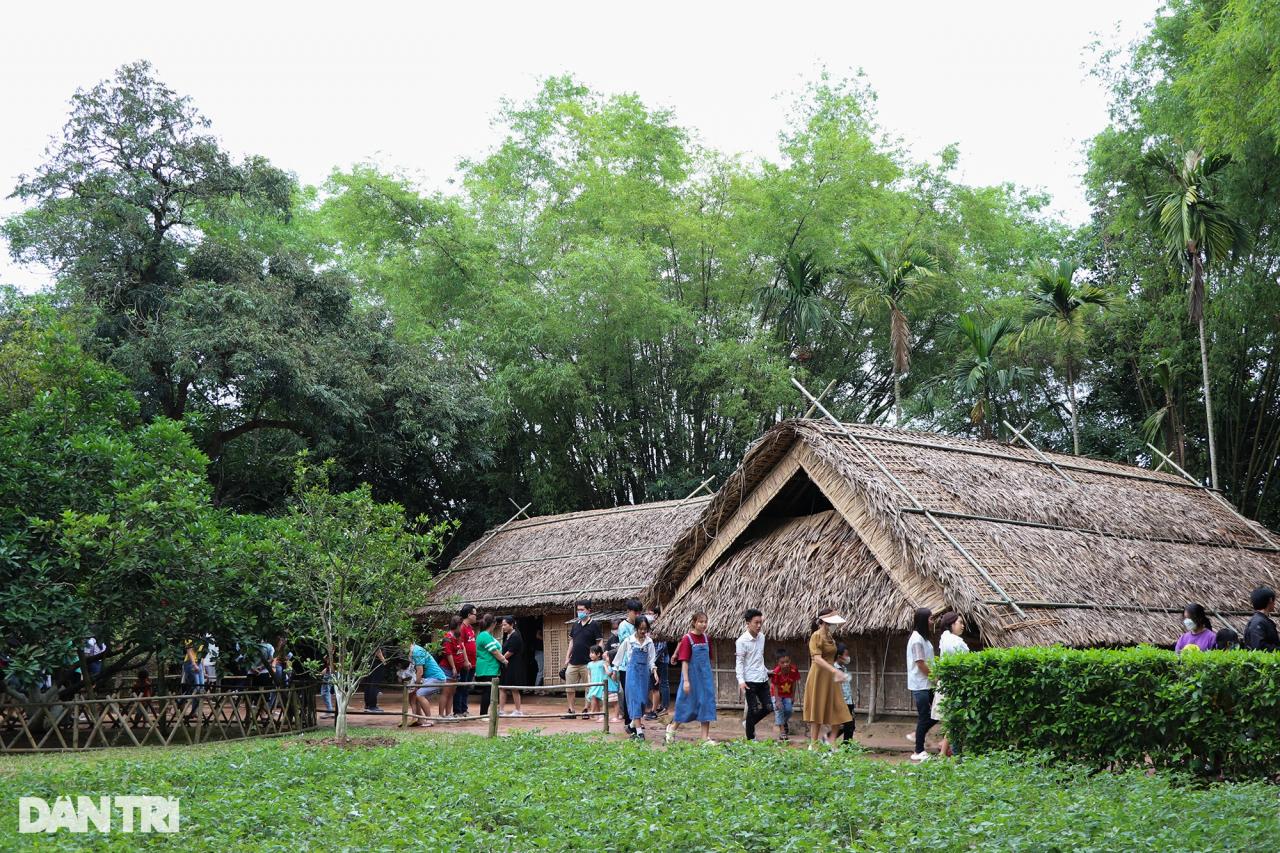
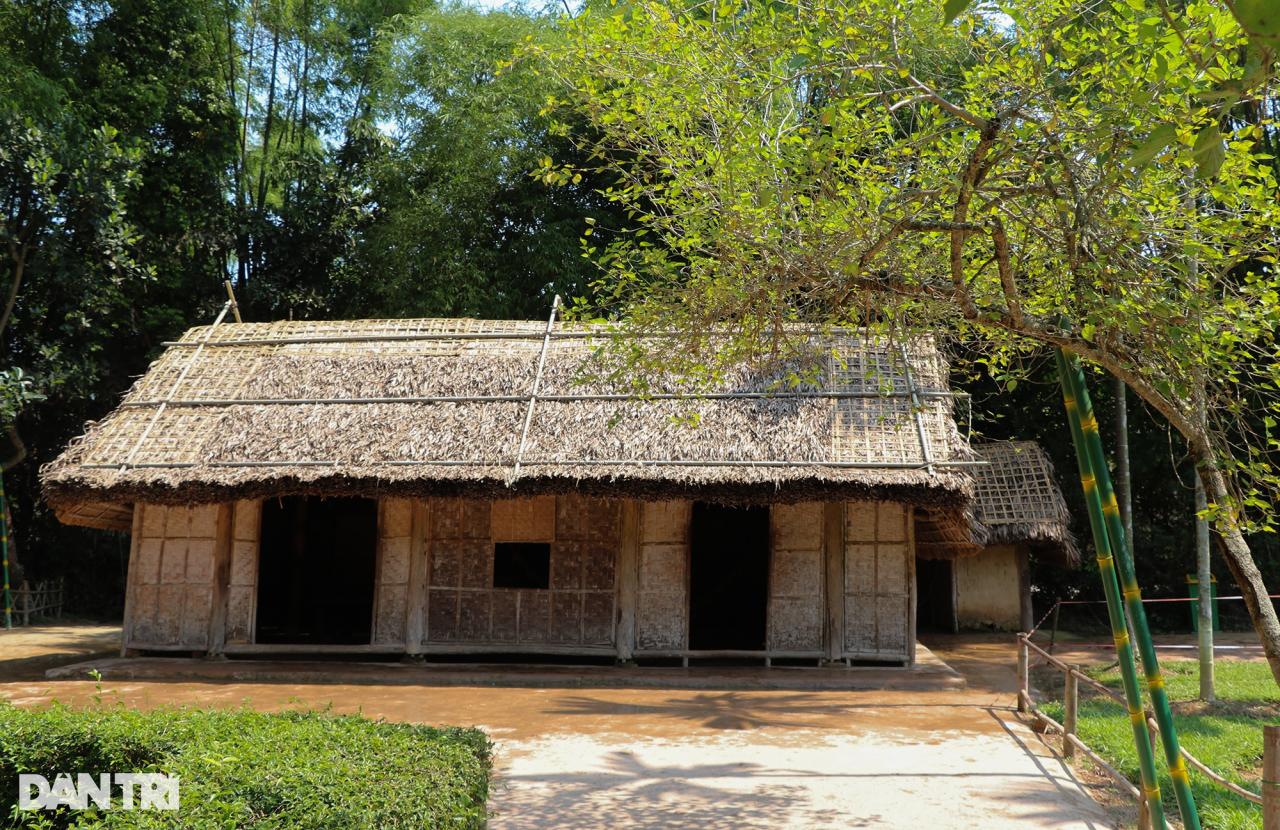
The house of Deputy Scholar Nguyen Sinh Sac in Lang Sen (Kim Lien commune, Nam Dan district, Nghe An province ) - where President Ho Chi Minh spent five years of his childhood - has become a "red address," attracting millions of domestic and international visitors (Photo: Hoang Lam).
Rediscovering the warmth of Ho Chi Minh in his homeland.
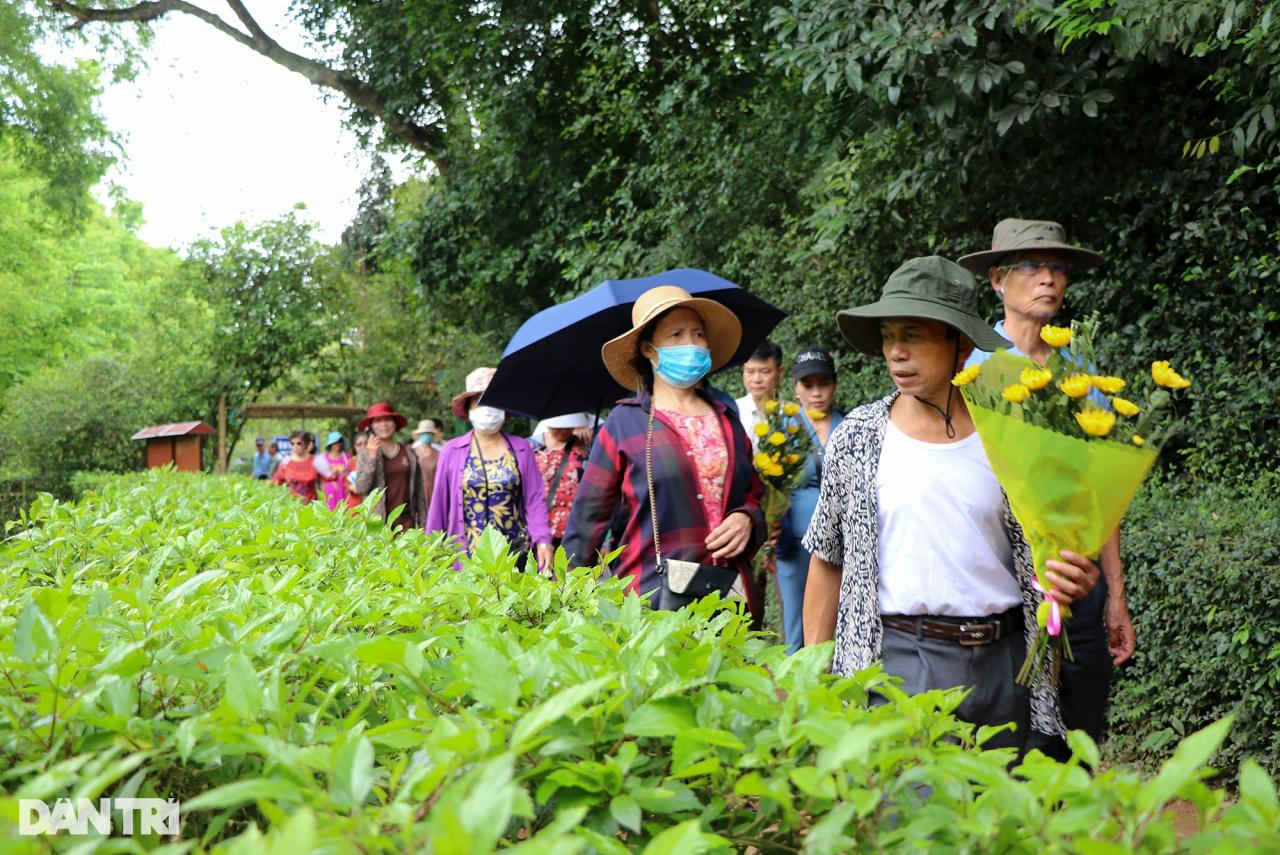
Every year, April and May are peak months for the staff of the Propaganda and Education Department, as they welcome thousands of visitors daily to the Kim Lien National Special Historical Site (Nam Dan, Nghe An). Particularly during the recent April 30th and May 1st holidays, the site received nearly 2,000 groups of visitors in a single day.
Tourists visit the Kim Lien historical site on the occasion of the 133rd anniversary of President Ho Chi Minh's birth (Photo: Hoang Lam).
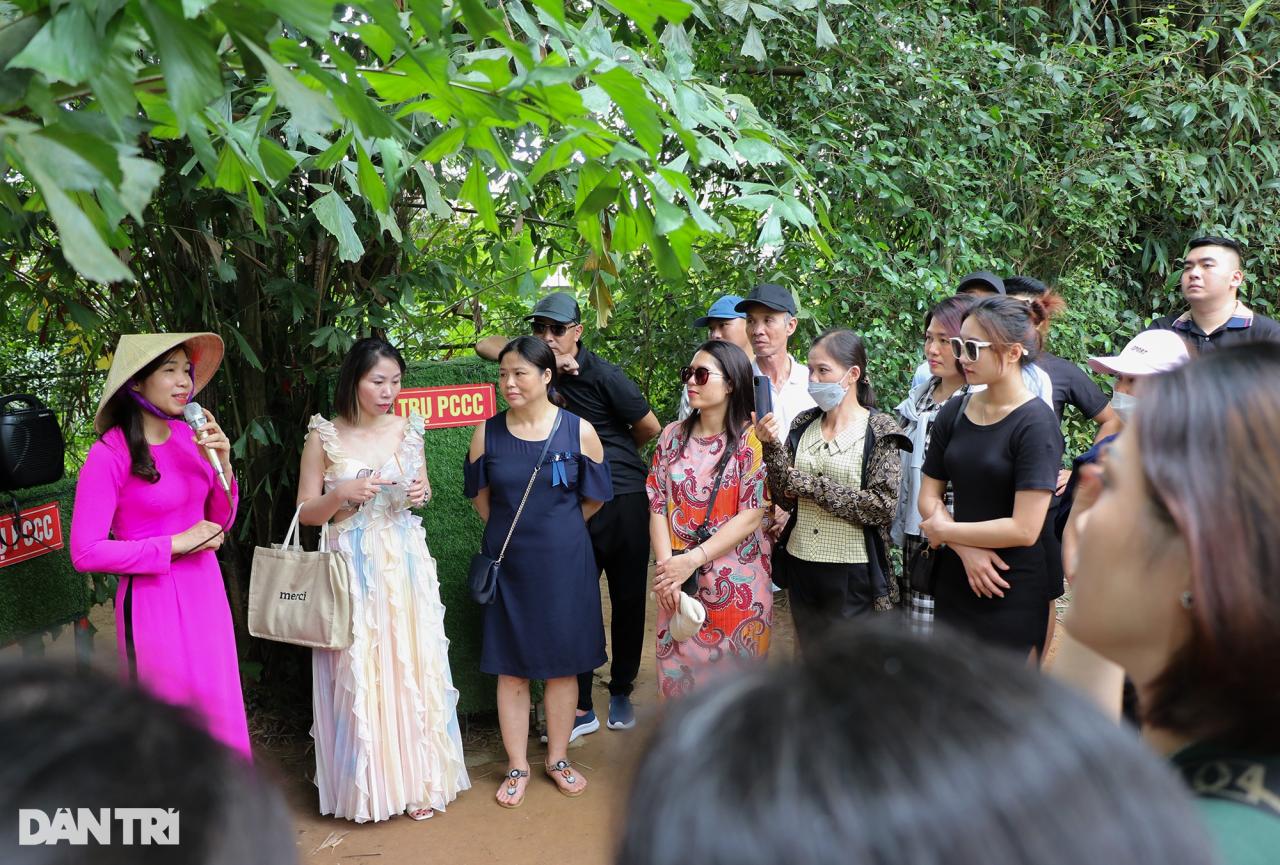
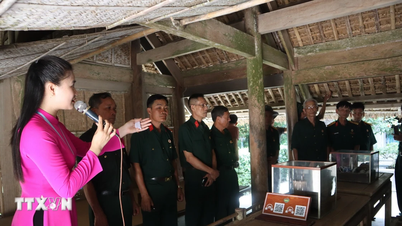
Dressed in lotus-pink ao dai (traditional Vietnamese dress) and conical hats from Nghe An province, amidst the 39-40 degree Celsius heat, the tour guides, with their distinctive voices, diligently introduce visitors to the simple thatched-roof house and the humble household items associated with the childhood of President Ho Chi Minh and his family.
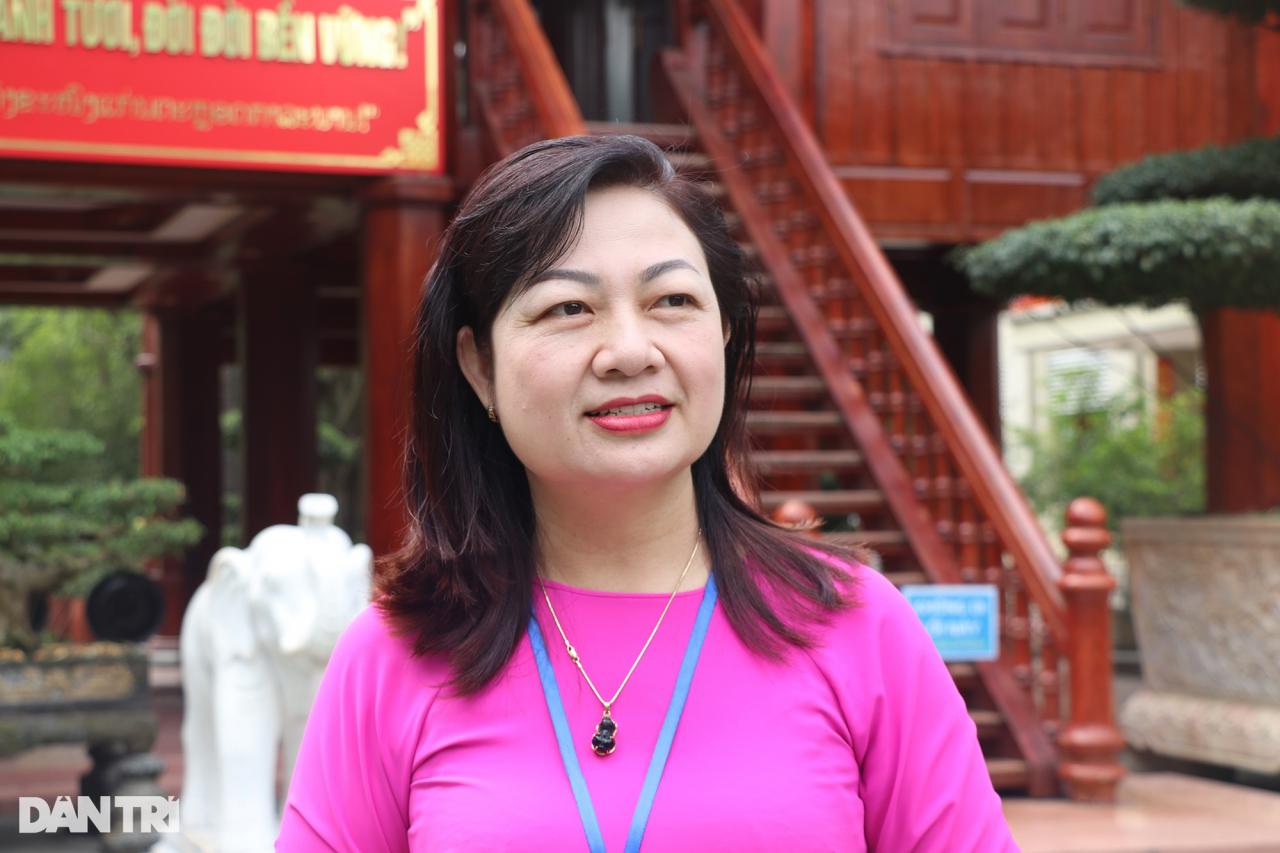
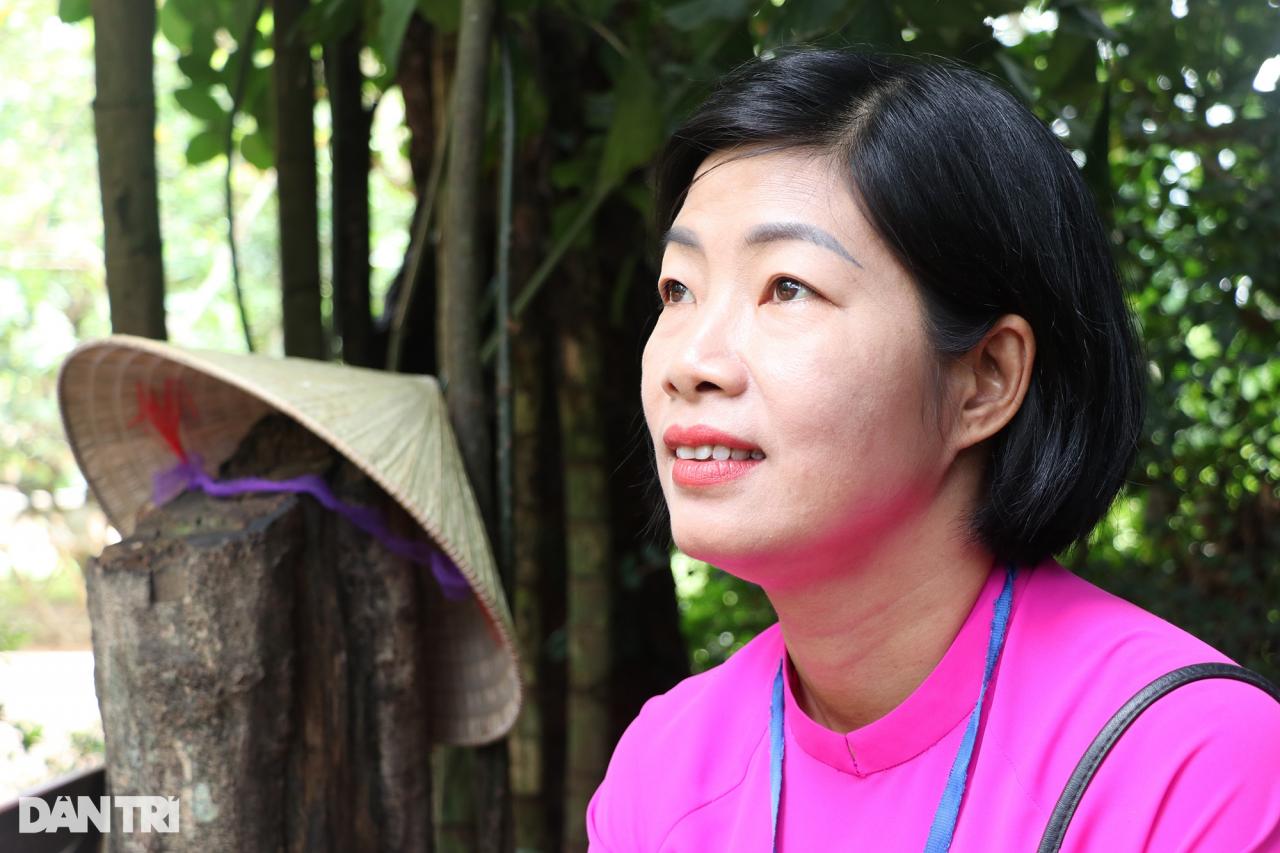
Tour guide Nguyen Thi An Vinh recounts the story of a Japanese tourist "seeking the warmth of President Ho Chi Minh" at Sen Village (Photo: Hoang Lam).
While domestic tourists evoke a sense of familiarity in tour guides, like those returning home to their shared homeland and roots, foreign tourists always leave them with particularly special emotions.
Although she has since moved into a management position, Ms. Nguyen Thi An Vinh (48 years old, Deputy Head of the Propaganda and Education Department) still vividly remembers the story of a visitor from Japan. At that time, Ms. Vinh had just passed the recruitment exam to work as a tour guide here two years prior. One day at the end of 1998, the weather was quite cold, and Ms. Vinh was assigned to welcome a foreign tourist. He was an elderly man of average height, his face marked with many wrinkles, but still radiating intelligence. He attentively listened as the interpreter translated the tour guide's introduction of each artifact related to President Ho Chi Minh's five years of childhood in the house of Mr. Nguyen Sinh Sac in Lang Sen village.
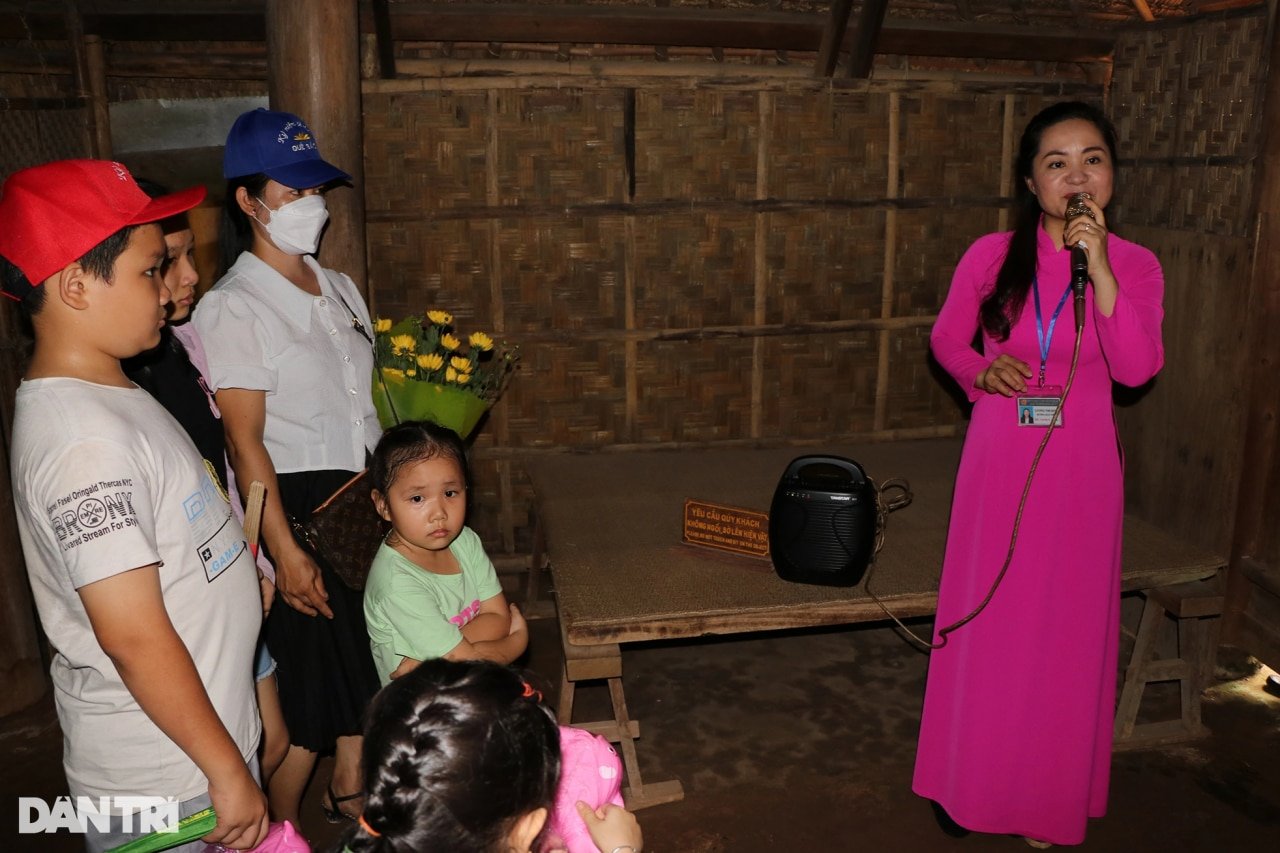
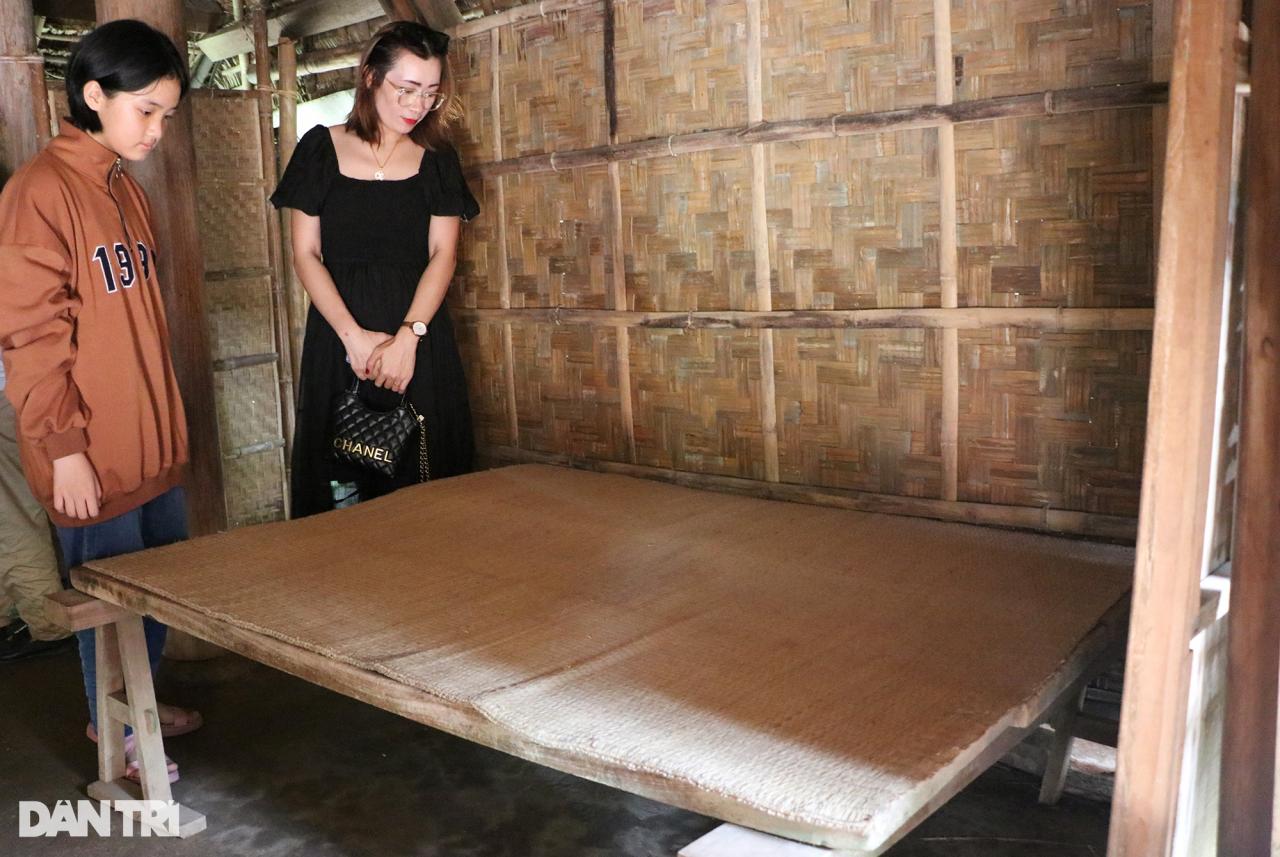
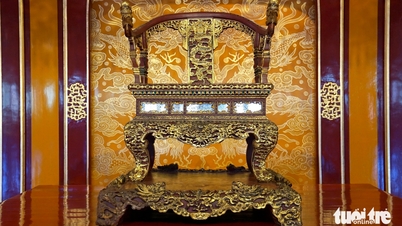
A tour guide at the Kim Lien historical site is introducing visitors to the wooden platform that was once the resting place of President Ho Chi Minh and his older brother Nguyen Sinh Khiem (Photo: Hoang Lam).
He stood silently for a long time in front of the wooden bed where Nguyen Tat Thanh and his brother slept every night. This bed, later lent to a relative by the late Vice-Minister, was unfortunately burned in one corner due to burning charcoal for heating in the winter. When it was recovered, the Monument Management Board sawed off the burnt section. During his visit to his hometown after 50 years of absence, President Ho Chi Minh still noticed that the bed had become shorter than before.
"After I introduced the wooden platform to him, the Japanese guest was deeply moved. He cried and cautiously asked, 'Could I sit on this platform for a while to feel the warmth of Ho Chi Minh?' I was surprised and astonished by this request, but tears welled up in my eyes. He must have loved President Ho Chi Minh very much to make such a special request," An Vinh recalled.
Visitors see the wooden bed that President Ho Chi Minh used in his childhood; 50 years after his return, he still noticed that the bed had become a little shorter (Photo: Hoang Lam).
Each year, the Kim Lien National Special Historical Site welcomes millions of visitors, including many international tourists. Particularly for the people of the Lao ethnic groups, President Ho Chi Minh has become a symbol of Vietnam-Lao solidarity, building and nurturing the good feelings between the Parties, Governments, and peoples of the two countries, ensuring they remain "evergreen and enduring for generations to come."
He is also a great symbol of the aspiration for independence and freedom, the tireless struggle for national liberation, class liberation, and peace and happiness of the Vietnamese people, and, together with the leaders of the Lao Party and State, the tireless struggle for peace for the people of the world. Therefore, every year, many Lao tourist groups, from leaders to ordinary citizens, visit the birthplace of President Ho Chi Minh.
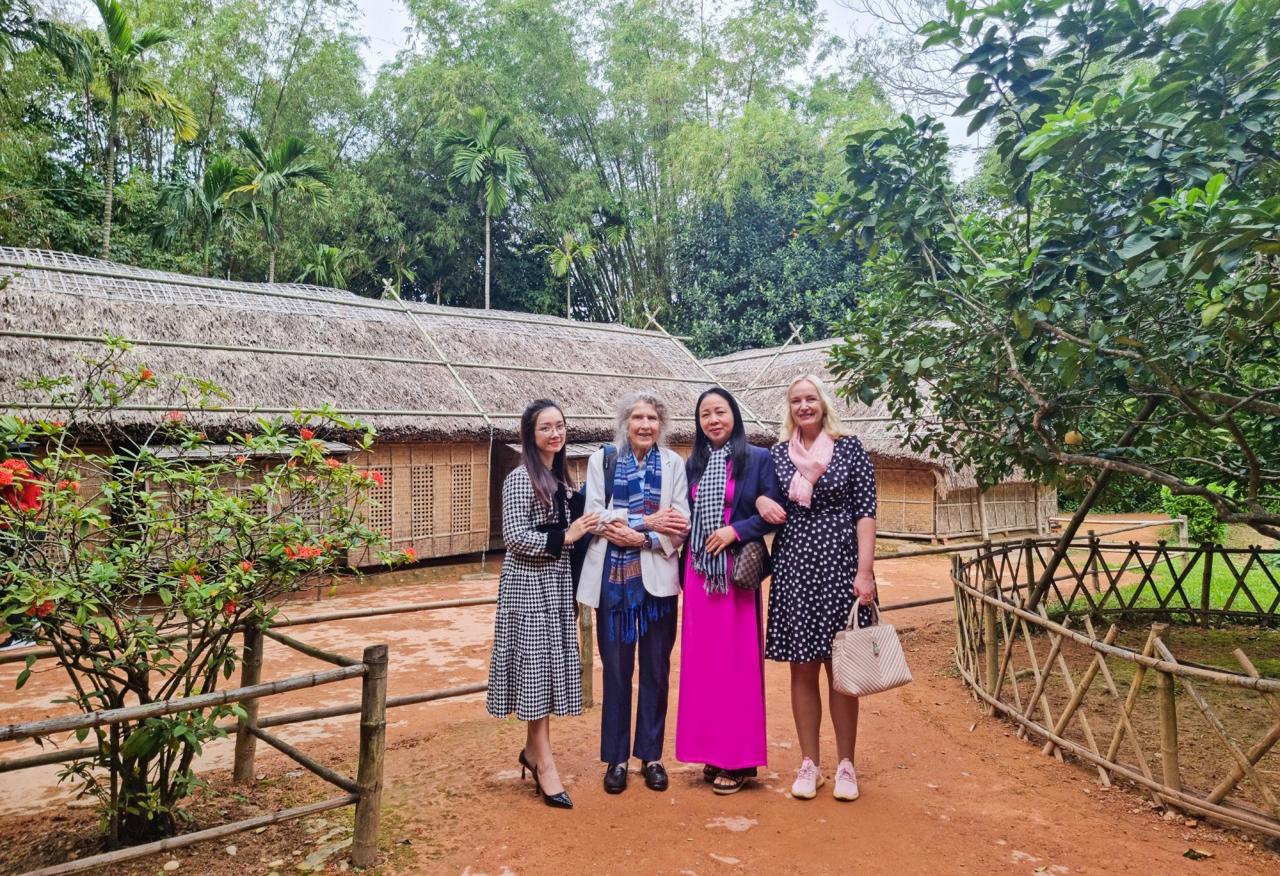
International tourists take souvenir photos in front of the house of Deputy Mandarin Nguyen Sinh Sac in Lang Sen village (Photo: An Vinh).
Ms. An Vinh continued: "That time, I welcomed a group of tourists from the Lao People's Democratic Republic visiting Hoang Tru village, Uncle Ho's maternal hometown. They requested to hear a guided tour in Vietnamese, without an interpreter. Listening to all the artifacts about the place where Uncle Ho was born, their voices choked with emotion. They cried, and I was also swept up in their feelings. In the simple thatched house, we hugged each other and sang the song "Vietnamese-Lao Brotherhood": " You are on this side of the Western Truong Son Mountains / I am on this side of the Eastern Truong Son Mountains / Always sending each other songs of affection... / The two countries hear the same rooster crowing at dawn / The land of Champa, the land of the Dragon and Fairy / Walking together to build a bond of love / Vietnamese-Lao brotherhood..."
Special catalyst
The Propaganda and Education Department has 20 staff members, including 3 in management, 3 responsible for welcoming registered tourist groups, and 17 tour guides in charge of guiding and introducing visitors at Lang Sen (Uncle Ho's paternal hometown), Hoang Tru (Uncle Ho's maternal hometown), the tomb of Mrs. Hoang Thi Loan, and Chung Son Temple - where Uncle Ho's relatives are worshipped.
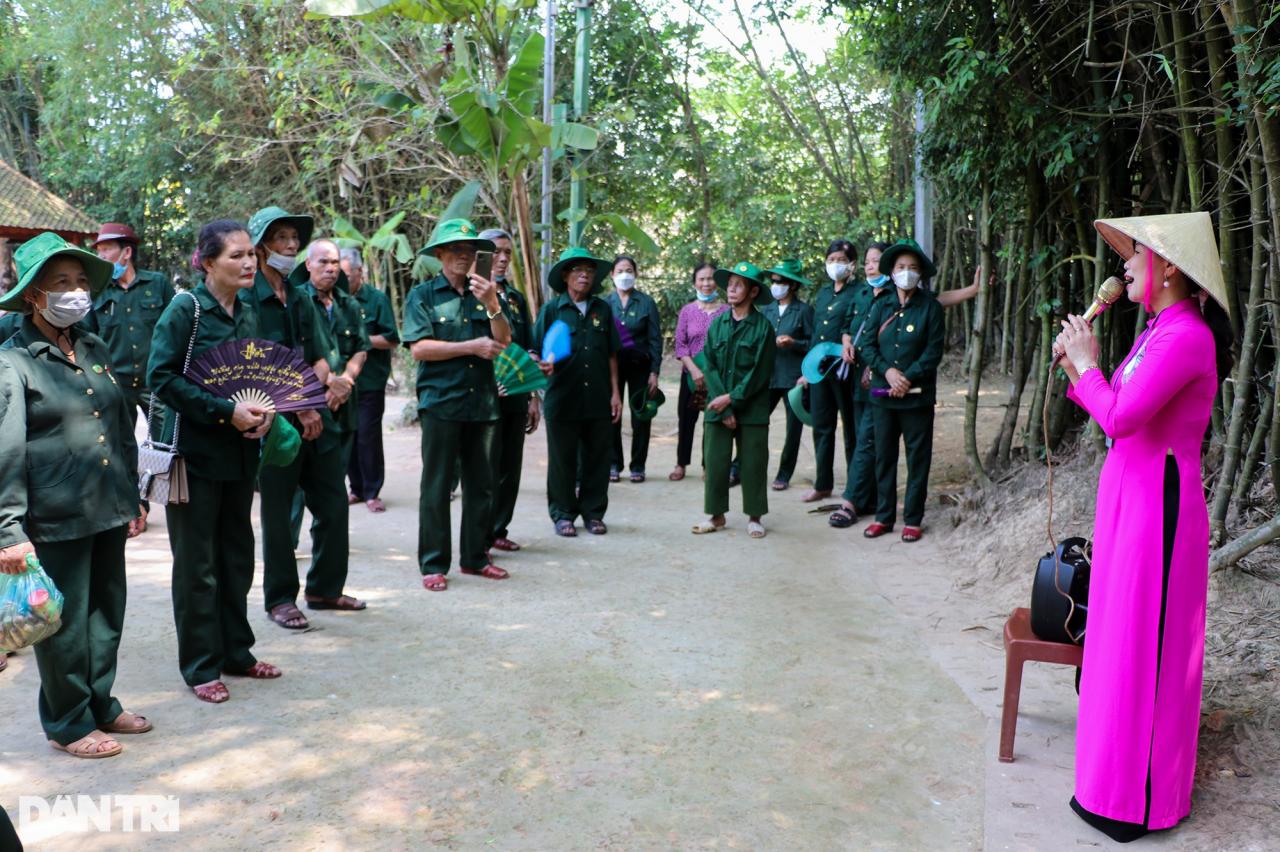
A tour guide is introducing a group of former Phu Tho Youth Volunteers to President Ho Chi Minh's maternal hometown in Hoang Tru village (Kim Lien, Nam Dan) during the month of May (Photo: Hoang Lam).
The workload for the tour guides at the Kim Lien Historical Site is immense, especially during peak days when they welcome around 20,000 visitors. With their warm, deep voices, characteristic of the Nghe An dialect but clear and distinct, they transport visitors back to the past, to the place where President Ho Chi Minh spent his childhood or where he visited his hometown twice in 1957 and 1961. For these guides, visitors are not only the recipients of their service but also a source of inspiration and a special catalyst that keeps their work fresh and engaging.
In the heartwarming land of Nghe An in May, whether it's a weekday or a weekend, the tour guides at the Kim Lien historical site are almost always working at full capacity. While waiting for the next group of tourists, Ms. Phung Thi Huong Giang retreated to a shady spot to escape the sun. Taking a sip of water, Ms. Giang smiled: "That's the secret to maintaining the voice of a tour guide from Uncle Ho's hometown." On average, each guide directly guides and introduces more than 20 groups of tourists a day; on peak days, that number can double or even triple. By evening, their throats are sore and hoarse, so they have to use warm salt water to preserve their voices.
The small house where President Ho Chi Minh was born (Photo: Hoang Lam).
Tour guide Phung Thi Huong Giang: Besides their affection for President Ho Chi Minh, tourists are a special catalyst that keeps their work fresh and exciting (Photo: Hoang Lam).
"Usually from April to September, which is both a time with many major holidays and a school break for students, the number of tourists visiting Uncle Ho's hometown is higher than at other times of the year. Standing and speaking for hours in the hot sun is very tiring, but witnessing the emotions of the tourists, seeing their affection for Uncle Ho and his hometown, we forget all the fatigue and try our best to convey the most complete message about Uncle Ho and his hometown to everyone. Some of us have been dedicated to this work for nearly 30 years, but we always find it fresh and attractive, because in addition to our responsibility to the job and our personal feelings for Uncle Ho, we always receive positive 'catalysts' from the tourists themselves when they come to our shared hometown," shared Ms. Phung Thi Huong Giang (48 years old).
Earlier this year, Ms. Giang welcomed a rather special guest, a man from Malaysia who spoke Vietnamese very well. Even more surprising was his deep understanding of President Ho Chi Minh and his profound emotion upon visiting the small, two-room thatched house in Hoang Tru village – the birthplace of Uncle Ho.
"As I introduced him to each item, such as the hemp hammock and the loom where Mrs. Hoang Thi Loan still wove cloth, rocked her children to sleep, and stayed up with her husband studying, he stood silently for a long time. He said that he greatly admired President Ho Chi Minh and had read many documents about him, but he never imagined that such a great personality as President Ho Chi Minh would be born in such an unimaginably simple and humble place," Ms. Giang recounted.
During the holidays of April 30th, May 1st, and President Ho Chi Minh's birthday (May 19th), the Kim Lien historical site sometimes welcomed 2,000 groups of tourists (Photo: Hoang Lam).






































![[Video] Sunset at Lap An Lagoon – Where the sun sets over the fishing nets](https://vphoto.vietnam.vn/thumb/1200x675/vietnam/resource/IMAGE/2026/05/31/1780192137701_beach-landscape-sea-water-nature-grass-745871-pxhere-com.jpeg)

















Comment (0)