

Immediately implement the plan to welcome guests.
Late on March 8th, the Ministry of Culture, Sports and Tourism informed the Cultural Counselor of the Chinese Embassy in Vietnam that the Chinese government had decided to include Vietnam in the pilot program for reopening group tourism in the second phase, starting from March 15th.
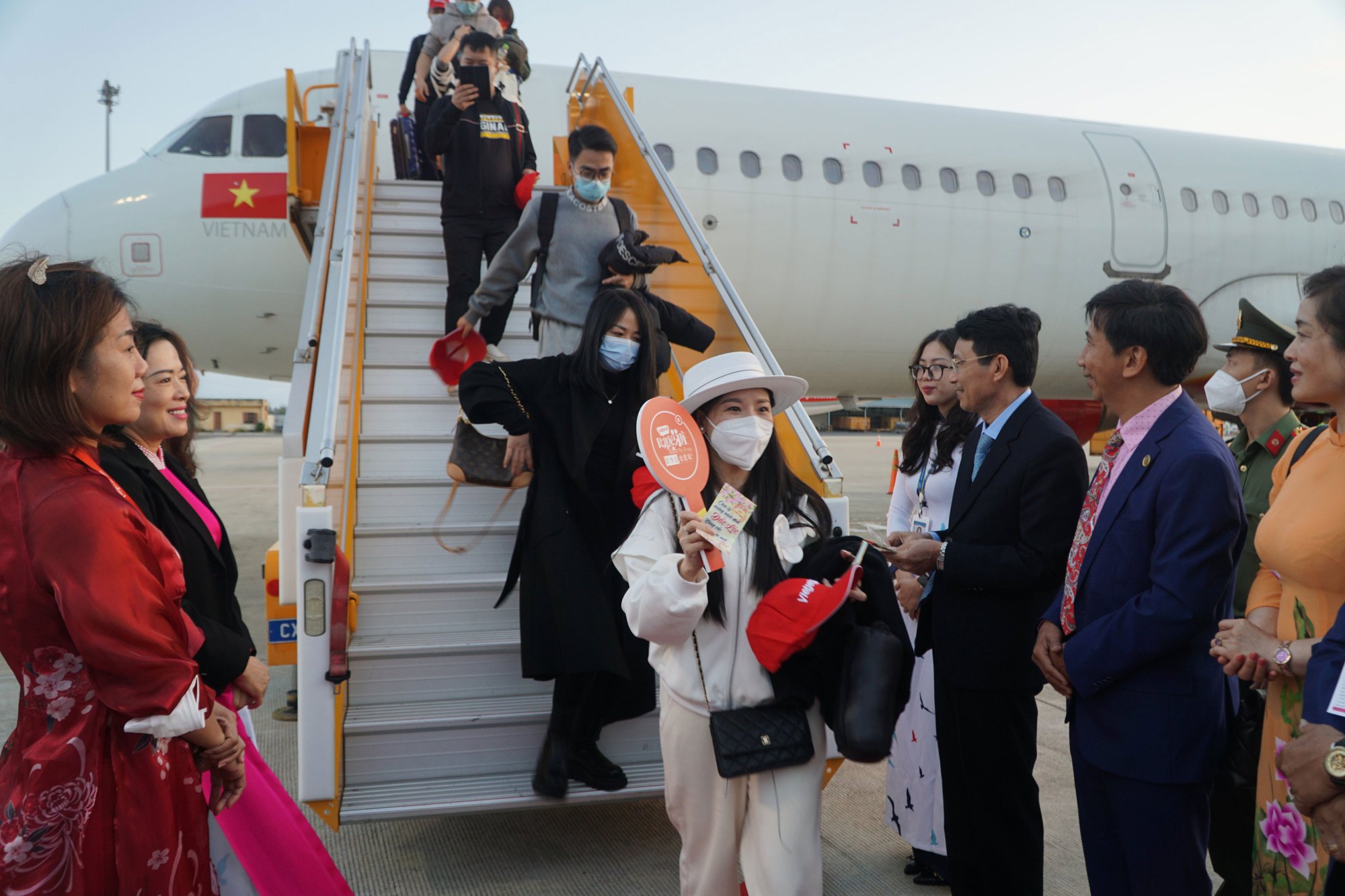
China's official opening of tourism relations with Vietnam is expected to create a new breakthrough for the tourism industry.
The very next morning, Deputy Director General of the Vietnam National Administration of Tourism, Ha Van Sieu, was tasked with urgently developing a plan to welcome tourists from this "giant" market, to be reported to the Ministry of Culture, Sports and Tourism and the Government at the upcoming meeting. Simultaneously, domestic airlines also urgently held meetings to study options for launching flight networks to China, as they had previously had to temporarily postpone operations until the end of April or May pending further decisions from China regarding allowing tourists to visit Vietnam.
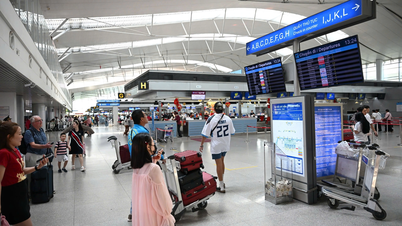
Before the pandemic, China was Vietnam's largest source market, accounting for up to one-third of the international revenue of Vietnamese airlines. Each week, Vietnamese airlines operated over 200 flights to various provinces and cities in China. Therefore, from the moment this market officially reopened, Vietnam Airlines proactively planned for the full recovery of its China routes, expecting that passengers visiting relatives, working, and on business trips would quickly help the market recover by about 20% within 1-2 months and continue to accelerate, recovering to 50% of the 2019 level.
Responding to Thanh Nien newspaper early on March 9th, a representative of Vietnam Airlines stated that the flight schedule will certainly change, but the Chinese market has unique characteristics; it's not simply a matter of opening up and immediately launching flights. Vietnam Airlines' representative office in China is continuing its efforts to negotiate and launch routes to China as soon as possible.
Tourism expert Nguyen Van Thanh, former Vice President of the Nha Trang - Khanh Hoa Tourism Association, enthusiastically stated that this is good news for Vietnam's tourism industry. In the context of distant tourism markets facing many difficulties due to the economic crisis and political conflicts, the return of Chinese tourists from March 15th, if quickly recovering to about 50-60% of pre-pandemic levels, would secure Vietnam's 3-4 million international visitors. Along with nearly 3.7 million visitors in 2022 and the implementation of various tourism attraction policies, the goal of welcoming 8 million international visitors in 2023 is entirely achievable.
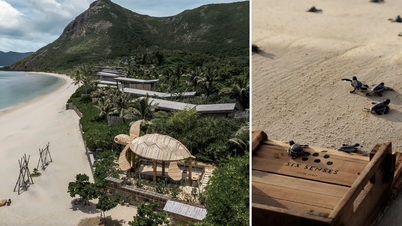
However, that's not the most significant point. According to Mr. Thanh, before the pandemic, Chinese tourists accounted for over 70% of international visitors to Nha Trang - Khanh Hoa. Although domestic tourism surged in 2022, and there were a few groups from South Korea, Thailand, and Europe, it was still insignificant compared to the actual number of 80,000-90,000 accommodation establishments in the province. Therefore, even though domestic tourism had recovered beyond 2019 levels, many hotels and restaurants in Nha Trang - Khanh Hoa remained closed. Only when news of China reopening its tourism sector emerged did numerous hotels, large and small, begin renovating, and investors hastily leased kiosks and shophouses in the Western Quarter to welcome their regular customers.
"The VegaCity mega-urban area is preparing to open in April with the expectation of becoming a commercial and tourism city of Southeast Asian stature; the 5-star Meliá hotel, promoted as the best in the entire system in Vietnam, is also ready to launch. Nha Trang, Khanh Hoa has prepared such large investments, so if Chinese tourists don't come, it will be very difficult," Mr. Nguyen Van Thanh emphasized.
Reorganizing the market to attract high-spending customers.
Before the Covid-19 pandemic, China alone generated $200 billion in global tourism revenue. Chinese tourists travel extensively in large groups, making them a highly sought-after market share for all tourism industries. Therefore, this market is a prime target for competition, with every country vying for a piece of this enormous pie.
Just as China reopened its borders to tourism but remained closed to Vietnam, Thailand capitalized on the momentum, attracting 1.38 million Chinese tourists during the 2023 Lunar New Year holiday alone. Previously, the Thai government had projected at least 5 million Chinese tourists this year, but only expected around 300,000 in the first quarter. Yet, in less than a month during the Lunar New Year, the number of visitors exceeded the target by nearly five times. Malaysia also aimed to welcome 5 million Chinese tourists in 2023, a 1.5-fold increase compared to the 3.1 million in 2019 – before the Covid-19 pandemic.
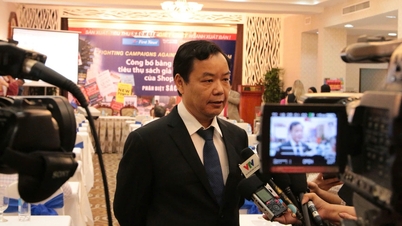
With its advantageous geographical location, ranking among the top traditional markets favored by Chinese people, and competitive pricing, Vietnam's tourism industry is eagerly anticipating a major boost when it officially reopens to Chinese tourists from March 15th. However, Chairman of the Board of Directors of Vietravel Corporation, Nguyen Quoc Ky, predicts that even with the fastest implementation, it will still take Vietnam 45-60 days to truly re-enter this market. According to Mr. Nguyen Quoc Ky, it is difficult to welcome a massive influx of tourists like Thailand and Malaysia did earlier this year because at that time, China had just opened its doors, the pent-up demand for tourism was very high, and they had already "released" all their tourists to countries that had opened earlier. Vietnam reached an agreement with this market somewhat late, thus missing the opportunity to immediately attract a large number of tourists like Thailand and Malaysia.
Noting that charter travelers will recover faster than those traveling on commercial flights, Mr. Nguyen Quoc Ky noted that Vietnam's current challenge is to prepare companies with sufficient capacity to receive and supply products and services to these travelers.
"Charter travelers don't face many procedural hurdles, but it requires the capacity of local authorities to receive them. The receiving destination, the receiving partners, from coordination at airports to immigration systems, preventive health care, hotel and restaurant systems... everything needs to be planned in advance so that the units are ready, avoiding overlapping or turning into 'zero-cost tours'. Thailand has done very well in this regard; we can look to them and learn from them to reorganize our system for receiving Chinese tour groups," Mr. Ky advised.
Sharing the same view, Mr. Nguyen Van Thanh believes that in the coming period, Chinese tourists coming to Vietnam will travel in groups, not as numerous as individual travelers before the pandemic. This is an opportunity for Vietnam to restructure and reorganize the market to attract high-end tourists, exploiting this market more effectively and thoroughly. Specifically, Chinese people are known for spending a lot. They don't hesitate to spend money on shopping, dining, entertainment, and choosing high-end services and products, but when they come to Vietnam, they spend very little, sometimes staying for a whole week without spending much. The reason is that we don't yet have unique products, or high-standard shopping and entertainment areas to meet their needs. Moreover, this has led to the distortion of "zero-cost tours," causing significant damage to the tourism industry.
"This situation needs to be thoroughly addressed. From human resources, travel agencies, tour guides to accommodation systems, restaurants, and commerce, everything must be invested in, upgraded, and coordinated effectively and wholeheartedly so that Vietnamese tourism can sustainably and long-term exploit the huge market right next to it," expert Nguyen Van Thanh observed.
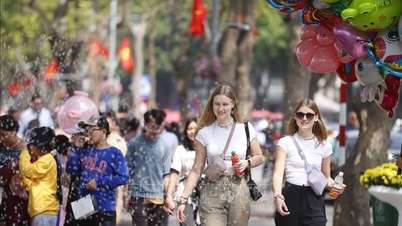
No other source of tourists can replace Chinese visitors for Khanh Hoa. Therefore, the news that China will allow tourists to travel to Vietnam from March 15th, coinciding with the day the Prime Minister chaired the National Tourism Conference, has brought new vitality and opened up many expectations for the recovery of Vietnam's international tourism market.
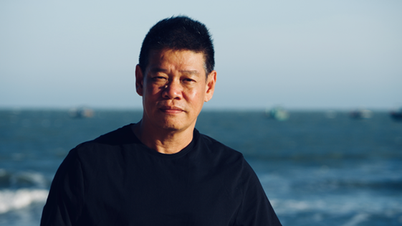
Mr. Nguyen Van Thanh
Source link



![[Image] National Assembly discusses the implementation of the socio-economic development plan.](https://vphoto.vietnam.vn/thumb/1200x675/vietnam/resource/IMAGE/2026/04/20/1776696707422_ndo_br_img-20260420-185419-jpg.webp)
![[Photo] General Secretary and President To Lam meets with National Assembly delegates from ethnic minorities.](https://vphoto.vietnam.vn/thumb/1200x675/vietnam/resource/IMAGE/2026/04/20/1776696701056_a1-bnd-8331-3342-jpg.webp)









![[PHOTO] The most beautiful sidewalks in Saigon that captivate people, captured with smartphones.](https://vphoto.vietnam.vn/thumb/402x226/vietnam/resource/IMAGE/2026/04/21/1776707735189_anh14_rlcz.jpeg)

































































Comment (0)