

In reality, the potential for developing rural tourism in localities is enormous and has become a common development trend. However, to develop tourism effectively and make a positive contribution to the New Rural Development movement, many challenges remain.
Promoting the value of local culture.
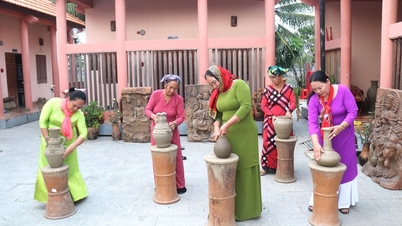
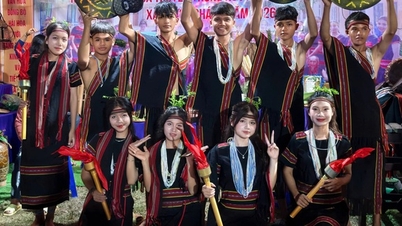
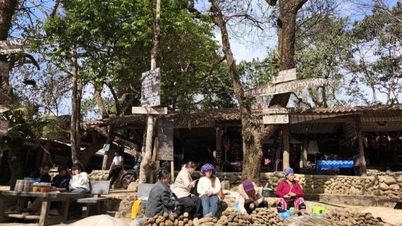
Chieng Chau commune (Mai Chau district, Hoa Binh province) is known as the cultural "cradle" of the Thai ethnic minority. In 2009, Ms. Vi Thi Oanh and several Party members established the Chieng Chau Brocade Weaving and Tourism Service Cooperative. With the support of artisans, the government, and the JICA organization (Japan), the traditional brocade weaving craft in the locality has gradually been restored and developed strongly. Currently, the cooperative's handcrafted products are exported to many countries and territories.
According to Ms. Oanh, the cooperative has partnered with several travel agencies to organize tours exploring and experiencing traditional culture, including brocade weaving. As a result, the income of cooperative members has increased by 5-6 million VND per person per month. Deputy Secretary of the Mai Chau District Party Committee, Ha Cong Nghi, stated that preserving and promoting ethnic cultural identity plays a crucial role in achieving the local socio-economic goals. Mai Chau District has identified the development of community tourism and cultural tourism as its key focus.
Sa Dec Flower Village (Sa Dec City, Dong Thap Province) has also transformed its local cultural values into a distinctive tourism product. Known as a traditional craft village with a history of over 100 years, Sa Dec Flower Village is the largest supplier of flowers and ornamental plants in the Mekong Delta region. It is also a cultural destination characteristic of the Western Vietnam riverine region, attracting a large number of domestic and international tourists.
Having been involved in flower and ornamental plant cultivation for over 40 years, Mr. Tran Van Tiep said that flower growers here are striving to innovate to keep pace with modern trends and development. Many new flower varieties have been introduced by Sa Dec farmers, but they still maintain the traditional method of growing them on trellises, creating a unique characteristic of the craft village. More and more spacious and well-equipped houses are being built thanks to income from the flower industry. Flower and ornamental plant artisans have continuously created many artistic products, promoting the image of the gentle people of Sa Dec and fostering pride and awareness of preserving traditional cultural heritage.
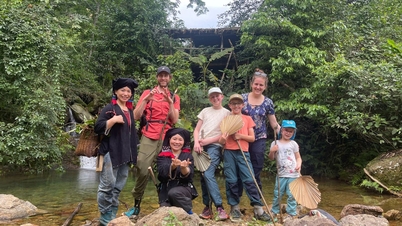
In Sa Dec, there are many experiential tourism models. Flower growers collaborate with tourism companies to develop eco-tourism tours in their gardens, cultural tourism, and further promote local agricultural product brands, increasing income and innovating the mindset of agricultural economics. The Sa Dec city government in particular, and Dong Thap province in general, are focusing resources on investing in upgrading the transportation system and supporting people and cooperatives in participating in professional training to develop sustainable agricultural tourism.
Diversifying tourism models
The Ministry of Agriculture and Environment has guided localities to promote awareness and innovative thinking on the development of agricultural and rural tourism; and directed the construction of models that suit the strengths and advantages of each locality. The goal is for each province and city to have at least one recognized exemplary rural tourism destination by 2025, linked to advantages in agriculture, culture, traditional crafts, and ecological environment.
Preliminary statistics show that there are over 584 active agricultural and rural tourism models nationwide, concentrated in the northern mountainous region and the Mekong Delta. There are 382 rural tourist destinations recognized at the provincial level, of which 11.3% are agricultural and craft village tourism destinations; 21.2% are community tourism destinations; 21.7% are ecotourism destinations; and the remainder are historical sites, accommodation, and commercial services.
According to Ngo Truong Son, Chief of the Central Office for New Rural Development Coordination, training and capacity building, as well as changing mindsets regarding the role of rural tourism in building new rural areas, have been strongly implemented. In 21 provinces and cities, 83 training courses have been organized for 4,964 tourism management officials and local tourism businesses, notably in Hanoi, Ha Giang, Bac Giang, Hung Yen, An Giang, etc.
According to Vo Ngoc Kien, Head of the Propaganda and Mass Mobilization Department of the Hoa Binh Provincial Party Committee, the province has set a direction for preserving and promoting the cultural identity of ethnic groups in conjunction with building a new type of person to contribute to creating unique tourism products. The province identifies promoting the cultural identity of ethnic minority communities and preserving the system of relics and artifacts of Hoa Binh's culture as the core element in building a sustainable tourism environment, creating unique and attractive tourism products; thereby improving quality and competitiveness on the national and international tourism map.
In reality, for agricultural and rural tourism to become a breakthrough in the National Target Program for New Rural Development in the 2026-2030 period, localities need to strengthen regional linkages to jointly exploit the potential and advantages from characteristic agricultural product chains and local cultural values. Short-term and long-term tourism development plans need to be developed. This is a key task to exploit the economic potential of agriculture, promote the advantages of national cultural identity; and is an important internal resource in improving the quality of new rural development in the 2026-2030 period.
Source: https://nhandan.vn/du-lich-gan-voi-nong-thon-moi-nang-cao-thu-nhap-nguoi-dan-post870799.html


















![[Video] The 14th Congress of the Vietnam Trade Union determined to place union members and workers at the center of all activities.](https://vphoto.vietnam.vn/thumb/402x226/vietnam/resource/IMAGE/2026/06/04/1780559593244_dai-hoi-xiv-cong-doan-viet-nam-xac-dinh-lay-doan-vien-nguoi-lao-dong-lam-trung-tam-cua-moi-hoat-dong00-01-17-12still002-4247-jpg.webp)


















![[Video] Sunset at Lap An Lagoon – Where the sun sets over the fishing nets](https://vphoto.vietnam.vn/thumb/1200x675/vietnam/resource/IMAGE/2026/05/31/1780192137701_beach-landscape-sea-water-nature-grass-745871-pxhere-com.jpeg)



































Comment (0)