


Tourism services on the island are increasingly developing, contributing to the economic restructuring and improving the lives of the people. However, many roads on the island are currently in disrepair, service infrastructure has not improved, freshwater resources are at risk of depletion, and the power grid is unstable…
Infrastructure has not kept pace with growth.
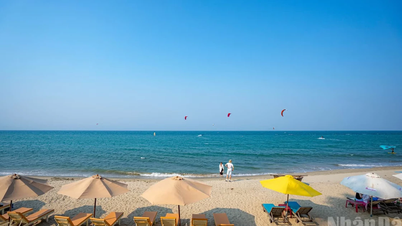
From March onwards, Phu Quy Island becomes bustling with numerous high-speed ferry trips carrying tourists. On average, the island welcomes over 1,000 visitors per day. The number of visitors increases on weekends and during the summer. According to the People's Committee of Phu Quy Special Economic Zone, in the first quarter of 2026, the island is expected to welcome over 42,000 visitors, including 2,100 international tourists. In 2021, the island welcomed over 40,000 visitors, including 300 international tourists; by 2025, the number of visitors is projected to quadruple, including over 3,900 international tourists. In 2019, the island had 9 accommodation establishments; by 2026, this number is expected to reach 69 establishments with over 850 rooms.
Data shows that both the number of tourists and accommodation facilities have increased, but the tourism infrastructure is not yet synchronized, affecting the quality of service. The island only has one road, approximately 1.2 km long, scheduled to be inaugurated in 2025, and a night food court operating from April 2026. The island has 7 water supply facilities with a total designed capacity of approximately 2,680 m³/day, but these were built many years ago. The increase in tourists means a greater demand for clean water, causing water resources to become increasingly scarce, even depleted.
According to one accommodation establishment, more than two years ago, there was information that new freshwater lakes would be built on the island and the water supply system upgraded, but nothing has materialized to date. The well water is saline, making extensive extraction impossible. Although local authorities have warned against exploiting groundwater resources, some establishments still exploit it to the fullest due to business pressures. Another problem is that the electricity supply is almost overloaded and cannot meet demand; hotels have installed solar power, but the maintenance costs are too high. During the storm season, the solar panels are constantly affected by rain and wind.
Experts estimate that, with current usage rates, even if the new freshwater reservoir project is put into operation, groundwater resources are still at risk of depletion by 2030. Therefore, the special economic zone must consider groundwater management, as well as preventing erosion, land loss, and saltwater intrusion. The island could consider investing in seawater desalination technology and charging higher water prices to conserve water resources.
Experts estimate that, with current usage rates, even if the new freshwater reservoir project is put into operation, groundwater resources are still at risk of depletion by 2030. Therefore, the special economic zone must consider groundwater management, as well as preventing erosion, land loss, and saltwater intrusion. The island could consider investing in seawater desalination technology and charging higher water prices to conserve water resources.
Local authorities need to promote and establish mechanisms to encourage cremation upon death, thereby reducing the land area used for traditional burials. The government should have a specific mechanism for the island regarding the purchase of electricity from solar energy, solely for local use, to encourage agencies and households to install their own solar panels.
Planning before construction
Phu Quy Island currently operates from three power sources: oil and gas, wind, and solar. In the short term, the power sector plans to invest in two additional generating units, increasing capacity to 3.2 MW. On average, in previous years, the power sector incurred losses of approximately 180 billion VND, but with the recent surge in oil prices, the cost will exceed the expense of extending power lines from the mainland.
The cost for this would be around 9 trillion VND, so the plan is not yet feasible. According to Nguyen Ba Ut, Director of the Department of Industry and Trade of Lam Dong province: “From April to June, there is no wind on the island, and during this time there are many tourists visiting. Furthermore, wind power has high maintenance and repair costs, so installing wind power is not suitable. Therefore, the island needs to invest in a solar energy system.”
Regarding water resources, the Director of the Department of Agriculture and Environment of Lam Dong province, Phan Nguyen Hoang Tan, shared: “On average, the island needs about 3,000 m³ of water per day for daily use. If we include the needs of tourists, it reaches 5,000 m³, while the water source only provides 1,600 m³, which is not enough to serve the people and tourists.”
In May, the People's Committee of Lam Dong province submitted a proposal to the Party Committee of the People's Committee of the province for approval of the investment plan for the construction of freshwater reservoirs and the upgrading and renovation of the water supply system in the special economic zone, with a budget of over 400 billion VND. The project includes the construction of three reservoirs; a raw water pumping station at reservoir No. 9, primary pumping stations at reservoirs No. 7 and 8; a surface water treatment plant with a capacity of 600 m³/day; and a raw water and freshwater supply system. The reservoirs utilize rainwater to supply the clean water plant, aiming to minimize water loss and runoff into the sea.
In addition, the water stored in the reservoirs will supplement the water supply and reduce saltwater intrusion. The water supply system prioritizes the use of surface water from rainwater harvesting reservoirs built to ensure sustainable exploitation and protection of freshwater resources on the island.
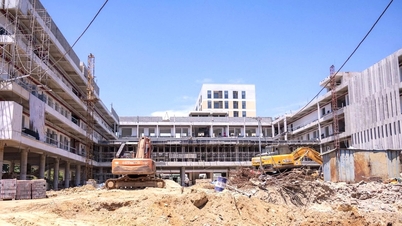
According to the People's Committee of Phu Quy Special Economic Zone, construction will begin on an eastern road over 800 meters long in June. Infrastructure in the special economic zone is currently not comprehensively developed. Public investment funds allocated to the island are still low, at around 10 billion VND in 2026, which is insufficient to meet the needs for essential infrastructure investment.
Chairman of the People's Committee of the Phu Quy Special Economic Zone, Le Hong Loi, proposed that Phu Quy be allowed to retain its annual land use fee revenue; and at the same time, receive additional capital support to strengthen development resources. This would enable the special economic zone to proactively invest in and upgrade urban infrastructure, improve service quality, and develop tourism.
On the other hand, the province is accelerating investment in freshwater reservoirs and water treatment systems; upgrading roads around the island with hot asphalt concrete; supporting the construction of auxiliary facilities at tourist spots, squares, and embankments, etc.
The island needs to develop a coastal road, restrict permits for buildings with heights facing the sea, build green services, and promptly implement services in the tourist area. In addition, the province will invite investors and experts to collaborate with relevant agencies to develop a master plan for the island.
Mr. Ho Van Muoi, Chairman of the People's Committee of Lam Dong Province
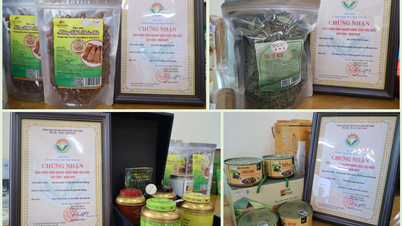
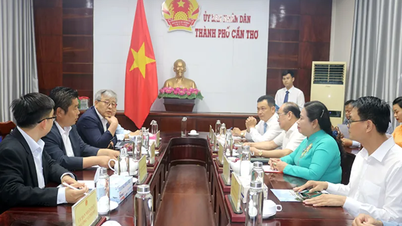
Mr. Ho Van Muoi, Chairman of the People's Committee of Lam Dong province, said: “Phu Quy has many potentials and advantages for developing tourism and services. However, the special economic zone has not yet defined its development to match its tourism potential. Currently, the island must identify its breakthrough as the marine economy. With a large number of boats, Phu Quy does not have a single store selling OCOP (One Commune One Product) products. To achieve this, the special economic zone needs to attract investors in seafood processing. The island needs to implement the construction of a coastal road, limit the issuance of permits for buildings with heights facing the sea, develop green services, and quickly implement services in the tourist area. Along with that, the province will invite investors and experts to coordinate with relevant agencies to develop ideas for the island's planning.”
The development of tourism in Phu Quy will boost the growth of services such as seafood businesses, accommodation, transportation, and tours. If the island's infrastructure is strategically invested in to meet the demands of tourism development, it will ensure environmental sustainability, improve the lives of the people, contribute to national security and defense stability, and proactively respond to the impacts of climate change.
Source: https://nhandan.vn/phat-huy-tiem-nang-du-lich-dao-phu-quy-post966822.html
![[Photo] First session of the 14th Congress of the Vietnam Trade Union](https://vphoto.vietnam.vn/thumb/1200x675/vietnam/resource/IMAGE/2026/06/03/1780465947883_ndo_br_img-3852-jpg.webp)
![[Photo] General Secretary and President To Lam presides over a meeting with the Central Organizing Committee.](https://vphoto.vietnam.vn/thumb/1200x675/vietnam/resource/IMAGE/2026/06/03/1780482764658_a1-bnd-4741-3342-jpg.webp)


![[Photo] Secretary of the National Assembly Party Committee, Chairman of the National Assembly presides over the meeting of the Standing Committee and Executive Committee of the National Assembly Party Committee.](https://vphoto.vietnam.vn/thumb/1200x675/vietnam/resource/IMAGE/2026/06/03/1780480353201_ndo_br_bnd-2585-jpg.webp)
































![[Video] Sunset at Lap An Lagoon – Where the sun sets over the fishing nets](https://vphoto.vietnam.vn/thumb/1200x675/vietnam/resource/IMAGE/2026/05/31/1780192137701_beach-landscape-sea-water-nature-grass-745871-pxhere-com.jpeg)























Comment (0)