

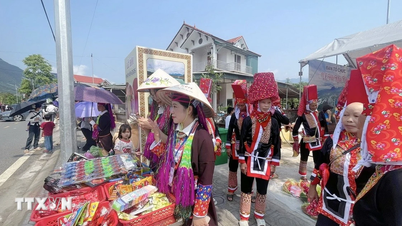
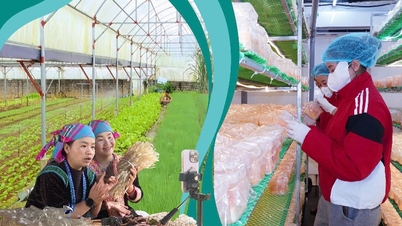
Videos depicting the simple Tet celebrations of the Hmong, Red Dao, and Giay people, or the experiences of working in the fields and farms of the highlanders, and lunches consisting only of green vegetables and black pork fat... are attracting international and domestic tourists alike, leaving viewers in awe.
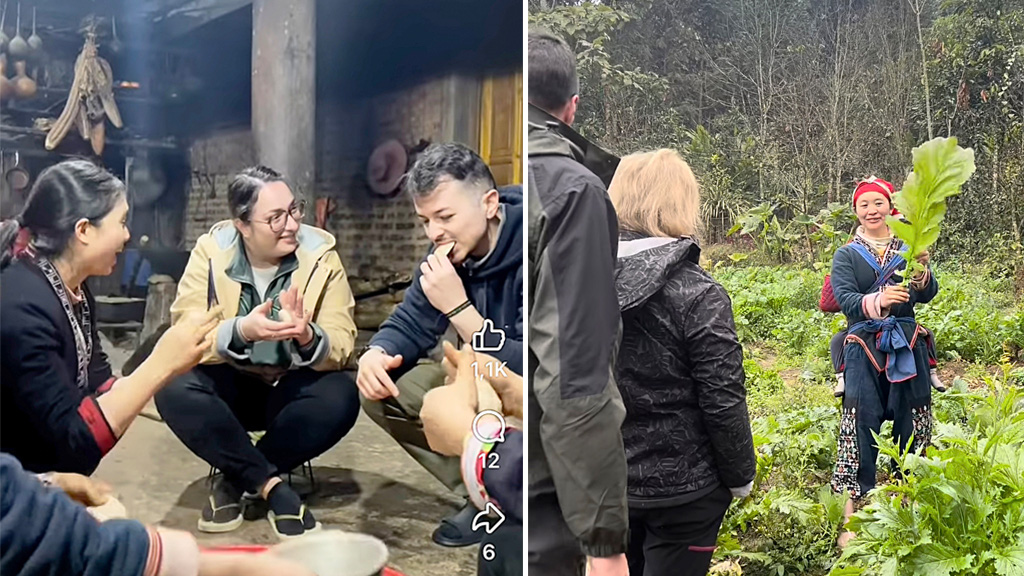
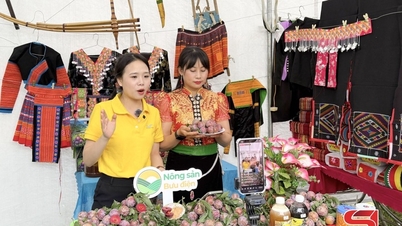
International tourists experience highland tourism ... through social media promotion by local people - Screenshot
These personal channels on Facebook, TikTok, and Zalo were created by none other than local people. More and more people are succeeding in marketing tourism through social media, helping to improve their income, enhance the value of agricultural products, and introduce the national cultural identity to international visitors.
Amateur tutorials, surprisingly engaging.
Ms. Nguyen Thi Thuy (District 1, Ho Chi Minh City) shared that she recently had a trip during Tet that she "thought wouldn't be fun but turned out to be incredibly enjoyable." Her family, along with two younger siblings and two foreign friends, planned a trip to Vietnam at the end of December 2024, with the goal of visiting only... unique places.
"By chance, Facebook brought up the personal page of a Red Dao person in Lao Cai who does rural tourism and introduces local agricultural products. I watched a video about people harvesting cabbage in the fields and butchering pigs to extract fat in preparation for Tet (Lunar New Year)."
"Intrigued, we followed up on Facebook and had a 7-day trip that was reasonably priced and incredibly fun and memorable with two friends in England," Thuy recounted.
According to Ms. Thuy, the cost of staying at a Red Dao family's home is only 300,000 VND per person per night; a meal for 8 people costs less than 2 million VND; and the cost of a "guide" to take you into the forest to experience planting, harvesting bamboo shoots, and finding wild vegetables is only 500,000 VND, lasting until the guests are tired and want to go home.
On social media, there are increasingly more Facebook, Zalo, and TikTok pages run by young people from Lao Cai, Ha Giang, Yen Bai, Thai Nguyen... or other lowland areas, introducing OCOP products such as green tea, vermicelli, banh chung (Vietnamese rice cake), bamboo shoots, peanut candy, hawthorn tea, cinnamon, accompanied by many videos of tourists visiting and experiencing them.
Everything is presented very simply, the camera angles are very amateurish, but viewers find it irresistible. For example, the page called "May Kim Dao Do" in Ta Phin village (Sa Pa district, Lao Cai province) has over 8,000 likes and more than 200,000 followers.
The key to attracting visitors lies in personal profiles that revolve around showcasing mountain and forest scenery, organic vegetable gardens on hillside fields and rice paddies cultivated by highlanders, or exploring Dao cultural festivals; mountain and forest meals or peaceful countryside scenes; the New Year's rituals of the Red Dao people; and groups of Western tourists experiencing harvesting vegetables and raising pigs... These videos are "drawing" more tourists to the area.
A video of a farmer in Thai Nguyen making peanut candy also attracted nearly 5,000 viewers. The video was assisted by "colleagues" who were family members, including children and grandchildren. Not only did this channel help sell OCOP products, but it also attracted many customers who came to the farm to try making the product themselves.
With over 10 years of experience operating tours in Sa Pa (working for Duc Minh Tourism Company, Lao Cai province), Mr. Le Tuan Kiet recounts that international tourists coming to Sa Pa, in addition to visiting famous places in the highlands, also tend to "show Facebook and say: 'Please let me come here'".
Mr. Kiet said: "Foreigners who travel independently to Vietnam already have a lot of travel experience and have done their research. I was surprised that even when traveling with a guided tour, some people still provide the Facebook profiles of person A and person B and ask to be taken to local people's homes for tourism purposes, just for the experience shown in the video. This gives the locals extra income."
At the same time, they can also sell additional services at home such as food, accommodation, baking, or experiencing different cultures... Compared to working as a factory worker or doing housework in the city, the income is nowhere near as much."
A new trend, but it needs clear direction.
"I saw that the people in the highlands had a lot of delicious, clean agricultural products, but there was no market for them. Instead of working as a factory worker, I stayed home and built a canal, making at least one video a week to promote tourism and sell agricultural products. This gave me extra income and created jobs for my whole family," shared the owner of a homestay in Ta Phin village (Sa Pa district), explaining how he got into tourism.
According to Ms. Nguyen Thi Khanh, president of the Ho Chi Minh City Tourism Association, leveraging social media to promote the image of Vietnam's land, people, and culture is a very good and trending approach to agricultural tourism.
However, support is needed for farmers and individuals who build canals for tourism purposes. "I think state management agencies and departments should provide guidance to avoid duplication and encourage more creativity," Ms. Khanh said.
Mr. Nong Viet Yen, Director of the Department of Culture, Sports and Tourism of Yen Bai province, said that the "non-polluting industry" (tourism) has strongly swept into Yen Bai through various promotional channels, including those built by locals on Facebook, Zalo, etc. Locals, especially young people, are utilizing social media to promote tourism and homestay establishments, which is generating very good income.
This contributed to the growth of local tourism. Specifically, in 2024, the tourism industry grew by 103% compared to 2023, with 270,000 international visitors; over 1.8 million domestic visitors; and the number of accommodation establishments increased from 119 to 562 last year, driving a breakthrough in revenue, reaching nearly 2 trillion VND.
"In the near future, the province will have a thematic program to support tourism, enhance the value of OCOP products, and organize training sessions for tourism business owners. In addition, training will be held to exchange ideas on methods and techniques for creating trending videos and images to preserve and promote the cultural values of the Northwest region," Mr. Yen said.
Regarding the overall picture of locals leveraging social media in the tourism industry, a tourism expert (living in Ho Chi Minh City) assessed that their approach is unique and different from news reports or tourism publications. Even images, videos, and clips heavily influenced by local dialects attract tourists. This reflects the needs of visitors.
"A collaborative effort is needed, from local people's tourism models to linkages with government agencies and private businesses in the field of digital transformation in tourism, to bridge the gap between domestic and international tourists while minimizing advertising costs and effectively accessing the market," this person suggested as an additional solution.
Social media inspires travelers.
In 2024, according to research by Booking.com, 69% of respondents used platforms such as Instagram, TikTok, Facebook, or YouTube to find ideas for their next trip;
67% of people want to travel to locations that have appeared in movies or television shows; 60% want to experience the food and culture that have been featured in the media.
Don't leave it to "the customer is at risk, the customer... has to fend for themselves."
As a tour operator, Mr. Le Tuan Kiet believes that the way local people conduct agricultural tourism through social media is good and effective. The locals communicate well in English, leaving a positive impression on tourists.
However, Mr. Kiet witnessed the risks faced by international tourists staying in private homes. According to him, the approach at the time was... "the tourists are responsible for their own safety."
"A Spanish tourist visited a local's home after learning about the place through Facebook. Upon arriving, the locals led them into the forest to gather bamboo shoots and experience foraging for food. Unfortunately, the tourist slipped and fell, and this tourist also has a blood clotting disorder. The response was chaotic, and basically, the tourist had to fend for themselves. Calling an ambulance and everything else took a lot of time..."
Local authorities need to guide people to collaborate with travel companies or local authorities to provide better after-sales service and customer care. If tourists have accidents and have to handle things themselves, international tourists will certainly only visit once," Mr. Kiet said.
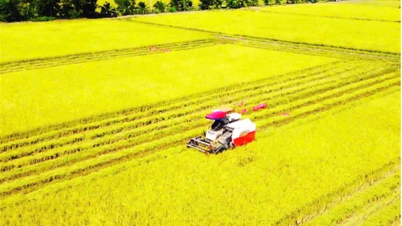
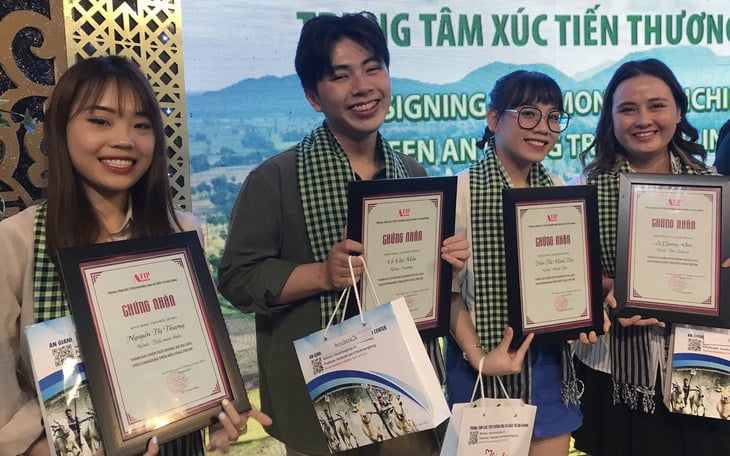 Digitalizing An Giang tourism on social media platforms.
Source: https://tuoitre.vn/du-lich-nong-nghiep-qua-facebook-20250216235216617.htm




![[Image] National Assembly discusses the implementation of the socio-economic development plan.](https://vphoto.vietnam.vn/thumb/1200x675/vietnam/resource/IMAGE/2026/04/20/1776696707422_ndo_br_img-20260420-185419-jpg.webp)
![[Photo] General Secretary and President To Lam meets with National Assembly delegates from ethnic minorities.](https://vphoto.vietnam.vn/thumb/1200x675/vietnam/resource/IMAGE/2026/04/20/1776696701056_a1-bnd-8331-3342-jpg.webp)










































































Comment (0)