|
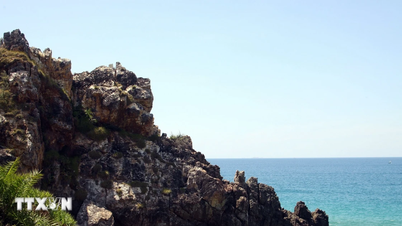
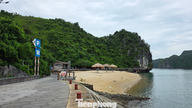
| Sochi National Park is a popular tourist destination. Photo: sochinews.io |
According to the Russian Ministry of Natural Resources and Environment, the number of visitors to nature reserves in 2025 is projected to reach 22.6 million, a 28% increase compared to 2024. In recent years, the number of visitors to national parks has shown steady growth. In the first four months of 2026 alone, approximately 5 million visitors were expected to visit national parks, equivalent to the same period the previous year. The majority of visitors are concentrated in the summer and early autumn. Alexander Zakondyrin, Director of the Center for Unified Science under the Russian Ministry of Natural Resources and Environment, predicts that by the end of 2026, the number of visitors to nature reserves could reach 25 million. “Tourist interest in Russia’s nature reserves continues to increase year after year. Ecotourism is a strategically important sector with great development potential, and can become a growth engine for Russian regions. A 15-20% annual increase in visitor numbers is entirely feasible,” Zakondyrin emphasized.

The development of domestic ecotourism is currently receiving special attention from the Russian government. Russian President Vladimir Putin has requested the construction of modern ecotourism infrastructure in all of Russia's national parks by 2030. In January 2026, Putin also instructed the Russian government, in coordination with committees of the State Council, to finalize procedures for organizing ecotourism in nature reserves.
According to Dmitry Tortev, a member of the Expert Council of the Competition Protection Committee of the Russian State Duma, the five most visited national parks in Russia currently generate approximately 8 billion rubles annually from entrance fees. These are the Sochi, Kislovodsk, Losiny Ostrov, Krasnoyarsk Stolby, and Curonian Spit national parks. “If tourist numbers increase by more than 10%, the revenue of these parks could reach around 9 billion rubles. The majority of visitors are not local residents but ecotourists, with an average daily expenditure, conservatively estimated at 5,000-7,000 rubles, including accommodation, food, sightseeing, and souvenirs,” Tortev stated. Mr. Tortev also noted that the total annual contribution of ecotourism to the Russian economy, through related sectors such as transport, food services, and retail, could reach approximately 120-150 billion rubles.



Source: https://www.qdnd.vn/du-lich/tu-van/du-lich-sinh-thai-o-nga-hut-khach-1042970