When rice fields become a tourist "specialty".
Morning in Tra Que vegetable village begins before the sun has even risen above the coconut groves at the mouth of the Co Co River. In the thin mist, the figures of people hunched over the vegetable rows appear, a rhythm of life that has existed for hundreds of years. The scent of seaweed from the lagoon blends with the fragrance of mint and cinnamon, creating a unique aroma that anyone who has visited will find hard to forget.

Chrissy Oliver experiences riding a buffalo.
Photo: Manh Cuong
In that space, groups of foreign tourists cycled through the narrow paths, stopping to watch farmers watering vegetables and fertilizing the soil, then enthusiastically rolled up their trousers and joined the fields to practice hoeing furrows and carrying water. Some laughed loudly as the bamboo buckets swayed on their shoulders, while others sat for hours just listening to farmers tell stories about how they use seaweed from the Co Co River as natural fertilizer for their vegetables.
Mr. Nguyen Loi, 64 years old, who has been involved in vegetable farming in Tra Que village for over 40 years, said that in the past, the whole village was only used to "working the land under the sun and rain," never imagining that one day the vegetable fields would become a place to welcome international tourists. "Before, we only knew how to grow vegetables to sell at the market. In recent years, many tourists have come, and they not only visit but also like to water the vegetables and carry water themselves. So, we farmers have to learn how to do tourism," Mr. Loi said with a gentle smile.

Foreign tourists enjoy buffalo riding tours.
Photo: Manh Cuong
He and many other farmers learned simple English phrases from conversations with tourists. Without formal schooling, their language skills were honed daily in the fields—sometimes spoken, sometimes not—but this created a unique sense of closeness.
In the Thanh Tay rice paddies near Hoi An , another tourist attraction is drawing international visitors: riding buffaloes through the rice fields. Amidst the lush green rice paddies, the sight of foreign tourists sitting on the backs of buffaloes, trying their hand at plowing or planting rice has become commonplace. These buffaloes, traditionally associated with agriculture, now take on another role: allowing tourists to "step into" Vietnamese agricultural life.

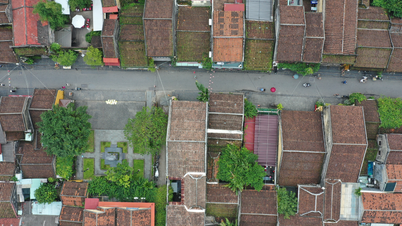
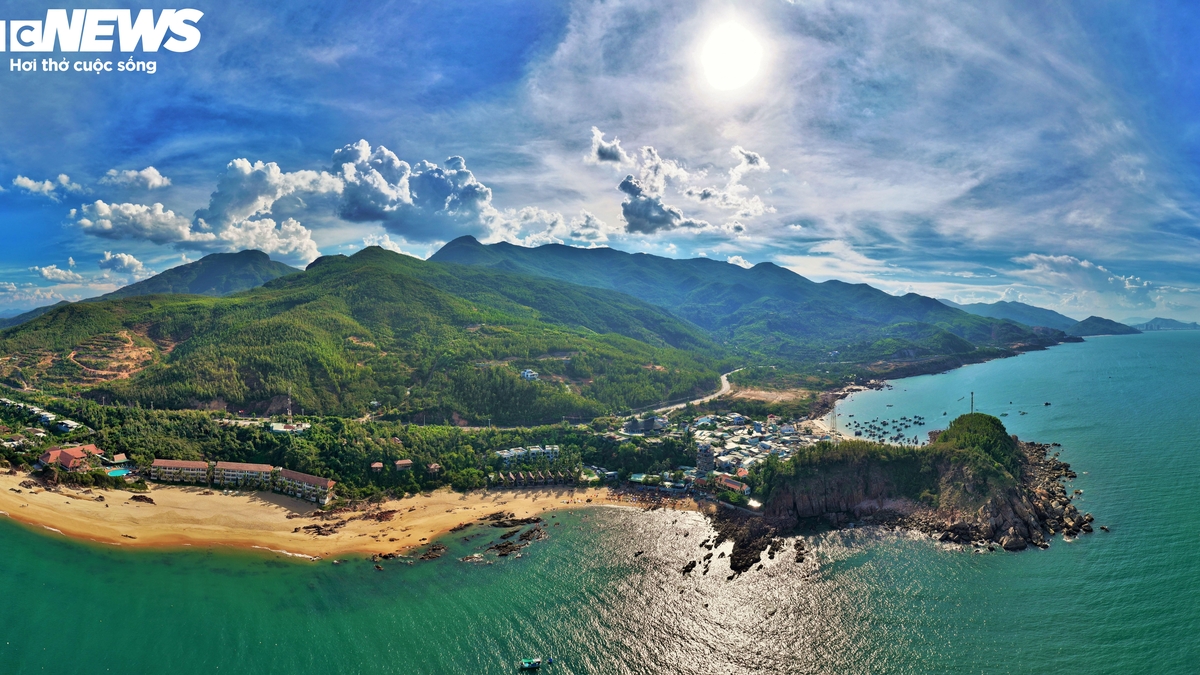
Tra Que vegetable village viewed from above.
Photo: Manh Cuong
Mr. Le Nhien, 60 years old, used to make a living by plowing fields for hire. When mechanization caused plowing to gradually disappear, tourism opened up a new livelihood for him, and he has spent more than 20 years providing tourism services on the back of a buffalo. "In the past, buffaloes were only used to pull plows; who would have thought they would one day be used for tourism? Many foreign tourists have never seen a buffalo in real life, so when they get to sit on its back and ride through the fields, they really enjoy it," Mr. Nhien said.

The excitement of the young tourists
Photo: Manh Cuong
At 65 years old, Mr. Nguyen Nam has also spent many years leading buffaloes for tourists. He says that in the past, the fields were just places for labor, but now they have been transformed into cultural and tourist spaces. "Every time we guide tourists to ride buffaloes or plow rice, they pay us. Thanks to tourism, farmers have more income to make a living from farming," he said.
It's noteworthy that neither Tra Que nor the buffalo riding tours in Thanh Tay attempt to create artificial "stages." The locals maintain their daily lives, simply opening the doors of their villages for tourists to experience. This authenticity is what sets them apart at a time when many tourism products are becoming increasingly commercialized.

Tourists experience plowing rice paddies.
Photo: Manh Cuong
The soul of the countryside amidst the pressures of urbanization.
According to Mr. Bui Van Dung, Chairman of the People's Committee of Hoi An Tay Ward, with the community tourism model in Tra Que, people do not sacrifice their agricultural land. "In the context of increasingly valuable land in suburban areas, the fact that people still maintain their vegetable fields and traditional crafts is very commendable. They not only produce agricultural products but also transform farming into unique tourism products," Mr. Dung said.

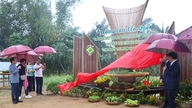
International tourists flocked to Tra Que vegetable village to experience it firsthand.
Photo: Manh Cuong
According to Mr. Dung, for many years the locality has consistently pursued the development of green tourism and experiential tourism associated with organic agriculture and the preservation of traditional rural spaces. This approach has helped improve the lives of the people without disrupting the local cultural structure. "Farmers in Tra Que now not only know how to grow vegetables but also know how to promote the image of their homeland, communicate with international tourists, and do community tourism very professionally. They are truly the 'tourism ambassadors' of the locality," Mr. Dung emphasized.
Besides generating income, tourism has also contributed to changing the perspective of many families on farming. Mr. Le Tam, a long-time vegetable farmer in Tra Que, recounts that in the past, his children often wanted to leave farming to work in factories because they thought farming was hard work and offered little future. But as more and more tourists came, his children began to see that their parents' work also had its own value.

David Brown "transforms" himself into a farmer to carry water to irrigate vegetables.
Photo: Manh Cuong
In Thanh Tay, people who were once on the verge of abandoning their livelihoods due to mechanized farming are now making a living from their buffaloes. According to Mr. Tran Van Khoa, CEO of Jack Tran Tours Hoi An, what international tourists are looking for is not simply entertainment, but an opportunity to experience Vietnam's rice-farming culture in the most authentic way. "We don't turn the countryside into an amusement park. The important thing is to preserve the identity and real life of the people, and then create additional experiences to connect tourists with the local culture," Mr. Khoa said.

Vietnam encourages US businesses to expand investment in high technology.On the morning of June 26th, at the Government Headquarters, Deputy Prime Minister Ho Quoc Dung received Mr. Jeff Place, Supply Chain Director of Coherent Group (USA). During the meeting, the Deputy Prime Minister affirmed that Vietnam encourages US businesses to expand investment, especially in high-tech, innovation, and semiconductor industries. According to Mr. Khoa, the appeal of agricultural tourism lies in the feeling of "living like a local." Tourists can actually step into the fields, touch the mud, chat with farmers, and experience the rhythm of rural life with all their senses. That's also why many tourists, after leaving Hoi An, still fondly remember the very ordinary encounters in Tra Que or Thanh Tay. Some return just to meet the farming family who hosted them; others maintain contact, sending letters and gifts from afar.

Mr. Le Tam instructs international tourists on how to till the soil to plant vegetables.
Photo: Manh Cuong
The lush green vegetable gardens, the buffaloes in the rice paddies, and the image of farmers wearing conical hats and speaking broken English are becoming a special part of Hoi An's soul. And perhaps it is these simple things that make international tourists feel they have truly "touched" Vietnam.
"Hello… no chemicals!"
Mr. Nguyen Loi, a farmer from Tra Que vegetable village, recounts that he learned his English right in the middle of the vegetable fields through conversations with international tourists. Without formal schooling, he only remembers simple phrases to introduce his vegetable farming. "Hello… no chemical!" he says, laughing loudly. "At first, no one understood me, and I was quite embarrassed. But I got used to it. Tourists like it because they see honest farmers," Mr. Loi said. According to many households in Tra Que, it is this simplicity and naturalness that makes international tourists feel close to them. Some stay for hours just to learn how to water vegetables, carry water, or listen to farmers tell stories about life in the countryside along the Co Co River.
Source: https://thanhnien.vn/nhung-dai-su-du-lich-chan-dat-185260616184304722.htm