

The story of Mr. Nguyen Ngoc Triu (Hung Phu village, Uar commune) is a clear example of the spirit of innovation, shifting from a "farming" mindset to a " tourism " mindset.
Having spent many years cultivating cashew nuts, cassava, and tobacco, he couldn't escape the vicious cycle: good harvests meant low prices, and high prices meant poor harvests. Instead of continuing down the same path, he decided to change direction, transforming nearly 6 hectares of land along the Ba River to grow flowers and develop the "Sunflower Hill Farm" model.
At the time, Mr. Triu's idea was considered "reckless" by many. But it was precisely this unconventionality that opened up opportunities. By the end of 2023, fields of cosmos, marigolds, and sunflowers began to bloom, attracting thousands of visitors.
His family also developed additional services such as camping, fishing, and outdoor dining , creating a fairly complete integrated farm model serving tourism.
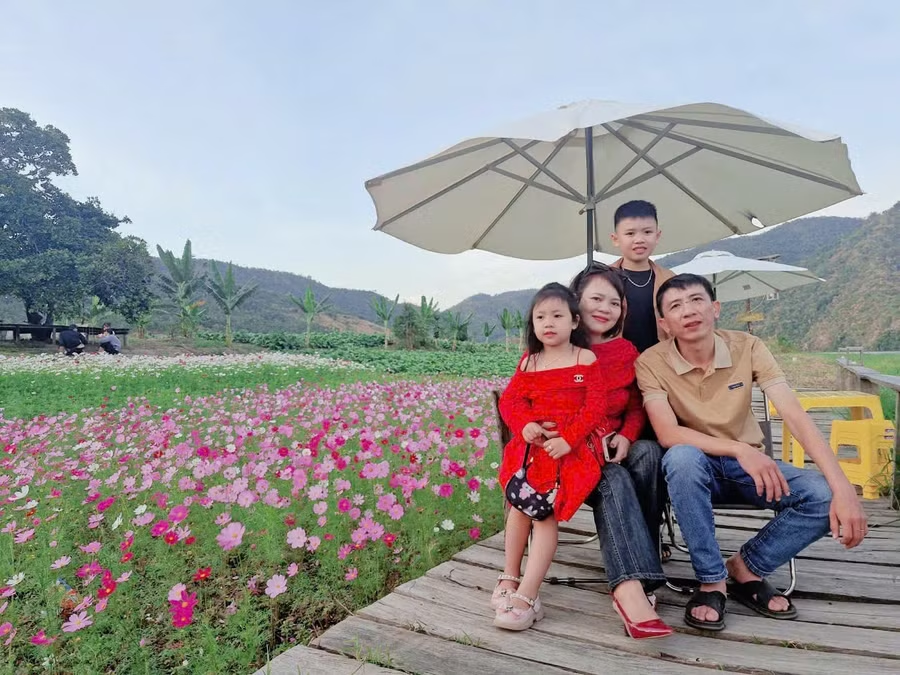
With its picturesque natural scenery and vibrant flower gardens, "Sunflower Hill Farm" attracts many tourists. Photo: NH
"Many visitors to the 'Sunflower Hill Farm' have told me that the journey over the arid roads to reach a lush green valley overflowing with flowers is a delightful discovery ."
"Besides that, they encouraged me to continue investing in the model in an area with a pristine natural landscape, featuring interwoven mountains, forests, alluvial plains, and fields, creating an ideal space for developing outdoor activities and resorts," Mr. Triu said enthusiastically.
Besides Mr. Triu's model, the Cheo Reo valley also has many other small-scale but potentially rich ecotourism destinations. My Gardens picnic area (Group 5, Ayun Pa ward) owned by Mr. Nguyen Van Hai is one example.
Initially, Hai's idea was quite simple: planting portulaca flowers along both sides of the road so the children would have a place to play and building a small hut for resting after working in the fields. But when he realized the increasing demand from locals and tourists for sightseeing and taking photos, he boldly invested in expanding.
On his 4.5-hectare plot of land, Mr. Hai planted many types of flowers such as cosmos, sunflowers, and poinsettias, creating a vibrant and colorful space. Surrounding it are several stylized stilt houses made from wood, straw, and thatched roofs.
My Gardens also serves some traditional dishes of the local ethnic minorities, allowing visitors to experience harvesting, processing, and enjoying corn right on the spot.
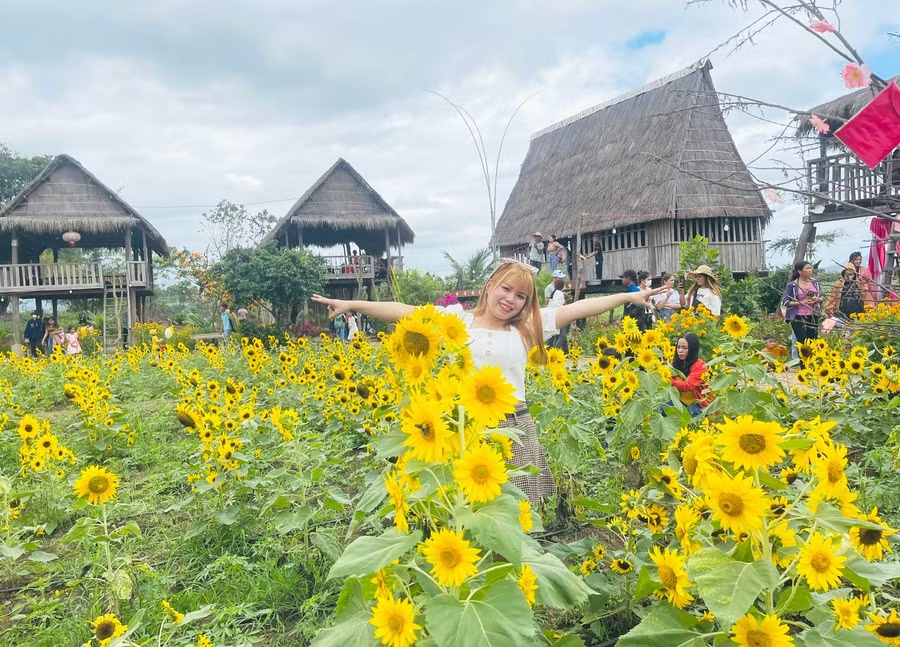
Tourists happily check in at My Gardens picnic area. Photo: NH
"Although the picnic area along the Ba River has been submerged by floods many times, my family has always renovated it and planted a new crop of flowers. The land rewards hard work; the alluvial deposits help the plants stay lush and green."
"With the increasing trend of tourists exploring many areas in Gia Lai during the National Tourism Year 2026, we hope this camping area will contribute to creating a favorite stop for tourists when visiting Ayun Pa," Mr. Hai shared.
At the Suoi Da 2 eco-tourism area (Ia Rbol commune), the highlight is a suspension bridge over 50 meters long spanning the stream. Water from upstream flows over rocky rapids, creating a waterfall more than 6 meters high with a white, frothy spray.
At the foot of the waterfall, rocks eroded over time have formed a series of natural flat surfaces where visitors can relax and soak in the cool, refreshing water.
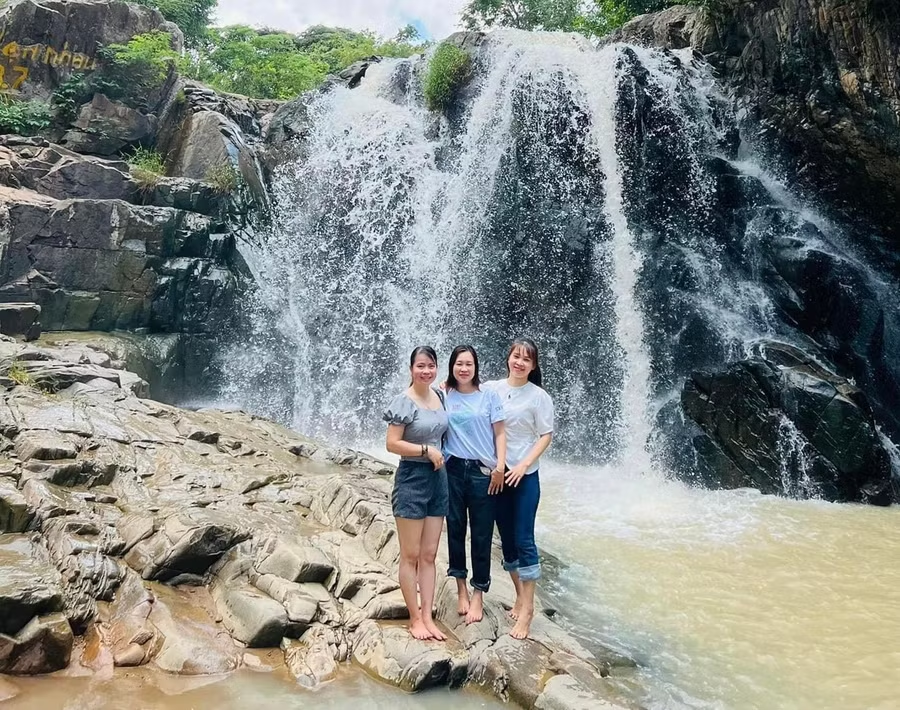
Suoi Da 2 eco-tourism area attracts visitors during holidays and weekends. Photo: NH
To facilitate travel and provide resting and photography opportunities for tourists, the family obtained permission from the local authorities to build a suspension bridge, tents "hidden" in the cliff face, and plant flowers, creating a few small scenic spots that harmonize with the natural surroundings.
Source: https://baoangiang.com.vn/du-lich-xanh-vung-thung-lung-cheo-reo-a482921.html
![[Image] Bridges and roads connecting the eastern part of Ho Chi Minh City](https://vphoto.vietnam.vn/thumb/1200x675/vietnam/resource/IMAGE/2026/04/16/1776328595108_ndo_br_bh-vt5-jpg.webp)





























![[Infographic] Details of the Hanoi-Quang Ninh High-Speed Railway Project](https://vphoto.vietnam.vn/thumb/402x226/vietnam/resource/IMAGE/2026/04/16/1776338188424_anh-man-hinh-2026-04-16-luc-18-16-10.png)
![[Photo] National Assembly Chairman Tran Thanh Man meets with the Speaker of the Georgian Parliament](https://vphoto.vietnam.vn/thumb/402x226/vietnam/resource/IMAGE/2026/04/16/1776338494029_anh-man-hinh-2026-04-16-luc-18-21-21.png)












Comment (0)