The close collaboration between local administrative capacity and the solid professional support from higher-level hospitals is creating a sustainable and modern healthcare ecosystem. This is a strategic step towards realizing the goal of bringing high-quality healthcare services to the grassroots level.
The "sweet fruits" of primary healthcare.
Recent experience in the capital city shows that linking central and city-level core hospitals directly with grassroots healthcare is a groundbreaking approach. The emergence of a model where central-level clinics are located right at ward health stations is considered a bold but highly effective experiment to improve the quality of primary healthcare.
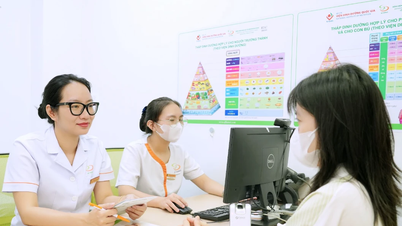
The most vivid example is the pilot model at the Hanoi Medical University Hospital's multi-specialty clinic located at the Vinh Hung Ward Health Station. According to Assoc. Prof. Dr. Nguyen Lan Hieu, Director of Hanoi Medical University Hospital, the core reason for the success of this model is the ability to quickly and conveniently conduct consultations between the grassroots and higher-level facilities thanks to the direct on-site coordination of doctors.
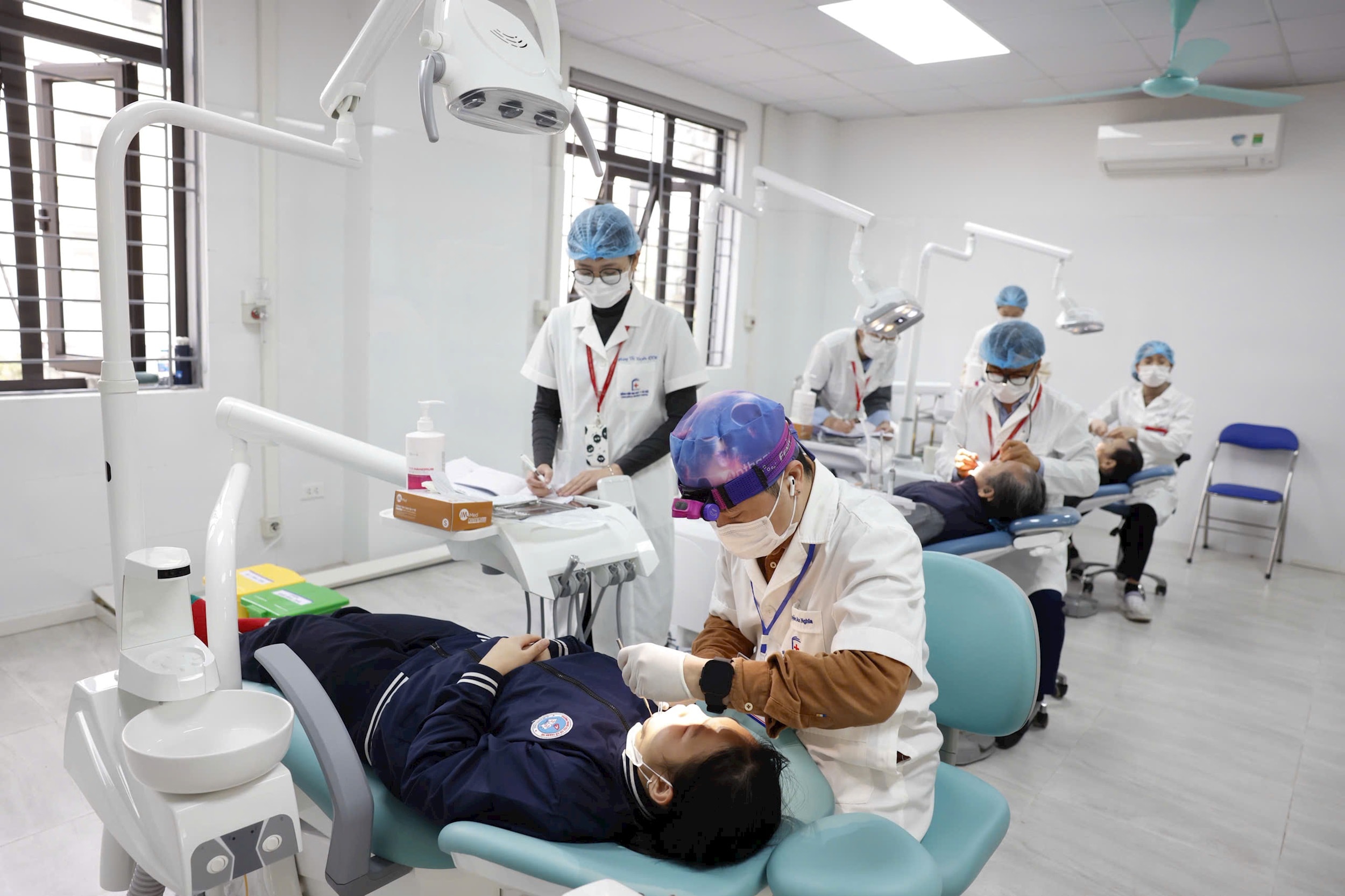
Local residents seeking treatment for chronic illnesses at the ward can rest assured, as complex cases will receive immediate support from leading experts and state-of-the-art equipment. Beyond providing medical care, the higher-level hospital also supports local human resource training through well-structured professional courses. In particular, the cooperation mechanism between doctors at the health station and the higher-level hospital has created a professional medical environment, helping to attract and retain skilled doctors and medical staff who are committed to contributing to grassroots healthcare.
Following that line of thinking, the "sister hospital" model, or the mechanism of specialized referral networks implemented by the city's first-tier hospitals, has also yielded many positive results. A prime example is the collaborative journey of Xanh Pôn General Hospital.
Dr. Nguyen Duc Long, Director of Xanh Pon General Hospital, said: After successfully implementing the "sister hospital" model at Ba Vi Hospital, which helped improve its surgical and obstetric capabilities, Xanh Pon Hospital has flexibly strengthened support for health stations, notably Phu Thuong Ward Health Station. From a unit facing many difficulties after the separation, thanks to Xanh Pon Hospital lending ultrasound machines, assigning doctors to take turns directly examining patients and assisting with testing, the appearance of Phu Thuong Health Station has completely changed. The number of patients coming to the station has skyrocketed from a few cases to an average of over 30 cases per day, rebuilding strong trust in the local people.


Removing bottlenecks and easing the burden on higher-level routes.
The positive impact from model projects in Vinh Hung and Phu Thuong has spread, yielding noticeable results on a wider scale after Hanoi streamlined and integrated its grassroots healthcare system into 126 larger-scale commune and ward health stations.
The effectiveness of this connection is measured by the satisfaction and health of the people, including the reduction in waiting times. For example, at Tay Ho Ward Health Station, the waiting time for outpatient check-ups and regular medication has been reduced to only about 30 minutes. This is coupled with improved capacity in managing chronic diseases. In the first quarter of 2026 alone, the Hanoi primary healthcare system recorded over 636,700 outpatient visits, providing regular treatment management for over 268,000 diabetes patients and over 660,000 hypertension patients.
The model of linking central and city-level hospitals with grassroots healthcare, bringing high-quality medical services directly to the people, has significantly contributed to reducing the burden on higher-level facilities. Statistics from the first quarter show that the number of patients requiring referral to higher-level facilities decreased by 5.4% compared to the same period in 2025. This figure confirms the increasingly improved "gatekeeping" capacity of primary healthcare, helping to alleviate financial and time pressure for patients.
Besides the encouraging results, the practical implementation of the new model after one year has also revealed some "bottlenecks" such as outdated infrastructure in many health stations, a lack of advanced equipment like X-ray and ultrasound machines, and the overwhelming workload of staff with multiple responsibilities.
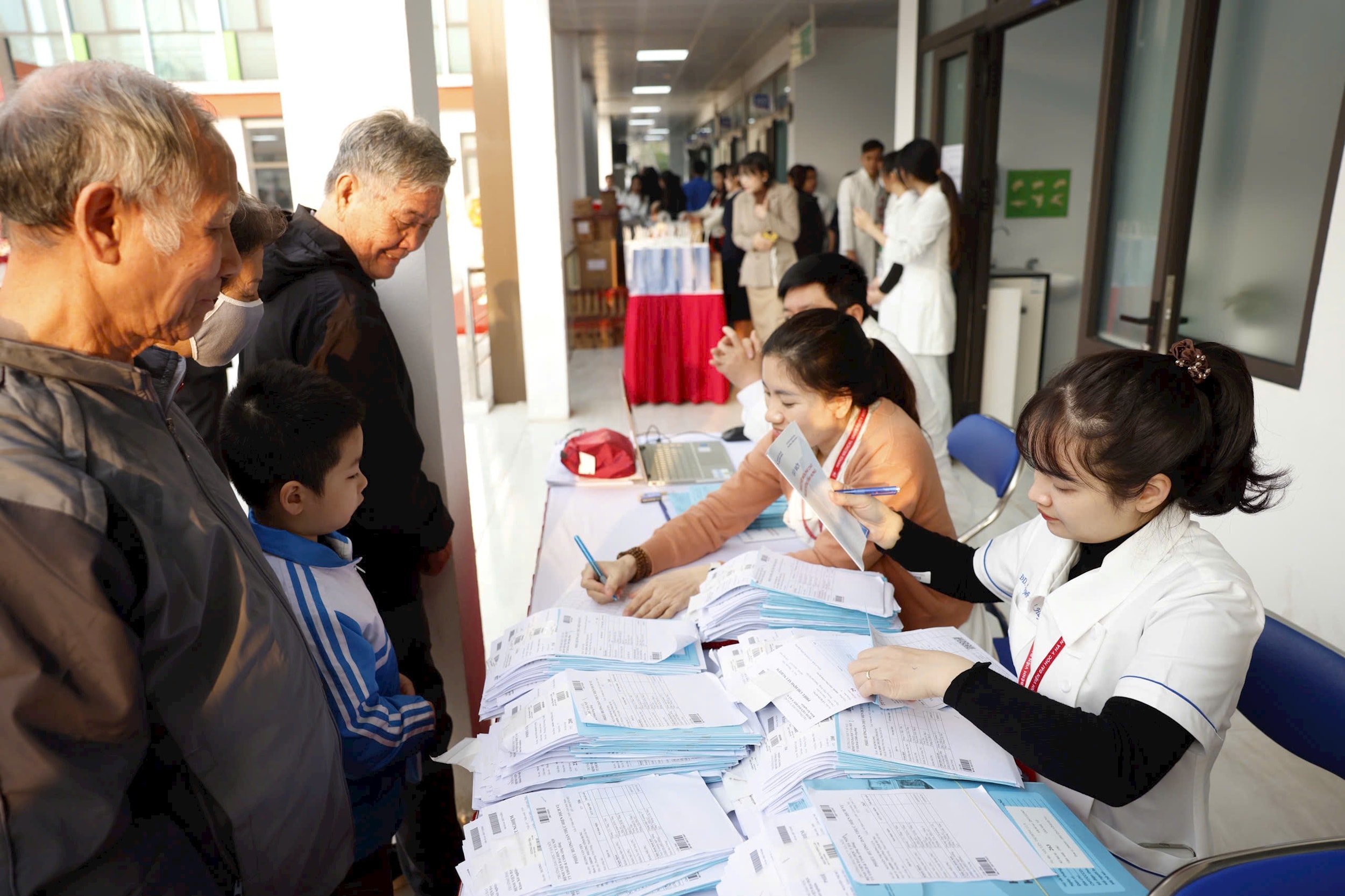
To definitively resolve the issue, Hanoi has implemented a comprehensive set of strategic solutions, establishing task forces comprising leaders from the Department of Health, the Hanoi Center for Disease Control (CDC), and the Hanoi Food Safety and Hygiene Sub-department… to go down to the grassroots health stations to address operational and drug supply problems. In particular, the capital's health sector is also aiming to change the mindset in providing healthcare for all citizens, exemplified by the innovation of annual routine health check-ups.
Instead of organizing mass health checkups using a simple, formal method that easily leads to complacency and waste, Associate Professor Dr. Nguyen Lan Hieu proposed clearly classifying three groups of people (those with chronic diseases, employees, and self-employed individuals) to establish appropriate examination standards. Specifically, issuing vouchers (examination slips) to self-employed individuals and young children who choose their own medical facilities, combined with storing data using electronic medical records and electronic health books, will help continuously and accurately monitor the health status of the population.



Sharing his vision for the sustainable development of Hanoi's healthcare system, Dr. Nguyen Trong Dien, Director of the Hanoi Department of Health, emphasized: With the motto "Pioneering - Connecting - Breakthrough for an integrated, modern, smart, and humane healthcare system in the capital city," Hanoi's healthcare sector identifies improving the capacity of grassroots healthcare as its core foundation. Hanoi has been actively bringing high-quality healthcare services from higher levels to serve people right at the commune and ward levels. The sector will continue to promote digital transformation, improve electronic health records, interconnect medical examination and treatment data, and promote "telemedicine" to effectively implement Resolution 72-NQ/TW of the Politburo , helping grassroots healthcare truly fulfill its role as the loyal "gatekeeper" of the people.
The transformation of primary healthcare under the new model is a long-term strategic step. By choosing the right model for replication, the specialized support from higher-level hospitals will create a healthcare system in the capital that is increasingly humane and sustainable, bringing genuine peace of mind to every citizen right in their residential area.
Source: https://hanoimoi.vn/dua-dich-vu-y-te-chat-luong-cao-ve-co-so-1207965.html




![[Photo] "Hanoi Lotus Festival" honors the lotus flower that has been associated with Vietnam for thousands of years.](https://vphoto.vietnam.vn/thumb/1200x675/vietnam/resource/IMAGE/2026/06/27/1782516943048_sen-ha-noi-2026-minh-duy-1-jpg.webp)