After each training course, learners proactively apply the knowledge gained to livestock farming, develop their family economies effectively, and contribute to the sustainable achievement of local poverty reduction goals.
Entrusted with providing vocational training for rural workers, in 2026, the Vocational Education and Continuing Education Center 1 (the Center) was assigned a target by the Dien Bien Provincial People's Committee to enroll and train 1,330 workers. To ensure training closely matches actual needs and is convenient for learners (primarily farmers and ethnic minorities in villages and hamlets), the Center proactively surveys the vocational training needs of the people in the area, then compiles the information into groups of preferences and schedules specific classes accordingly.
Based on survey results, from the beginning of March 2026 to the present, the Center has organized 13 vocational training classes in 11 communes and wards. The training courses are mainly related to the production conditions and strengths of each locality, such as: livestock and poultry farming; safe vegetable cultivation; mushroom cultivation; fish farming; coffee cultivation; and some construction-related trades. The classes are held right at the local level, with flexible start dates according to actual conditions, making it convenient for people to participate.
According to Tran Ninh Nam, Deputy Director of the Vocational Education and Continuing Education Center 1: Vocational training classes are organized based on the aspirations of the learners; the curriculum is also restructured using a "hands-on" approach, with theory accounting for only one-third of the time, while most of the time is dedicated to practical training for students right in the barns, livestock breeding areas, and production facilities of the villagers.


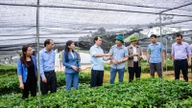
In early March 2026, the Center officially organized a basic vocational training course on poultry farming techniques and disease prevention and treatment in Huoi Phuc village, Thanh Yen commune, with 35 students. Notably, all students from Huoi Phuc village are ethnic minorities who maintain small-scale household poultry farming. Therefore, they were very focused, attentive, and actively participated in the course. Over the course of three months, students acquired knowledge on free-range poultry farming techniques, and learned how to identify and treat common diseases in their livestock. The students basically applied all the learned knowledge to practice, resulting in healthy poultry growth and a 100% survival rate. This initial demonstration shows the effectiveness of the vocational training model that closely integrates theory with practice.
Ms. Lo Thi Hoa, a student in a vocational training class in Huoi Phuc village, said: “The people in the village all raise poultry to meet their family needs and increase their income, but in the past, farming was based on experience, so the efficiency was not high, and the poultry often got sick, died, or spread diseases within the flock. After participating in the class, I and other students have understood the techniques of caring for and preventing diseases in poultry by feeding them correctly, sufficiently, and cleanly; the instructors also guided and instructed us on how to recognize the signs of poultry diseases and the risk of disease, so we now know how to observe poultry to proactively prevent and treat diseases.”
At the same time as the vocational training class in Huoi Phuc village, the Center also organized a training course on pig farming techniques and disease prevention and treatment in Yen village, Thanh An commune. The class was attended by 35 students from Yen village and some neighboring villages. Mr. Lo Minh Quyet, a participant, said: “With the instructors' detailed guidance on safe farming practices, identifying and treating common diseases in pigs, we have gained a better understanding of how to care for and prevent diseases in livestock. With the knowledge gained from the class, I will apply it to my family's pig farming to ensure good growth and minimize the risk of disease outbreaks.”
Directly guiding people in vocational training classes at the grassroots level, Mr. Lo Van Binh, a teacher at the Center, said that not only are classes held in villages to save students travel, but instructors also proactively schedule classes in the mornings or at the end of each day to make it convenient for students to attend and still have time for family work. The program content is designed to reduce theory and increase practice (30% theory, 70% practice); at the same time, students are divided into small groups (5 people/group) to take turns practicing under the guidance of the instructor. The "hands-on" method helps learners easily absorb knowledge, quickly apply it to practice, and gradually improve the efficiency of livestock farming at home.
Evaluating the effectiveness of the training courses organized in the past period, Comrade Tran Ninh Nam, Deputy Director of the Vocational Education and Continuing Education Center 1, said: Thanks to the practical training method, more than 80% of trainees have created jobs for themselves and their families after completing the training; 100% of trainees proactively apply their knowledge to their family's livestock farming models; and initially, the trainees' livestock farming models have improved in terms of scale and facilities to meet requirements.
In the coming period, the Vocational Education and Continuing Education Center 1 will continue to coordinate with communes and wards to organize classes and manage vocational training according to the needs of the people, meeting the requirements of local socio-economic development and the needs of the labor market.

Source: https://nhandan.vn/dua-lop-hoc-nghe-ve-ban-post968869.html
![[Image] Schools organize meetings and introduce teaching models to students admitted to grade 10.](https://vphoto.vietnam.vn/thumb/1200x675/vietnam/resource/IMAGE/2026/06/25/1782368077271_ndo_br_z7970052192242-1ec8daeb77a6eed1a4e9f58c564ddd3e-jpg.webp)
![[Photo] General Secretary and President To Lam receives Palestinian Ambassador Saadi Salama](https://vphoto.vietnam.vn/thumb/1200x675/vietnam/resource/IMAGE/2026/06/25/1782365384740_a1-bnd-9423-8322-jpg.webp)


![[Image] Ho Chi Minh City: Ma Lang area, Chicken-Rice Market about to change its appearance](https://vphoto.vietnam.vn/thumb/1200x675/vietnam/resource/IMAGE/2026/06/25/1782377698627_ndo_br_m1-jpg.webp)


























![[Video] Exploring the interior of Bach Mai Hospital's Ninh Binh branch](https://vphoto.vietnam.vn/thumb/402x226/vietnam/resource/IMAGE/2026/06/26/1782432918694_bach-mai-jpg.webp)