

 |
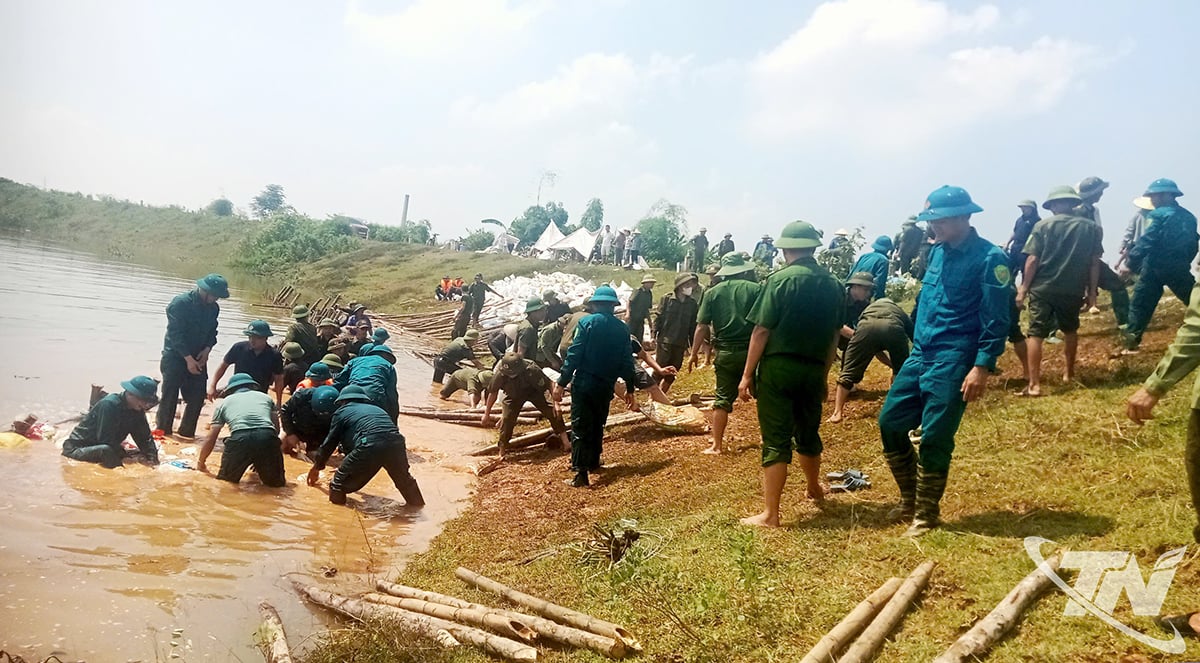
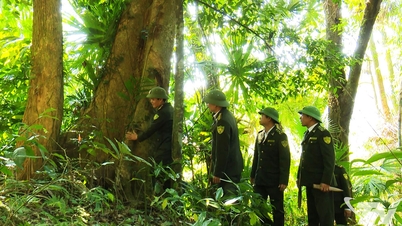
| The police, army, militia, and people participate in protecting the safety of dikes and embankments. |
Improving forecasting – the key to proactive prevention.
The recent historic floods in the province have shown that early forecasting and warning are key factors in minimizing risks. Thai Nguyen has gradually applied digital technology in disaster monitoring, with an automated monitoring system tracking rainfall, river levels, and reservoir water levels in real time.
However, in light of increasingly extreme weather events, the province aims to comprehensively upgrade its risk forecasting, warning, and communication infrastructure. The Provincial People's Committee is planning to invest in a meteorological and hydrological monitoring network, surveillance cameras for reservoirs, dams, pumping stations, and dikes, along with an automatic flood warning system in residential areas.
Data from these devices will connect directly to the province's Intelligent Operations Center (IOC), enabling quick and accurate decision-making in emergency situations. Simultaneously, the province is focusing on training specialized disaster prevention and control personnel at all levels, especially at the commune level – where response plans are directly implemented.
Officials are equipped with skills in risk assessment, evacuation and rescue planning, and the use of technological equipment for monitoring and warning. Alongside this, community risk communication is being intensified to help people raise awareness, learn how to protect themselves, and reduce complacency when storms occur.
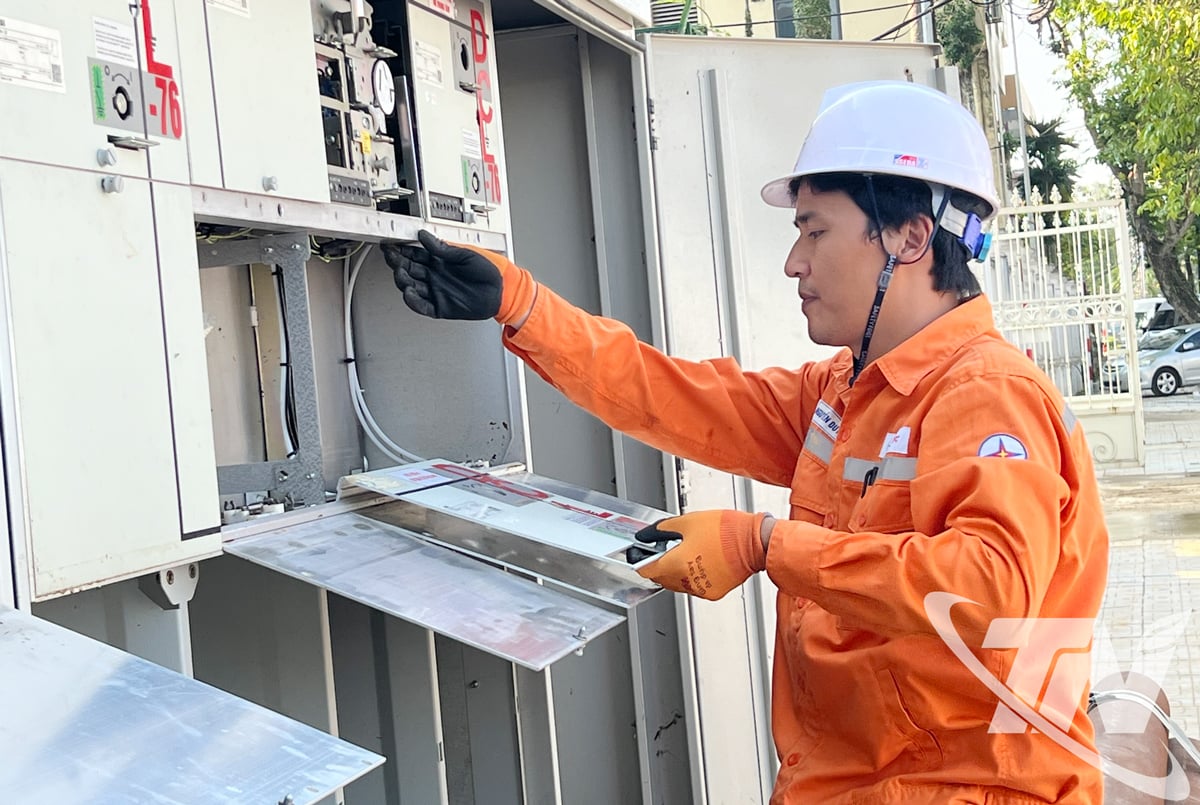 |
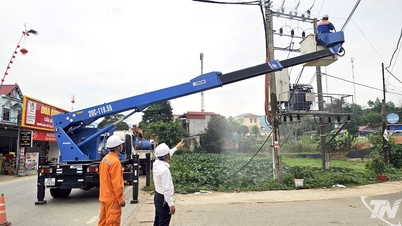
| Electricity workers in Thai Nguyen are fixing the problem and ensuring electricity supply for the people. |
One of the new directions is to build an integrated digital disaster risk map on the province's digital transformation platform, allowing people to look up information on risk areas, evacuation points, and safe routes with just a few taps on their phones. This will be an important step in modernizing risk management, moving towards a "smart, safe, and proactive society" model.
Resilient infrastructure - a vision for sustainable development.
Mr. Nguyen Van Bac, Deputy Head of the Irrigation and Disaster Prevention Sub-Department (Department of Agriculture and Environment): If timely response is a short-term solution, then investing in disaster-resistant infrastructure is a long-term strategic solution.
Thai Nguyen is implementing many key projects to create a solid "shield" for the central and downstream areas, such as the flood control system in the province center and improving the load-bearing capacity of dikes.
In addition, the province focuses on planning flood drainage corridors, relocating people from deeply flooded areas, and preventing encroachment on riverbanks – a cause of more severe flooding. The protection and development of upstream forests is considered a fundamental solution, linking reforestation with sustainable livelihoods, aiming for a forest cover rate of over 52% across the province by 2030.
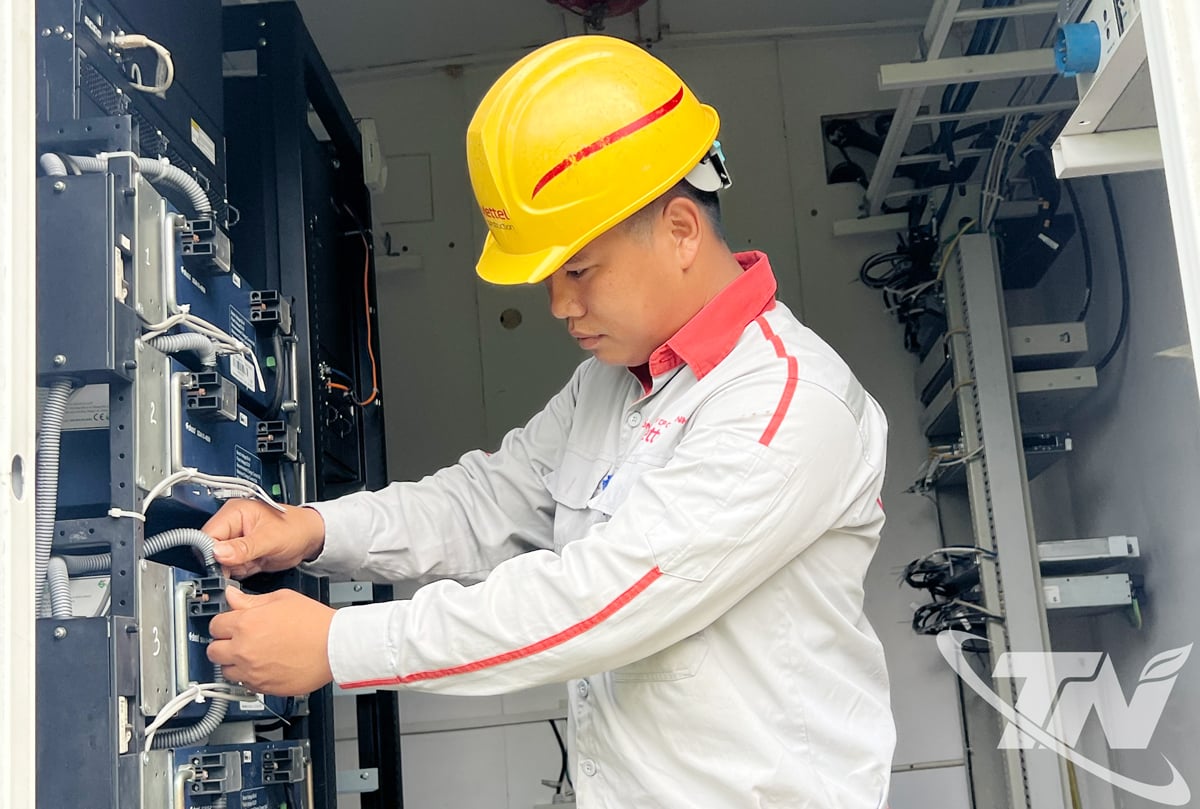 |
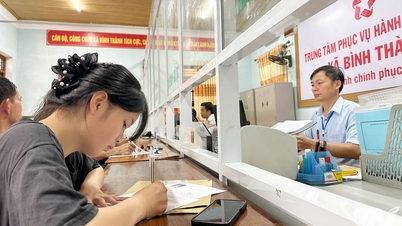
| Inspecting infrastructure at Thai Nguyen Telecommunications to ensure communication is restored after the storm and floods. |
In particular, during his recent visit to inspect the flood situation in the province, the Prime Minister directed the urgent construction of 17km of new flood control dikes along the Cau River, through the provincial center; and also requested ministries and agencies to coordinate and support Thai Nguyen in planning a comprehensive drainage system.
This is a strategic step, creating a legal basis and resources for the province to improve flood control infrastructure and adapt to climate change. Recently, the Provincial People's Committee issued Document No. 4215/UBND-TH dated October 15, 2025, on organizing the implementation of urgent projects and works to overcome the consequences of natural disasters.
Accordingly, the Provincial Project Management Board for Investment in Construction of Transportation and Agricultural Works was assigned to lead the implementation of two key projects: the flood control system in the central area of the province and the new Gia Bay bridge construction project, under an emergency mechanism, ensuring progress, quality, and safety.
The province also needs to identify and diversify investment resources, combining state budget funds, ODA capital, public-private partnerships (PPP), and the participation of businesses and the people. Simultaneously implementing both "structural solutions" and "non-structural solutions"—land planning, forest protection, early warning systems, and community communication—will create a sustainable foundation and minimize long-term risks.
Source: https://baothainguyen.vn/thoi-su-thai-nguyen/202510/dung-la-chan-truoc-thien-tai-3e52a63/

![[Photo] Prime Minister Pham Minh Chinh attends the inauguration ceremony of the Vietnam Space Center.](https://vphoto.vietnam.vn/thumb/1200x675/vietnam/resource/IMAGE/2026/03/13/1773397068038_ndo_br_dsc-3366-jpg.webp)
![[Photo] Ho Chi Minh City decorated with flags and flowers ahead of election day.](https://vphoto.vietnam.vn/thumb/1200x675/vietnam/resource/IMAGE/2026/03/13/1773392076518_anh-man-hinh-2026-03-13-luc-15-53-29.png)




































































Comment (0)