

Pressure from rising energy costs due to geopolitical conflicts makes traditional policy tools ineffective, creating a dilemma between controlling inflation and supporting growth.
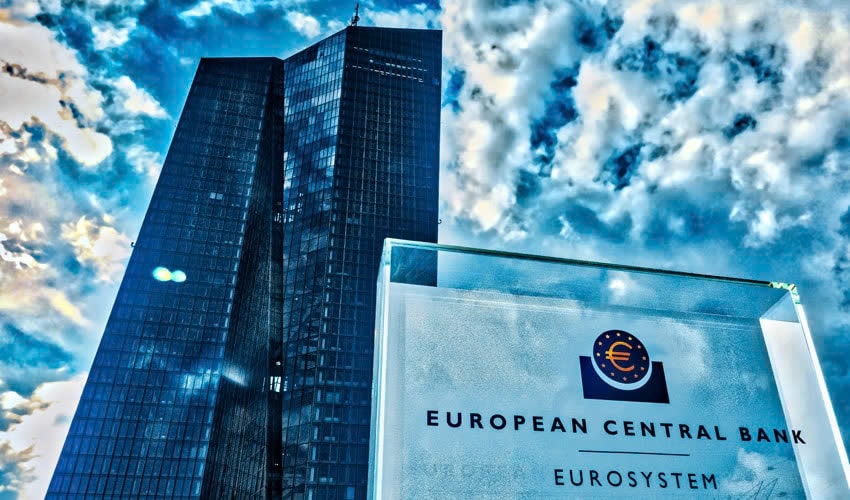
Despite inflation in the Eurozone being projected to exceed the 2% target in 2026, the ECB is not in a hurry to tighten monetary policy. Financial markets have begun betting on the possibility of interest rate hikes, with expectations that the key interest rate could reach at least 2.5% by the end of this year.
The problem lies not just in the inflation rate, but in its nature. Current price pressures are primarily supply-side, particularly in energy, rather than domestic demand. The risk of disruptions to oil and gas supplies across the Strait of Hormuz, amid escalating conflict with Iran, has driven up transportation, production, and consumption costs significantly.
According to the International Monetary Fund (IMF), in an extreme scenario, disruptions to energy flows could cause global oil and gas supplies to fall by around 20%, forcing financial institutions to lower growth forecasts and raise inflation forecasts. If this scenario occurs, the ECB could face the risk of re-establishing stagflation – that is, sluggish growth coupled with high inflation – a particularly difficult situation for any central bank.
This difference is crucial for monetary policy. Raising interest rates may reduce demand, but it cannot resolve the supply shortage. This means the ECB risks slowing growth without controlling inflation – an increasingly difficult policy dilemma.
The minutes of the March 2026 meeting, published on April 17, show that the ECB is well aware of this risk. Despite warning of the potential for increased inflation due to the energy shock, the institution kept interest rates unchanged at 2%, arguing that there was insufficient evidence to suggest that price pressures would spread or persist unusually long. This decision indicates that the ECB currently prioritizes avoiding overreacting to a shock that may only be temporary in nature.
Instead of reacting to negative scenarios, the ECB is opting for a data-driven approach. Indicators such as inflation expectations, business selling prices, profits, the labor market, and core inflation will determine the next steps.
Speaking to CNBC, Bundesbank President and ECB Governing Council member Joachim Nagel said that policymakers are facing conflicting scenarios, as oil price volatility and geopolitical tensions could quickly alter the economic outlook.
Speaking on April 14 in Washington, D.C., on the sidelines of the International Monetary Fund (IMF) and World Bank (WB) Spring Meetings, European Central Bank (ECB) President Christine Lagarde said that the Eurozone economy is currently situated between the baseline and pessimistic scenarios developed by the ECB, as the conflict in the Middle East, which has lasted more than six weeks, has increased energy costs and put pressure on growth prospects.
Although inflation in Europe has exceeded the 2% target, ECB leaders believe that current factors are not sufficient to justify immediate monetary tightening. According to Christine Lagarde, the ECB remains committed to a policy direction based on price stability coupled with financial stability.
With weak growth and high borrowing costs, the ECB is forced to carefully consider the balance between controlling inflation and maintaining economic recovery. Essentially, this is no longer just a matter of adjusting interest rates, but a challenge of managing macroeconomic risks in an environment of multiple overlapping shocks.
The current dilemma is not just about when to raise interest rates, but about the effectiveness of the policy. When inflation is supply-side, monetary tightening could slow growth without cooling prices, placing the ECB in one of its most difficult policy positions in years. In the short term, the major challenge is not just whether the ECB will raise interest rates, but whether it can maintain its credibility in controlling inflation without further damaging the already fragile growth prospects of the Eurozone.
Source: https://hanoimoi.vn/ecb-doi-mat-voi-bai-toan-lam-phat-tien-thoai-luong-nan-745806.html




![[Image] Shipbuilders exposed to steel and record-breaking heat.](https://vphoto.vietnam.vn/thumb/1200x675/vietnam/resource/IMAGE/2026/06/04/1780545781745_ndo_br_img-5402-4683-jpg.webp)













































![[Video] Sunset at Lap An Lagoon – Where the sun sets over the fishing nets](https://vphoto.vietnam.vn/thumb/1200x675/vietnam/resource/IMAGE/2026/05/31/1780192137701_beach-landscape-sea-water-nature-grass-745871-pxhere-com.jpeg)




























Comment (0)