

The Ministry of Finance has just released a report on several issues of public and social concern related to the Ministry's areas of state management.
The report states that market prices in the first five months of 2026 fluctuated mainly due to seasonal factors and developments in fuel and raw material prices on the world market.
In February 2026, the increased demand for shopping and travel during the Lunar New Year (Year of the Horse) led to sharp increases in the prices of food, dining out, and transportation services, thereby putting pressure on the consumer price index (CPI).
As a result, the CPI in February 2026 increased by 1.14% compared to the previous month, increased by 1.19% compared to December 2025, and increased by 3.35% compared to the same period in 2025.
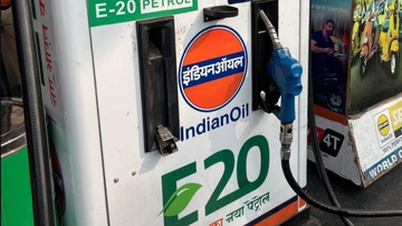
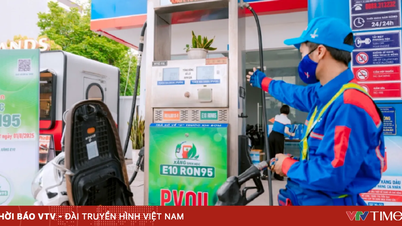
In March 2026, domestic gasoline and diesel prices increased in line with global fuel price trends, along with rising construction material prices due to increased input costs and transportation expenses. These are the main reasons for the 1.23% increase in the CPI in March 2026 compared to the previous month.
By April 2026, domestic gas prices increased sharply in line with world prices; in addition, prices of out-of-home dining services and construction materials increased due to higher input and transportation costs, causing the CPI in April 2026 to rise by 0.84% compared to the previous month.
According to data from the General Statistics Office, the CPI in April 2026 increased by 3.31% compared to December 2025 and by 5.46% compared to the same period last year.
Overall, in the first four months of 2026, the CPI increased by 3.99% compared to the same period last year; core inflation increased by 3.89%. Of the 11 main groups of consumer goods and services, 10 groups saw price increases, while the information and communication group experienced price decreases.

In the remaining months of 2026, the global economy is projected to continue facing numerous uncertainties, such as prolonged geopolitical conflicts, increasing protectionist trade trends, and unpredictable changes in the monetary policies of major economies.
These developments could cause volatility in energy prices and other key input commodities, thereby impacting domestic price levels.
To control inflation, support production and business activities, ensure social security, and strengthen the confidence of businesses and investors, in Notice No. 219/TB-VPCP dated April 29, 2026, from the Government Office, Deputy Prime Minister Nguyen Van Thang assigned specific tasks to ministries, sectors, and localities to strengthen the monitoring and analysis of supply, demand, and prices of essential goods.
At the same time, focus on solutions to ensure and regulate supply and demand; strengthen market inspection, examination and supervision, and check compliance with price laws.
In addition, flexibly and effectively utilize price regulation tools and measures as prescribed by law to control and stabilize the market for goods and services within the managed sector.
Source: https://danviet.vn/cpi-tang-399-trong-4-thang-dau-nam-2026-d1431880.html
![[Photo] First session of the 14th Congress of the Vietnam Trade Union](https://vphoto.vietnam.vn/thumb/1200x675/vietnam/resource/IMAGE/2026/06/03/1780465947883_ndo_br_img-3852-jpg.webp)
![[Photo] Secretary of the National Assembly Party Committee, Chairman of the National Assembly presides over the meeting of the Standing Committee and Executive Committee of the National Assembly Party Committee.](https://vphoto.vietnam.vn/thumb/1200x675/vietnam/resource/IMAGE/2026/06/03/1780480353201_ndo_br_bnd-2585-jpg.webp)

![[Photo] General Secretary and President To Lam presides over a meeting with the Central Organizing Committee.](https://vphoto.vietnam.vn/thumb/1200x675/vietnam/resource/IMAGE/2026/06/03/1780482764658_a1-bnd-4741-3342-jpg.webp)














































![[Video] Sunset at Lap An Lagoon – Where the sun sets over the fishing nets](https://vphoto.vietnam.vn/thumb/1200x675/vietnam/resource/IMAGE/2026/05/31/1780192137701_beach-landscape-sea-water-nature-grass-745871-pxhere-com.jpeg)


























Comment (0)