

On June 8th, the U.S. National Oceanic and Atmospheric Administration (NOAA) declared that El Niño had begun to occur on Earth. El Niño is a climate phenomenon that affects storms in the Pacific Ocean, increases rainfall, and raises the risk of flooding in the Americas and other regions. Over the past three years, the global climate has been influenced by La Niña, causing global temperatures to fall below average.
Scientists believe this year's weather conditions are particularly worrying. According to Reuters, the last time El Niño peaked, in 2016, was the hottest period ever recorded on Earth.
Meteorologists predict that El Niño, along with heat waves caused by climate change, could lead to record-high temperatures worldwide .
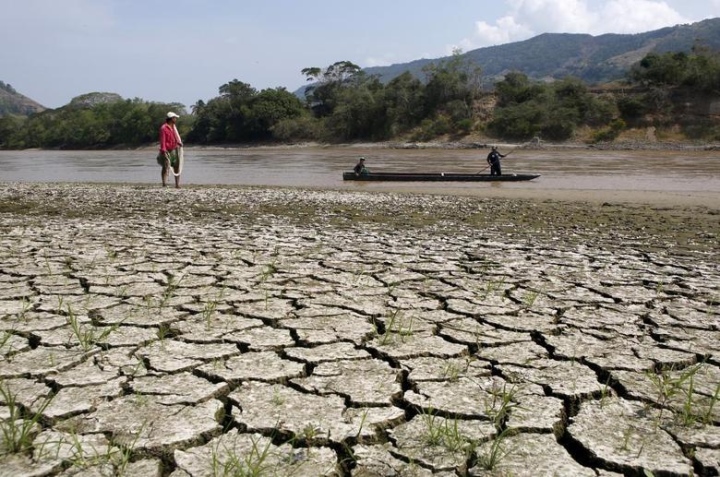
Scientists believe that the El Niño phenomenon could cause Earth's temperatures to rise to record levels in the near future. (Photo: Reuters)
Experts are also concerned about what is happening in the seas. The El Niño phenomenon will cause sea surface temperatures in the Eastern Pacific to rise above normal levels. Even in May, before El Niño began, surface sea temperatures were already 0.1°C higher than the previous record.
"We are in an unprecedented situation," said Michelle L'Heureux, a meteorologist at the National Weather Forecast Center, part of NOOA.
According to a study published in Science in May, the impact of El Niño could cost the global economy $3 trillion by disrupting food production, industrial processes, and spreading disease.
Countries vulnerable to climate change are beginning to pay attention to the El Niño phenomenon. Peru has allocated $1.06 billion to address the impacts of El Niño and climate change. Meanwhile, the Philippines, a country frequently affected by tropical storms, has established a task force to deal with the effects of extreme weather events.
What factors create El Niño?
El Niño is a natural climate phenomenon created by warm ocean currents in the eastern Pacific Ocean.
This phenomenon occurs when trade winds blowing from east to west along the equator in the Pacific Ocean slow down or reverse as atmospheric pressure changes. However, scientists have not yet been able to conclude what factors initiate this process.
Because trade winds affect the temperature of the sea surface water—warmed by the sun—the weakening of these winds causes warm ocean currents in the western Pacific to move into colder basins in the eastern and central Pacific.
During the El Niño cycle of 2015-2016, when it was at its peak, the number of halibut off the coast of Peru plummeted due to warm water moving from the Western Pacific. This phenomenon also caused the destruction of a third of the Great Barrier Reef in Australia.
The accumulation of warm water in the eastern Pacific Ocean also impacts the atmosphere through evaporation, creating storms.
"When El Niño shifts warm water currents, storms move with them," said NOAA meteorologist Tom DiLiberto.
How does El Nino affect the global climate?
Changes in storm activity affect fast-moving air currents—known as the subtropical current. This current, which causes weather changes globally, is pushed southward and flattened.
"If you change the path of storms, you change the weather conditions," DiLiberto stated.
Under the influence of El Niño, the southern United States will experience colder and wetter weather conditions, while the western United States and Canada will become drier and hotter.
The number of hurricanes in the US will decrease due to changes in Atlantic wind patterns. However, hurricanes in the Pacific will increase and become more severe, directly impacting vulnerable islands in the region.
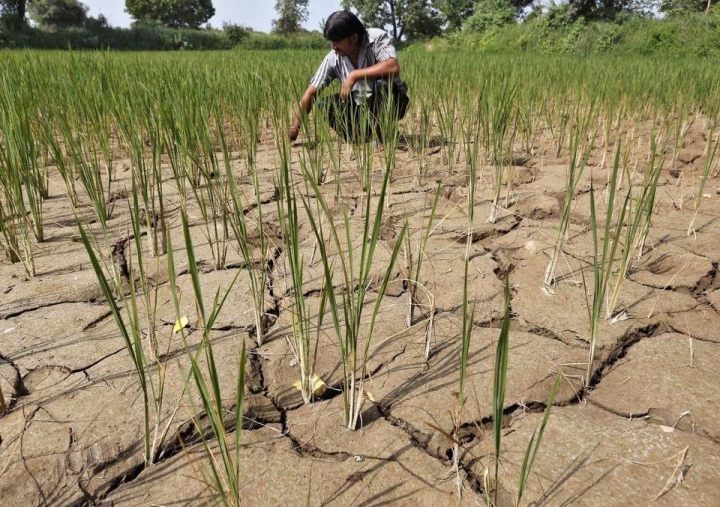
India was one of the places that suffered severe droughts during the most recent El Niño cycle in 2015. (Photo: Reuters)
Some areas in Central and South America will see increased rainfall, while Australia will face severe heatwaves, droughts, and bushfires.
El Niño will help the Horn of Africa region escape drought after five years of La Niña's influence.
In the past, both El Niño and La Niña phenomena occurred on average every 2-7 years. El Niño lasted from 9 to 12 months, while La Niña, which occurs when colder waters flow across the Eastern Pacific, typically lasted from one to three years.
Is El Nino affected by climate change?
According to DiLiberto, how climate change impacts El Niño is "a very important research topic." While climate change may double the impact of El Niño – causing a layer of heat to build on top of existing heat and intensifying the rainy season – it is still not possible to definitively conclude that this directly affects the weather phenomenon.
Scientists cannot be certain that climate change will disrupt the balance between El Niño and La Niña, causing one to occur more frequently than the other. They say that if sea surface temperatures rise across all regions, this cycle is unlikely to change, as the mechanisms of both phenomena remain the same.
However, if sea surface temperatures rise unevenly, the El Niño phenomenon could become more severe.
(Source: Zing News)
Beneficial
Emotion
Creative
Unique
Source
![[Photo] General Secretary and President To Lam presides over a working session with the Central Policy and Strategy Committee on the development of the materials industry.](https://vphoto.vietnam.vn/thumb/1200x675/vietnam/resource/IMAGE/2026/05/21/1779359935432_a3-bnd-3129-1412-jpg.webp)

![[Photo] National Assembly Chairman Tran Thanh Man working with the Standing Committee of the Law and Justice Committee](https://vphoto.vietnam.vn/thumb/1200x675/vietnam/resource/IMAGE/2026/05/21/1779378929214_ndo_br_1-4610-jpg.webp)


















































































Comment (0)