 |
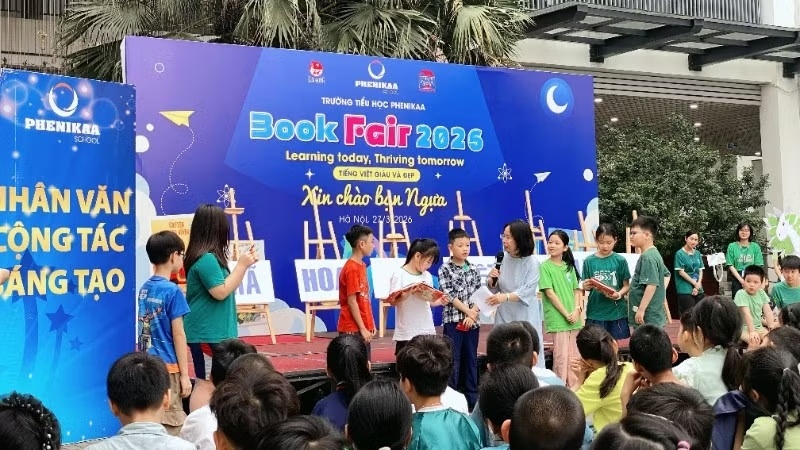
The lively cultural exchange activities related to reading attract young readers. |
"Awakening" the initiative of young readers.
During summer vacation, children have significantly more free time, and their need to participate in experiential activities increases. This shift largely stems from parents becoming increasingly aware of the harmful effects of allowing their children to freely immerse themselves in the online world and electronic devices, thus shifting towards positive values from guided experiential activities. However, within the diverse ecosystem of skills-based classes, reading culture still faces significant competition.
Observing the implementation of the "My Home Books" Project, Ms. Le Thuy Duong - Project Leader - objectively assesses the current state of reading culture. She stated: "The demand for reading is gradually increasing, but it is still slow compared to other forms of entertainment: playing musical instruments, singing, dancing, hosting events (MC), camping... and it is not yet truly in-depth, sometimes still superficial, because the need doesn't really come from young children."
This situation reflects a fairly common habit: many students are enrolled by their parents in various reading clubs, large and small, during the summer to fill their free time, with the mindset of "the more the merrier."
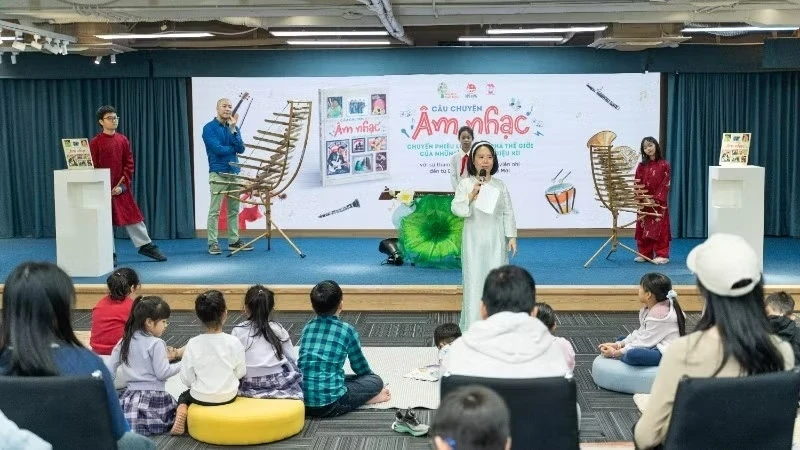 |
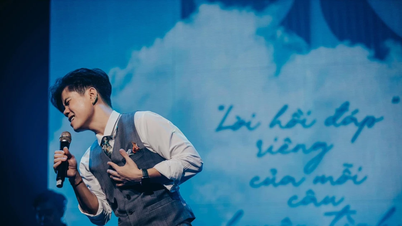
A combination of reading culture and musical space. |
As a result, the act of rereading does not occur actively and regularly during or after those periods of activity. This distraction is recognized by educators as an objective reality of modern life. Children today face too many other vibrant interests outside of the pages of a book.
Nevertheless, those involved in promoting reading have used this as motivation to change their approach. Ms. Le Thuy Duong emphasized: "We need to make greater efforts to encourage reading, to organize activities involving books, and to draw children into the world of language. This is truly what we need to do, continuously and with the greatest effort."
This process requires perseverance; even for the most dedicated individuals, accompanying children on their journey is a continuous effort and requires acceptance of each child's individual level of receptiveness.
Towards interactive value and identity
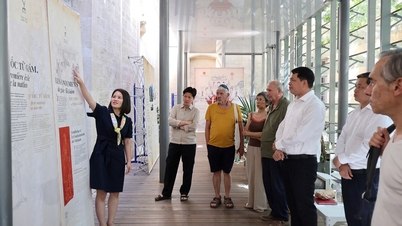
To attract and bring reading culture closer to urban children, free reading promotion projects like "My Home Books" have boldly broken free from traditional frameworks, shifting towards highly interactive and location-flexible models. The project's greatest innovation lies in its breaking of spatial limitations.
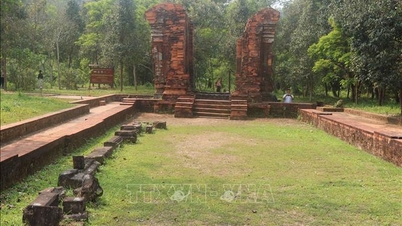
Explaining this difference, the project leader analyzed: "The biggest difference between 'Our Home Books' and other reading spaces currently available is that 'Our Home Books' is usually organized on a large scale (schools) or in open spaces (book streets, museums, memorial spaces...), with the simultaneous participation of children with their teachers or parents, or both."
Playing a central role in these open spaces are the presenters – individuals who possess both excellent entertainment skills and a deep understanding of the subject matter, along with a strong foundation of knowledge. The presenters' quick wit allows for continuous adjustments to the program script, creating an open space where everyone participates in content creation.
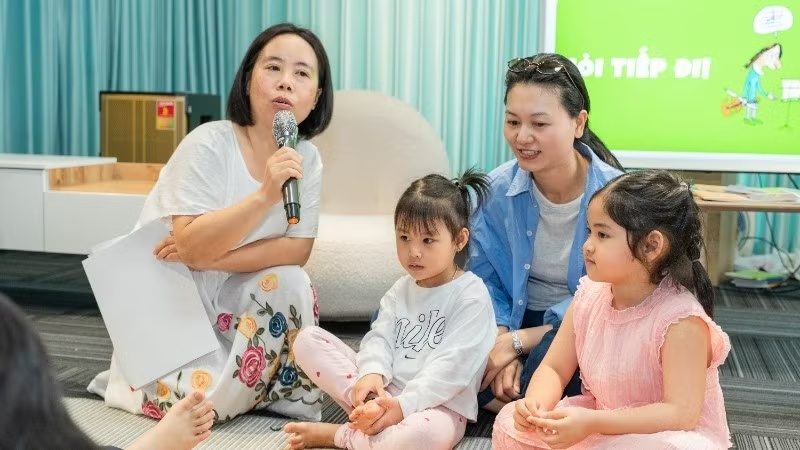 |
Parents and children read and play together at the Reading Corner of Kim Dong Publishing House. You may also like  How much does the new, spacious Nissan Kicks B-segment SUV with e-POWER powertrain cost in Vietnam, starting from 490 million VND?GĐXH - The newly launched B-segment SUV Nissan Kicks features an unusual e-POWER powertrain that breaks the mold of hybrid vehicles, with a starting price of 490 million VND.  A powerful earthquake strikes northern Japan.VHO - A strong earthquake measuring 6.9 on the Richter scale, with its epicenter at a depth of approximately 50km, struck northern Japan on the morning of June 25th.  XSMT 25/6 - Results of the Central Vietnam Lottery today, June 25, 2026GD&TĐ - XSMT 25/6/2026. Lottery results for today, June 25th. Live XSMT results 25/6. XSMT 25/6. Central Vietnam lottery results for today, Thursday, June 25th, 2026. |
Thanks to the principle of "suggesting and developing the main content together," many details outside the script appeared naturally. For example, in the program "I Tell You the Story of Truong Sa" at Le Hong Phong Primary School (Ha Dong), the students eagerly asked naive but genuine questions to writer Nguyen Xuan Thuy, such as: "Uncle, is soft drink sweet?"
For example, when flipping through a book about Hue, a young participant might suddenly ask, "Who is Professor Tran Van Khe?". For more specialized programs like the "A Thousand Years of Vietnamese History" book series or the "Fast-forward through masterpieces" activity, the organizers are willing to open the books, listen to participants freely express their opinions, and then offer suggestions and correct any inaccuracies.
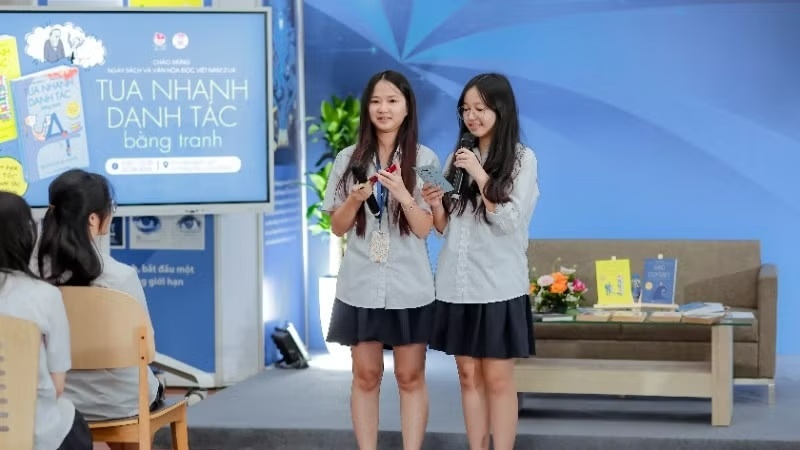 |
Students now have a new environment to be creative and interact. |
Furthermore, the projects skillfully intertwine the pages of the book with cultural experiences and traditional heritage, meeting the combined needs of families: to be active, to increase their knowledge, and to preserve memories.
Explaining the reason for prioritizing extracurricular experiences, Ms. Le Thuy Duong stated: "Taking children to cultural spaces such as memorial houses or museums, historical sites, or meeting authors is truly a way to make young children feel much closer to the works, thereby fostering curiosity and exploration through associations and questions raised during the journey."
From a receptive perspective, while reading itself has a quiet impact, spatial experiences generate powerful visual emotions. This series of experiences is likened to a door opening, preparing you to step into the world of words.
Building a sustainable foundation
The vibrant atmosphere and colorful appearances of superficial events are not enough to form lasting reading habits. Reading culture needs to be rooted in a deeply interconnected educational ecosystem. Models like "My Home Books" demonstrate the reality of effective connections between schools, families, and society.
Positive changes have been clearly demonstrated through the three-year partnership with Nguyen Du Primary School (Ha Dong). Here, the project organized Reading Festivals with numerous creative play areas, such as "Exploring Geography with Tí," "Decoding the Historical Axis," and "Cleverly Managing Money," while also focusing on seminars, skill transfer for teachers, and connecting with publishers to reward students.
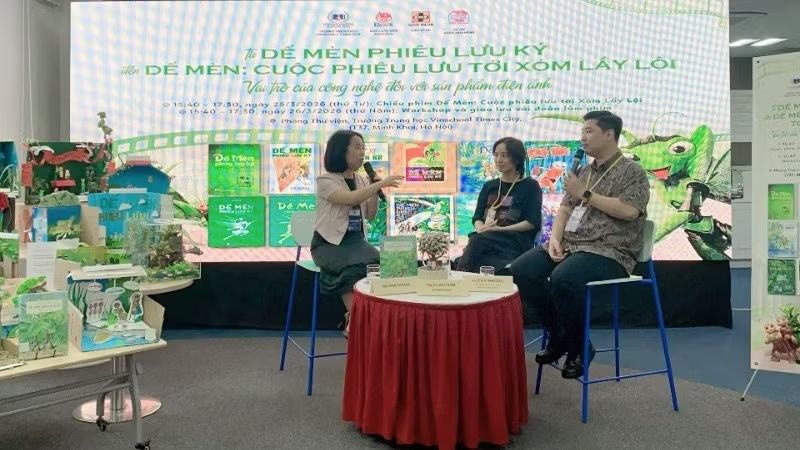 |
Numerous seminars were held interspersed with reading promotion programs. |
As a result, the reading movement thrives year-round, and students gradually become more confident, proactive in seeking out information, and capable of asking insightful questions. However, to achieve this genuine transformation, practical experience shows that a coordinated effort from all parties is essential: schools, families, and publishers, with the project playing a key coordinating role.
To prevent reading culture and books from becoming a burdensome "task" where the attitude of adults plays a crucial role, Thuy Duong offers a simple solution: "Parents and teachers should truly participate in the reading journey and play with children, not leave reading entirely to them. Only then will reading become a joy." When parents enthusiastically share a good passage, and teachers naturally integrate knowledge from books into their lessons, children will be motivated to explore and eager to "show off" what they have just learned.
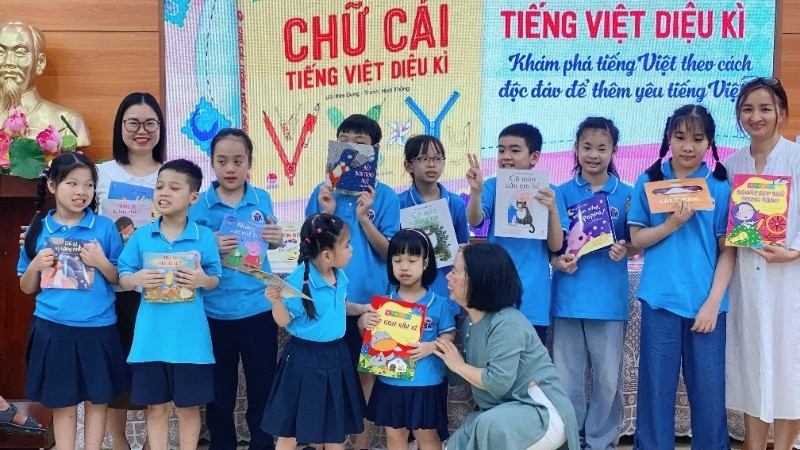 |
Children become more enthusiastic about reading after the lively events that are organized. |


The habit of turning the pages of a book can be the first step in building and accumulating skills and knowledge. Answering a question about advice for parents in finding extracurricular activities, the project leader emphasized: "Reading is always the foundation of all activities and development."
A specific example is learning to be a presenter; fluent and expressive pronunciation techniques are merely the tip of the iceberg, while reading a diverse range of books to acquire foundational knowledge, understand context, and respond to situations is the root cause. Similarly, to play a piece well, an artist needs to read extensively to absorb the history and culture of the work.
The ever-expanding reading promotion ecosystem is thanks to the quiet dedication of its founders and collaborators. Many non-profit projects are being run, entirely without economic considerations, stemming from passion and a desire to change community perceptions.
With other stable jobs to secure their livelihoods, organizations and individuals passionate about reading culture and encouraging children are making the most of their expertise and support from professionals to maintain the project with increasingly in-depth quality. This enthusiastic spirit, combined with flexible models in schools and cultural spaces, is quietly creating a generation of young readers and writers who are more proactive, knowledgeable, and closely connected to the source of knowledge.
Source: https://znews.vn/gap-trang-vo-mo-trang-sach-post1655594.html
![[Image] Schools organize meetings and introduce teaching models to students admitted to grade 10.](https://vphoto.vietnam.vn/thumb/1200x675/vietnam/resource/IMAGE/2026/06/25/1782368077271_ndo_br_z7970052192242-1ec8daeb77a6eed1a4e9f58c564ddd3e-jpg.webp)



![[Image] Ho Chi Minh City: Ma Lang area, Chicken-Rice Market about to change its appearance](https://vphoto.vietnam.vn/thumb/1200x675/vietnam/resource/IMAGE/2026/06/25/1782377698627_ndo_br_m1-jpg.webp)
![[Photo] General Secretary and President To Lam receives Palestinian Ambassador Saadi Salama](https://vphoto.vietnam.vn/thumb/1200x675/vietnam/resource/IMAGE/2026/06/25/1782365384740_a1-bnd-9423-8322-jpg.webp)