

The truth behind the tactic of selling apartments at a loss.
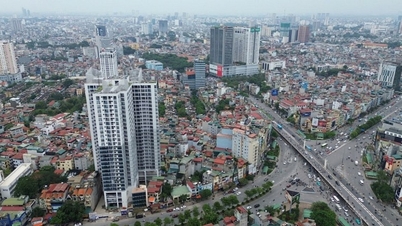
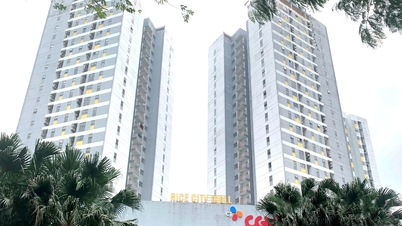
In a project considered "luxury" in Hai Ba Trung district, some homeowners are selling their apartments at a loss of 300 million to 800 million VND. For example, a fully furnished 100m2, 3-bedroom apartment in this project, which was priced at over 5 billion VND at the beginning of 2022, is now being offered at a loss of 500 million VND, bringing the price down to 4.5 billion VND, a price of approximately over 45 million VND/m2.
Also in this project, a 1-bedroom apartment with an area of 48m2, previously priced at 3 billion VND, is now being offered by the owner at a reduced price of 2.5 - 2.7 billion VND.
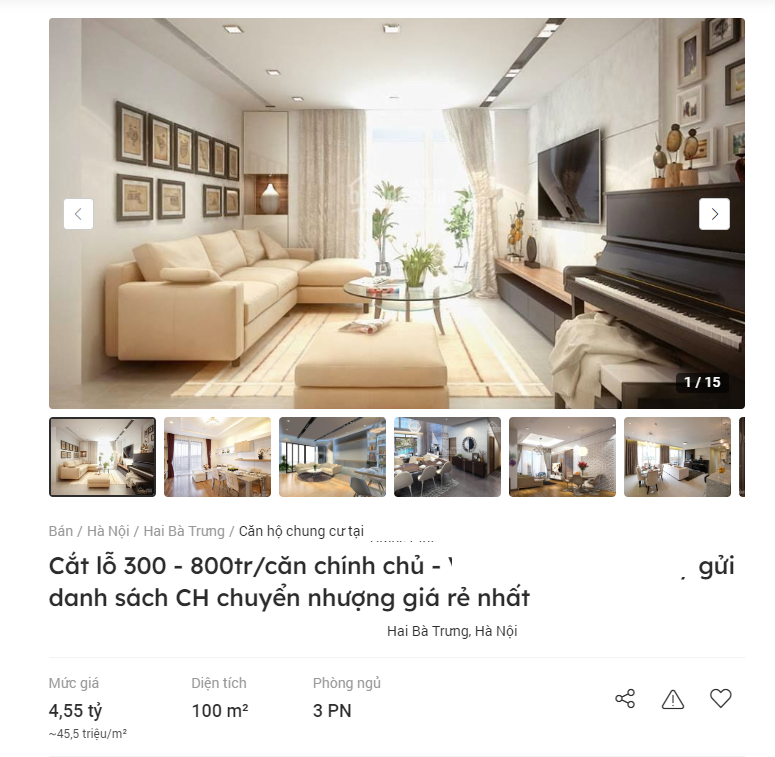
Many homeowners are accepting losses of up to 300-400 million VND per property, and some are even taking a big risk by cutting losses of up to 800 million VND. (Photo: Real Estate)
Speaking with a reporter from the Newspaper for Journalists and Public Opinion, Mr. Do Kien Hung, director of a real estate brokerage in Thanh Xuan district, shared: Since 2020, the phenomenon of "selling at a loss" in apartments has continuously appeared. There are some cases of genuine "loss-cutting," but most are just tricks used by real estate brokers.
Mr. Hung shared that, in the context of a steadily decreasing supply of apartments over the years, especially affordable apartments priced under 25 million VND/m2 which have almost disappeared in Hanoi , there is no question of selling apartments at a loss.
"Most apartments in Hanoi priced under 35 million VND/m2 are experiencing price increases in both the primary and secondary markets," Mr. Hung said.
For example, in the primary market, an urban development project in Nam Tu Liem district, which had apartment prices ranging from 41-42 million VND/m2 last June, has now increased to 45-47 million VND/m2, depending on location.
Or, another urban development project in Gia Lam, which had selling prices ranging from 30-32 million VND/m2 in June 2022, now has a new price listed by the developer at over 35 million VND/m2.
Meanwhile, in the secondary market, a project completed in 2020, located right on Quang Trung Street (Ha Dong District), which initially sold for around 26-29 million VND/m2 depending on location, is now being offered for sale by homeowners at over 40 million VND/m2. Thus, in just 3 years, the project has increased in value by nearly 40%.
"Therefore, in the context of the current severe supply shortage, apartment prices are likely to rise easily, but difficult to fall," Mr. Hung said.
According to Batdongsan.com.vn's Q1 report this year, 43% of people with a genuine need to buy a home are still waiting for real estate prices to fall.
However, Mr. Nguyen Quoc Anh, Deputy General Director of Batdongsan.com.vn, believes that apartment prices are unlikely to fall significantly in the near future because types of housing that serve actual living needs remain a bright spot in the real estate market.
Mr. Nguyen Van Dinh, Chairman of the Vietnam Real Estate Brokers Association, believes that housing prices in Hanoi are trending sharply downward, but this is not actually the case. Furthermore, current housing prices are already much higher than when developers first started their projects, so high discounts are seen as a business strategy by the developers.
"This year, the apartment segment in the Hanoi market will receive more attention than low-rise properties, due to the high prices of low-rise properties," Mr. Dinh stated.
Furthermore, according to Mr. Dinh and many other experts, the supply crisis in the market cannot be resolved in the short term, and according to market principles, when demand is high but products become scarcer, prices will naturally increase, not decrease.
There are cases where actual losses are cut.
As Mr. Hung shared, there are some genuine cases of selling at a loss, but they are rare. For example, homeowners who have suffered business losses and urgently need money may accept selling at a loss to recover their capital.
"Due to the difficult economic situation , there are many cases where entrepreneurs have to sell their houses and cars to keep their companies afloat. Such cases do occur, but they are not common. Most homeowners will sell to acquaintances at a good price," Mr. Hung said.
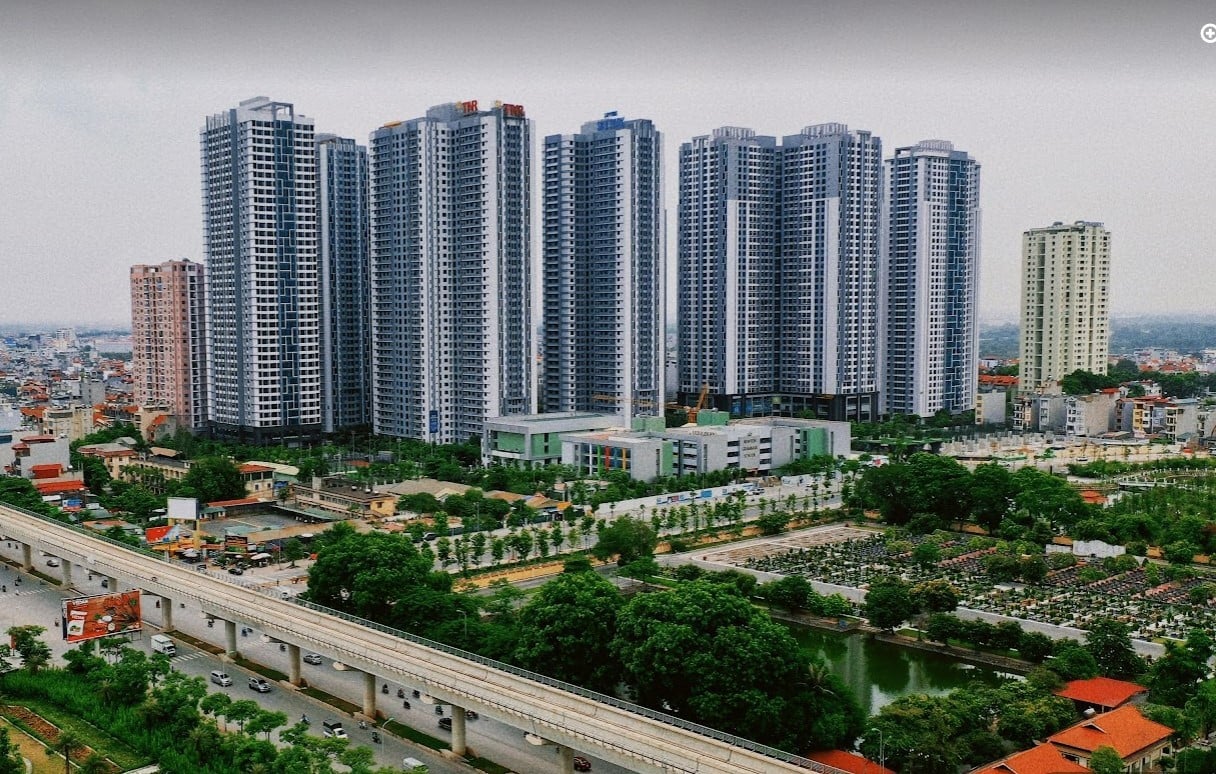
There are some genuine cases of "cutting losses," but most are just a ploy by real estate brokers. (Photo: MD)
Secondly, projects plagued by scandals, such as apartments whose quality doesn't match the price, or projects with numerous construction and design violations that prevent them from meeting the standards for issuing land ownership certificates, also lead many people to accept losses and look for other projects.
"In Hanoi, there is no shortage of apartment projects with construction and design violations, and many homebuyers have not received their land ownership certificates for over a decade. In such cases, many people will cut their losses to find another project," Mr. Hung said.
Thirdly, there are cases where homeowners buy apartments with 50-year ownership rights, and after about 10-15 years, they accept a "loss" to look for another project.
"This isn't a common case, but it does happen. Because apartment projects with long-term or perpetual ownership will have higher prices than apartments with 50-year ownership. During use, depreciation will be deducted from the selling price, hence the situation of selling at a loss," Mr. Hung said.
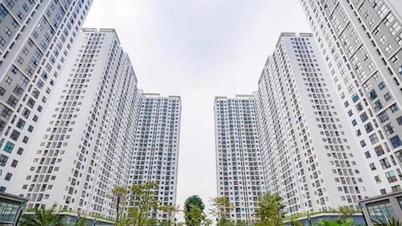
Finally, the most obvious example is the high-end, sky-high-priced apartment projects that are struggling to sell, forcing them to cut their losses to offload their inventory quickly.
"The apartment market in Vietnam suffers from a severe shortage of affordable apartments, but an oversupply of luxury apartments. Due to this oversupply, homeowners have to accept losses when reselling," Mr. Hung shared.
Source

![[Image] Close-up view of the interchange connecting the two expressways and Long Thanh Airport.](https://vphoto.vietnam.vn/thumb/1200x675/vietnam/resource/IMAGE/2026/05/25/1779703378210_ndo_br_z7863716673926-224453a31600126cce10622af6290afd-4549-jpg.webp)



![[Image] Hanoi's urban life under the challenge of a "scorching hot" environment](https://vphoto.vietnam.vn/thumb/1200x675/vietnam/resource/IMAGE/2026/05/25/1779706979265_nang-nong-t5-2026-minh-duy-7-4636-jpg.webp)















































































Comment (0)