

A drop of water unites the Jrai community.
The ritual of offering a drop of water, also known as Soi Yang Ia, is a long-standing cultural tradition of the Jrai people in Gia Lai . Like other ethnic groups in the Central Highlands, before choosing land to establish a village, the Jrai first search for an area with a spring flowing from a mountain stream to use as a water source. This water source not only ensures the livelihood of the villagers but is also the source of life itself.
After the village is established, the Jrai people usually hold a ceremony to worship the water source (the water's edge). This is an important ritual to thank the Water God for bringing good things to the villagers. At the same time, through this ceremony, the village elders also pray to the Water God for the villagers' health, favorable weather, abundant harvests, flourishing nature, and a prosperous and happy life. This ceremony will be held in subsequent years, after the harvest.
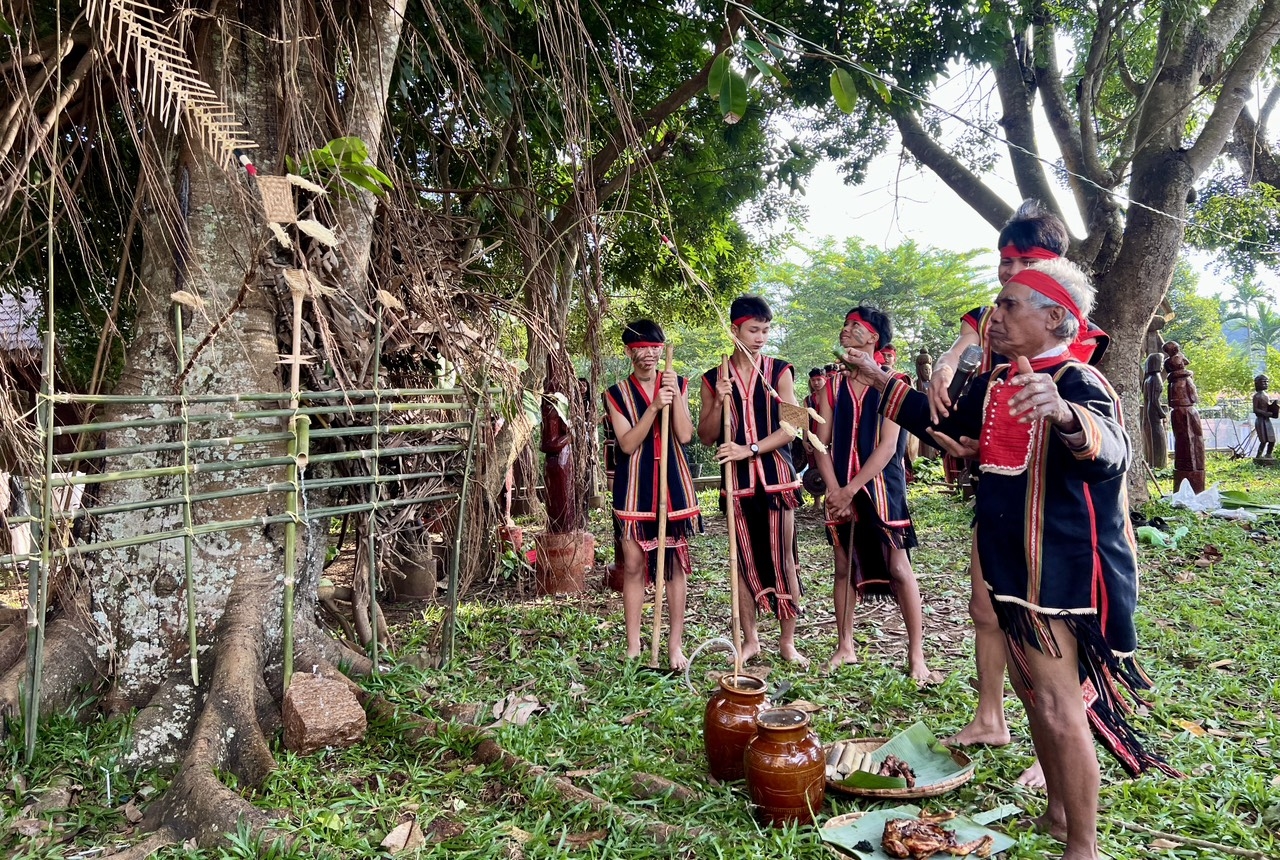
The water offering ceremony is one of the important rituals of the Jrai people in Gia Lai.
In Bong village, Ha Bau commune, Dak Doa district (Gia Lai province), every year around March-April, the villagers excitedly contribute their labor and resources to organize the water offering ceremony.
Elder Blơng shared: "Before the ceremony takes place, everyone in the village enthusiastically participates. Young people clean and clear the village roads and alleys, while others cut bamboo, split reeds, and erect the ceremonial pole at the water's edge. The village elders prepare the prayers, and the women brew more fragrant rice wine to entertain guests. The gong and drum ensemble also practices day and night to make the ceremony more solemn and impressive."
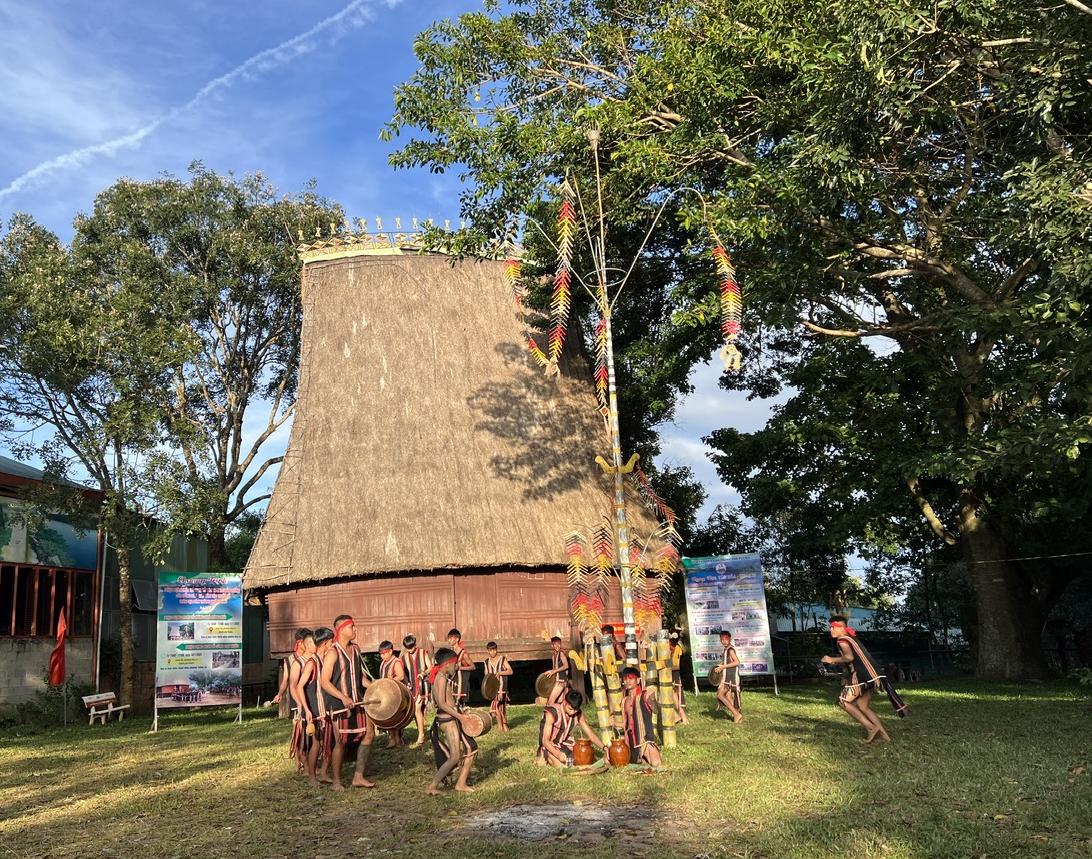
Offering water drops - an important ritual to thank the Water God for bringing good things to the villagers.
According to Jrai tradition, the water offering ceremony requires a set of gongs and drums, two bamboo tubes, ten jars of wine, a gourd of water, a rooster, a ceremonial pole, and a bundle of Ngăl leaves with fruit. The ceremony takes place early in the morning. The ceremonial pole is brought to the water source and planted by young men from the village. The offerings include a roasted chicken, raw chicken liver, raw chicken blood, a jar of wine, banana leaves, and a bundle of Ngăl leaves with fruit.
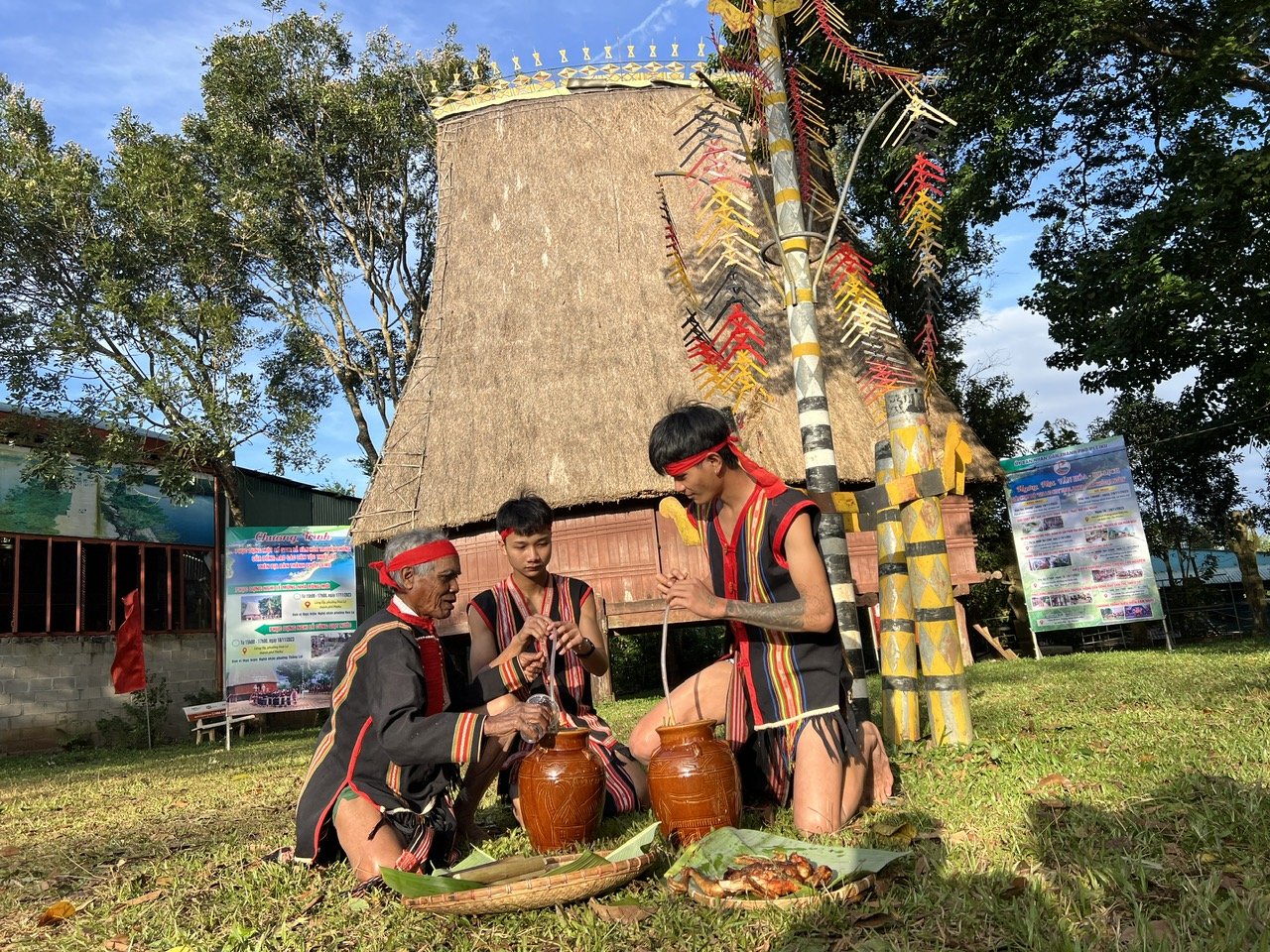
The offerings included a roasted chicken, raw chicken liver, raw chicken blood, a jar of wine, banana leaves, and a bundle of Ngăl leaves with fruit.
When the water offering ceremony begins, the village elder Blơng and two other respected elders spread banana leaves, smeared chicken liver on the handles of the wine jars and on the leaves of the Ngăl tree bearing fruit. All three chanted in unison, inviting Yang to bless the villagers with good health, favorable weather, abundant harvests, flourishing nature, and freedom from disease. They prayed for year-round flowing water, for safe crossings of rivers and streams, for safe journeys, and for travelers to have a safe trip. After the ceremony at the water's edge, the villagers began carrying the water back to the village. Around the warm fire, everyone held hands, socialized, ate, and exchanged good wishes.
The Jrai people believe that the gods have feelings like humans, experiencing joy and sorrow, anger and resentment, hatred and love… Offering many gifts to the gods with sincere hearts will bring corresponding help, protection, support, and defense from the gods.
Offering water as a sacrifice - a beautiful cultural tradition that needs to be preserved and promoted.
Similar to Jrai people in other villages, along with preserving unique traditional rituals such as the communal house worship ceremony, the New Year celebration, and the funeral ceremony, the Jrai people in the mountainous city of Pleiku also pay special attention to the Water Droplet Worship Ceremony. For them, the water droplet is a unique cultural symbol closely linked to their spiritual and cultural life, which the villagers have preserved together for generations.
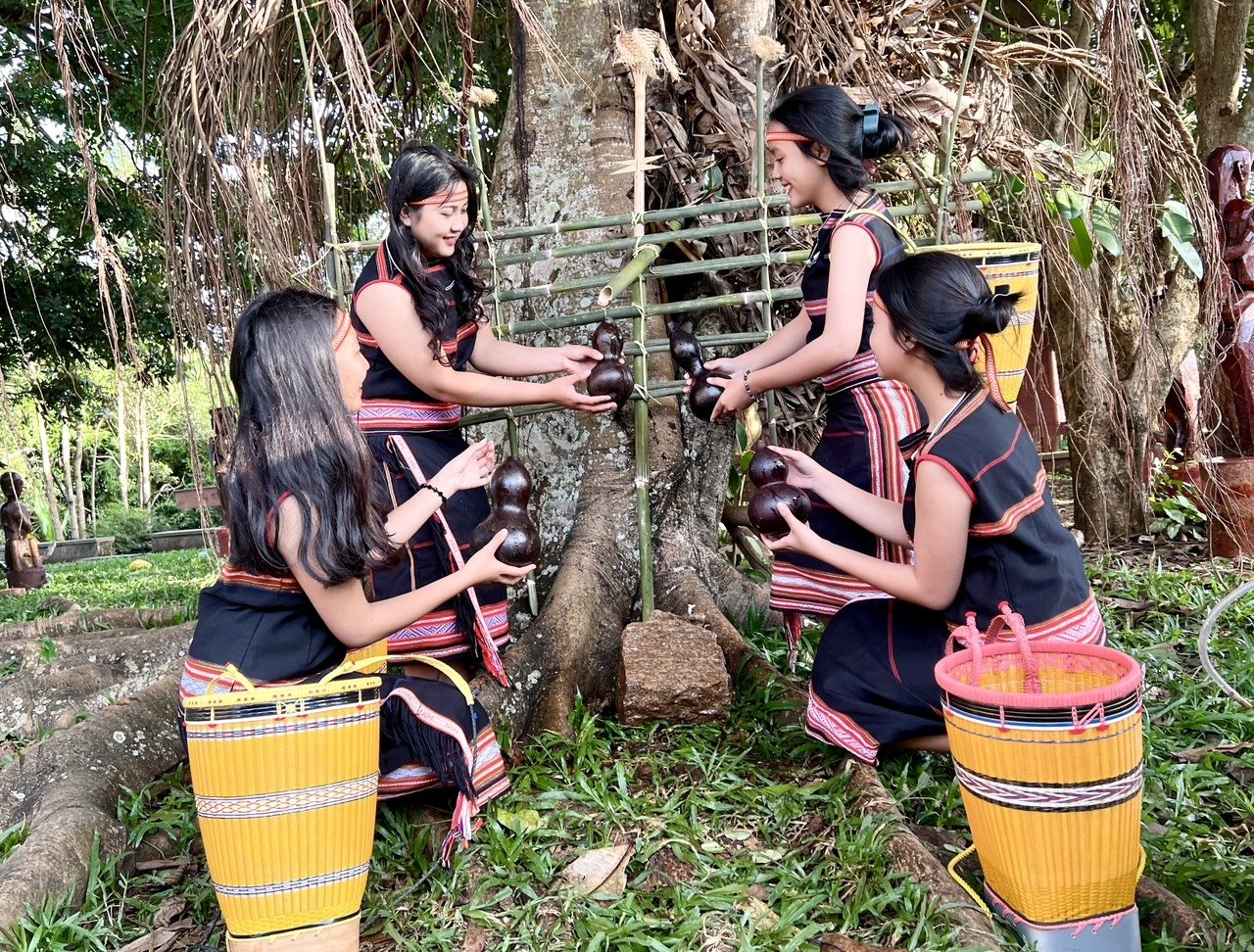
After the village elder finished the ritual, the Jrai girls went down to the cool stream to collect the clean water in their gourds and bring it back home.
Recently, the artisans of Choét 2 village, Thắng Lợi ward (Pleiku city) recreated the water offering ceremony at the communal house of Ốp village, Hoa Lư ward, in the presence of numerous tourists from within and outside the province. On this occasion, village elder Ak was entrusted with the responsibility of performing the ritual.
After preparing all the offerings, the village elder Ak dipped the straw into the earthenware jar of wine and began reciting the prayer aloud: “O spirit of the stream, cross the forest, follow the edge of the rice fields, and come to our Ia Nguin stream. Today, we offer sacrifices to the gods, pouring chicken liver, pig liver, and wine onto the water source to ask Yang to bless the villagers with good health, a good life, freedom from illness, favorable weather, abundant harvests, and prosperity for all things in the village, free from disease. May the spirit grant us a clear, abundant water source that flows year-round…”
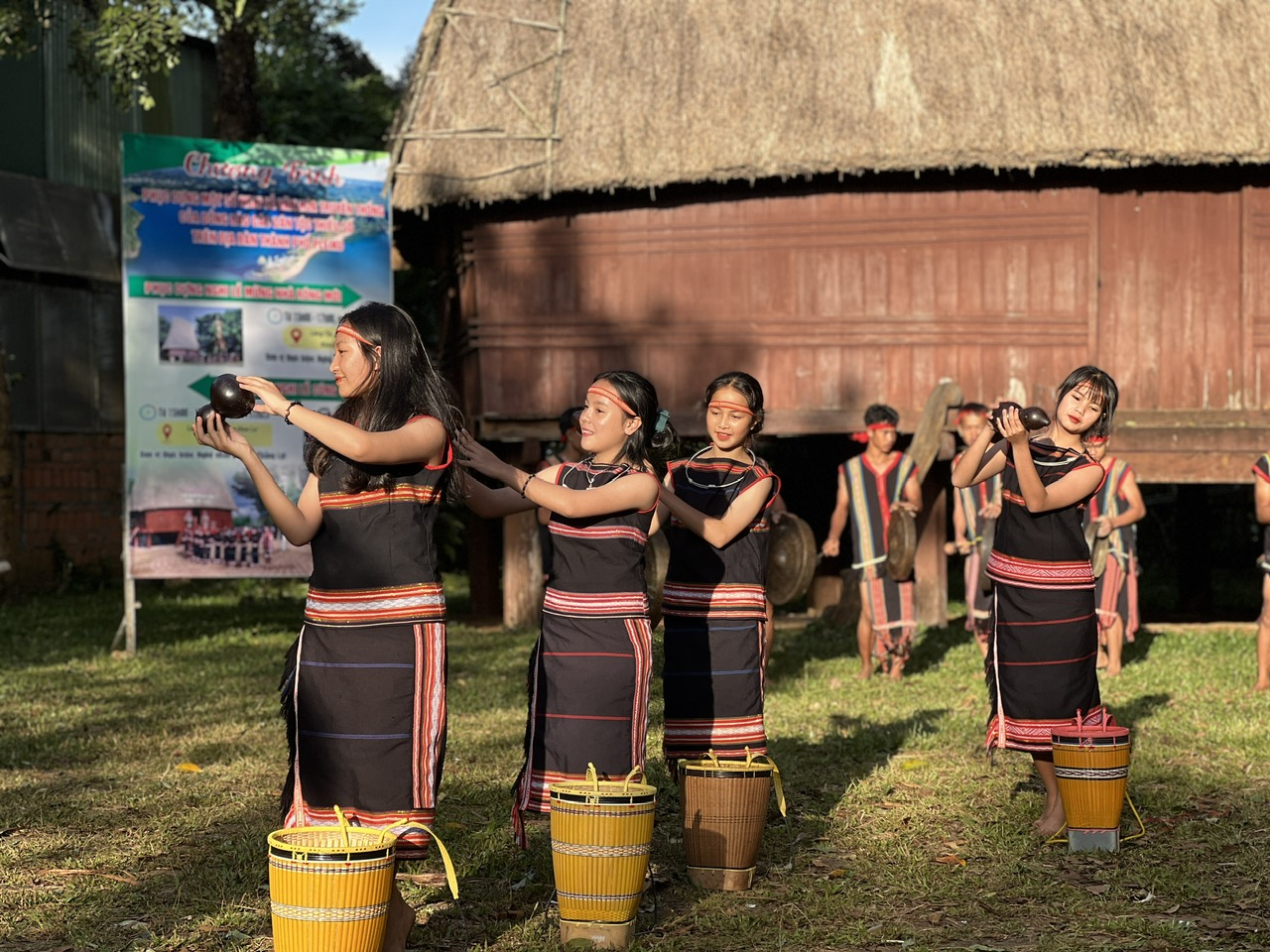
Offering water as a sacrifice - a beautiful cultural tradition that needs to be preserved and promoted.
After reciting the prayers, the elder Ak bowed and drank the first cup of wine, followed by the other elders and villagers. At this time, the Jrai girls went down to the stream to collect the cool, fresh water in gourds and brought it back. The villagers and children then collected the water to wash their faces and splashed it on themselves, believing it would bring them good fortune bestowed by Yang.
As the ceremony concluded, the sounds of gongs and cymbals began to stir the previously tranquil atmosphere. Visitors were welcomed by the villagers with resounding gong and cymbal sounds accompanied by graceful and fluid Xoang dances. Joyful faces celebrated the arrival of the refreshing water to the village, and the villagers exchanged good wishes.
“Now, the villagers’ lives are much less difficult and arduous than before. Besides focusing on economic development, the villagers are also concentrating on preserving and promoting traditional culture. Recently, thanks to the attention of the authorities at all levels, the village’s water offering ceremony has been restored on a larger scale, attracting many locals and tourists to visit, and everyone in the village is happy,” said village elder Ak excitedly.
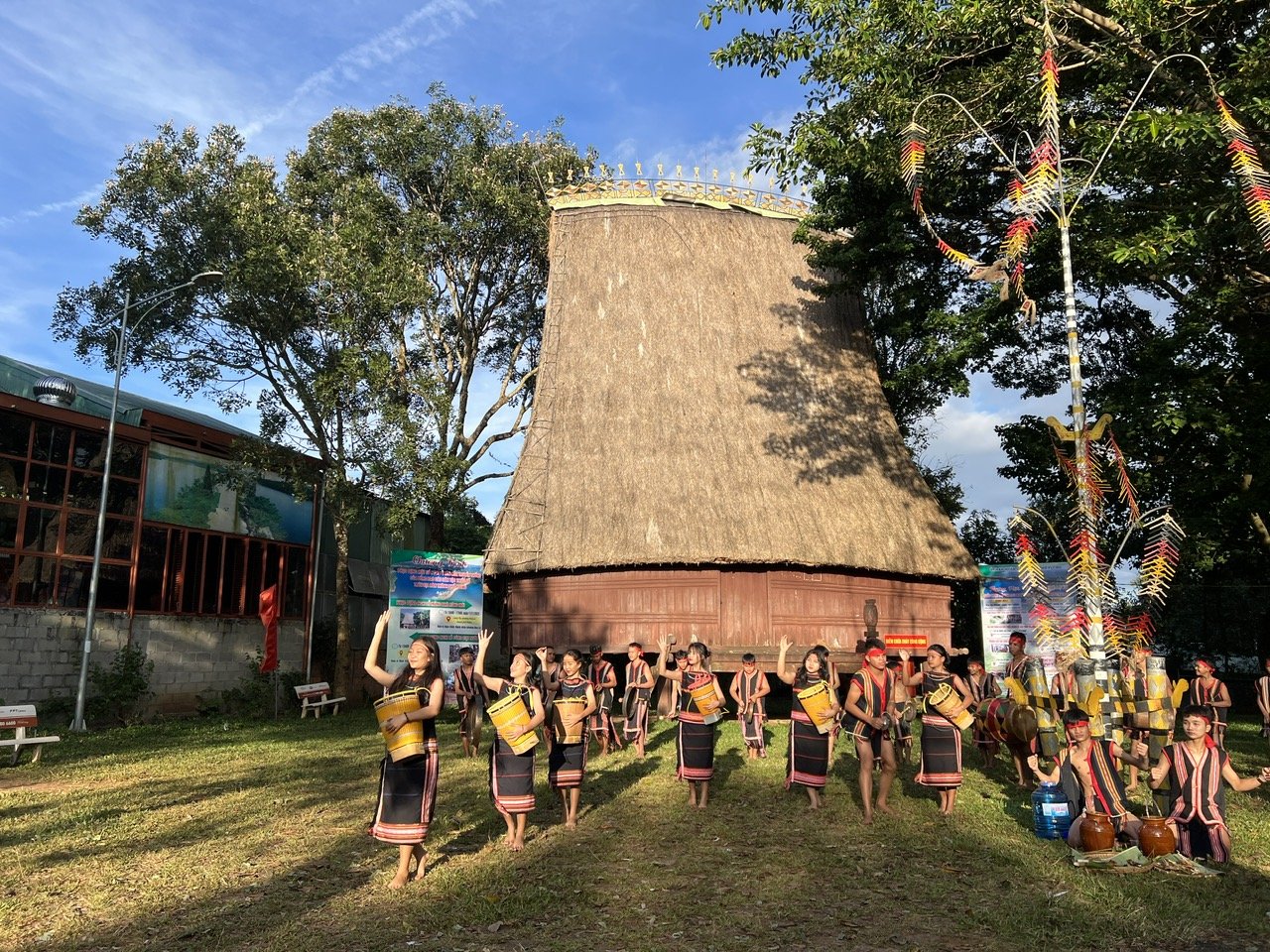
Under the roof of the traditional communal house, to the resounding sound of gongs, people join hands and perform graceful Xoang dances.
The Jrai people's water offering ceremony not only contributes to preserving and promoting the beautiful traditional cultural values of the ethnic group in the Central Highlands but also helps to strengthen community solidarity and work together to build a stronger, more prosperous, and civilized homeland.
Every year, the Jrai people in the villages still maintain the tradition of holding the water offering ceremony. With the attention of the authorities at all levels, the people have been able to restore the ceremony on a larger and more magnificent scale in order to preserve and promote the cultural identity of the ethnic group.
Source










































![[Infographic] Vietnam's Economic Situation Report, Q1 2026: Strong Growth Momentum](https://vphoto.vietnam.vn/thumb/402x226/vietnam/resource/IMAGE/2026/04/04/1775298512042_tang-truong-kinh-te-viet-nam.jpeg)

![[Image] Close-up view of the 10-lane road connecting to Long Thanh Airport](https://vphoto.vietnam.vn/thumb/402x226/vietnam/resource/IMAGE/2026/04/04/1775291871988_ndo_br_1-resize-5690-jpg.webp)
















Comment (0)