Mr. Doan Nguyen Duc, Chairman of the Board of Directors of Hoang Anh Gia Lai Joint Stock Company, agreed to meet me at 4 PM. And at that exact time, a seven-seater car, its body covered in patches of red dirt, pulled up sharply in front of the Round House - Ong Bau Cafe, located in the center of the LPBank HAGL Football Academy complex.
He got out of the car, walked briskly inside, and shook my hand. “No filming or photography, please. I just got back from the garden, I’m casually dressed. If you need any pictures, just tell the crew; we have plenty,” he said, noticing the camera already set up on the table and the video recorder already positioned.
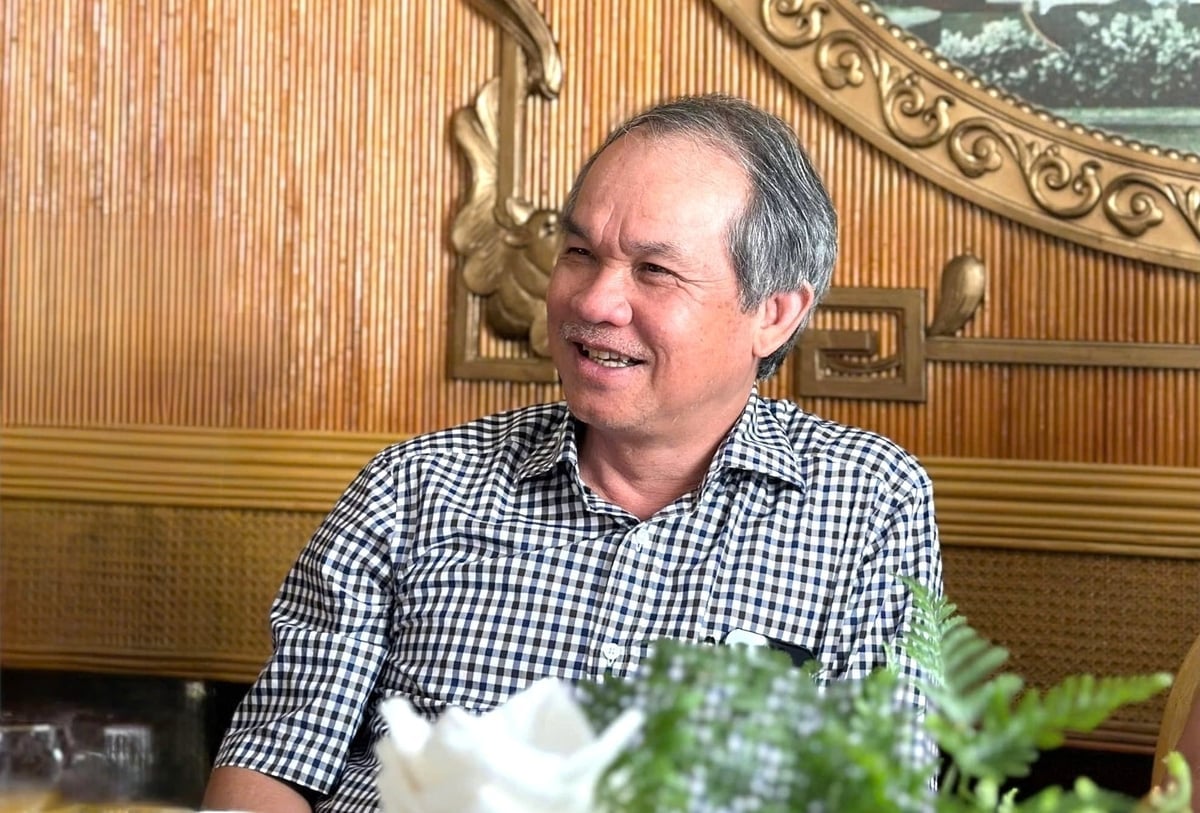
Mr. Doan Nguyen Duc, Chairman of the Board of Directors of Hoang Anh Gia Lai Group Joint Stock Company. Photo: HAGL.
True to his signature style as the billionaire from the "Nẫu" region: quick-witted and decisive, he got straight to the point when asked about the 10,000-hectare coffee project that Hoang Anh Gia Lai is currently implementing.
We would like to present to our readers a conversation between a reporter from the Agriculture and Environment Newspaper and Mr. Doan Nguyen Duc.
What were the reasons behind Hoang Anh Gia Lai's decision to choose coffee cultivation, and for such a large area of land, sir?
Firstly, Hoang Anh Gia Lai is an agricultural conglomerate, having started in agriculture in 2008, nearly 20 years ago. During this time, Hoang Anh Gia Lai has invested in planting many types of crops such as rubber, oil palm, and other plants. There have been successes, but also many failures. In 2016, Hoang Anh Gia Lai restructured, shifting to a new direction. However, it remains agriculture, focusing on essential crops such as bananas, durian, macadamia nuts, and most recently, coffee.
And why choose coffee? Because it's an essential crop, especially essential for many countries around the world. The decision to invest in 10,000 hectares of coffee has its own reasons. In its agricultural operations since 2008, Hoang Anh Gia Lai has been one of the first to invest in Laos, and is very familiar with the policies and land potential of Laos.
Since investing in Laos with 7,000 hectares of bananas, 2,000 hectares of durian, and mulberry trees, Hoang Anh Gia Lai has clearly seen the potential of coffee cultivation in this country, specifically in the Boloven Plateau, as not every place in Laos is suitable for growing coffee.
With the support of the Lao government, Hoang Anh Gia Lai continues to invest in the coffee sector because this region is very suitable for Arabica coffee plants. The Boloven plateau is located at an altitude of 1,000 meters or more, with red basalt soil, and climatic and soil conditions that are completely similar to, or even better than, the coffee-growing regions in Gia Lai...
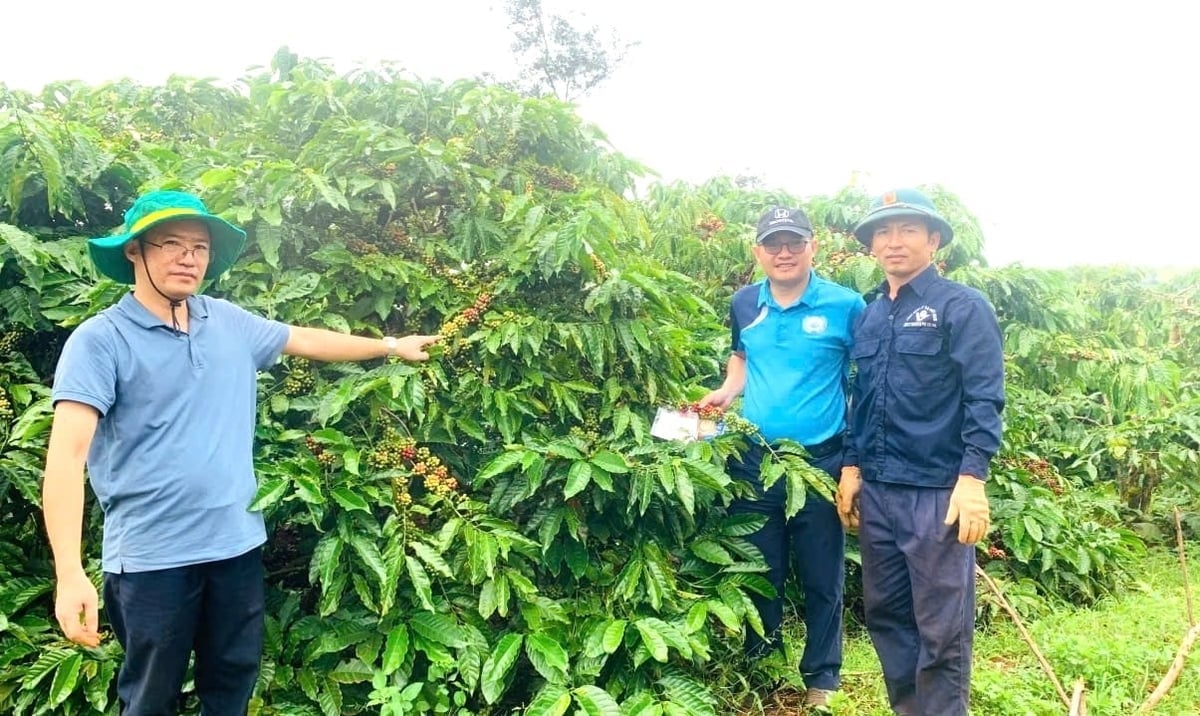
A model coffee plantation of the Eakmat Institute, where high-quality coffee varieties like these will be transferred to Hoang Anh Gia Lai. Photo: WASI.
With the above advantages, Hoang Anh Gia Lai decided to invest in 10,000 hectares of coffee, with Laos accounting for 80% and Vietnam for 20%. This plan started implementation in June 2025, and to date, 3,000 hectares have been planted. The remaining 7,000 hectares will be planted in 2026-2027. This is a large project for the group, and I think also for the Lao government, because the project will create a large number of jobs for local people. Specifically, 10,000 hectares of coffee will create jobs for over 10,000 direct laborers. In short, for Hoang Anh Gia Lai, 10,000 hectares is not too difficult; they have the capacity to implement it.
One thing is certain: when investing in the 10,000-hectare coffee project, Hoang Anh Gia Lai will follow a sustainable organic production approach, aiming for the highest certifications demanded by demanding markets. Could you share more about this?
Farming nowadays without adhering to the four principles of "sustainable organic farming" is... unsustainable. "Sustainable organic farming" must begin at the very first stage, from soil treatment to seeds, fertilizers, irrigation, harvesting, processing, and preservation.
Mr. Phan Viet Ha, Deputy Director in charge of WASI, said: “The Institute is accompanying and will continue to work with Hoang Anh Gia Lai throughout the entire value chain, from seeds and techniques to cultivation processes, aiming to build a high-yield, sustainable, and widespread coffee development model.”
Regarding the land, as I mentioned above, Hoang Anh Gia Lai places absolute trust in the Western Highlands Agro-Forestry Science and Technology Institute (WASI, commonly known as the Eakmat Institute because its former name was the Eakmat Coffee Research Institute). Currently, this is the only institute in Vietnam that has been researching coffee for many years and has achieved significant success. Recently, Hoang Anh Gia Lai signed a cooperation agreement with the Eakmat Institute, providing 30 million coffee seedlings, enough to plant the remaining 7,000 hectares of the project.
It should also be added that, within the framework of this project, Hoang Anh Gia Lai has planted 3,000 hectares in Paksong district, Champasack province, specifically in the Boloven plateau of Laos.
Regarding fertilizers, Hoang Anh Gia Lai is currently building three organic fertilizer factories: two in Laos and one in Vietnam. Our strength lies in owning a large livestock herd including pigs, chickens, and silkworms. When combined with coffee husks, this will be an inexhaustible source of organic fertilizer. Not to mention our 7,000-hectare banana plantation will return a significant amount of fertilizer to the soil.
Technical expertise? We have our "big friend," the Eakmat Institute. And irrigation water? That's not a concern in the Boloven Plateau. In short, this will be a model circular agriculture project.
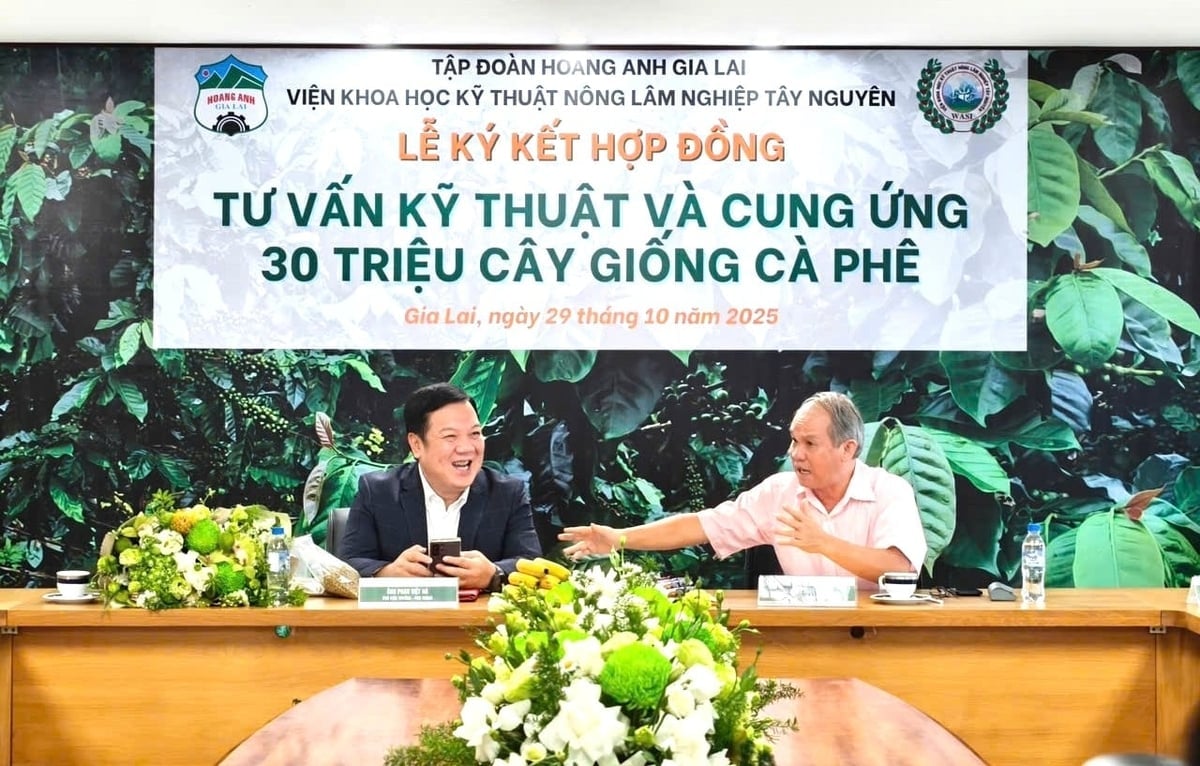
The signing ceremony for the transfer of 30 million high-quality coffee seedlings and cultivation techniques between Eakmat Institute and Hoang Anh Gia Lai Group. Photo: Dang Lam.
And what about the funding for the project, sir?
To supply 10,000 hectares of coffee requires approximately 5,000 billion VND, which Hoang Anh Gia Lai will raise over 3 years, with the first year already completed. The remaining 3,000 billion VND will be raised over the next two years (2026-2027), which is not at all difficult.
Currently, Hoang Anh Gia Lai's annual profit is between 1,500 and 2,000 billion VND or more. We anticipate our profit to reach 1,500 billion VND in 2025, and plan to increase it to 2,500-3,000 billion VND in 2026, with further increases expected in 2027.
Therefore, the capital for this project comes from profits from previous years, reinvested in the following year, with no borrowed funds whatsoever. In short, there are three financing options for this project: from business profits, from the financial market, and from bank loans.
Hoang Anh Gia Lai will choose the first option, and if that's not enough, they will mobilize funds from the financial market. Borrowed capital will only be a contingency plan, because in our opinion, investing with borrowed capital is unlikely to be sustainable.
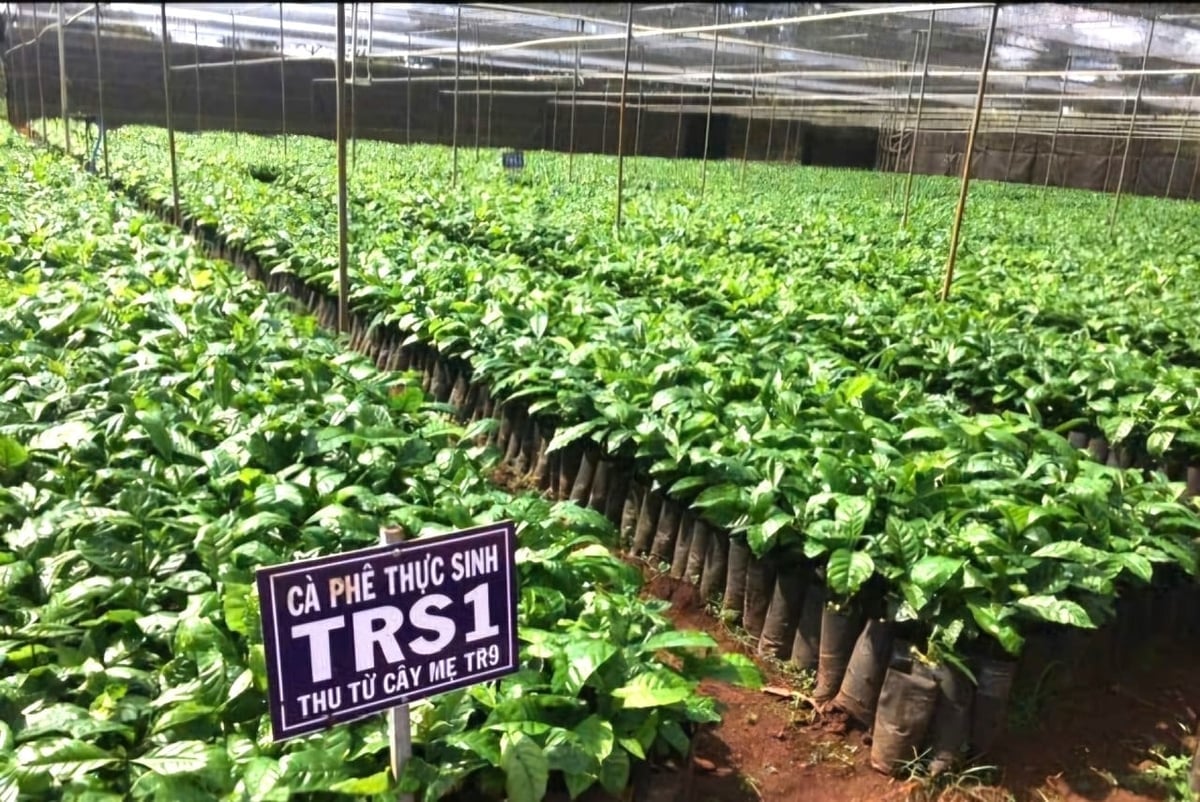
A coffee seedling nursery at the Eakmat Institute. Photo: WASI.
To build a coffee brand called "Hoang Anh Gia Lai Coffee," it's essential to mention the construction of a modern processing plant, isn't it, sir?
The construction of processing plants will initially involve building two plants in Laos during the 2026-2027 period, each with a capacity of approximately 1,500 tons per day. The capital required for building the processing plants in Laos will only be a few hundred billion VND, not a large sum. One plant will be built in Vietnam.
Producing high-quality coffee beans is impossible without modern processing facilities, resulting in a good coffee product. Hoang Anh Gia Lai's coffee processing plants utilize wet processing technology, and the harvesting process requires a high percentage of ripe cherries.
Our coffee is grown at altitudes above 1,000 meters, all cared for using the same process, resulting in an extremely consistent product of exceptionally high quality.
That's an advantage for branding.
Can you share your export plans and projected profits?
Coffee is a product consumed worldwide. There are currently exchanges in London and New York. It can be sold at any time, production is virtually unlimited, and whatever quantity is exported is always sold, so there's never any worry about finding buyers. However, prices are determined by the global market on the exchange; we cannot control them.
Regarding the export of coffee under the "Hoang Anh Gia Lai Coffee" brand, with 10,000 hectares and an average yield of 5-6 tons of beans per hectare, the production volume would be 50,000-60,000 tons. Of course, all coffee products under the "Hoang Anh Gia Lai Coffee" brand meet export standards, for the reasons I mentioned above: quality. The price is determined by the market. Currently, Robusta coffee from Gia Lai is priced at $4,500 USD/ton, and Arabica coffee at $9,000 USD/ton, provided it is processed using the wet method.
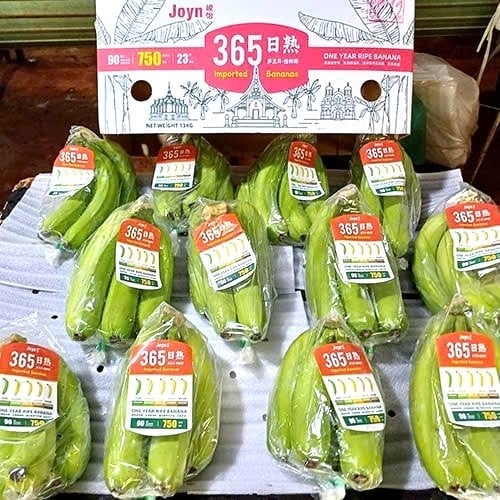
Bananas exported by Hoang Anh Gia Lai. Photo: HAGL.
The first harvest is expected to begin in October 2027. Depending on market conditions, but based on current purchase prices, Hoang Anh Gia Lai will earn approximately $600 million per year from this 10,000-hectare area.
Another equally important issue, sir, is what kind of workforce the project will need?
As I mentioned, the project will create jobs for approximately 10,000 direct laborers. In addition, a strong team of agricultural engineers is needed, both in terms of numbers and knowledge and experience. On average, there should be one engineer responsible for technical matters for every 50 hectares; for 10,000 hectares, several hundred engineers are required. Of course, the engineers must be highly qualified. If we are implementing high-tech agriculture, all stages such as irrigation and fertilization will utilize advanced technology; therefore, the engineering team must meet all these requirements.
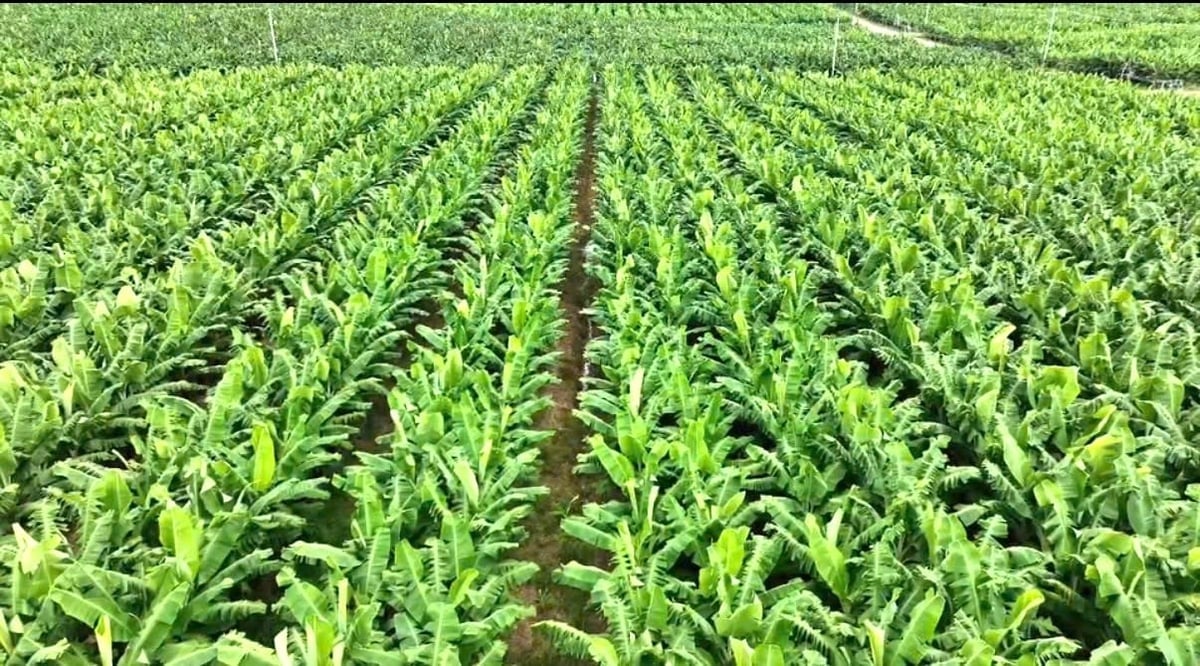
Bananas are one of Hoang Anh Gia Lai's main crops. Photo: HAGL.
At the end of the conversation, Mr. Doan Nguyen Duc further shared: Hoang Anh Gia Lai is a business located on coffee-growing land. Ideally, coffee cultivation should have started many years ago, not just now. However, they previously focused too much on rubber trees, only abandoning them from 2008 to 2016 when the rubber crop failed.
During its restructuring, Hoang Anh Gia Lai chose banana cultivation because it's a short-term crop. This short-term crop gradually restored the company and saved it. Now the company is stable in all aspects, with finances being a major concern. Therefore, the company is beginning to consider coffee cultivation, aiming for long-term sustainability. While bananas saved Hoang Anh Gia Lai, coffee will be number one in the future.
Within the next 2-3 years, coffee will be the leading crop, followed by durian. Bananas are currently in first place, but once coffee starts yielding, bananas will drop to fourth.
At the end of the conversation, I asked further, "With this 10,000-hectare coffee project, are you confident of success?" Mr. Doan Nguyen Duc replied, "Look at coffee farmers, are there any who lose money? Everyone is rich! Hoang Anh Gia Lai will never lose money. Because I've calculated very carefully, even if the price of coffee drops to 30,000 VND/kg, we still won't lose money, while currently the price is 120,000-140,000 VND/kg."
Source: https://nongnghiepmoitruong.vn/giac-mo-doan-nguyen-duc-d785306.html



![[Photo] General Secretary and President To Lam presides over a meeting on assessing national development resources.](https://vphoto.vietnam.vn/thumb/1200x675/vietnam/resource/IMAGE/2026/05/20/1779253785852_a1-bnd-2943-8519-jpg.webp)
![[Photo] National Assembly Chairman Tran Thanh Man working with the Standing Committee of the Economic and Financial Committee](https://vphoto.vietnam.vn/thumb/1200x675/vietnam/resource/IMAGE/2026/05/20/1779249584387_ndo_br_1-jpg.webp)


















![OCOP during Tet season: [Article 4] Elevating local products](https://vphoto.vietnam.vn/thumb/402x226/vietnam/resource/IMAGE/2026/01/29/1769652810578_2935-z6982071462129_649e82db06fb2f2ea701388b1f5f5b0b-173322_176-185229-202804_457.jpeg)








![[Workers' Month 2026] Spreading love on the Vinh - Dong Hoi frontline: Nearly 1 billion VND spent on caring for the lives of workers.](https://vphoto.vietnam.vn/thumb/402x226/vietnam/resource/IMAGE/2026/05/20/1779237885217_img_8650.jpeg)































Comment (0)