


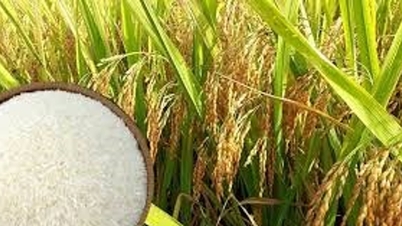
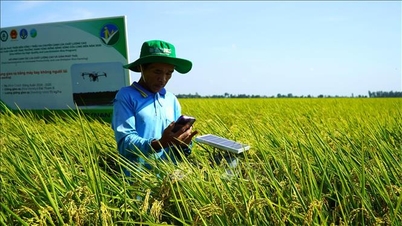
The workshop is expected to contribute to the dissemination of sustainable agricultural production models, strengthen production linkages, and promote the effective implementation of the Project to cultivate 1 million hectares of high-quality, low-emission rice in the Mekong Delta region.
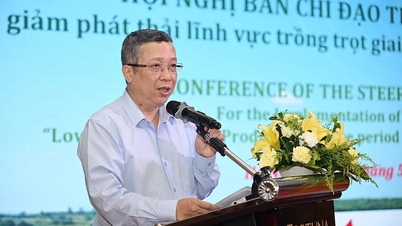
At the workshop, Mr. Doan Van Chien, Deputy Director of the Mekong Delta Regional Agricultural Extension Center (National Agricultural Extension Center), stated that, in the context of implementing a two-tiered local government model, agricultural extension work needs to be reorganized in the direction of being "close to the people, directly serving the people," closely linked to the grassroots and the fields. Agricultural extension must adapt to new challenges such as climate change, market fluctuations, and rapidly changing consumer trends, while simultaneously leveraging opportunities from science and technology and digital transformation to improve the efficiency of agricultural production.
According to Mr. Chien, the agricultural extension development strategy until 2030 and vision for 2050 identifies farmers as the central focus, developing agriculture based on agricultural economics and value chains. Agricultural extension work is not limited to technology transfer but also includes supporting production organization, market connections, promoting innovation, green growth, and emission reduction.
He emphasized that the goal by 2030 is to standardize the agricultural extension staff, train professional farmers, promote digital transformation in agricultural extension activities, socialize resources, and replicate effective, safe, and climate-change-adaptive production models. In this context, community-based agricultural extension plays a bridging role in bringing knowledge, technology, and confidence to rural people.
Regarding the project to cultivate 1 million hectares of high-quality, low-emission rice, Mr. Chien affirmed that agricultural extension workers are the core force in disseminating information, training farmers, transferring advanced farming techniques, building raw material areas, and establishing green rice brands. He also suggested that the Ministry of Agriculture and Environment and local authorities should soon finalize mechanisms and policies and strengthen the agricultural extension system from the provincial to the grassroots level to meet the development requirements of the new phase.
According to Mr. Tran Minh Tuan, Director of the Center for Irrigation and Water Supply Research (Southern Institute of Water Resources Science), the management solutions have been very effective, minimizing the impact of drought and saltwater intrusion to a low level. Importantly, through information dissemination about the drought and saltwater intrusion situation, people's awareness has been raised. As a result, people have adopted appropriate solutions in production, starting early and avoiding drought and saltwater intrusion.
Tran Minh Tuan, Director of the Center for Irrigation and Water Supply Research (Southern Institute of Water Resources Science), also proposed solutions to ensure water resources for production and daily life in the Mekong Delta in the coming time. Accordingly, with non-structural solutions, it is necessary to strengthen and improve the capacity for forecasting water resources and saltwater intrusion to support the organization of agricultural production in accordance with the water situation. In particular, it is necessary to modernize and digitally transform the management and operation of irrigation works and organize agricultural production in accordance with the water resource demarcation of irrigation works. When drought and saltwater intrusion occur, flexible cropping seasons need to be adjusted.
Regarding engineering solutions, Mr. Tran Minh Tuan, Director of the Center for Irrigation and Water Supply Research (Southern Institute of Water Resources Science), suggested building structures to connect and transfer water from upstream or areas with abundant freshwater to water-scarce locations. Simultaneously, he emphasized the need to improve the on-farm irrigation system to support the project "Sustainable Development of 1 Million Hectares of High-Quality, Low-Emission Rice Farming Linked to Green Growth in the Mekong Delta." He also stressed the importance of establishing complete and integrated irrigation systems to proactively manage water supply, drainage, and storage, meeting the demands of modernization in agricultural production.
Mr. Nguyen Truong Vuong, Head of External Relations at Bayer Vietnam Co., Ltd., stated that in the rice sector, the company is implementing the Bayer Forward Farming model in the Mekong Delta, in collaboration with the National Agricultural Extension Center and numerous partners. The project focuses on training and improving skills in safe, efficient, and emission-reducing rice cultivation.
According to Mr. Vuong, the model aims to develop regenerative agriculture with main objectives such as: reducing the impact of climate change, adapting to water scarcity, reducing the use of pesticides, improving the quality of agricultural products and increasing farmers' income through reduced input costs, increased productivity and expanded export potential….
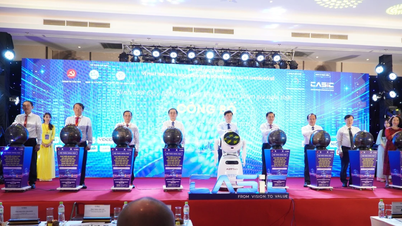
In her closing remarks at the workshop, Ms. Huynh Kim Dinh, Deputy Director of the National Agricultural Extension Center, assessed that the workshop on technology transfer, high-quality rice production, and adaptation to drought and salinity in Ca Mau became a forum connecting managers, scientists, businesses, cooperatives, and farmers in the context of the Mekong Delta facing many challenges from climate change.
According to Ms. Dinh, the presentations at the workshop showed that drought, saltwater intrusion, water depletion, and market fluctuations have become real pressures on agricultural production. Analyses of drought and salinity trends, land subsidence, and changes in river flow highlight the urgent need to build an adaptive, smart, and low-emission agricultural system.
Deputy Director of the National Agricultural Extension Center, Huynh Kim Dinh, emphasized that agricultural extension in the new phase needs to shift from "technical recommendations" to "accompanying the value chain," from traditional production to green, digitized, and climate-adaptive agriculture. The National Agricultural Extension Center will continue to be a bridge between policy, science, businesses, markets, and farmers; and will promote ecological, circular, and low-emission agricultural models in the future.
Source: https://baotintuc.vn/kinh-te/giai-bai-toan-han-man-xay-dung-vung-lua-ben-vung-20260522165636694.htm







































































Comment (0)