

SGGP
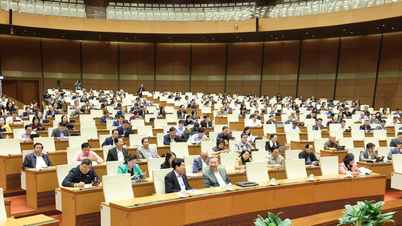
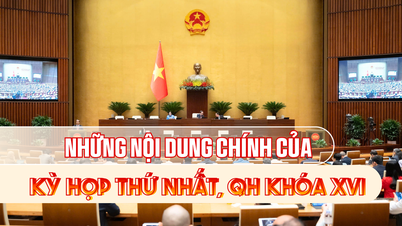
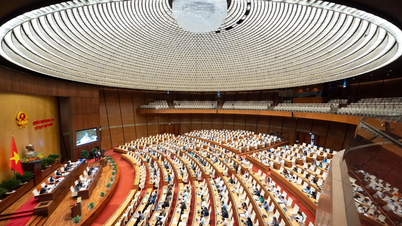
According to the agenda of the 5th session, on May 30th, the National Assembly will discuss in groups the draft amendment to the National Assembly's resolution on taking votes of confidence and no-confidence votes for those holding positions elected or approved by the National Assembly and People's Councils (draft).
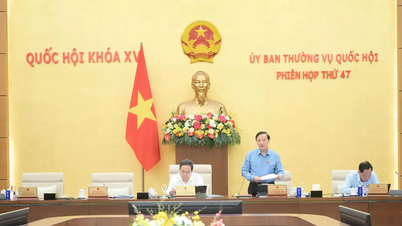
At the plenary session of the Legal Committee on the evening of May 26, the Head of the Delegation Affairs Committee, Nguyen Thi Thanh, stated that the draft has added specific regulations on prohibited acts to ensure that the confidence vote is conducted objectively and transparently. At the same time, it has added regulations on suspending the enforcement of certain provisions in related laws to ensure the consistency and uniformity of legal regulations.
Amending Resolution No. 85/2014/QH13 is a very urgent task, because in 2023, the Politburo issued Regulation No. 96-QĐ/TW on conducting confidence votes for leadership and management positions in the political system. Resolution No. 85/2014/QH13 needs to be amended to institutionalize Regulation 96, most importantly the regulations on the consequences for those subject to the confidence vote, as well as how to handle these consequences.
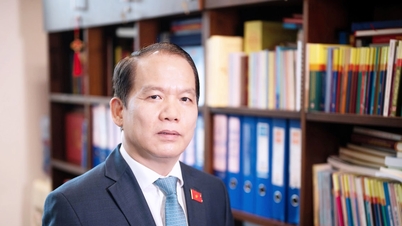
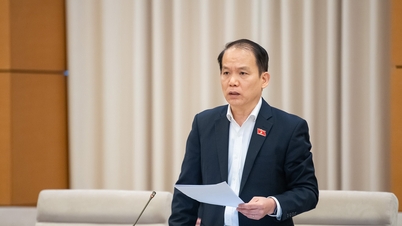
According to the Chairman of the Legal Committee, Hoang Thanh Tung, the draft has basically met the set objectives. However, there is a basis for the opinion that the concern about dynamic, creative, and proactive officials who dare to think, act, and confront challenges may easily "lose votes" remains a "dilemma." This is not to mention that officials in the health, education , and transportation sectors, which are directly involved in the daily lives of citizens, are more likely to receive lower confidence ratings than those in less confrontational fields or those who prioritize harmony.
To solve this "dilemma," very specific criteria are needed for each individual being voted on, in addition to general criteria regarding public service ethics and personal ethics. For example, the trust in a minister must be considered from two perspectives: policy formulation and policy implementation. Furthermore, voters need access to multiple information channels at various levels.
Of course, to ensure the final result is as objective and accurate as possible, the sufficient condition is the impartiality of the voters. But first, the necessary conditions must be met, as mentioned.
Source

![[Photo] Prime Minister Pham Minh Chinh receives the Chinese Ambassador to Vietnam](https://vphoto.vietnam.vn/thumb/1200x675/vietnam/resource/IMAGE/2026/04/05/1775397481797_ndo_br_dsc-5512-jpg.webp)



















































![[INFOGRAPHICS] Exploiting children's personal images for profit can result in fines of up to 50 million VND.](https://vphoto.vietnam.vn/thumb/402x226/vietnam/resource/IMAGE/2026/04/06/1775442200854_1775442148.webp)















Comment (0)