
General Secretary To Lam and President Luong Cuong, along with National Assembly delegates, attended the session on the morning of November 26. Photo: QUANG PHUC
Earlier, presenting the report explaining and responding to feedback on the draft Extradition Law, the Chairman of the National Assembly's Committee on Law and Justice, Hoang Thanh Tung, stated that regarding cases that may be subject to extradition, there were suggestions to raise the minimum penalty threshold to 2 years imprisonment or more to ensure effective international judicial cooperation, avoid wasting administrative resources on minor cases, and at the same time demonstrate a humane policy, only extraditing those with truly serious acts that pose a danger to society.
The Standing Committee of the National Assembly believes that the provision in the draft law stating that "persons who may be extradited are those who have committed crimes for which Vietnamese law and foreign law prescribe a prison sentence of one year or more..." is inherited from the current Law on Mutual Legal Assistance, is consistent with international practice and commitments in extradition agreements signed by Vietnam, and aims to ensure flexible and timely cooperation in many cases, not limited to serious crimes. In practice, the competent authority may consider the possibility of extradition for individuals who have committed crimes for which the law prescribes a prison sentence of one year, but who play a crucial role in resolving the case.
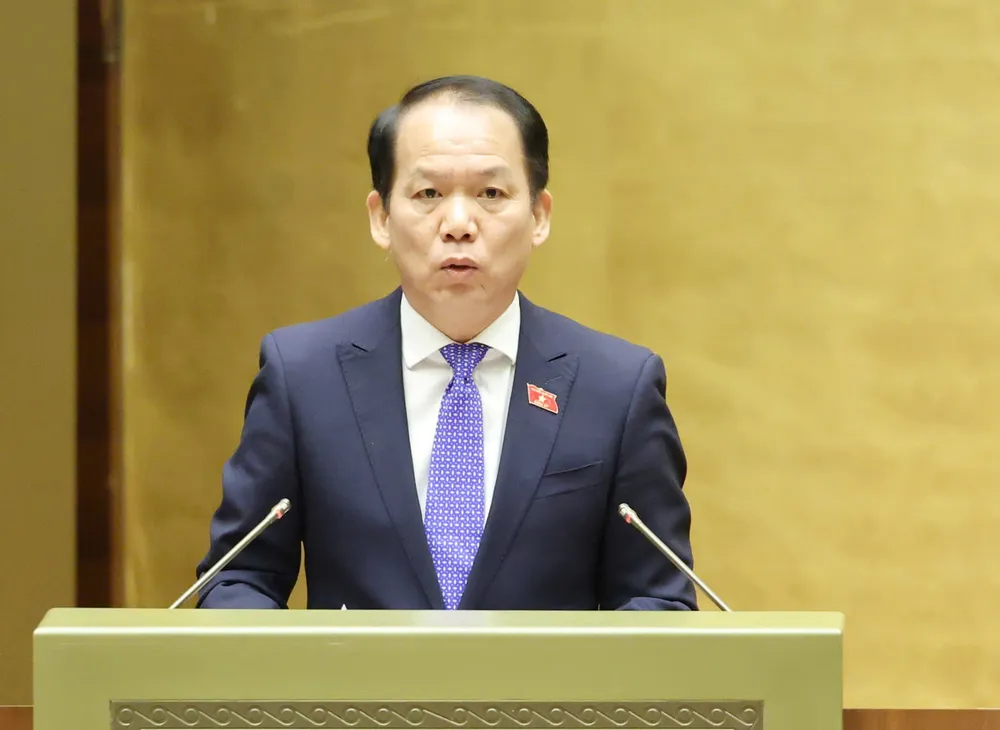
Chairman of the National Assembly's Committee on Law and Justice, Hoang Thanh Tung, presented the report on the review of draft laws on the morning of November 26. Photo: QUANG PHUC
Furthermore, the humanitarian policy of our State is ensured through a case-by-case review mechanism, not by adding criteria regarding the severity of the punishment. Raising the threshold for prison sentences would lead to the inability to extradite cases with low penalties, even those with clear international impact, reducing the effectiveness of international judicial cooperation and failing to address the risk of human rights violations in specific cases.
Therefore, to ensure international compatibility, maintain effective cooperation in combating transnational crime, and ensure the consistency of the legal system, the Standing Committee of the National Assembly proposes to retain the minimum penalty threshold at 1 year imprisonment as stipulated in the draft law.
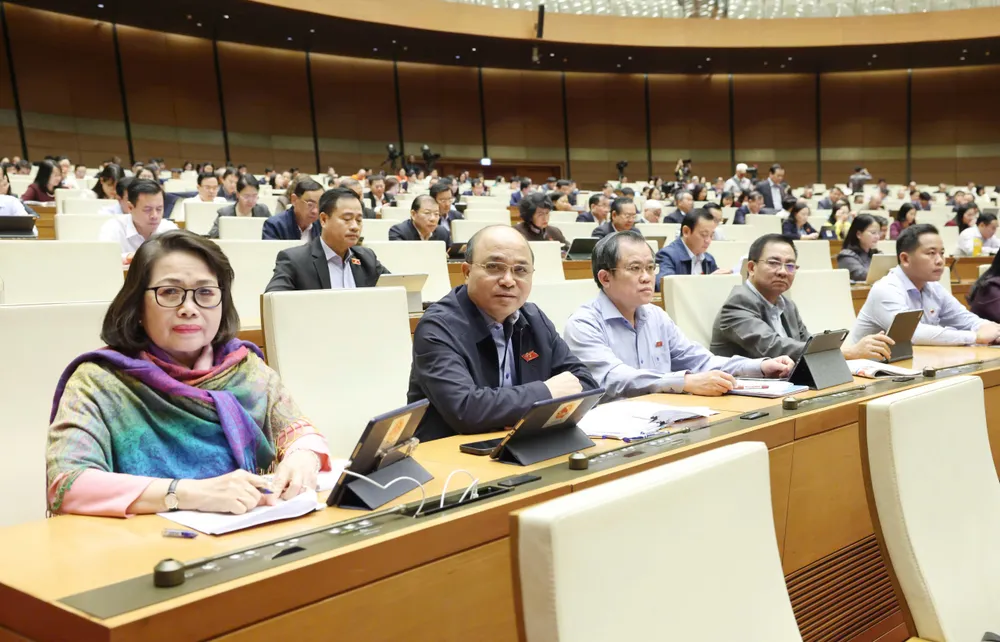
The National Assembly session on the morning of November 26. Photo: QUANG PHÚC
Regarding the detention of individuals in emergency situations prior to extradition requests, some opinions suggest that the detention of individuals in emergency situations relates to human rights and demonstrates Vietnam's responsibility in international cooperation. Therefore, more specific regulations are needed concerning the competent authorities, the mechanism for delegating authority, and regulations on the locations for detention in emergency situations to ensure feasibility. Furthermore, the Minister of Public Security is tasked with providing guidance on the content of detention decisions, the regime, and the management of detainees during their stay at detention facilities. Responding to the opinions of National Assembly deputies, the Standing Committee of the National Assembly has directed the inclusion of this content in the draft law.
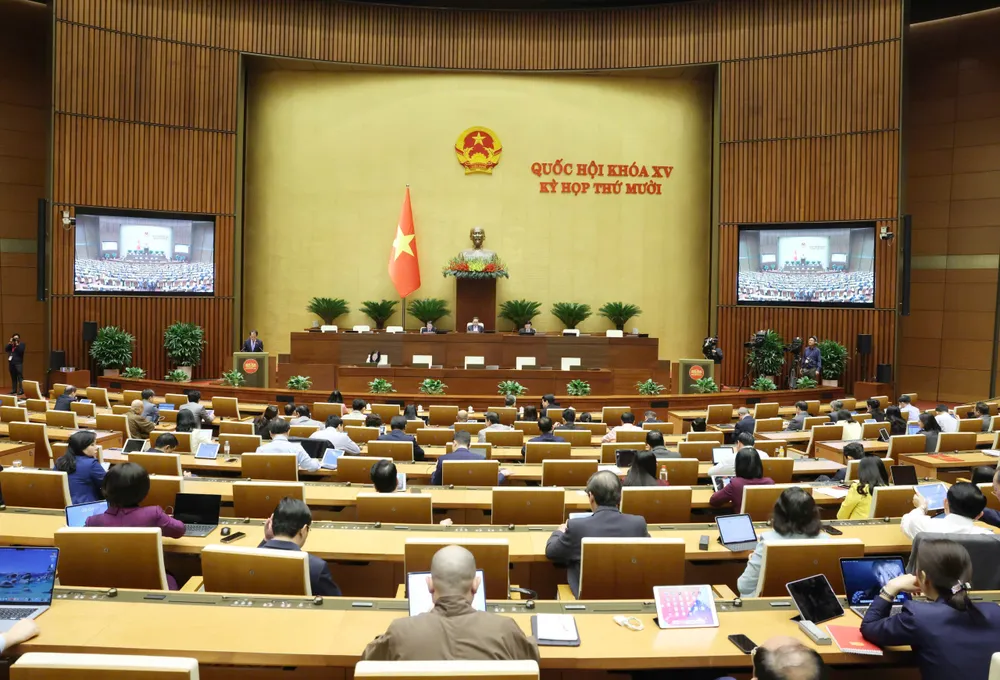
Morning session, November 26. Photo: QUANG PHÚC
Regarding the draft Law on the Transfer of Prisoners Serving Sentences, specifically concerning the conversion of prison sentences, the Standing Committee of the National Assembly believes that the conversion of prison sentences is a complex issue that directly affects the rights of prisoners serving sentences, while Vietnam's criminal policy differs significantly from that of other countries. Therefore, to ensure the feasibility, stability, and ease of application of the draft law, and to align with the requirements of innovative thinking in lawmaking, the draft law assigns the Minister of Public Security to preside over and coordinate with the Chief Justice of the Supreme People's Court and the Prosecutor General of the Supreme People's Procuracy to provide detailed regulations on related matters such as: the conversion of prison sentences in cases where the sentence imposed by the transferring country on the prisoner is over 30 years for multiple crimes, or over 20 years for a single crime; and the conversion of prison sentences during the period when a portion of the sentence or decision of the transferring country's court has already been served...
The draft Law on Mutual Legal Assistance in Civil Matters stipulates the principle of "reciprocity" in mutual legal assistance in civil matters between Vietnam and foreign countries to ensure flexibility in applying and implementing this principle, thereby maximizing the protection of the legitimate rights and interests of Vietnamese agencies, organizations, and individuals, and promoting international cooperation.
Article 11. Costs of fulfilling an extradition request
1. In cases where Vietnam is the requesting country for extradition, Vietnam shall bear all extradition costs arising from the time of receiving the person to be extradited, unless otherwise agreed.
2. In cases where Vietnam is the country requested to extradite, Vietnam shall bear all extradition costs incurred up to the point of handing over the extradited person, unless otherwise agreed.
3. The Government shall provide detailed regulations for this Article.
PHAN THAO
Source: https://www.sggp.org.vn/quoc-hoi-thong-qua-4-luat-post825479.html



![[Photo] Admire the coral "masterpiece" amidst the million-year-old heritage of Dak Lak province.](https://vphoto.vietnam.vn/thumb/1200x675/vietnam/resource/IMAGE/2026/05/31/1780221235105_anh-man-hinh-2026-05-31-luc-16-53-27.png)
![[Image] Hanoi Police officially crowned champions of V-League 2025/2026](https://vphoto.vietnam.vn/thumb/1200x675/vietnam/resource/IMAGE/2026/05/31/1780244769054_ndo_br_039d561b692be875b13a-jpg.webp)

![[Photo] Solemn bathing ceremony and Buddha procession in Hue](https://vphoto.vietnam.vn/thumb/1200x675/vietnam/resource/IMAGE/2026/05/31/1780228263543_1-jpg.webp)
![[Photo] The General Secretary, President and his wife begin their state visit to the Philippines.](https://vphoto.vietnam.vn/thumb/1200x675/vietnam/resource/IMAGE/2026/05/31/1780230559452_anh-man-hinh-2026-05-31-luc-19-28-11.png)














![[Video] Sunset at Lap An Lagoon – Where the sun sets over the fishing nets](https://vphoto.vietnam.vn/thumb/340x192/vietnam/resource/IMAGE/2026/05/31/1780192137701_beach-landscape-sea-water-nature-grass-745871-pxhere-com.jpeg)
































![[Photo] Admire the coral "masterpiece" amidst the million-year-old heritage of Dak Lak province.](https://vphoto.vietnam.vn/thumb/402x226/vietnam/resource/IMAGE/2026/05/31/1780221235105_anh-man-hinh-2026-05-31-luc-16-53-27.png)




























Comment (0)