


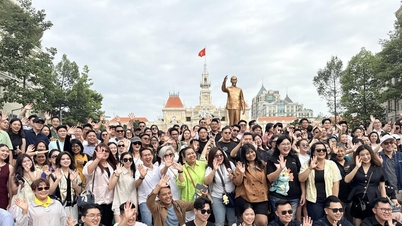
Over the past period, Lao Cai province has made concerted efforts to implement many comprehensive, decisive, and in-depth solutions to gradually restore and expand the international tourist market after the Covid-19 pandemic.
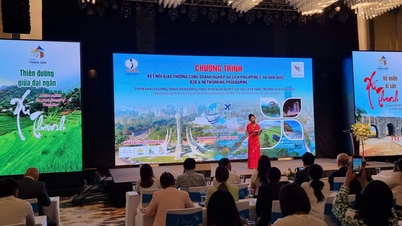
Firstly, we must be proactive and decisive in promoting international tourism , through organizing and participating in international tourism fairs, and inviting famtrip and presstrip delegations from key markets.
In particular, the province successfully organized the Lao Cai International Tourism Fair with 134 booths and the participation of 55 units, including 15 booths from 7 countries and 140 international travel agencies that came to survey and experience tourism products in Lao Cai.
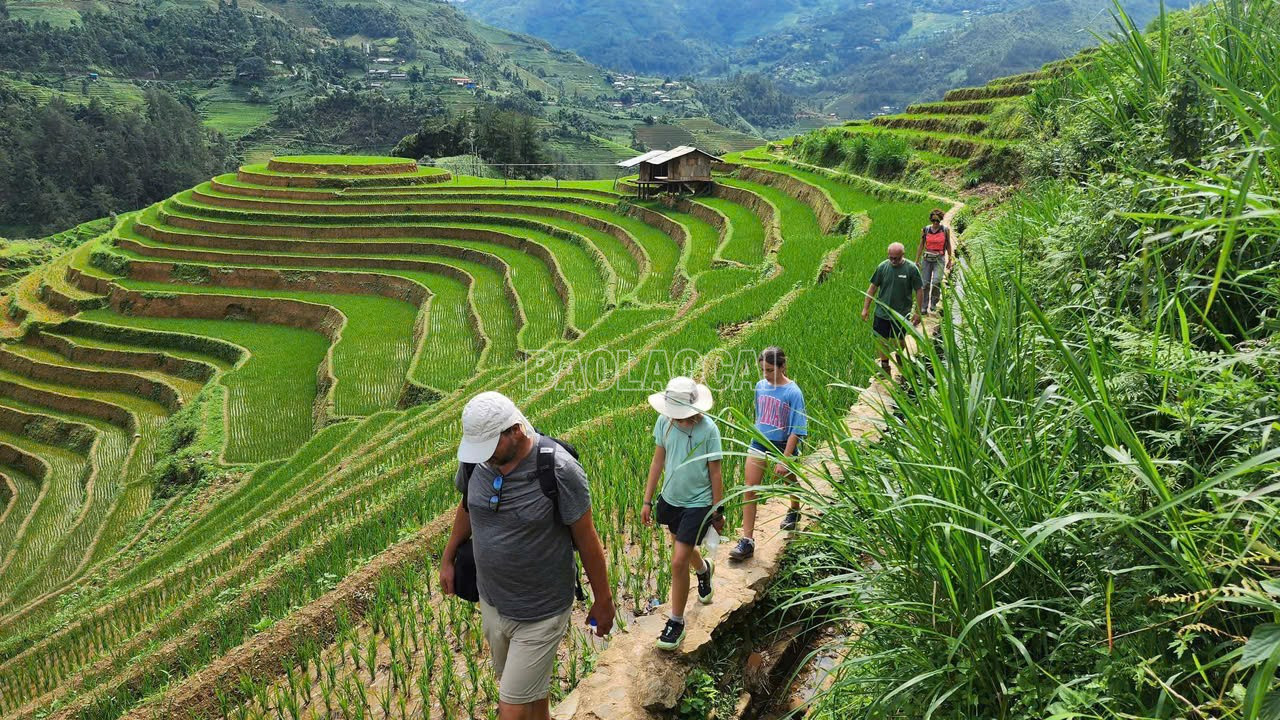
In particular, focusing on promotional activities abroad, especially with Yunnan province in China, the tourism industry has proposed developing a model tour product: "1 tour - 2 countries - 6 destinations" between Vietnam and China.
Communication efforts on digital platforms and social media have been intensified, helping to bring the image of Lao Cai tourism closer to global tourists. Tourism infrastructure and service quality have also received significant investment and improvement.
To date, the province has over 2,100 accommodation establishments with more than 20,600 rooms; many hotels meet 3-5 star standards, satisfying the high-end accommodation and resort needs of foreign tourists.
Tourism and travel businesses are also being connected to anticipate market trends, gradually building international tours and routes linked with neighboring localities and border regions.
The province has also identified unique tourism products that suit the tastes of international tourists, ranging from products deeply rooted in the cultural identity of ethnic minorities to ecotourism, mountain resorts, and trekking to explore nature… in order to create mechanisms and policies to support development in a way that improves both quantity and quality.
The policies include: preferential loans, training of local tour guides, foreign language and service skills training for international tourists, and programs to raise community awareness about civilized and friendly tourism, aiming to create a more positive and professional environment for welcoming international tourists.
Philip, a French national who recently visited Mu Cang Chai, shared: "I learned about Mu Cang Chai through friends. I really enjoyed the beautiful scenery here. It's peaceful and also very unique with its local culture. I also really enjoyed talking to the children. They were always smiling and hospitable, even though life is still very difficult."


Currently, in villages with tourism potential throughout the province, ethnic minority people have boldly borrowed preferential loans to renovate their homes and equip them with necessary facilities and amenities to welcome guests. The resorts are furnished with bamboo partitions or large screens made of brocade or floral fabrics. Blankets and mattresses are also handcrafted according to the unique characteristics of each ethnic group.
Families also combine selling local souvenirs, such as brocade fabrics, ethnic clothing, rattan and bamboo products, and local specialties like forest honey and self-produced agricultural products, or offering services like herbal baths and saunas, which are very popular with customers.
Visitors to Lao Cai also have the opportunity to learn about the customs, daily life, and work of the locals, participating in the production of traditional handicrafts such as brewing and cooking rượu (rice wine), grinding mèn mén (a type of cornmeal), spinning flax, weaving cloth, brocade, forging knives, and during the rice season, participating in harvesting and threshing rice on terraced fields, pounding cốm (roasted rice flakes), and making bánh dày (rice cakes)... In each area, visitors can also enjoy local specialties, immerse themselves in folk songs and dances, and experience the traditional customs of that locality. It is these simple, genuine aspects that attract international tourists from many countries around the world.
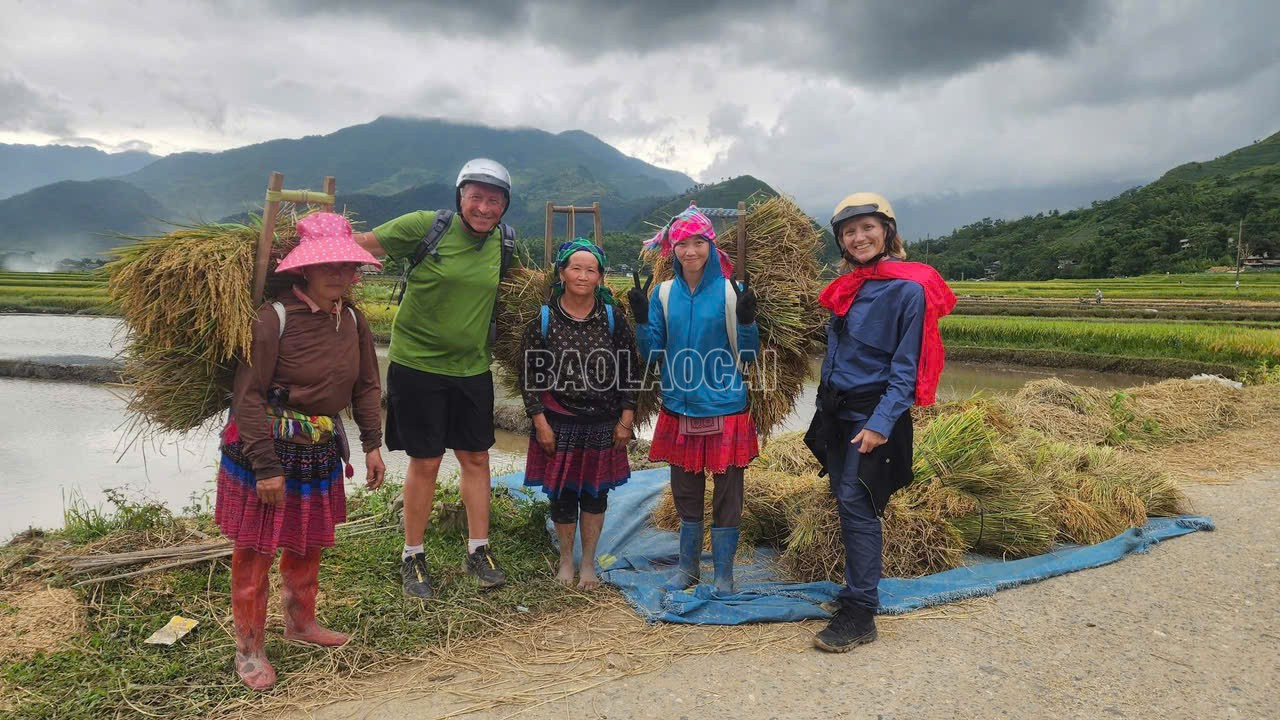
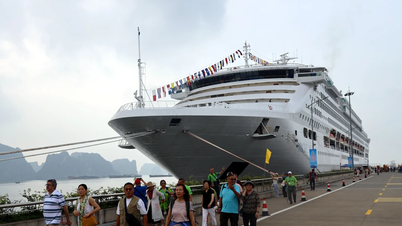
As of September 2025, Lao Cai had welcomed over 1.1 million international visitors, a significant increase compared to the same period the previous year and approaching pre-pandemic levels.
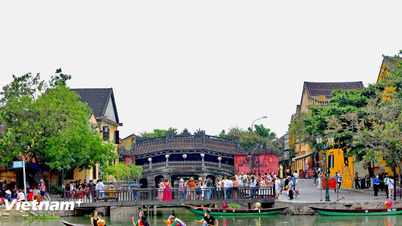
International tourists are not only a major source of revenue for the tourism industry but also a crucial driving force in improving the quality of products, services, and the destination's standing. For a locality with abundant natural and cultural potential and border gate advantages like Lao Cai, attracting international tourists is always identified as one of the key tasks in the strategy for sustainable, modern, and internationally integrated tourism development.
By 2025, Lao Cai province aims to welcome 10.5 million tourists, including 1.5 million international visitors, and by 2030, 3.5 million international visitors, reaching a total of 15 million tourists annually (with Chinese tourists accounting for 40-45%), becoming a national and international-level eco-tourism, cultural tourism, and resort center.
To achieve this goal, the tourism industry has identified several difficulties and obstacles that need to be addressed. These include the lack of international transportation infrastructure, the absence of a direct civil airport; current visa policies and immigration procedures that are not yet truly streamlined for some potential markets; and the fact that cross-border tourism with China is still subject to many strict regulations, causing difficulties for businesses and tourists.
Furthermore, while the workforce serving international tourists is trained, it still lacks professionalism and foreign language skills, especially in remote areas. In addition, some small businesses and community-based tourism households have not yet met international standards regarding safety, hygiene, environmental protection, and customer service skills.
In the coming period, the tourism industry in Lao Cai province will focus on implementing a comprehensive set of solutions to capitalize on global tourism trends, enhance competitiveness, and attract international tourists effectively and sustainably.
Ms. Vu Thi Mai Oanh, Deputy Director of the Department of Culture, Sports and Tourism of Lao Cai province, said: First of all, the industry will focus on developing and diversifying tourism products to suit the tastes of international tourists. In particular, types of tourism such as cultural and community-based experiential tourism, eco-tourism and resort tourism, adventure tourism - trekking, health and wellness tourism, and high-end tourism (MICE, golf) will be prioritized. These are product lines suitable for international tourists with long stays and high spending levels, especially from European, North American, Japanese, and Korean markets.
Simultaneously, the province will intensify efforts to promote and market international tourism, developing it both in breadth and depth. In particular, the province will utilize digital channels, social media, and modern communication technologies to reach international tourists directly, effectively, and quickly.
Another crucial solution is to continue upgrading infrastructure and services for international tourists. The industry will focus on encouraging and guiding the development of accommodation facilities that meet international standards, improving transportation infrastructure connecting destinations, and enhancing the quality of tourism human resources, especially in foreign languages, professional skills, and service attitude. This is the foundation for ensuring that international tourists visiting Lao Cai experience high-quality, friendly, and professional services.

At the same time, the province should do a good job of advising the provincial government, focusing on strengthening regional linkages and international connections. Specifically, this includes: continuing to expand inter-provincial tours and routes in the Northwest region; tourism tours combining mountainous and coastal areas (Lao Cai - Hanoi - Hai Phong - Quang Ninh; Lao Cai - Hanoi - Nha Trang, etc.); cross-Vietnam charter train services (high-class railway services); expanding cross-border cooperation with Yunnan province (China), and developing border tourism models on the Red River and Nam Thi River.
The industry will also continue to promote digital transformation in tourism, developing a smart tourism ecosystem, including: multilingual portals, digital maps, QR codes at destinations, cashless payments… viewing these as core tools to enhance the experience and effectiveness in attracting international tourists.
Lao Cai's tourism industry, after its merger, is at a crucial turning point. Transforming from a potential destination into a leading attractive destination in the Northwest region for international tourists requires foresight and decisive action.
We are confident that, with the strategic vision of the new political system, Lao Cai province will overcome current obstacles and implement breakthrough solutions, transforming Lao Cai into a national and international-level eco-tourism, cultural, and resort center, commensurate with its inherent potential beauty.
Source: https://baolaocai.vn/giai-phap-thu-hut-khach-quoc-te-post882763.html






















































































Comment (0)