

Vietnam's tourism industry has experienced a strong recovery after the COVID-19 pandemic. In the first six months of 2025, Vietnam welcomed 10.6 million international visitors, achieving a growth rate of 20.7% compared to the same period last year.
However, according to the United Nations Tourism Organization (UN Tourism) in 2024, there were over 1.4 billion international tourist arrivals globally, with the Asia -Pacific region receiving 316 million, while Vietnam recorded 17.5 million, accounting for less than 1.3% of the total world tourist arrivals and 5.5% of the Asia-Pacific region.
This situation reflects increasingly fierce competition, not only regionally but also globally. Without comprehensive reforms, the development of appropriate strategies, and keeping pace with technological trends, Vietnam's tourism sector will face significant challenges on the international tourism map, particularly in achieving its goal of attracting nearly 200 million domestic and international tourists by 2030, contributing 13-14% to the total socio-economic product.

Intense competition in Southeast Asia.
Southeast Asia continues to be a tourism hotspot, with Thailand, Singapore, Malaysia, Indonesia, and Vietnam constantly competing to attract international visitors. From January to April 2025, Thailand led with 12.1 million visitors; Singapore received only about 5.7 million but had high average spending; Malaysia ranked second with 8.36 million visitors and Vietnam third with 7.67 million visitors.
Vietnam currently holds an advantage over other countries in the region, but still faces many challenges in attracting international tourists compared to Thailand, Malaysia, and even Singapore.
Hannah Pearson, a Southeast Asia tourism research and consulting expert, stated, "These countries all possess unique tourism development policies and high-quality services, helping them maintain their attractiveness to international tourists. Simultaneously, they apply technology to improve service quality, implement smart tourism management, and develop many special tourism products such as sustainable tourism, green tourism, and MICE (Meetings, Incentives, Conferences, and Exhibitions) tourism."
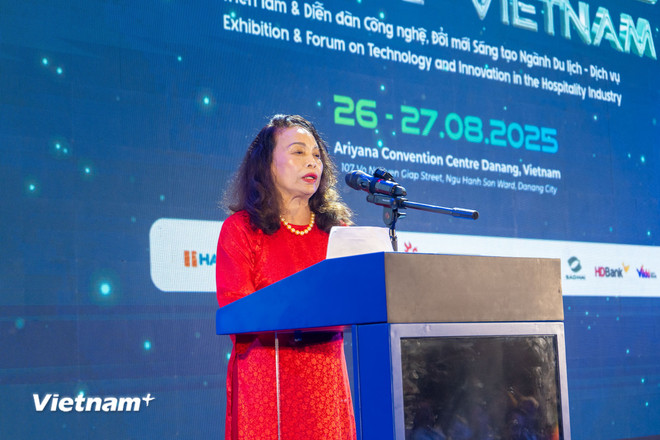
Ms. Do Thi Hong Xoan, President of the Vietnam Hotel Association, affirmed: "The tourism and hotel industry is entering a 'new race' – requiring innovative thinking, flexibility in strategy, and decisive action."
"Tourists are increasingly discerning but willing to pay for real value. Technology opens up tremendous opportunities for businesses that know how to take advantage of it, and the trend of developing sustainable and responsible tourism is no longer an option, but has become a mandatory criterion," Ms. Xoan emphasized.
Challenges in maintaining tourism growth momentum.
Vietnam's tourism industry is entering a strong growth phase after the pandemic, with 10.6 million international visitors and 77.5 million domestic visitors in the first six months of the year, generating total revenue of 518 trillion VND. According to Ms. Do Thi Hong Xoan, this result is thanks to supportive policies such as e-visas, visa exemptions for 13 countries, and various support mechanisms for accommodation establishments.
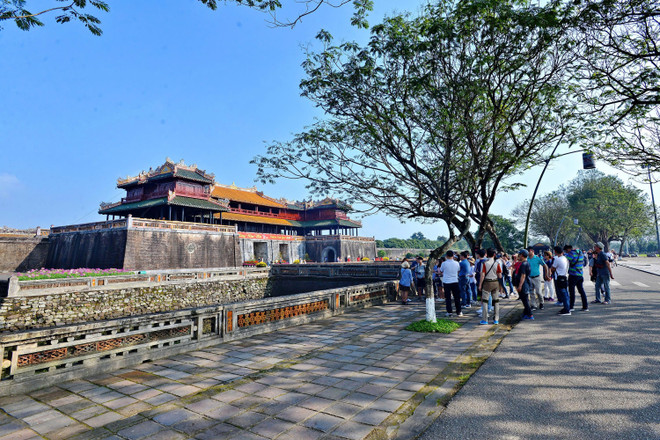
However, the divergence between hotel models is becoming increasingly clear: those that invest in quality, technology, and human resources are recovering and attracting customers, while some establishments are still struggling and lacking direction.
The tourism industry's human resources remain in a "critical" state, especially high-quality personnel, experienced managers and leaders capable of driving change, which are lacking and becoming a bottleneck.
Hannah Pearson emphasized, "Sustainable growth is only possible when Vietnamese businesses meet the higher experiential expectations of international tourists and develop responsible tourism. Hotels must innovate their thinking, apply technology, and redefine the customer experience to maintain their appeal."
So how can Vietnam's tourism industry maintain its growth momentum, or even achieve stronger breakthroughs in the next phase? The answer will be revealed in the next installment, " Vietnam Tourism: Technology and Certification Elevate Destinations."
Source: https://www.vietnamplus.vn/du-lich-viet-nam-truc-suc-ep-canh-tranh-khu-vuc-dong-nam-a-post1058865.vnp


























![[Photo] Prime Minister Pham Minh Chinh attends the Conference summarizing and implementing tasks of the judicial sector.](/_next/image?url=https%3A%2F%2Fvphoto.vietnam.vn%2Fthumb%2F1200x675%2Fvietnam%2Fresource%2FIMAGE%2F2025%2F12%2F13%2F1765616082148_dsc-5565-jpg.webp&w=3840&q=75)
























































Comment (0)