

National Assembly Deputy Tran Hoang Ngan ( Ho Chi Minh City): Through a development-oriented legal system, we can promote decentralization and delegation of power.
.jpg)
Photo: Quang Khánh
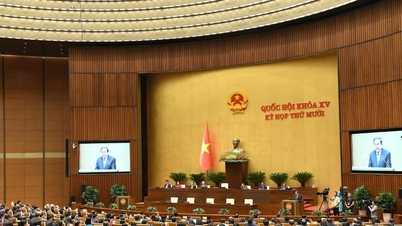
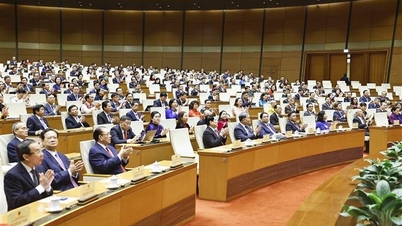
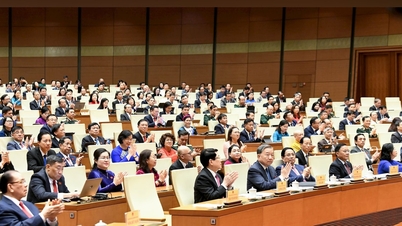
At its Tenth Session, the National Assembly passed 51 laws and 39 resolutions, including 8 normative legal resolutions, accounting for nearly 30% of the total number of laws and normative legal resolutions of the entire 15th term.
Over nearly two months of work, the National Assembly reviewed and passed numerous laws, contributing to the completion of a development-oriented legal system, promoting decentralization and delegation of power in the direction of "local authorities decide, local authorities act, local authorities are responsible". At the same time, it improved the investment and business environment, reformed administration, and reduced unnecessary procedures to strongly attract investment.
The majority of laws and resolutions passed by the National Assembly at this session received a very high level of consensus, with over 90% of the attending delegates voting in favor. During the group and plenary sessions, delegates contributed very insightful, in-depth, and intelligent opinions, which the drafting agencies listened to and thoroughly incorporated, especially regarding the contents of the amended Personal Income Tax Law.
Accordingly, the revenue threshold for household and individual businesses eligible for tax exemption has been raised from 200 million VND/year to 500 million VND/year. This is considered a significant reform aimed at reducing the burden of procedures and compliance costs for the individual economic sector, while also aligning with the context of business recovery and the adjustment of the general price level.
According to the new regulations, households and individual businesses with total revenue not exceeding 500 million VND in the fiscal year will not have to pay personal income tax or value-added tax.
At the same time, the National Assembly has worked alongside the Government to remove "bottlenecks" in infrastructure, land, and localities, especially through the adoption of resolutions amending and supplementing several articles of Resolution No. 98/2023/QH15 on piloting some specific mechanisms and policies for the development of Ho Chi Minh City; resolutions amending and supplementing several articles of Resolution No. 136/2024/QH15 on piloting some specific mechanisms and policies for the development of Da Nang City; and resolutions piloting some specific mechanisms and policies to implement large and important projects in the capital city.
These mechanisms provide the three cities of Hanoi, Ho Chi Minh City, and Da Nang with flexible institutional space, increasing their autonomy, maximizing the mobilization of social resources, and accelerating the progress of key projects.
The final session of the 15th National Assembly left many positive impressions and milestones, continuing to strongly institutionalize the three strategic breakthroughs in the spirit of the 13th Party Congress Resolution, namely breakthroughs in institutions, infrastructure, and high-quality human resources. This is an important foundation for our country to confidently move into a new era.
I am confident that, under the leadership of the Party, with the support of the National Assembly and the determination of the Government, and with the trust of the people, we will achieve the set goals.
National Assembly Deputy Ha Sy Dong (Quang Tri): Institutional "bottlenecks" have been removed.
.jpg)
Photo: Quang Khánh
The Tenth Session concluded the activities of the 15th National Assembly with remarkable achievements reflecting a term of effort, innovation, and responsibility. This session played a crucial role, setting impressive records for the longest working time and the largest workload in the last three National Assembly terms. The laws and resolutions passed this time have contributed to removing institutional and human resource bottlenecks, seizing opportunities and room for development to promote double-digit growth in the coming period.
With a sense of responsibility to voters and the people, the Government has submitted a large volume of draft laws and resolutions to the National Assembly for consideration and approval. The National Assembly, with its strong reform spirit, has applied a streamlined process while still ensuring legislative quality, making groundbreaking decisions to effectively address bottlenecks in the investment environment, planning, disbursement of public investment capital, and attracting resources… building confidence for businesses and the people, and serving national development in the new era.
The National Assembly also devoted time to discussing and deciding on major issues regarding resources for key national projects, such as the North-South high-speed railway, the Ninh Thuan nuclear power project, and the expressway system… with the aim of gradually completing a comprehensive infrastructure and promoting sustainable socio-economic development.
In addition, humane policies such as free textbooks, insurance policies, and support for national target programs contribute to mobilizing and guiding social resources, creating confidence for domestic and foreign businesses.
This session also served as a forum for frank, lively, and multifaceted debates, all in a constructive spirit, aimed at finding optimal, accurate, and relevant solutions to be incorporated into laws and resolutions. Media outlets truthfully and promptly conveyed issues with differing opinions, helping to disseminate information clearly and thereby receiving positive feedback from voters and the public.
A prime example is the draft law amending 10 laws on road traffic safety, which includes a mandatory provision for child safety equipment in vehicles starting January 1, 2026. After feedback from delegates in the National Assembly, the media, and public consensus, the drafting agency and the National Assembly Standing Committee incorporated and removed this provision that was not in line with reality. This clearly demonstrates a proactive, serious, and responsible approach to improving the legal system towards transparency, conciseness, readability, understanding, memorability, and ease of implementation.
Following this session, the delegates' greatest hope is that the Government, ministries, and localities will promptly concretize the laws and resolutions of the National Assembly with practical actions. With the institutional "bottlenecks" removed, the crucial task now is to organize effective implementation, meeting the expectations of voters and the business community, igniting new confidence, vitality, and aspirations for the country to take off strongly.
I also hope that the media will continue to disseminate the new policies, laws, and institutions recently passed by the National Assembly, helping people and businesses understand the meaning of each regulation, especially those that directly impact the investment and business environment.
Looking back over the past five years, it is clear that the 15th National Assembly has left many profound impressions, clearly demonstrating its role as the highest state power body, listening to and caring for the legitimate interests of the people and businesses.
The Tenth Session – the final regular session of the 15th National Assembly term – has concluded, but much work remains to be done, including institutional reforms, promoting socio-economic development, and fulfilling the commitments and promises of the Government and judicial bodies to the electorate. The 16th National Assembly will continue this journey, stronger, building upon and innovating, reviewing strengths to build upon them; and at the same time, continue to address existing bottlenecks, ensuring the smooth operation of the legal system and the apparatus throughout the term and in the years to come.
National Assembly Deputy Nguyen Anh Tri (Hanoi): Saving time while still ensuring substance.
.jpg)
Photo: Pham Thang
This was a very special session, lasting for a long period (from October 20th to December 11th) and addressing many issues in accordance with the full functions of the National Assembly.
During this period, the country witnessed many major events, including Party congresses of ministries, sectors, and localities, as well as many pressing national issues, such as the task of completing the 2025 plan, especially the target of achieving GDP growth above 8%, and the situation of natural disasters, storms, and floods causing damage to both people and property in many localities. The workload was therefore very large and stressful, especially for delegates holding important leadership and management positions who had to handle many other tasks simultaneously.
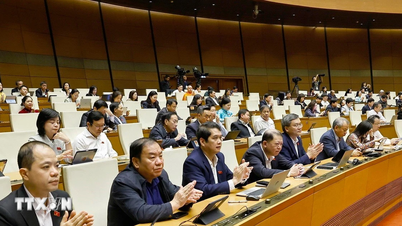
However, the delegates worked with great seriousness, high responsibility, and quality, engaging in lively discussions, especially on important national issues. The program was organized scientifically, and the management by the Speaker of the National Assembly and the chairpersons of the sessions ensured flexibility.
In its legislative function, the National Assembly passed numerous laws and resolutions during this session. In its oversight function, this session did not include direct question-and-answer sessions, but rather integrated activities, in which government leaders and ministries provided explanations and reports clarifying issues of concern to the delegates. This approach is reasonable, time-saving, and still ensures substantive results.
Overall, at this session, the National Assembly decided on many important national issues, taking place in the context of the entire Party and people preparing for the 14th National Congress of the Party – a major political event of the country to be held in early 2026. Therefore, the spirit and "essence" of the Party Congress also left a strong mark on the entire content and program of this session.
Delegates received draft documents for the 14th National Congress of the Party, which contain many provisions on the Party's guidelines, policies, and viewpoints for the next term. These orientations will have a guiding impact on the issues presented to the National Assembly for discussion, creating a very high level of cohesion and unity between the Party and the National Assembly.
Source: https://daibieunhandan.vn/ky-hop-thu-muoi-quoc-hoi-khoa-xv-khan-truong-cu-the-hoa-cac-luat-nghi-quyet-cua-quoc-hoi-bang-nhung-hanh-dong-thiet-thuc-10400301.html


![[Image] Close-up of the newly discovered "sacred road" at My Son Sanctuary](/_next/image?url=https%3A%2F%2Fvphoto.vietnam.vn%2Fthumb%2F1200x675%2Fvietnam%2Fresource%2FIMAGE%2F2025%2F12%2F13%2F1765587881240_ndo_br_ms5-jpg.webp&w=3840&q=75)































































Comment (0)