

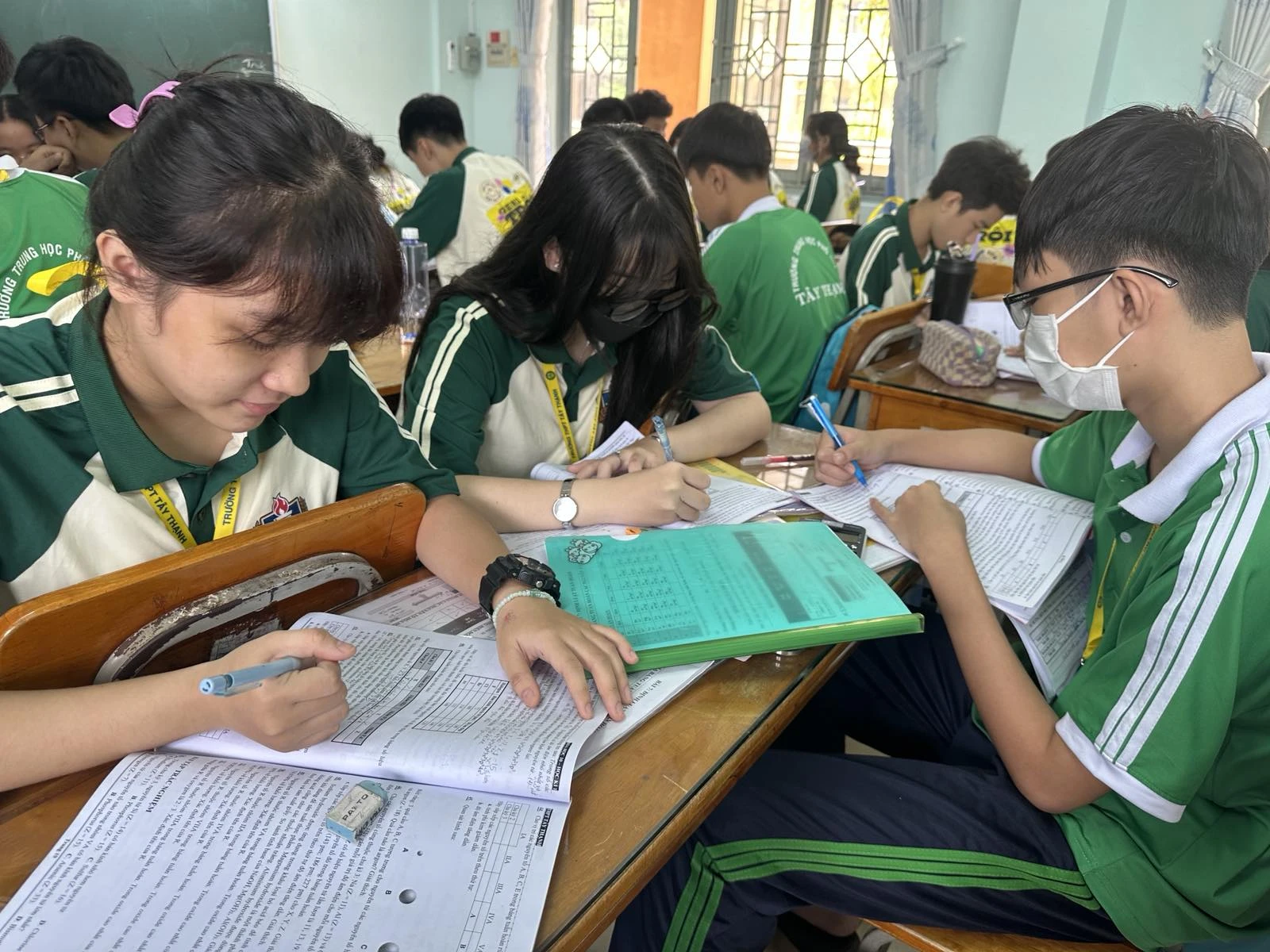
The Ministry of Education and Training has just released sample exam questions for the 2025 high school graduation exam for students to refer to.
Classify candidates effectively.
Mr. Tran Van Toan, former head of the mathematics department at Marie Curie High School (District 3, Ho Chi Minh City), commented that the sample exam clearly reflects the innovative spirit of the 2018 General Education Program. This is aimed at assessing students' abilities at different levels of thinking.
The sample math test has three types of questions:
- Format 1 (3 points): A familiar 4-option multiple-choice format consisting of 12 questions at the level of quickly recognizing concepts, definitions, and formulas.
- Format 2 (4 points): This innovative format consists of 4 questions, each with 4 parts, and requires students to answer whether those parts are true or false. Therefore, this format requires students to answer 16 points and demonstrate a thorough understanding of the knowledge learned in the curriculum.
- Format 3 (3 points): consists of 6 questions applying general knowledge to solve, and is also a new format given in essay form, but only requiring the final result to be stated in each question.
Master Toan commented that the innovations in the sample math exam contribute to a much more accurate assessment of students' abilities compared to before, but they do not assess the ability to present a solution to a problem.
The mindset of taking a "hit or miss" strategy is no longer in place.
Commenting on the four-answer multiple-choice questions, teacher Le Minh Huy from Nguyen Hien High School (District 11, Ho Chi Minh City) said that this is a familiar format, only requiring students to recognize the concepts and have a clear understanding of the theory.
Regarding Part 2 (true/false questions), Mr. Huy assessed this as a new and very good question type because each question consists of many sub-points, and students must truly understand the concepts to be able to answer them. This group of questions very well meets the objectives of the 2018 General Education Program regarding the development of thinking and reasoning skills in mathematics.
Teacher Huy commented that the short answers in Part 3 are a group of essay-type questions. Most of the questions in this section are at the application level, especially incorporating practical problems. The appearance of these types of questions forces students to know how to solve problems, moving away from the "guessing" or using "tricks" to solve math problems as before.
The sample test uses various materials to assess reading comprehension skills.
Master Nguyen Viet Dang Du, head of the history department at Le Quy Don High School (District 3, Ho Chi Minh City), commented that the structure of the sample history exam, using two multiple-choice formats, shows a change compared to the old exam format.
Specifically, in addition to the multiple-choice format with 4 options (in Part 1), the sample test includes a reading comprehension section where candidates must choose whether a statement is true or false (Part 2) – closely resembling the multiple-choice formats used in current university aptitude tests. However, the scoring system is relatively complex. Candidates who answer one question correctly in Part 2 only receive 0.1 points instead of 0.25 points as in Part 1.
Regarding difficulty, Master Du believes there is an improvement compared to the old exam format, with 12 application-based questions (accounting for 30% of the total questions). Therefore, the exam has the potential to differentiate candidates, serving the admission criteria of universities.
According to Master Du, the sample exam closely follows the history curriculum. The questions utilize various sources to test students' reading comprehension skills, but remain within the curriculum.
Overall, Master Du assessed the sample test as innovative and suitable for assessing students' abilities, but noted that it was still outdated compared to the rest of the world due to the limited use of multiple-choice test formats.
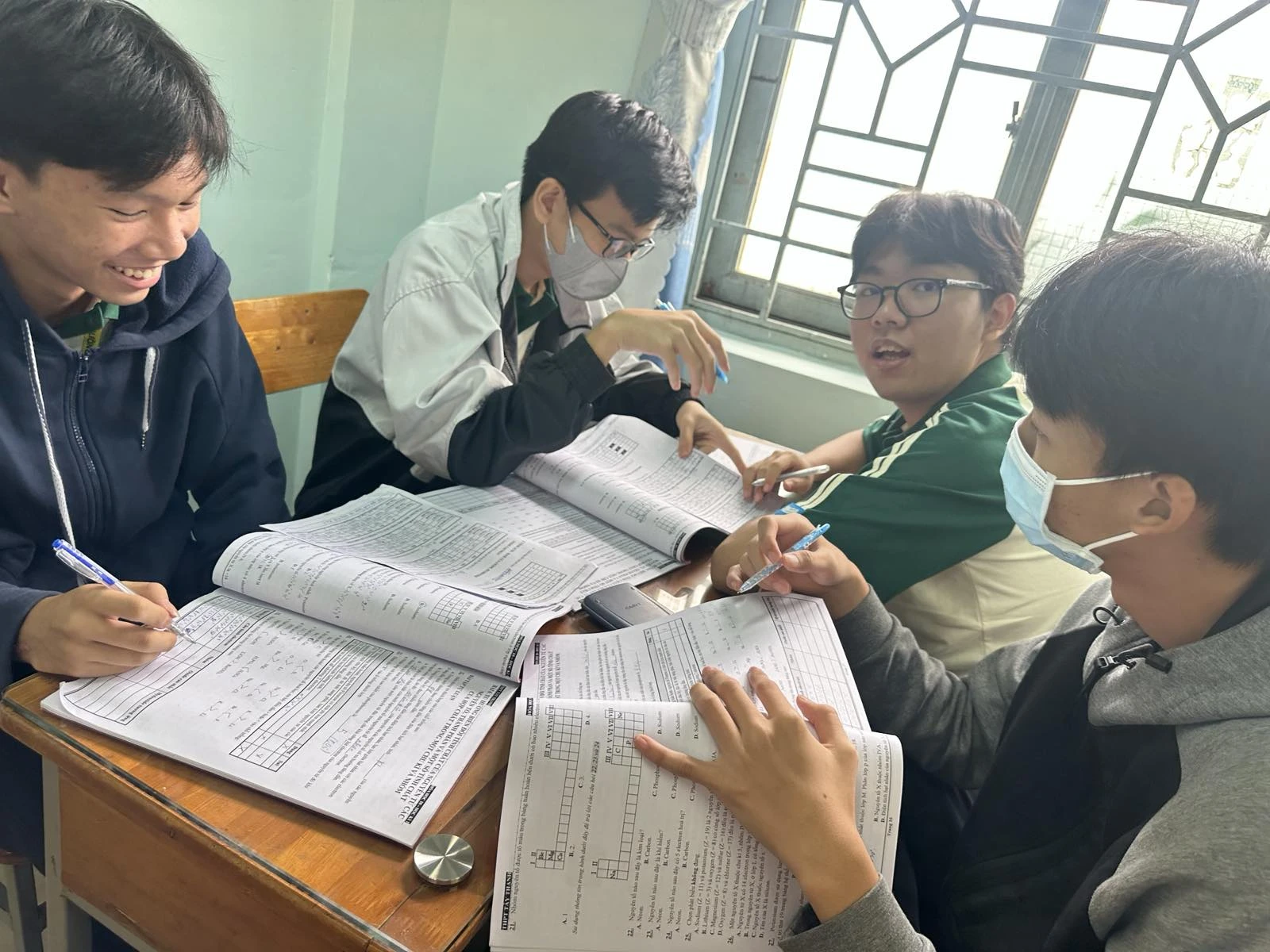
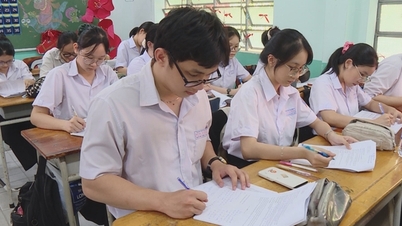
11th grade students from Tay Thanh High School (Tan Phu District, Ho Chi Minh City)
Reduce the probability of random selection to achieve the maximum score.
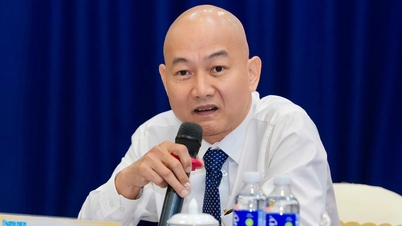
Besides using multiple-choice questions (a practice adopted in Vietnam for many years), the sample chemistry exam also includes true/false questions, according to Master Pham Le Thanh from Nguyen Hien High School (District 11, Ho Chi Minh City).
In true/false multiple-choice tests, each question has four options, requiring candidates to apply their knowledge and skills comprehensively to choose the correct or incorrect answer for each option. This helps to differentiate the thinking and abilities of various student groups, limiting the use of "tricks" or "guessing" to select answers, unlike in multiple-choice tests. The probability of randomly scoring the maximum mark is 1/16, four times lower than in current multiple-choice tests.
The sample test also incorporates short-answer multiple-choice questions, requiring candidates to possess high levels of competence, knowledge, and skills to write accurate answers, thus reducing the tendency to guess randomly as in previous tests. Overall, the combination of various standardized question formats helps in assessing and accurately classifying students' abilities.
However, Mr. Thanh said: "Teachers are still hoping that the Ministry of Education and Training will guide the development of exam content that is close to real life, not heavily focused on memorizing and understanding knowledge. And encourage higher-order thinking skills through the application of knowledge to solve specific problems in life, because if knowledge is not applied to reality, it is just information."
Source link










































































Comment (0)