A mark of a bygone era of Vietnamese music.
The Thanh Tung - Legacy of Love exhibition, held at the Exhibition House at 16 Ngo Quyen Street, Hanoi, attracted a large audience of music lovers. Over 100 photographs, old cassette tapes, vinyl records, original recordings from the 1970s, and handwritten manuscripts opened up the artistic world of the musician who left his mark on Vietnamese music in the 1980s and 2000s.
From his time studying at the Pyongyang Conservatory to the vibrant years of Vietnamese light music during the Doi Moi (Renovation) period, the life and career of composer Thanh Tung are revealed through photographs, recordings, and simple everyday stories. Through these, viewers gain a deeper understanding of the author of "Spring's Declaration of Love ," " A Drop of Sunlight on the Threshold ," " Purple Flowers in the Yard ," and "Alone," as well as the persistent artistic journey behind the songs that have become ingrained in the spiritual lives of millions of Vietnamese people.
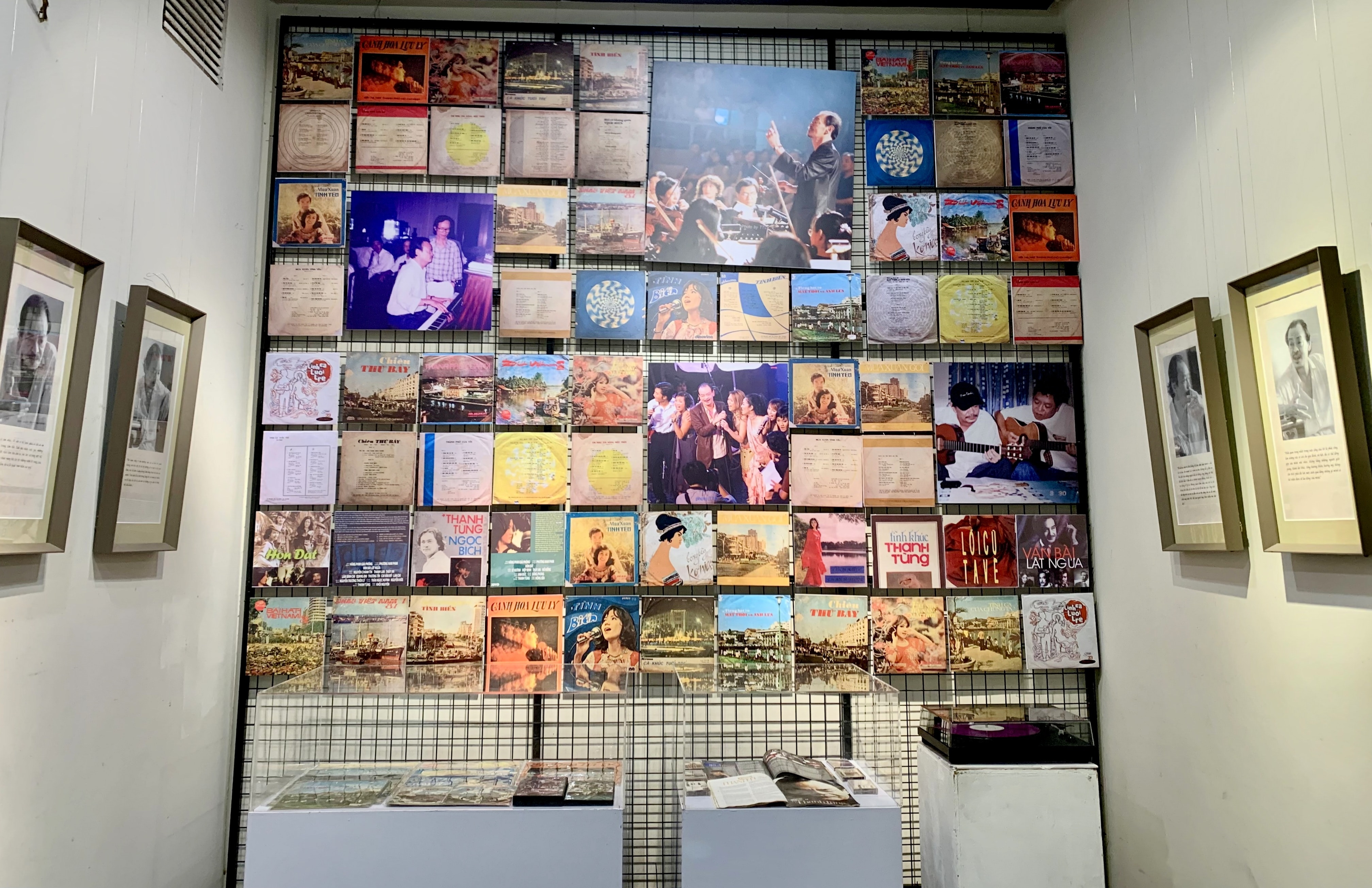
The exhibition is the result of nearly three years of work on the Legacy of Love project. Ms. Bach Duong, the musician's daughter, sought out her father's former friends and colleagues to hear their stories, retrieved photographs, tapes, recordings, and documents that had been lying dormant for many years in personal archives. Through this, many glimpses of the musical life of a bygone era are vividly recreated.
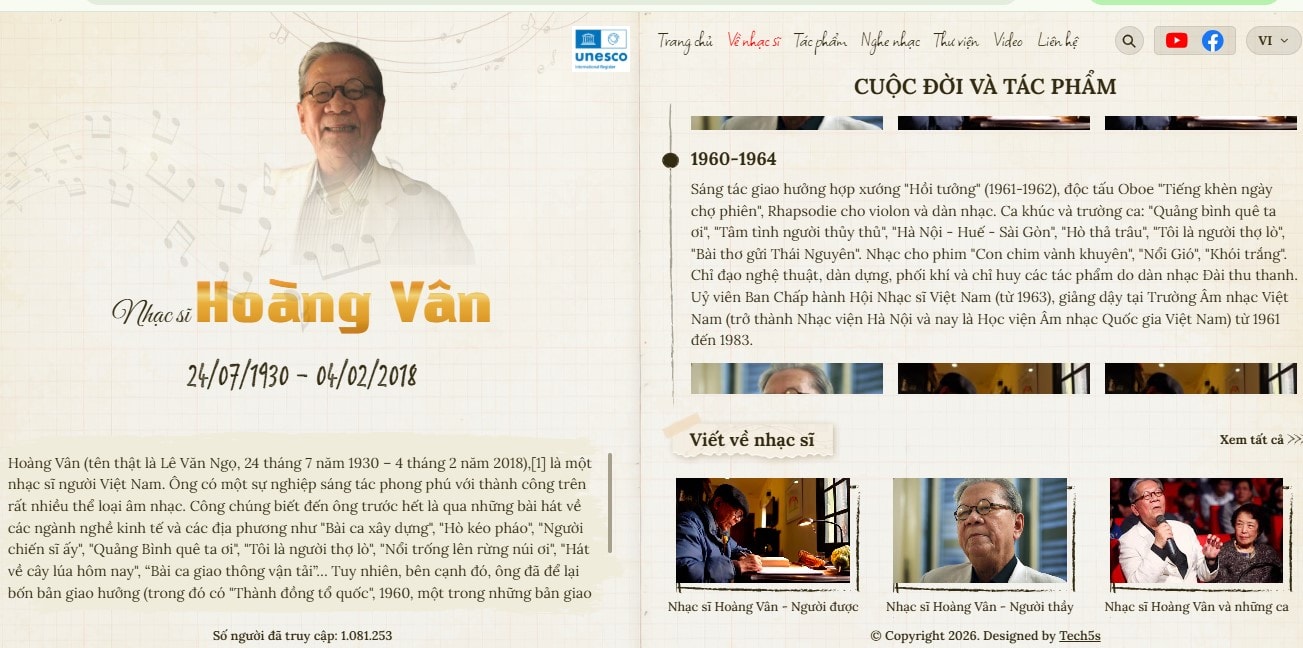
Gathering the pieces of a lifetime of creative work is a journey that the family of composer Hoang Van has persistently undertaken for many years. As one of the great names in Vietnamese revolutionary music, he left behind more than 700 works in various genres: songs, choral pieces, instrumental music, film scores… Compositions such as "Ho Keo Phao" (Dragging the Cannon) , "Bai Ca Xay Dung" (Song of Construction) , "Tinh Ca Tay Bac" (Love Song of the Northwest )… have become familiar melodies to many generations of Vietnamese people.
After the composer's death, Dr. Le Y Linh and his family began the journey of preserving and systematizing this vast legacy: from gathering manuscripts and recordings, meeting with people who had worked with the composer, cross-referencing documents, verifying information, and restoring lost musical scores... Conductor Le Phi Phi participated in editing and restoring many old recordings into complete musical scores...



In 2018, the website hoangvan.org was launched as a "music museum" in the digital space. It currently houses approximately 700 works, nearly 200 recordings, and thousands of valuable documents related to composer Hoang Van, with content presented in five languages. The website facilitates public access to his works and serves as a model for systematizing and promoting musical heritage through technology. More importantly, this archive contributed to Hoang Van's collection being inscribed by UNESCO as a World Documentary Heritage, affirming the enduring value of Vietnamese music in the flow of global culture.
Spreading musical heritage in the digital age.
Through the efforts of artists' families, the story of preserving musical heritage today raises larger issues in the context of digitalization and the development of the cultural industry.
In fact, besides songs, musical heritage is also present in handwritten musical scores, old tapes, professional journals, and more. These are memories of an era reflected through music. In the context of a rapidly changing entertainment landscape, preserving and promoting musical heritage becomes even more crucial, helping to safeguard many artistic values over time.
Composers like Văn Cao, Hoàng Vân, Phan Huỳnh Điểu, Thanh Tùng, and Trịnh Công Sơn have left behind works that have endured through the years. Many of their songs continue to be sung, re-arranged, and appear in contemporary music. However, the gap between musical heritage and young audiences remains a significant concern. Many young people know a famous song by heart but know very little about the composer, the circumstances surrounding its creation, or the artistic value behind the work. Therefore, bringing musical heritage closer to young audiences is also a way to extend cultural memory across generations.
Digitalization is seen as a crucial path to bringing musical heritage closer to the public. When heritage is present in the digital space with good quality, its reach will be much wider. Thematic playlists, music-story podcasts, short documentaries, and other multimedia content on social media can help young people access great musicians in a more intimate and natural way.
Furthermore, reviving classic works while respecting the original is also a direction that should be encouraged. In fact, many songs composed decades ago are highly adaptable to modern performance styles without losing their core value. A new arrangement, a project combining tradition and contemporary elements, or a creative performance program can all open doors for heritage to enter contemporary life.



Composer Quoc Trung once shared that many musicians possess a vast musical legacy, but not everyone is fortunate enough to have relatives with the necessary qualifications and expertise to preserve that treasure. This shows that preserving musical heritage cannot be solely the responsibility of the artist's family, but requires a longer-term strategy from cultural agencies, archives, publishers, and researchers.
Through in-depth research into musical heritage, Dr. Le Y Linh has found that many valuable manuscripts and recordings are still scattered across various archives. She hopes that more artist families will proactively gather, systematize, and preserve their creative materials. This will ensure that precious musical values are not lost over time and continue to be passed on to future generations.
Source: https://daibieunhandan.vn/gin-giu-ky-uc-qua-am-nhac-10420338.html



































![[Image] Ho Chi Minh City: Ma Lang area, Chicken-Rice Market about to change its appearance](https://vphoto.vietnam.vn/thumb/1200x675/vietnam/resource/IMAGE/2026/06/25/1782377698627_ndo_br_m1-jpg.webp)