

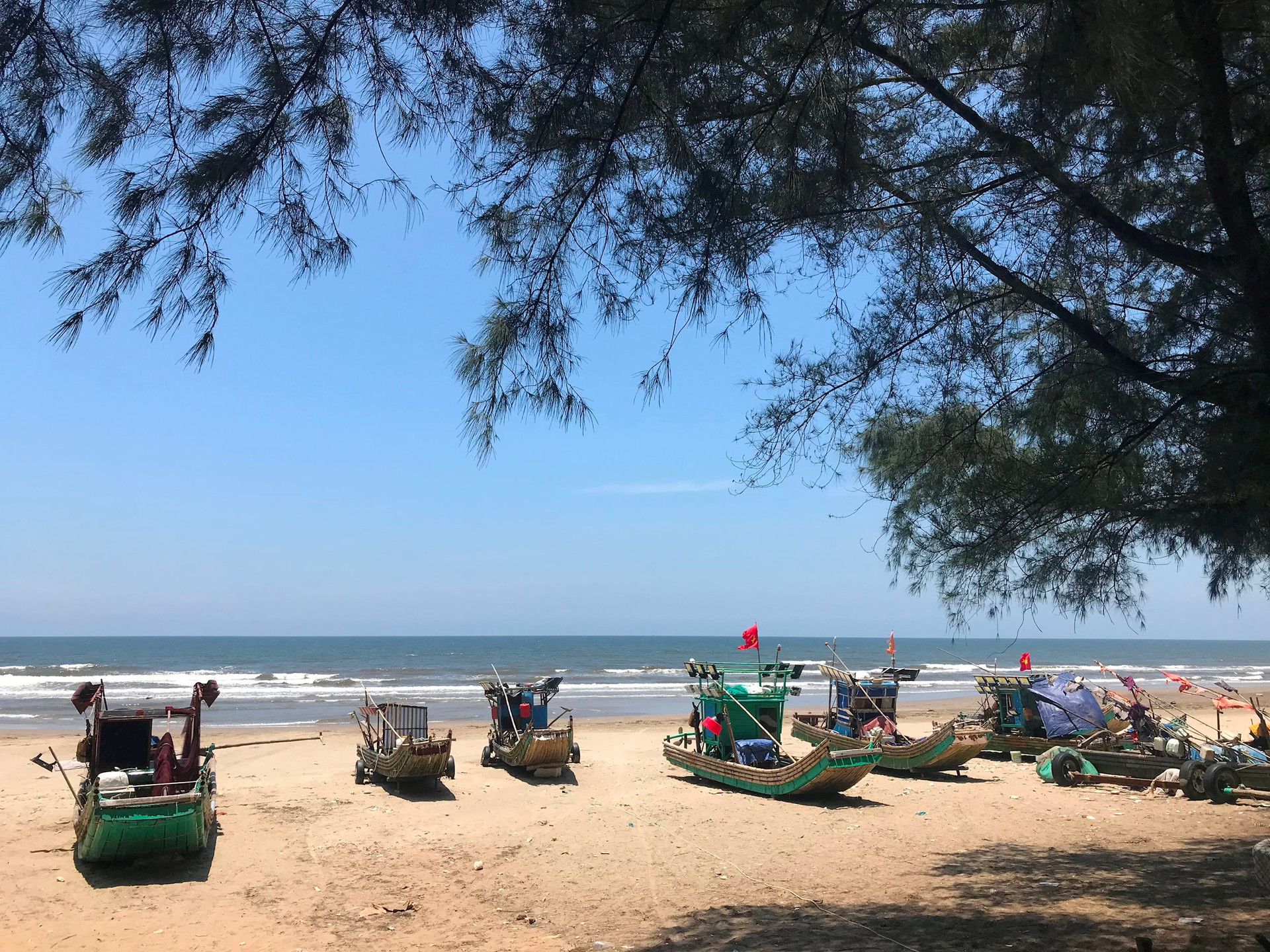
Staying close to the sea with an optimistic spirit.
The coastal village of Lăng Cô, Phú Lộc district (Thừa Thiên Huế province), has become a tourist resort town, still retaining its pristine beauty. It boasts the advantage of being located in the beautiful Lăng Cô Bay, with a clear and peaceful beach. The area also features Lập An Lagoon, situated about a kilometer from the beach, surrounded by a road running along the foothills. With the majestic Bạch Mã mountain range on one side and Lăng Cô Bay on the other, Lập An Lagoon possesses a unique and unmistakable beauty.
Here, the deep green of the mountains and hills, the crystal-clear water blend with the azure of the sky. Fisherman Nguyen Van Hai shared that the people of Lang Co are gentle and hospitable. Visitors to this coastal village will be warmly welcomed, enjoy the sea views and sunsets, and especially savor the local cuisine.
"Here, we have a special delicacy that we call 'heavenly pearls,' which is oysters. The oysters here are not only attractive to visitors from far away, but also very popular in neighboring areas," Hai emphasized.
Da Nang city has many villages where people have lived by the sea, making a living from fishing and forming coastal fishing villages such as Nam O, Man Thai, My Khe, Thanh Khe, Tho Quang, An Tan… Through the process of survival, the cultural characteristics of the coastal inhabitants have gradually formed and contributed to enriching the regional cultural identity.
Mr. Nguyen Xiu, head of the Thang Loi Solidarity Group (Tho Quang ward), said that in recent times, the fishing activities of fishermen in the group have faced difficulties. Thanks to the attention and encouragement of the authorities at all levels in supporting crew insurance, hull insurance, and investment in and application of modern equipment, the crew members in the group have all strived to stay at sea for extended periods.
Visiting Tho Quang fishing village today, you will no longer find dilapidated, unstable houses and rough dirt roads; instead, you will find spacious new houses and smooth concrete roads, making travel more convenient for the residents. Life is also more stable, and children can now attend school.
For generations, the coastal village of Ngư Lộc, Hậu Lộc (Thanh Hóa province) has relied on the sea for its livelihood, while also striving to provide education for its children. For them, the sea is not just a source of fish and shrimp; it is their home, their homeland. Despite facing difficulties and hardships, they remain steadfast in their determination to "protect the sea as they protect their own hearts." Ngư Lộc is the most populous commune in the country, with a population density of 36,000 people/km2; it has the smallest land area in Vietnam at only 0.46 km2. It is also the only commune in Vietnam without any agricultural land.
Mr. Nguyen Van Vien (Thang Tay village) shared: “We people know our disadvantage in terms of land conditions, so we strive to stay at sea. Because seafaring often involves storms, some people don't return, causing tragedy, but that doesn't dampen our spirits.” Mr. Bui Van Dung, owner of the TH-93628-TS vessel, who just returned from a successful fishing trip, shared: “The sea provides great resources, so many boats in my village persevere in staying at sea. Even though storms sometimes increase costs, that's life; there are ups and downs. Everyone must live with an optimistic spirit.”
Ngu Loc was formerly known as Diem Pho. The Diem Pho complex is a unique collection of temples, pagodas, shrines, and sanctuaries, meticulously preserved and protected by the local people. Its uniqueness lies primarily in the integration of temples dedicated to deities and Buddha within a single space. As its name suggests, the complex boasts a diverse range of cultural and religious sites, including: the Temple of the Holy Mother, the Temple of the Four Holy Maidens, the Temple of the Water God - Ne Son, the Temple of the Whale God, Lien Hoa Pagoda, and more.
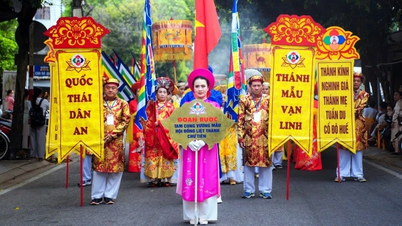
On the 15th and 1st days of the lunar month, during festivals, New Year celebrations, and springtime, many descendants of the fishing village flock to temples, shrines, and pagodas to light incense sticks and respectfully offer prayers for health, peace, and abundant catches after each fishing trip.

Preserving the memories of the past.
Vietnam's coastal areas boast many picturesque fishing villages. The people not only nurture dreams of venturing out to sea, prospering, and conquering the waves and vast fishing grounds, but also contribute to protecting national sovereignty over the sea and islands. Many villages, even in modern times, actively preserve traditional crafts. For example, the craft of weaving basket boats in Tho Quang fishing village, Son Tra district, Da Nang city, was once very developed. Although basket boats are rarely used today, mainly by fishermen fishing near the shore and in lagoons, some artisans still maintain the craft as a heritage passed down from their ancestors.
Artisan Phan Liem (80 years old) shared: "Previously, hundreds of people in the village practiced this craft, but now only a few remain because the craft can no longer keep up with the speed of larger ships. However, the craft of weaving basket boats is a way for our ancestors to explore and venture out to sea, a way to make a living from the ocean. To fish effectively, people have made basket boats in various sizes."
Meanwhile, Mr. Phan Van Son, an elderly fisherman from Tho Quang ward, confided: "The symbol of the fisherman and the basket boat is a cultural feature of this coastal region, and it's not easy to replace. No matter what, I am determined to preserve the craft of weaving basket boats, so that my children and grandchildren can still be proud of their ancestors' profession."
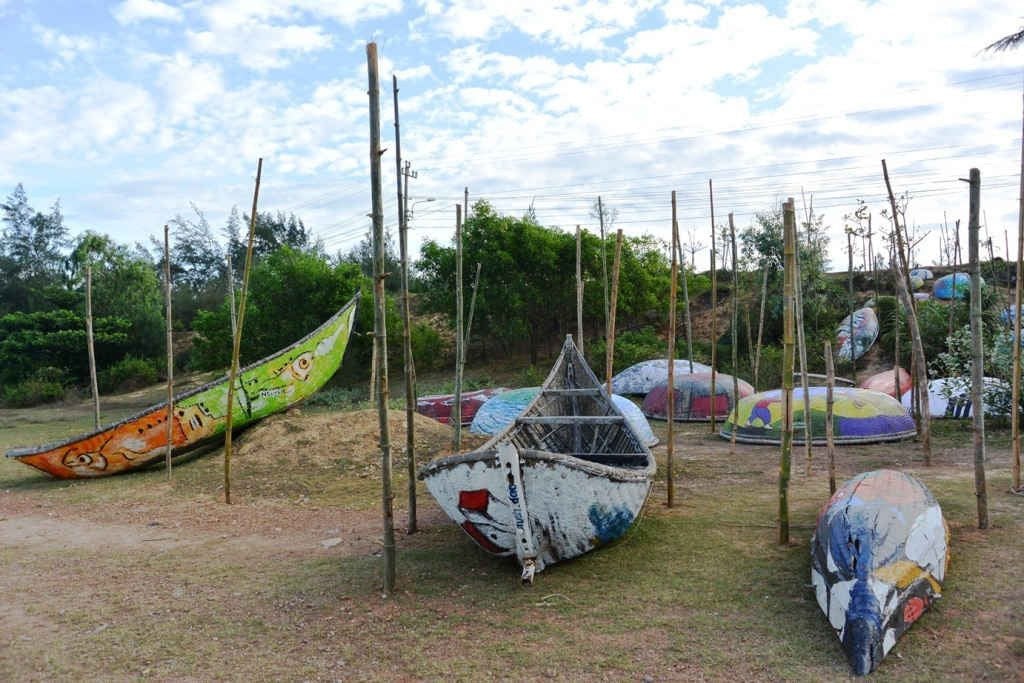
When mentioning the craft of making basket boats, one cannot overlook Tam Thanh fishing village in Tam Ky (Quang Nam province) – where these basket boats have become a cultural symbol of the coastal region. In recent years, Tam Thanh has also become a mural village, attracting many tourists. Currently, many people in Tam Thanh fishing village still use basket boats as a means of fishing and as a means of rescuing each other during natural disasters. The village currently has more than 100 murals painted on the walls of many houses. The themes of the artworks are inspired by the daily life of the people of Tam Thanh; everyday activities are vividly recreated through realistic brushstrokes and eye-catching colors, creating an impressive visual effect.
Besides admiring the murals, visitors will also enjoy exploring the basket boat pathway in the mural village. Instead of painting on house walls, the artists showcase their talent on basket boats – a familiar tool of coastal fishermen. All of this is like an extension of the livelihood of the local fishermen.
Many coastal villages in Vietnam have developed their own, more progressive village regulations and customs, in line with the traditional culture of the coastal region, aiming to build civilized and modern rural areas. This is a way to develop the marine economy while preserving traditional cultural identity in the process of building new rural areas.
Beyond the struggle for survival and the reliance on the sea for work, the working people also yearn for an improved cultural and spiritual life. Many coastal villages still preserve the skeletons of whales in tombs, maintain the rituals of praying for a bountiful harvest, and sing traditional folk songs – all ways of preserving maritime culture. In many regions, whales that have beached have been buried, and whale shrines have been built, also known as whale temples, serving as a common center for religious and spiritual activities for the people.
In the minds of coastal people, the Whale God is a deity, a benefactor to fishermen whenever they encounter misfortune at sea. And each season, the sea is a treasure trove, providing fishermen with abundant fish and shrimp. The sea gives fishermen strong, powerful arms to venture out to sea, together creating prosperous and abundant harvests.
Source: https://daidoanket.vn/gin-giu-nhung-ve-dep-lang-bien-10280563.html



![[Image] National Assembly discusses the implementation of the socio-economic development plan.](https://vphoto.vietnam.vn/thumb/1200x675/vietnam/resource/IMAGE/2026/04/20/1776696707422_ndo_br_img-20260420-185419-jpg.webp)

![[Photo] General Secretary and President To Lam meets with National Assembly delegates from ethnic minorities.](https://vphoto.vietnam.vn/thumb/1200x675/vietnam/resource/IMAGE/2026/04/20/1776696701056_a1-bnd-8331-3342-jpg.webp)






































































Comment (0)