Journalistic ethics - the source of trust and the "grey areas" in the digital age.
For a long time, when discussing journalistic ethics, we often mention seemingly simple yet sacred values: honesty, objectivity, dedication to the truth, and responsibility to serve the nation and the people. Journalistic ethics not only determines the value of an article but also establishes the vital boundaries of the profession. Journalism that loses its truthfulness loses public trust; and when trust collapses, all communication efforts become meaningless. Therefore, ethics always serves as an "anchor" preventing journalism and media from being swayed by the temptations of power, money, or fame.
 |
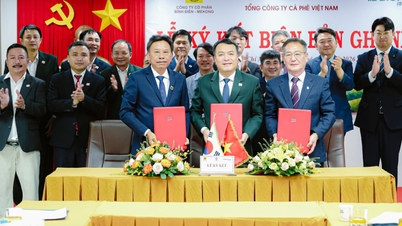
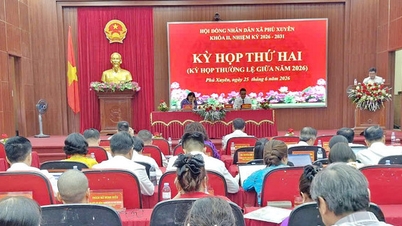
| Delegates attending the seminar "Journalists - Glory and Responsibility" organized by the People's Army Newspaper Journalists' Association and the Thai Nguyen Provincial Journalists' Association, April 2025. Photo: VIET TRUNG |
Entering the digital age, that ethical compass is facing "earthquakes" in the form of technology, especially the emergence of AI. Ethical challenges now come not only from traditional material temptations, but also from the very means we use daily. A prime example is Typhoon Yagi (September 2024), which left devastating consequences for people in the North, and also provided a costly lesson about digital media ethics. A news agency published an illustration of a family fleeing the flood, an image that deeply touched the viewers' compassion, and even had its logo displayed as proof of its commitment to journalistic work. However, the harsh truth was quickly exposed: it was just a staged photo created by a YouTuber couple in Ha Giang to "gain views," leading to fierce criticism from the public and profound disappointment as people's emotions were misplaced and trust in journalism was severely damaged.
Today, the rise of AI is creating a subtle form of professional corruption: the abuse of machines to "think for and write for" journalists. AI, with its rapid synthesis and language creation capabilities, is transforming many reporters from truth-seekers into passive "prompt typists." Not only students and newcomers, but even some professional journalists are falling into the trap of laziness. Recently, while judging at several journalism awards, my colleagues and I were deeply troubled by articles with perfect structure and polished language, yet dry, formulaic, and completely lacking the breath of reality. It's easy to recognize the excessive intervention of AI behind those soulless words. In practice, machines can assemble vocabulary but never feel the pain of the people, nor do they worry about the fate of the nation. The misuse of AI to write articles for oneself is a betrayal of the journalistic commitment to integrity.
Searching for the "red line" when journalists team up with algorithms.
Given the rapid development of AI, we cannot choose to turn our backs on it or be afraid; on the contrary, for journalism, publishing, and media, technological innovation is an inevitable trend. So, where is the line between leveraging technological advancements and violating journalistic ethics?
First, the line lies in transparency. A professional news organization has the right to use AI for translation, audio transcription, data trend detection, infographic design, or even writing weather forecasts and sports results based on raw data collected from various authoritative sources. But if an article involves machine learning, it must be clearly labeled so the public knows. Replacing an algorithm-generated product with one's own work is plagiarism and a violation of academic integrity.



 |
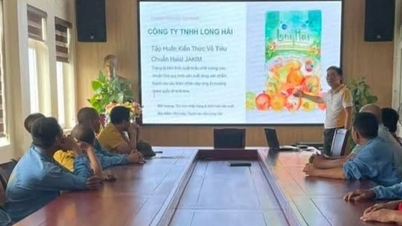
| A delegation from the Vietnam Journalists Association visits the place where leader Nguyen Ai Quoc - Ho Chi Minh published the Thanh Nien (Youth) newspaper in 1925 in Guangzhou City (Guangdong, China), June 2025. Photo: SON HAI |
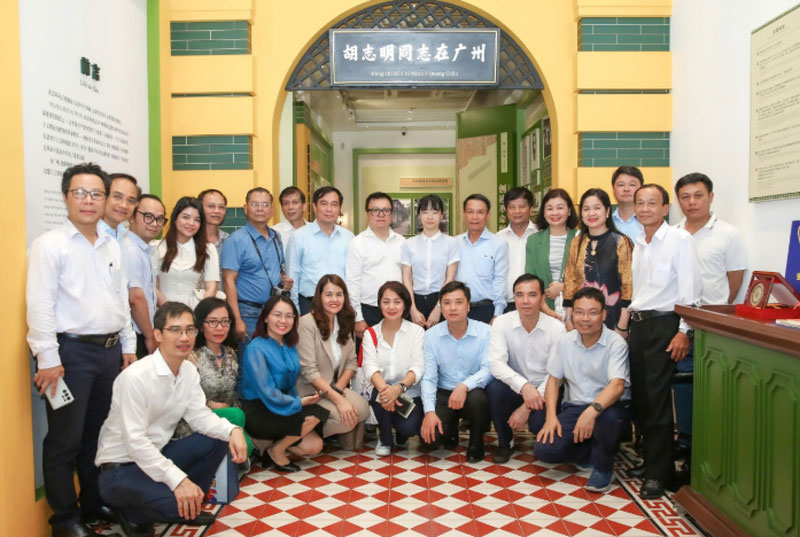 |
| A delegation from the Vietnam Journalists Association visits the place where leader Nguyen Ai Quoc-Ho Chi Minh published the Thanh Nien (Youth) newspaper in 1925 in Guangzhou City (Guangdong, China), June 2025. Photo: SON HAI |
Secondly, the boundary lies in accountability. AI is very prone to "hallucinations"—it fabricates information very convincingly based on biased or inaccurate input data. Therefore, the ethical boundary requires journalists not to leave the judgment entirely to machines. While journalists can use AI to search for data and suggest outlines, they must personally cross-check sources and assess the accuracy and merit of the information. When false information is published, the journalist, not some AI tool, is the one who must apologize and be held accountable before the law and the public.
Thirdly, the line lies in political ideals and sensitivity. Algorithms using AI often create "information bubbles" that only provide sensational news, catering to personal preferences to maximize profits. If journalists blindly follow AI-suggested topics, they easily turn their pens into tools for "clickbait," inadvertently contributing to false, distorted, and hostile narratives. The "red line" here is political acumen; journalists must use their human perspective to reject topics that go against national interests and must use technology to spread positive messages, not to amplify chaos.
Creating a generation of "digital journalists" in the new era of national development.
Having spent many years researching and teaching journalism and media, I believe that the ethical crisis in the digital age cannot be resolved by mere appeals. We need decisive and systematic actions to create a generation of "digital journalists" who are both professionally competent and possess a strong sense of humanity.
First, the training philosophy needs to change. "Algorithmic skills" should be taught alongside the cultivation of revolutionary ideals. Journalism and media training institutions need to shift from simply teaching students how to write news and take photos to teaching them to become experiential designers. Students must learn about AI, but not to become dependent on it; rather, they should learn to develop "algorithmic skills," understanding how machines work and how data is manipulated. Simultaneously, moral and political education must be mandatory. Lectures should incorporate vivid real-world scenarios, teaching students how to withstand the temptations of the online world, how to use technology as a sharp weapon to protect the Party's ideological foundation, and how to relentlessly combat fake news and harmful information.



Furthermore, establishing a mechanism for human decision-making and a code of conduct for AI in newsrooms is crucial. News organizations cannot manage converged or digital newsrooms without internal regulations on AI. Clear rules must be immediately enacted specifying which processes are permitted to use AI and which data absolutely cannot be fed into machine learning to protect national secrets and privacy. In particular, newsroom secretaries, who are the final reviewers, must upgrade their data source verification capabilities to ensure that even the most advanced technological processes pass through the final "filter"—a humane heart and a politically astute mind.
In an era where humanity is surrounded by the coldness of algorithms and machines, what the public craves most is the warmth of human connection. Journalistic ethics in the digital age is not just about avoiding wrongdoing, but also about accompanying, sharing, and healing social wounds. Journalism needs to focus on insightful articles, delving into the human condition, analyzing policy bottlenecks to resolve difficulties for the people, or celebrating the beauty of society. Journalism must be a place that connects communities and guides the public towards true, good, and beautiful values.
Technology may change the way we do journalism, but the purpose of journalism—to serve the nation, to serve the people, and to protect the truth—must never change. When journalists maintain a cool head in the face of algorithms and a heart burning with revolutionary ideals, revolutionary journalism will forever be a source of pride, a sharp tool of the Party and the State, and a solid foundation of people's trust in this era of national development.
Source: https://www.qdnd.vn/van-hoa/doi-song/giu-dao-duc-bao-chi-trong-thoi-dai-so-1045309