

According to him, throughout their writing careers, journalists must constantly learn, hone, and improve their professional skills, expertise, and ethical conduct.
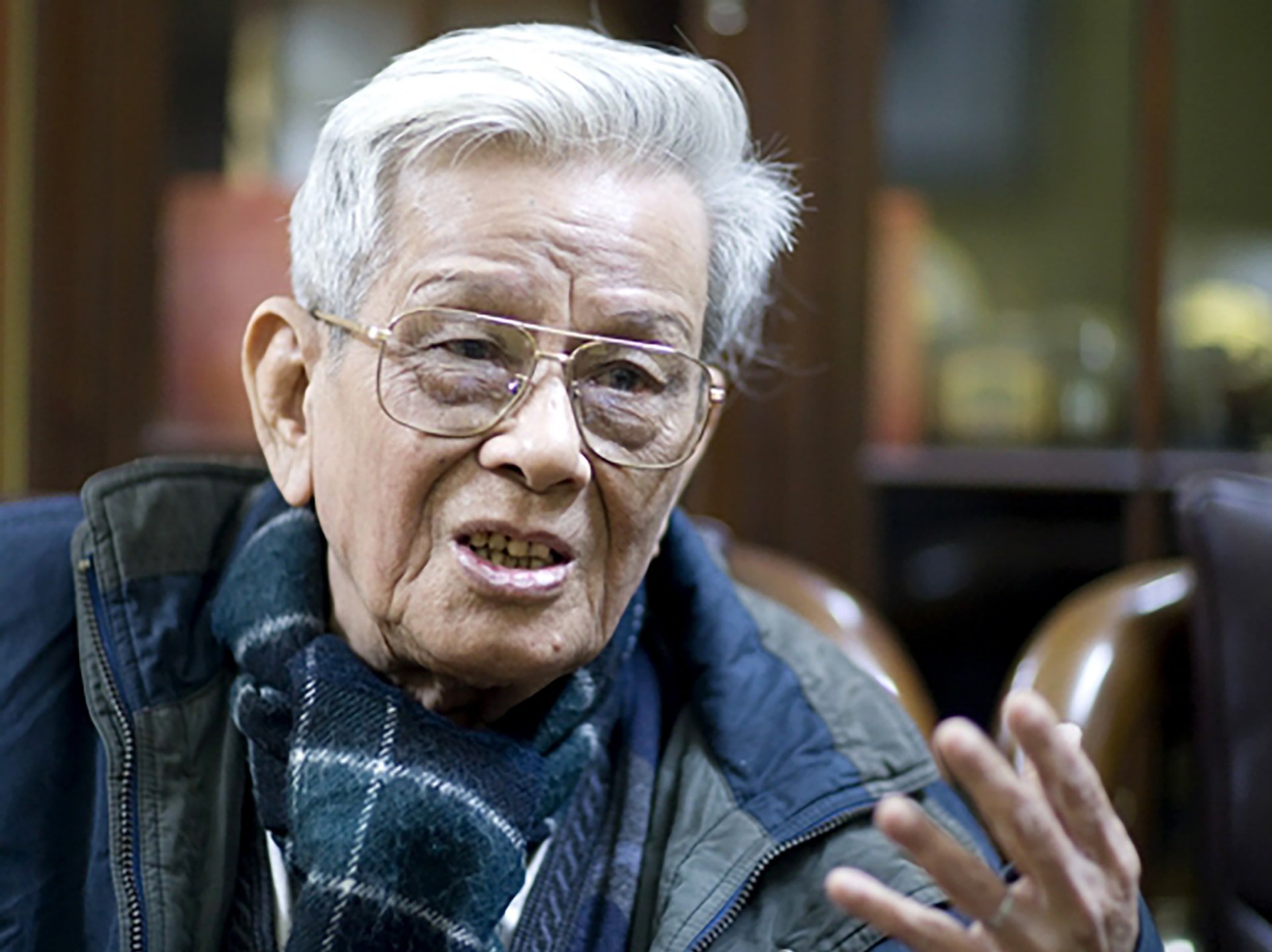
1. The late journalist Huu Tho was a veteran journalist, a very outstanding writer of the Vietnamese revolutionary press. For him, President Ho Chi Minh was "the greatest teacher of Vietnamese revolutionary journalism." With all due respect, right at the beginning of his book titled "Bright Eyes, Pure Heart, Sharp Pen," journalist Huu Tho admonished himself in his journalistic profession according to Ho Chi Minh's ideology.
Therefore, throughout his incredibly vibrant and rich journalistic career, journalist Huu Tho deeply cherished President Ho Chi Minh's teaching to journalists: "Your pens are also sharp weapons in the cause of upholding justice and eliminating evil."
Uncle Ho's profound instructions serve as a guiding principle for revolutionary Vietnamese journalists. Therefore, for journalist Huu Tho, his reflection on the mission of "upholding justice and eradicating evil" is a very glorious task. To undertake this arduous task, one must cultivate professional integrity and, especially, possess impeccable ethics to overcome temptations and threats, to maintain a firm pen, and not betray the trust of a large readership.
Thus, fulfilling the noble mission of "upholding righteousness and eradicating evil" of revolutionary journalism requires people with impeccable morals. Writers with impeccable morals must overcome petty temptations. Because overcoming temptation is an affirmation of self-respect and dignity, demonstrating a person of character, integrity, and morality, and showing unwavering resolve in thought, understanding, and action.
A writer with impeccable ethics will overcome any threats or intimidation. "An upright tree fears no storm," and this applies not only to journalism but to all professions in society. When we do nothing against our conscience and always act for the common good, we will have no fear in our hearts, and will always be pure, selfless, and see things through to the end.
The integrity of a journalist is forged from a foundation of pure ethics. Only then can they use their weapon, the pen, to "support righteousness and eliminate evil." In fulfilling this noble, glorious, and arduous task, journalist Huu Tho stated: "Today, as I understand it, it means enthusiastically supporting the reform process, those with upright hearts who wholeheartedly serve the people, and criticizing anything that is morally dishonest, bureaucratic, corrupt, and wasteful."
The reflections and teachings of journalist Huu Tho remain highly relevant to journalists today.
2. When addressing specific issues of ethics and conscience among Vietnamese journalists, journalist Huu Tho famously said: "To succeed in this profession, one must have keen eyesight, a pure heart, and a sharp pen." And with all humility from the bottom of his heart, he considered this merely: "A few words of reflection, shared with those new to the profession, so that we may all consider and uphold our professional ethics."
To "uphold the principles of the nation," according to journalist Huu Tho, journalists need to cultivate ethics and conscience, including the following guidelines: "Respect the truth. Be impartial and selfless. Be reasonable and compassionate. Be constructive, promote strengths, overcome weaknesses, correct mistakes and move forward. Do not reveal secrets of the Party and the State."
Broadly speaking, ethics and conscience constitute the overall cultural "picture" of a journalist. Therefore, journalists need integrity, ethics, and conscience, while also paying close attention to cultural conduct: "Humility, self-respect, sincerity, and dedication to the work are the most correct attitudes of a cultured journalist... Submissiveness and flattery are not the hallmarks of a cultured journalist. Exploiting others for favors during communication is uncultured and will be looked down upon. Arrogance, stubbornness, showing superiority, and disrespecting those you converse with are not the hallmarks of a cultured journalist."
The ethics and conscience of a journalist also lie in constantly preserving and cultivating a lasting love for the profession and for the pen. We understand that no good article is born from leisure and comfort, and no famous journalist has emerged without sweat, tears, and sometimes even blood. Above all, the best quality of a journalist holding a pen is: "When writing praise or criticism of someone, we should always put ourselves in that person's shoes; the pen will be more nuanced. Praise should be sincere... Criticism should not be harsh or slanderous... The heart, sincerity, and honesty help the journalist guide their pen. In business, never trade words! When writing about evil, our hearts must be full of goodness; literature and words must live with life through love to endure!"
The writings and heartfelt reflections on the profession by journalist Huu Tho truly offer profound lessons for writers today. Deep in his heart, veteran journalist Huu Tho earnestly hoped that generations of Vietnamese journalists would always uphold the "ethics of the profession" regardless of the circumstances.
3. In the current social context, many factors are impacting the preservation and cultivation of ethical conduct among revolutionary Vietnamese journalists. Alongside the numerous achievements, the field of journalism is raising many issues directly related to journalistic ethics. In reality, we have witnessed several cases of reporters and journalists violating professional ethics and being severely punished by law.
Furthermore, we are practicing journalism in an era of artificial intelligence and widespread digital transformation. Along with undeniable advantages, the development of digital technology is posing significant challenges to journalism in content management, facing the increasing risk of fake news, and creating legal and ethical issues related to journalism...
This analysis shows that, under any circumstances, journalists must uphold their professional ethics to best fulfill their mission of "supporting justice and eradicating evil." Because ethics is the core and foundation of Vietnamese revolutionary journalism over the past 100 years.
To accomplish this noble, glorious, and uniquely proud mission, Vietnamese revolutionary journalists must steadfastly practice their profession according to the motto "Sharp Eyes, Pure Heart, Sharp Pen"; strictly adhere to the Press Law and the 10 ethical regulations for Vietnamese journalists... In the process of creating their "spiritual offspring," reporters and journalists need to work with sincerity, honesty, and integrity. They must strive to ensure that "their hearts are full of goodness, and their writing lives on with love for the world, only then will it endure." As President Ho Chi Minh taught: "Talent must be accompanied by virtue. Talent without virtue, corruption and decadence, harm the nation."
Integrity and virtue are consistent and overarching requirements for cadres in general and journalists in particular. Under any circumstances, journalists must constantly cultivate their knowledge, hone their professional skills and moral character, and always remind themselves to be "Sharp-eyed, Pure-hearted, and Sharp-penned," worthy of being pioneers on the ideological and cultural front of the Party, State, and people; thereby making a significant contribution to building a clean, strong, and progressive revolutionary Vietnamese press, advancing alongside the nation in a new era of prosperity and well-being.
Source: https://hanoimoi.vn/giu-dao-nguoi-lam-bao-705863.html


![OCOP during Tet season: [Part 3] Ultra-thin rice paper takes off.](/_next/image?url=https%3A%2F%2Fvphoto.vietnam.vn%2Fthumb%2F402x226%2Fvietnam%2Fresource%2FIMAGE%2F2026%2F01%2F28%2F1769562783429_004-194121_651-081010.jpeg&w=3840&q=75)


Comment (0)