

Tu Vu commune is known as the "capital" of the Muong ethnic group in Thanh Thuy district, with over 70% of the population belonging to the Muong ethnic group. To preserve and promote the cultural values of their ancestors, which are gradually fading in modern life, many generations of dedicated artisans have returned to the ancestral lands of the Muong people, bringing traditional art forms, including gong music, to restore and pass on to future generations.
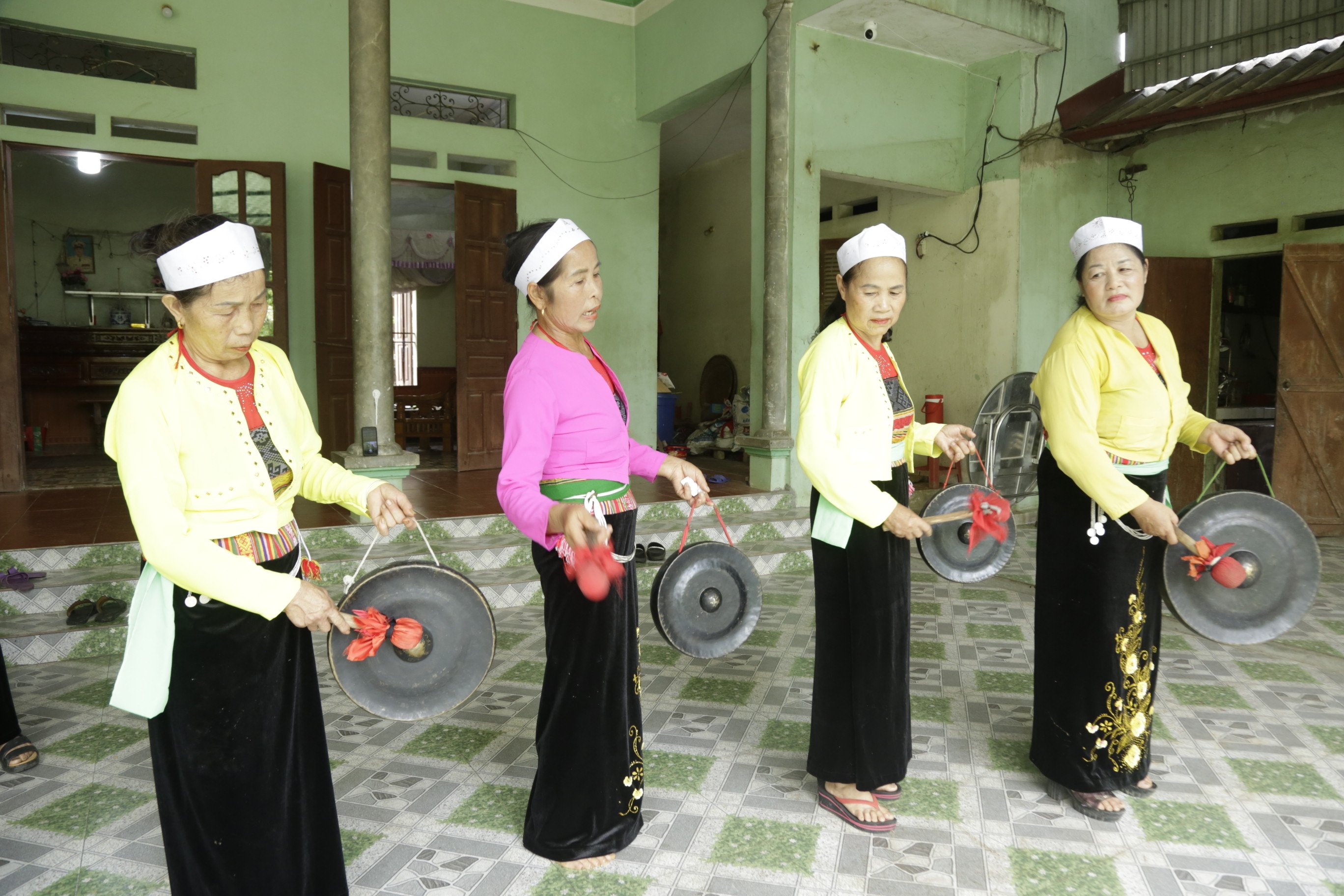
In Muong culture, gongs are played primarily by women.
Gongs are musical instruments of significant cultural value in the community life of the Muong ethnic group. Gongs participate in all aspects of Muong life, from birth to death. Therefore, the Muong people consider gongs to be treasures in their homes and preserve them through generations.
Artisan Dinh Van Chien (Zone 18, Tu Vu Commune), now 57 years old, has 17 years of experience researching, restoring, and spreading the love of Muong culture, including gongs and drums. From many years ago, Mr. Chien recalled being carried on his mother's back to village festivals, listening to the melodies of the Vi and Rang songs, and the sounds of gongs and drums. From an early age, his soul was imbued with the rich traditional culture of his ancestors. In 2007, Mr. Chien traveled to the ancestral lands of the Muong people, such as Hoa Binh, Ninh Binh, and Lang Son , to collect melodies of gongs and drums, Vi and Rang songs, Dum songs, spoken songs, lullabies, and traditional dances.
Introducing the gongs of the Muong people to visitors from afar, artisan Dinh Van Chien enthusiastically said: “A set of Muong gongs consists of 12 pieces, divided into 3 sets: Tlé gongs, Bong gongs, and Dam gongs. The Muong people use gongs in 24 festivals, such as housewarming ceremonies, weddings, and rice planting festivals... Unlike the ethnic groups in the Central Highlands, where gong players are mostly men, among the Muong people, gong players are mainly women.”
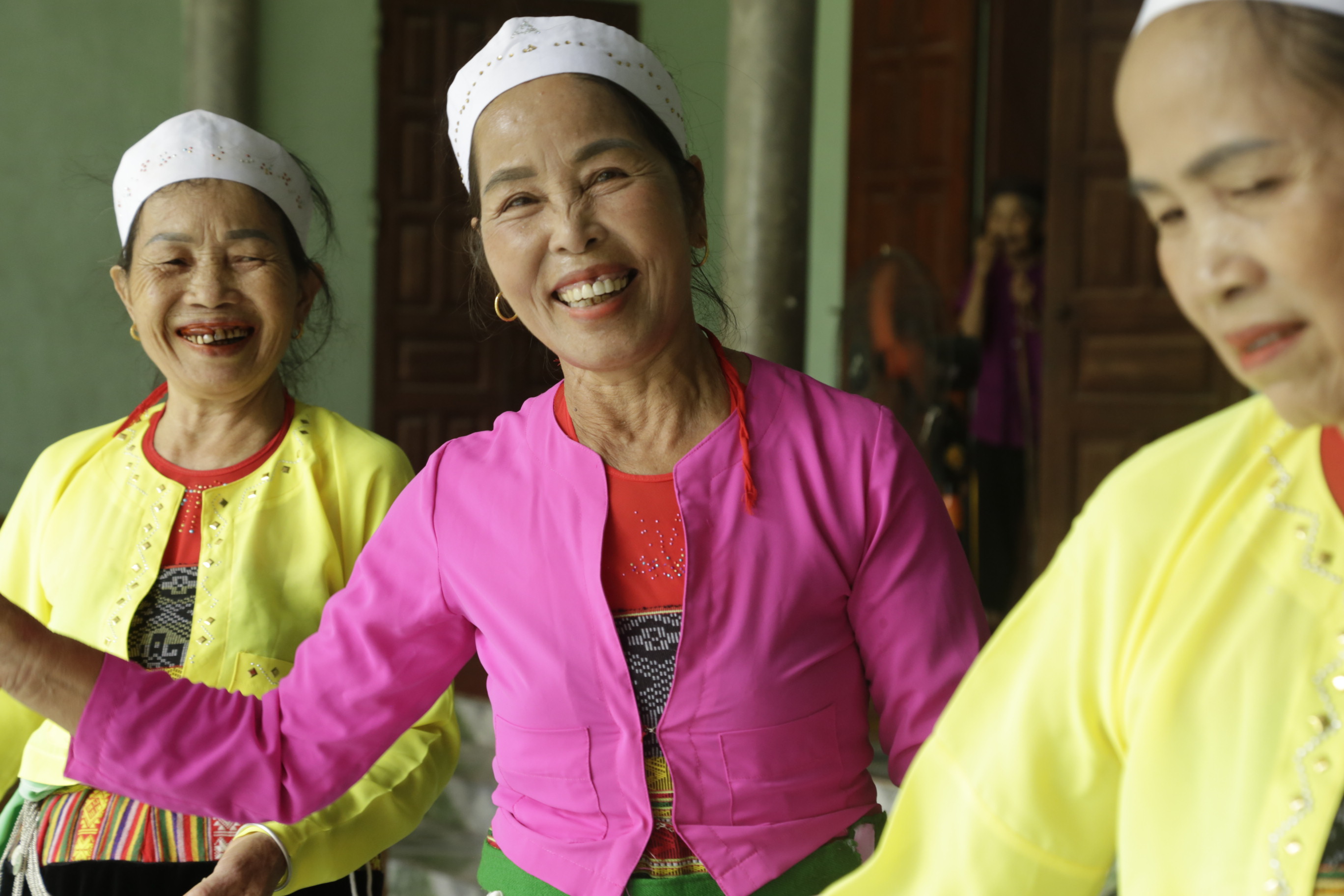
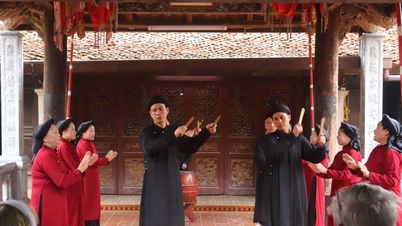
The charming smile of the woman in the folk songs of the festival.
A set of gongs consists of 12 pieces. The number 12 represents the 12 months of the year, encompassing the sounds of the four seasons: Spring, Summer, Autumn, and Winter. The Tlé gongs (poóng, lắp, chốt) include gongs number 1 to 4, producing the highest pitch in the set. The Bồng gongs (Bòng Ben) are gongs number 5 to 8, of medium size and pitch. The Dàm gongs (Khầm) are gongs number 9 to 12, the largest in size and with the lowest pitch. |
In the cultural activities of the Muong people, such as the Sắc Bùa singing, weddings, hunting, logging, house building, funerals, the New Rice Festival, and when encountering wild animals, the Muong village is filled with the lively sound of gongs and drums. During the spring, Muong villages often organize gong and drum troupes to visit families and offer New Year greetings, known as Sắc Bùa. Each troupe usually consists of 15 to 30 people carrying gongs and drums along with gifts such as rice, sticky rice, cakes, betel nuts, etc., to bless each household. At the beginning of the journey, the troupe plays the song "Going on the Road," and upon arriving at a house, they play the song "Blessing." For weddings, when welcoming the bride, they use Tlé gongs as Dóng gongs; during the Rằng Thường (singing exchange between the two families), they use Dàm gongs with their gentle, melodious tones. Gongs and drums help to set the rhythm and encourage the singing during the exchange, creating a joyful atmosphere. In funerals, the family will strike the gongs three times in a row to signal to the villagers...
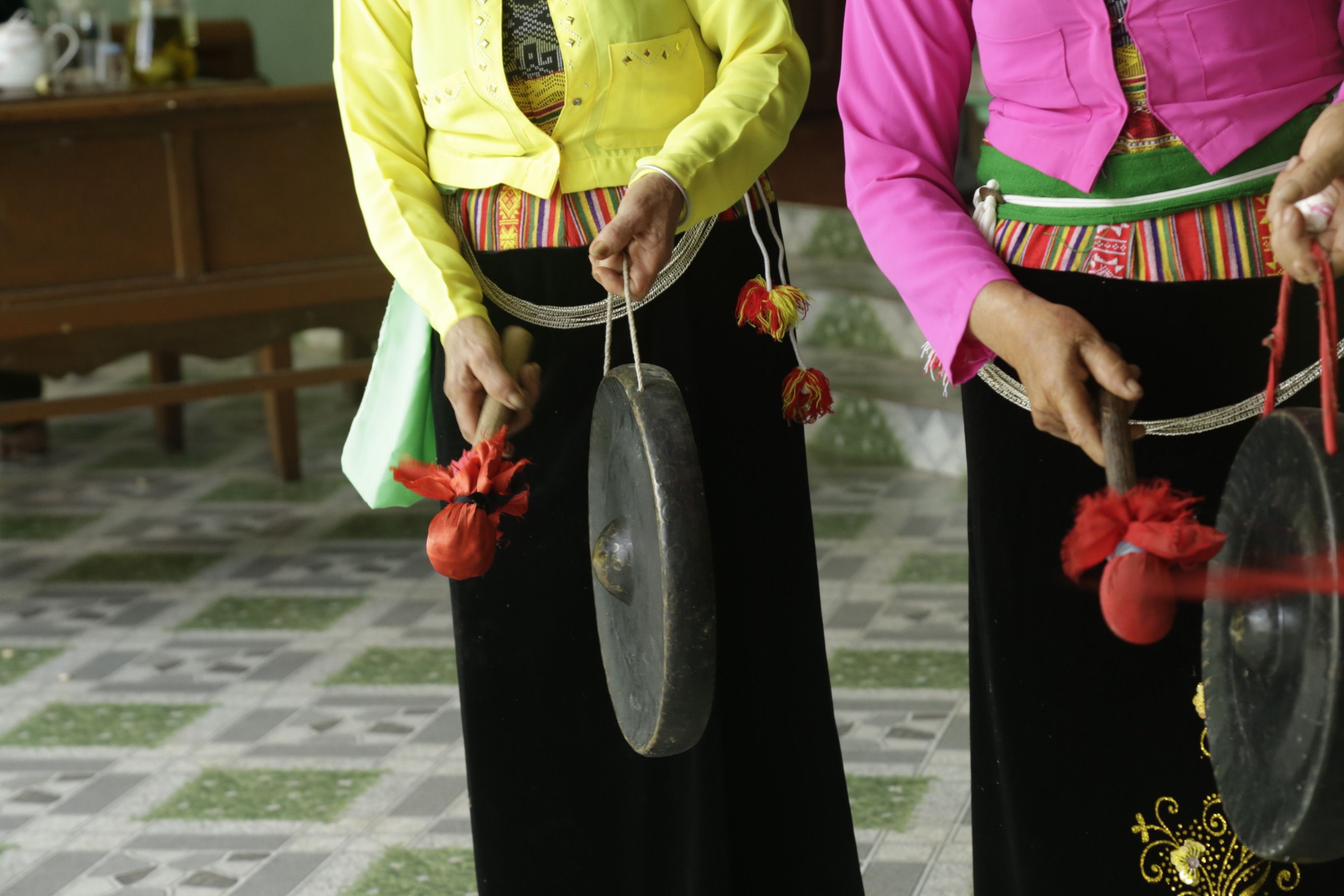
The shape of the gong of the Muong ethnic group.
Because of the importance of gongs in Muong culture, in 2018, artisan Dinh Van Chien initiated a movement to revive the traditional gong music, which was widely supported by the people in Tu Vu commune. Currently, 50 members of the Muong cultural heritage preservation club founded by Mr. Chien still meet regularly on weekend evenings; the youngest member of the club was born in 2010.
According to statistics, Tu Vu commune currently preserves over a dozen sets of gongs and drums, 5 stilt houses, and 40 sets of traditional costumes. The majority were purchased by the people themselves, demonstrating a growing awareness of preserving traditional culture. In particular, the project to inventory, collect, preserve, and promote the cultural identity of the Muong ethnic group for the period 2020-2025 with a vision to 2030, funded by Tu Vu commune with over 8.6 billion VND, has empowered the people in their journey to preserve their ancestral culture in modern life.
To date, several projects and tasks have taken shape, such as the traditional Muong ethnic culture exhibition house in the commune center, the expansion of clubs and performing arts groups showcasing Muong ethnic culture, the purchase of 13 additional sets of gongs, and the opening of training courses to teach Muong culture...
Comrade Khuat Dinh Quan, a cultural officer of Tu Vu commune, said: “Through the implementation of the project, resources from the entire society have been mobilized to participate in preserving, conserving, and promoting the cultural heritage of the Muong ethnic group in the area. This has created a strong shift in awareness and consciousness of protection, becoming a widespread, regular, and continuous movement in the cultural and spiritual life of the people, especially the younger generation.”
Despite enduring many ups and downs and historical events, the traditional cultural heritage of the Muong ethnic group, including their gong and drum melodies, will live on forever in the hearts and minds of the people.
Thuy Trang
Source: https://baophutho.vn/giu-dieu-cong-chieng-221334.htm
![[Photo] General Secretary and President To Lam presides over a working session with the Central Policy and Strategy Committee on the development of the materials industry.](https://vphoto.vietnam.vn/thumb/1200x675/vietnam/resource/IMAGE/2026/05/21/1779359935432_a3-bnd-3129-1412-jpg.webp)

































































Comment (0)