Three generations preserve the traditional craft.
In the heart of Hang Gai Street (Hanoi), where every square meter of commercial space is extremely expensive, the story of Ms. Do Thanh Huong's family, owners of the Tan My hand embroidery and design brand, is a prime example of a profound approach to economic development through heritage.
Over the years, her family has received numerous offers to convert the entire 1,000m² space into a hotel or restaurant, with the immediate profit potentially far exceeding that of maintaining a traditional craft brand. But in Tan My, the story is more than just a business calculation.

Ms. Do Thanh Huong
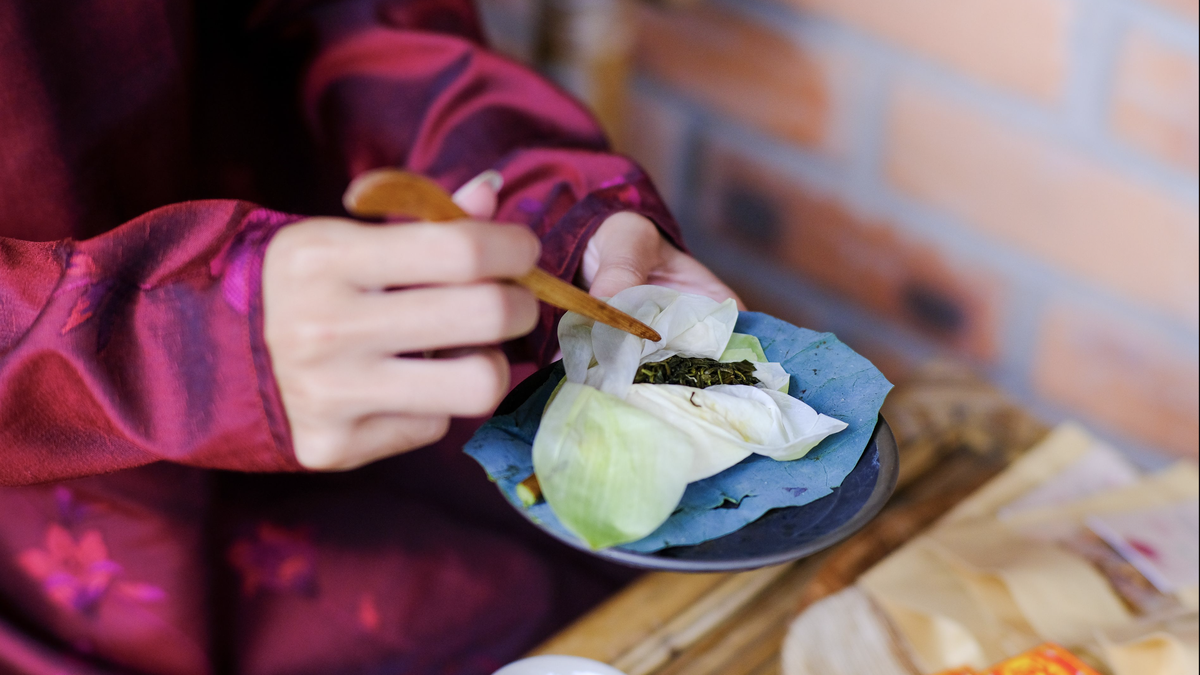
For Ms. Huong, Tan My is a place that holds the memories of many generations of women in her family, where the first embroidery frames were set up in 1969, and where stories about the craft are passed down from grandmother to mother, and from mother to daughter, like an unbroken stream.
Amidst the increasingly hectic pace of life in the Old Quarter, this space still retains a part of the memories of old Hanoi , something that, if lost, cannot be recreated by any technology or commercial model.

Each house in Hanoi's Old Quarter can become a "cultural ambassador" of Vietnam.
From a small shop initially measuring less than 20 square meters, Tan My has today become a familiar stop for many international tourists, diplomats , and politicians visiting Hanoi. What keeps them coming back is not only the exquisite handcrafted products, but also the experience of stepping into a vibrant space of urban memory, where each item carries a story about the profession, the people, and the cultural identity of Vietnam.
According to Ms. Huong, traditional crafts cannot survive solely on nostalgia. Today, a handcrafted product is no longer simply an object, but the culmination of skill, time, emotion, and layers of culture accumulated over generations. When customers perceive these layers of value, they are willing to pay the true price, not for the item itself, but for the story behind it.
The story of Tan My is not an isolated case. In many other corners of the old town, houses that were once valued primarily by their street-front location are now gradually being viewed according to a different value system.
They become cultural spaces, creative shops, handicraft showrooms, or experiential points that help visitors gain a deeper understanding of Hanoi life. In this way, the value lies in the cultural depth accumulated within each living space.
If Tan My is the story of a multi-generational family tied to a single profession, then in Gia Ngu Street, Ms. Pham Kim Thanh represents a different approach to heritage economics.
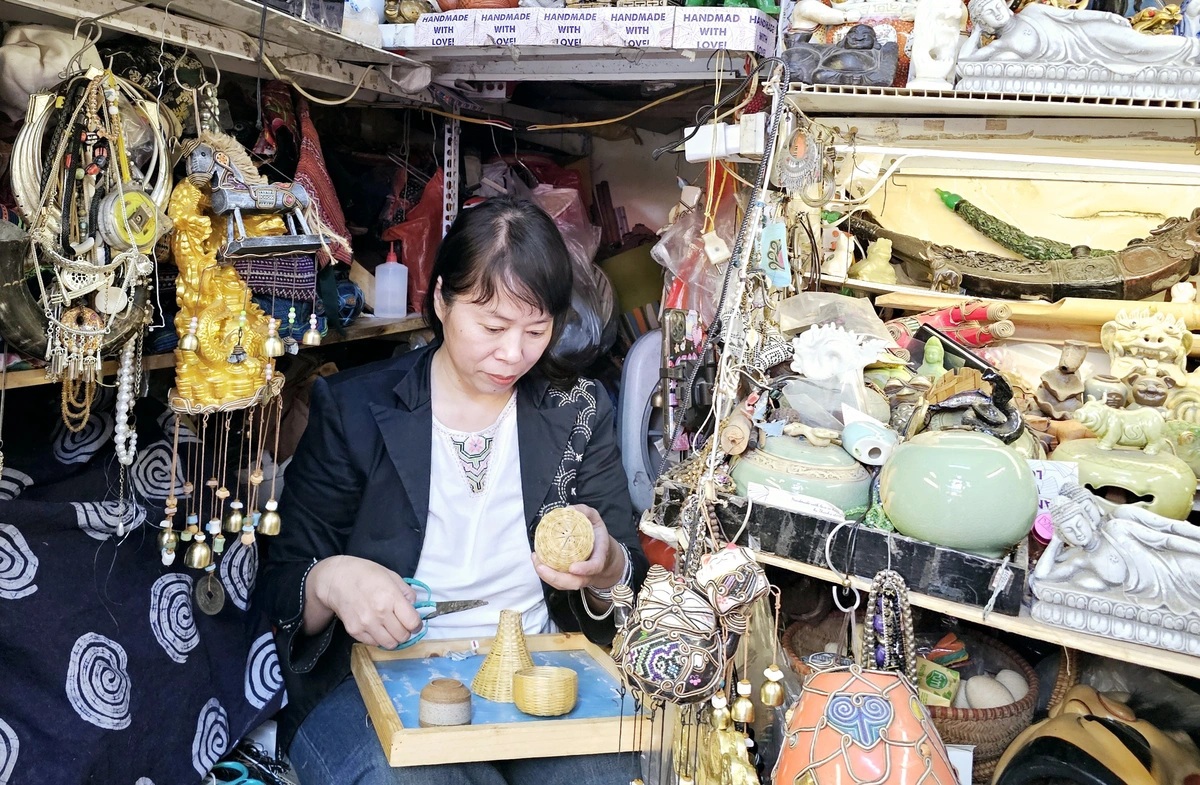
For Ms. Kim Thanh, the combination of old houses and tourism-business activities helps preserve architectural heritage, creates a self-sustaining income source, and provides an authentic cultural experience for tourists.


Having made her living from recycled materials for nearly 30 years, she has witnessed almost the entire transformation of the Old Quarter from the 1990s to the present day. She vividly remembers old Hanoi with its street vendors, small shops, slow pace of life, and the quiet Old Quarter at night.
But over time, that space changed. Old houses were renovated, new shops appeared, tourism developed, and the old town became a vibrant year-round destination. Instead of looking at these changes with regret, she chose to adapt.
According to Ms. Thanh, tourism and business are not opposed to heritage if properly organized. On the contrary, they are part of the conditions for heritage to survive in modern life.
"Without a source of income, it's very difficult for families to maintain, repair, and preserve houses that are hundreds of years old. Linking old houses with tourism and business is a way to preserve heritage. It generates income so that the heritage itself can sustain itself," she shared.
This reality shows that the greatest value of the old town lies not in its location or land price, but in its culture. A space that tells a story always has a longer-lasting vitality than an asset valued solely by its commercial value. And when the story is authentic enough, the heritage itself will create sustainable economic value.
When heritage enters life
The spirit of "heritage economy" extends beyond old houses and family-run shops to encompass historical sites and traditional craft spaces within the Old Quarter.

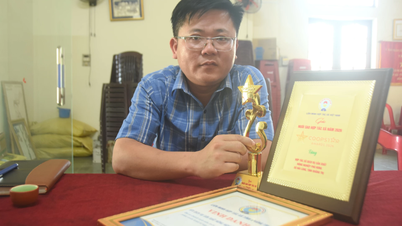
Mr. Nguyen Duc Tien
At Dong Thanh Temple on Hang Vai Street in Hanoi, the number of visitors, students, and research groups is increasing. According to Mr. Nguyen Duc Tien, Head of the Sub-committee for Monument Management and Keeper of Dong Thanh Temple, the important thing is that the monument is no longer forgotten, but has returned to community life as a natural part of the urban space.
Stone steles, horizontal plaques, couplets, and historical documents no longer remain merely in religious spaces, but have become living stories that help the younger generation better understand local history and culture. When included in tours exploring the old town, these relics also become a bridge between memory and the present.

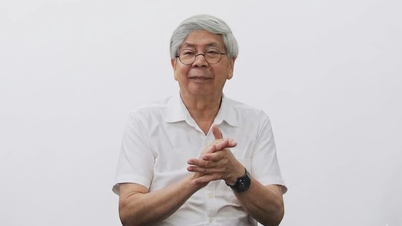
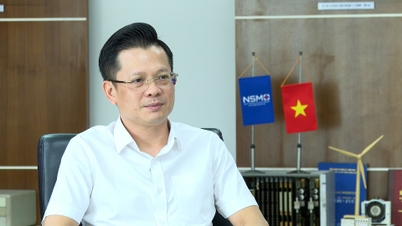
Dr. Dang Vu Canh Linh
According to Dr. Dang Vu Canh Linh, Deputy Director of the Institute for Cadre Training and Scientific Research - Central Committee of the Vietnam Fatherland Front, this is a clear manifestation of the "heritage economy" model, where seemingly outdated values become new resources for development. Each ancient house, each traditional craft, or each lifestyle custom contains its own layers of cultural sediment and can create economic value if exploited in the right way.
He emphasized that the key point lies in whether the community remains the subject of the heritage. When people continue to live within the heritage, operate it, and benefit from it, the heritage is not detached from life but continues to exist as an organic part of the city.
This approach has been implemented around the world for a long time. In Japan, Machiya houses in Kyoto are renovated into homestays, tea houses, or craft shops while retaining their traditional architectural structure. Singapore preserves the old shophouse system in Chinatown, Kampong Glam, and Little India, then repurposes them for commerce, creativity, and tourism. South Korea develops Hanok areas in Seoul and Jeonju into spaces for accommodation and cultural experiences, integrating heritage into modern life instead of placing it separately in museums.

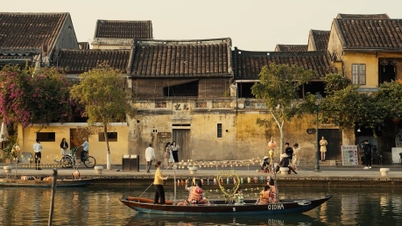
In Vietnam, Hoi An is a prime example. Ancient houses, craft streets, assembly halls, and community life are integrated into tourism, creating livelihoods for locals and preserving the urban identity. However, Hoi An also presents a major challenge: without proper control, commercialization can increase pressure on living spaces and diminish the authenticity of the heritage.

Mr. Vuong Xuan Nguyen - Director of the Institute of Economics, Culture and Arts
From an economic and cultural perspective, Mr. Vuong Xuan Nguyen, Director of the Institute of Economics, Culture and Arts, argues that the greatest asset of the Old Quarter lies not in its land but in the uniqueness of its culture. Today's tourists don't seek mass-produced products; they look for authentic experiences, real stories told by real people living alongside the heritage. When heritage becomes a "storytelling language," its economic value expands naturally without sacrificing its identity.
According to Mr. Nguyen, the problem lies not in commercialization itself, but in how it is commercialized. An old house transformed into a soulless hotel will impoverish urban memory. But a space that tells a story, a shop that preserves a traditional craft, or a community that lives with heritage is enriching that very heritage.
Looking from Hanoi's Old Quarter, a clear direction is emerging: people are not detached from their heritage but are using it to create livelihoods. When memory becomes a resource for development, culture and economy are not opposed but complement each other.
Source: https://phunuvietnam.vn/giu-hon-pho-co-boi-dap-di-san-238260607120611006.htm





























![[Image] Ho Chi Minh City: Ma Lang area, Chicken-Rice Market about to change its appearance](https://vphoto.vietnam.vn/thumb/1200x675/vietnam/resource/IMAGE/2026/06/25/1782377698627_ndo_br_m1-jpg.webp)