

 |
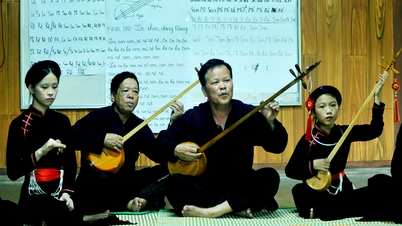
| Mr. Luu Sung Dong has been passionate about Then singing and Tinh playing since he was a child. |
From a young age, Mr. Dong listened to the melodious sounds of Then singing and Tinh lute playing during village festivals, holidays, and community gatherings. These simple yet profound sounds seeped into his soul without him even realizing it.
Over the years, my love for Then singing and Tinh playing has grown stronger, becoming an indispensable part of my life.
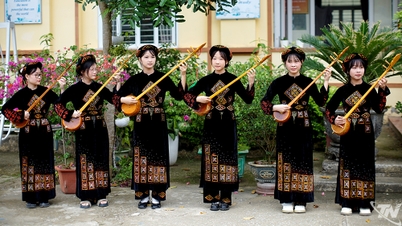
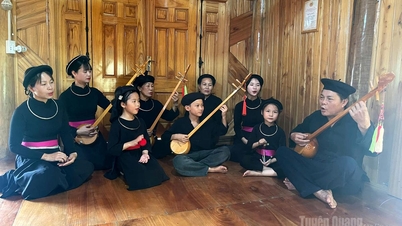
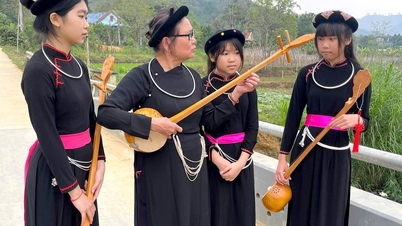
For the Tay and Nung people, Then singing and Tinh playing are not merely forms of folk art, but also repositories of cultural, historical, and customary values passed down from generation to generation.
Understanding this value, for many years, Mr. Luu Sung Dong has actively participated in cultural exchange and performance programs in his locality. When the sound of the Tinh lute rises, blending with the sweet melodies of Then music, listeners feel as if they are returning to the roots of their national culture. He sees it not only as a performance but also as a way to contribute to preserving and spreading traditional values.
What is even more valuable is that, in addition to practicing and performing, Mr. Dong also dedicates a lot of time to researching and learning to craft the Tinh instrument himself. In his small house, pieces of wood, dried gourds, and craft tools have become the materials for creating instruments that bear the distinctive mark of the artisan.

 |
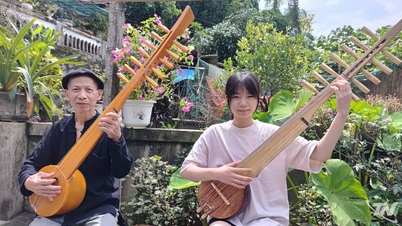
| The Tinh lute has become a companion to many people. |
According to Mr. Dong, the selection of materials is crucial for making a high-quality Tinh instrument. It's necessary to choose mature gourds with a balanced shape, a moderately thick shell, and that have been naturally dried to create resonance in the soundbox.
The neck of the guitar is usually made from sturdy, warp-resistant woods such as mulberry, cypress, or other durable forest woods. The wood must be properly treated and dried to prevent cracking and shrinkage during use.
After selecting the materials, the instrument maker must go through many meticulous steps such as cutting, shaping, shaping the neck, carving the body, assembling the parts, tightening the strings, and tuning. Each step requires carefulness, skill, and experience accumulated over many years.
Mr. Dong shared that the most difficult thing is not creating the shape of the instrument, but rather ensuring that the sound has the right resonance, sustain, and timbre. Therefore, each completed instrument is the result of perseverance, meticulousness, and a passion for national culture.
"Every time I finish making a Tinh instrument with my own hands, I feel very happy. It's a handcrafted product that contributes to preserving the traditional culture of our nation," Mr. Dong confided.
To date, many of the Tinh musical instruments he crafted have reached people with a shared passion both locally and outside the area. However, what always worries him is the rapid development of new forms of entertainment, which puts many folk songs and traditional music at risk of disappearing if not properly preserved. Therefore, he always hopes to contribute his efforts to pass on the passion to the younger generation. For him, preserving culture requires the joint efforts of the entire community.
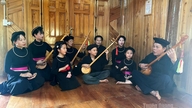
With all his heart, he is willing to teach the skills of Then singing and Tinh playing for free to anyone who loves and wants to learn this traditional art form. Many people, after being guided by him, have been able to play basic melodies on their own, thereby nurturing their love for national culture.
Amidst the relentless flow of modern life, individuals like Mr. Luu Sung Dong are truly admirable "keepers of the flame." They are contributing daily to preserving, transmitting, and keeping alive traditional cultural values.
Source: https://baothainguyen.vn/van-hoa/202606/giu-hon-then-qua-tieng-dan-tinh-7dc6e7c/



































![[Video] Sunset at Lap An Lagoon – Where the sun sets over the fishing nets](https://vphoto.vietnam.vn/thumb/1200x675/vietnam/resource/IMAGE/2026/05/31/1780192137701_beach-landscape-sea-water-nature-grass-745871-pxhere-com.jpeg)



























Comment (0)