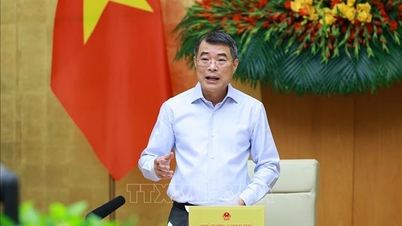
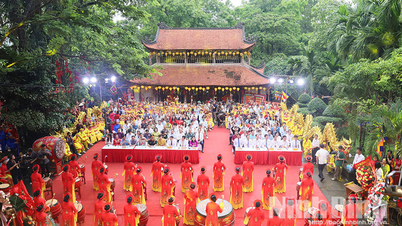
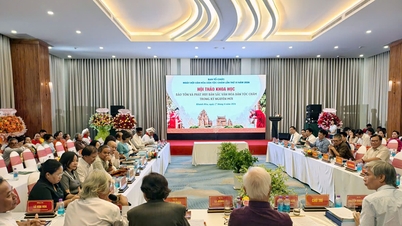
The workshop attracted 250 delegates, including more than 100 leading professors and doctors in the fields of culture, ethnicity, and heritage research - Photo: DUC CUONG
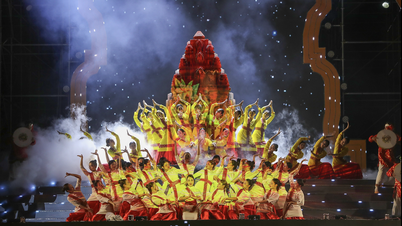
On the morning of June 27th, within the framework of the 6th Cham Ethnic Culture Festival, the Ministry of Culture, Sports and Tourism, in coordination with the People's Committee of Khanh Hoa province, organized a scientific seminar on "Preserving and Promoting Cultural Identity". Cham ethnic culture in the new era.
The workshop brought together a large number of researchers, conservation experts, cultural managers, and Cham artisans.
When cultural values face the challenges of time.
The workshop took place against the backdrop of many Cham cultural values facing new challenges as climate change, urbanization, and changes in social life increasingly impacted tangible and intangible heritage.
In his presentation, Associate Professor Dr. Ngo Van Doanh stated that the remaining Cham temple system in Khanh Hoa and the South Central region is a remarkable testament to the development of Cham architectural art over many centuries.
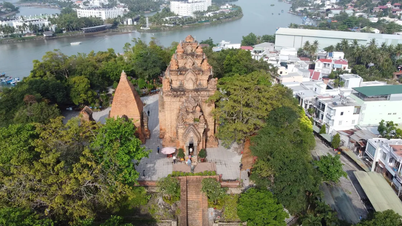
From the Hoa Lai tower complex, the Po Nagar Tower to Po Klong Garai and Po Rome, each structure reflects different stages of development in Cham art.
According to him, in addition to the UNESCO-listed sites, Cham temple complexes, ancient irrigation systems, festivals, epics, and many other forms of heritage need to be further studied, identified, and promoted more widely on the cultural heritage map of Vietnam and the world .
Many presentations also warned of the deterioration of Cham temples and towers under the impact of the natural environment. Experts proposed strengthening the application of science and technology in material conservation, building a digital database on the current state of relics, promoting environmental monitoring, and allocating resources regularly for periodic maintenance.




The Poklong Garai Cham tower complex in Khanh Hoa - Photo: Duc Cuong

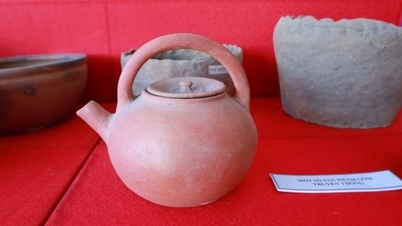
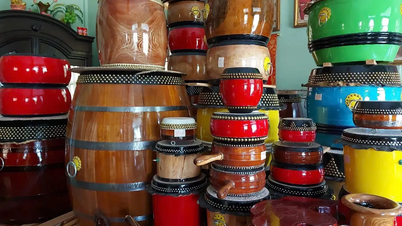
Handcrafted Bau Truc pottery products of the Cham people in Khanh Hoa - Photo: NUI XANH
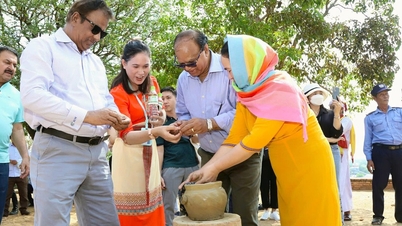
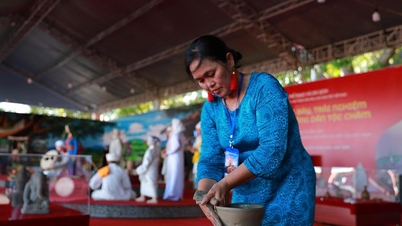
In the field of intangible heritage, Ms. Duong Thi Anh (Department of Cultural Heritage) stated that the traditional pottery making craft of the Cham people, despite being inscribed by UNESCO on the list of intangible cultural heritage in need of urgent protection, is still facing the risk of disruption due to a lack of successors, limited raw materials, and competitive pressure from industrial products.
According to her, heritage preservation does not mean "freezing" traditional values, but rather creating conditions for heritage to continue adapting to contemporary life, becoming a resource for the development of cultural tourism, creative economy, and sustainable livelihoods for the community.
Preserving Cham cultural essence in the new era.
Many opinions at the conference agreed that in the new era, preserving Cham culture should not only focus on safeguarding ancient structures or restoring traditional rituals, but more importantly, on ensuring the heritage continues to be present in community life.
Conservation efforts need to be passed on to the younger generation and contribute to the sustainable development of the locality and the country.

Cham cultural relics and heritage sites in Khanh Hoa have been integrated into the digital space, making it easy for locals and tourists to search and learn about them - Photo: DUC CUONG



At the workshop, the organizers launched the website on Cham cultural heritage in Khanh Hoa. Through the application of digital technology, Khanh Hoa aims to enhance the public's experience and accessibility to Cham cultural heritage, contributing to promoting preservation alongside development in the context of digital transformation.
Mr. Nguyen Long Bien, Permanent Vice Chairman of the People's Committee of Khanh Hoa province, said that through the suggestions of the delegates at the workshop, in the coming time the province will coordinate with scientists, experts and especially the Cham community, to focus on fully identifying the value of Cham cultural heritage, from temple architecture and festivals to traditional crafts.
This research aims to propose solutions for effectively exploiting cultural resources in conjunction with tourism development, creative economy, creating sustainable livelihoods, and improving the lives of the people. Through this, it contributes to making Cham culture one of the distinctive cultural products of Khanh Hoa.
Source: https://tuoitre.vn/giu-hon-van-hoa-cham-trong-ky-nguyen-moi-100260627113943007.htm
![[Photo] "Hanoi Lotus Festival" honors the lotus flower that has been associated with Vietnam for thousands of years.](https://vphoto.vietnam.vn/thumb/1200x675/vietnam/resource/IMAGE/2026/06/27/1782516943048_sen-ha-noi-2026-minh-duy-1-jpg.webp)























































![[Infographic] 16 fireworks display locations to celebrate the 50th anniversary of Ho Chi Minh City being honored with the name of President Ho Chi Minh](https://vphoto.vietnam.vn/thumb/402x226/vietnam/resource/IMAGE/2026/06/27/1782539591308_man-ban-phao-hoa-ruc-ro-dem-khai-mac-638jpg-17242995540161175940469.jpeg)