However, due to the ravages of time and challenging economic conditions, many houses are deteriorating day by day.
A two-century-old house and its keepers of memories.
The summer thunderstorm had just ended. Raindrops still dripped from the moss-covered tiled roof of an ancient house hidden behind rows of betel nut trees in Hoi Ky village. In the weathered brick courtyard, Mr. Duong Van Manh, a villager dedicated to collecting antiques, quietly swept away the remaining fallen leaves. Occasionally, he would look up at the roof, his gaze lingering on the tiles displaced by the heavy rain, before sighing softly.
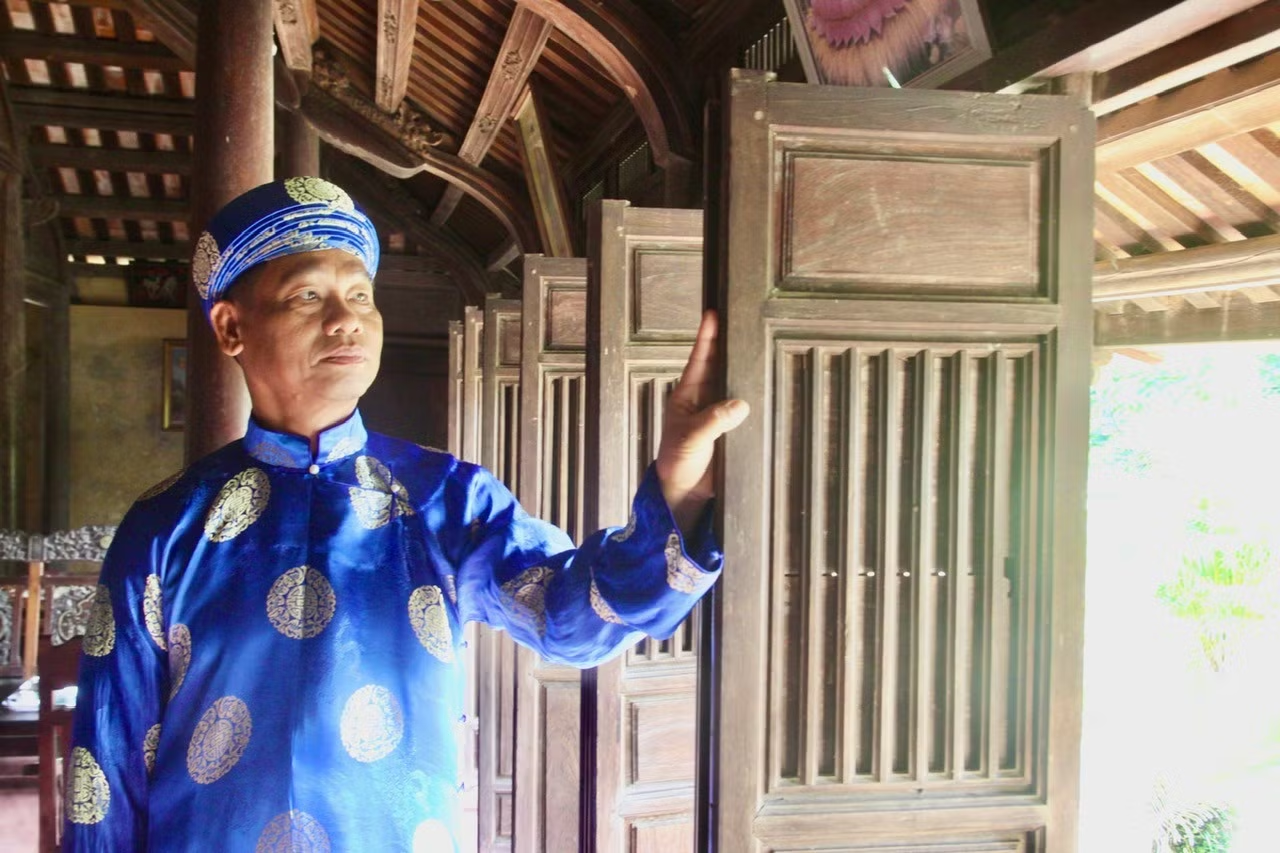
At nearly seventy years old, Mr. Manh is accustomed to climbing onto the roof himself every rainy season to replace tiles and patch leaks. Many tasks are no longer allowed by his children and grandchildren due to safety concerns, but he quietly manages them. "If I don't do it, who will? Wherever the house is damaged, I have to fix it," he says, his voice light and casual.
His hand rested on the dark, weathered jackfruit wood pillar, where small cracks ran like traces of sun and wind over the years. “This house is over two hundred years old. It was left to us by our ancestors. We’ll preserve it for as long as we can…” he said slowly, as if afraid to disturb the space thick with moisture and the scent of incense.
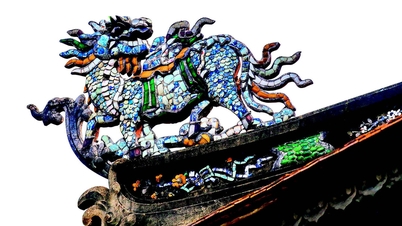
Inside the old house, the polished black jackfruit wood pillars still support the entire roof frame. On the rafters, the carvings of dragons, phoenixes, plum blossoms, and Buddha's hand fruit are still clearly visible despite having endured hundreds of seasons of rain and sun. The afternoon light filters through the gaps in the wooden doors, falling onto the tiled floor in thin golden streaks, highlighting the dark wood that has turned a honey color over time.
It is noteworthy that the entire structure of the house is assembled entirely using wooden mortise and tenon joints, wooden pegs, and wooden dowels, without the use of iron nails. This is a traditional construction technique of old-style houses, requiring high precision in every detail and the exquisite craftsmanship of the carpenters.
But what makes people linger longer is not just the technique or architectural value, but the feeling of a space that has witnessed many generations. Two hundred years of the house means that many generations of a family have been born, grown up, and then returned to the earth one after another. During that time, the countryside along the O Lau River has experienced war, floods, and the constant changes of rural life. Yet the house remains in its original place, a silent testament amidst the changes around it.
Mr. Duong Van Manh said that many people from other places have come to inquire about buying the house, including some who offered to dismantle it completely and transport it elsewhere to rebuild it. However, he has always refused. "Selling it would be easy," he said, "but then how will my descendants find their roots?" For him, the value of the house lies not only in its architecture or material possessions but also in its connection to his family lineage, memories, and the place where his family used to live.


Preserving amidst the flow of modernity
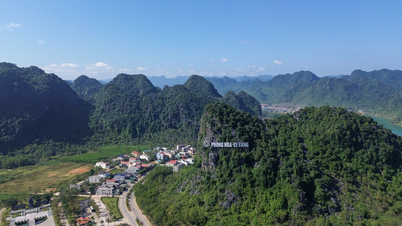
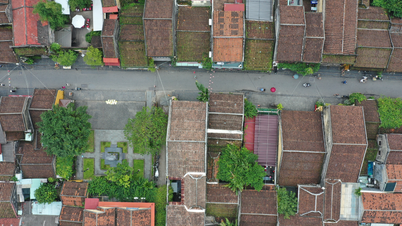
Viewed from above, Hoi Ky appears as a green strip of land embraced by the O Lau River. With three sides bordered by the river and one side facing the fields, this location has long given the village a rare sense of isolation and tranquility amidst the coastal region of Quang Tri .
According to the elders, Hoi Ky was formed about six hundred years ago. The first settlers came to cultivate the fertile riverside land, built houses and established villages, gradually forming a stable community. Thanks to the favorable waterway trade, it soon became a gathering place for many prominent families. Many families with good economic conditions, education, and even those who had served as officials under previous dynasties chose Hoi Ky as their place of residence, thus forming the system of ancient wooden houses that remain to this day.
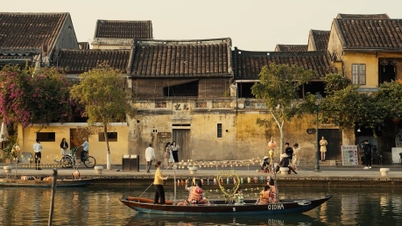
Walking through Hoi Ky today, one easily feels as if they are stepping into a relatively well-preserved folk architectural space of Central Vietnam. Rows of tea plants lining the pathways, moss-covered walls, wooden gates faded by time, and towering betel nut trees in front of houses create a characteristic, simple yet evocative rural landscape.
According to Mr. Ngo Hong Vy, head of Hoi Ky village, the village used to have about 36 original traditional wooden houses, but now only about 20 retain their traditional appearance. This number is still significant, but it also means that many heritage sites have deteriorated or changed over time.
According to Mr. Vy, most of the old houses are currently owned by individual households, so preservation mainly depends on the economic conditions of each family. "Everyone wants to keep the houses left behind by their ancestors, but the repair costs are very high. Many damaged items require skilled craftsmen and appropriate materials to be properly restored. What we worry about most is that without timely support, the remaining houses will continue to deteriorate over time," Mr. Vy shared.
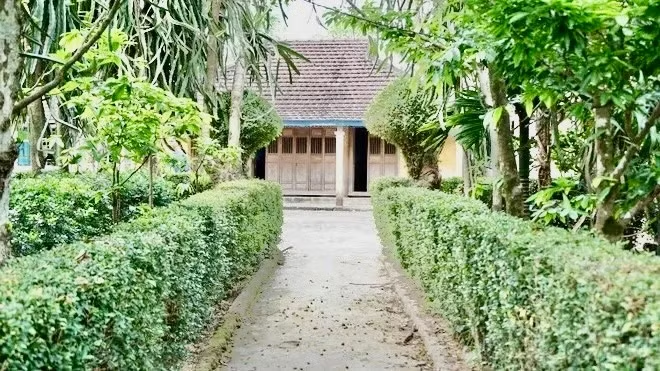
Behind the remaining moss-covered tiled roofs lies the difficult story of those striving to preserve their ancestral heritage. Time, harsh weather, and limited economic resources are becoming real challenges to the preservation of the ancient houses in Hoi Ky.
Repairing a traditional wooden house is a significant expense, requiring suitable materials and skilled craftsmen. This leaves many families in a situation where they want to preserve their houses but lack the resources for proper restoration. After each storm, many households can only make temporary repairs to prevent further damage.
In reality, not every house in the village has retained its original appearance. Some roofs have been replaced with new materials, and some moss-covered walls have been obscured by repairs and renovations. The blending of old and new unfolds quietly, gradually changing the face of a village once considered a treasure trove of folk architecture along the O Lau River.



Mr. Do Van Binh, Director of the Investment, Trade and Tourism Promotion Center of Quang Tri province, believes that the system of ancient wooden houses and the traditional village space are among the unique values of Hoi Ky. These are not only architectural works of historical value, but also reflect the formation, development and cultural life of the communities living along the O Lau River over many generations.
According to Mr. Binh, Hoi Ky has many conditions for developing community tourism associated with experiencing rural culture, traditional house architecture, and preserved traditional values. “The important thing is to find a balance between preservation and exploitation. If we only focus on tourism development while losing the original cultural space, the attractiveness of Hoi Ky will decrease. Conversely, if well preserved, it can become a unique destination, contributing to creating livelihoods for the people and preserving traditional values,” Mr. Binh stated.
Amidst the flow of modernity, the traditional houses in Hoi Ky are not only repositories of family memories or material traces of a historical period. They are also important pieces that make up the identity of a rural area along the O Lau River that has survived through hundreds of years of change.
The challenge of preserving traditional houses in Hoi Ky is therefore not only about retaining ancient architectural structures, but also about preserving the cultural values that have contributed to shaping the appearance and identity of a riverside village for centuries.
Source: https://cand.vn/giu-hon-xua-ben-dong-o-lau-post813149.html