Forest management contracts, safeguarding the rights of the people.
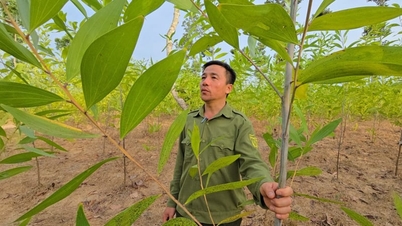
The Xuan Loc Protective Forest Management Board is assigned to manage an area of 10,372 hectares; of which approximately 10,028 hectares are located in Xuan Hoa, Xuan Thanh, and Xuan Loc communes, Dong Nai province (now Dong Nai city) and 343.44 hectares are located in Suoi Kiet and Tan Minh communes, Lam Dong province.
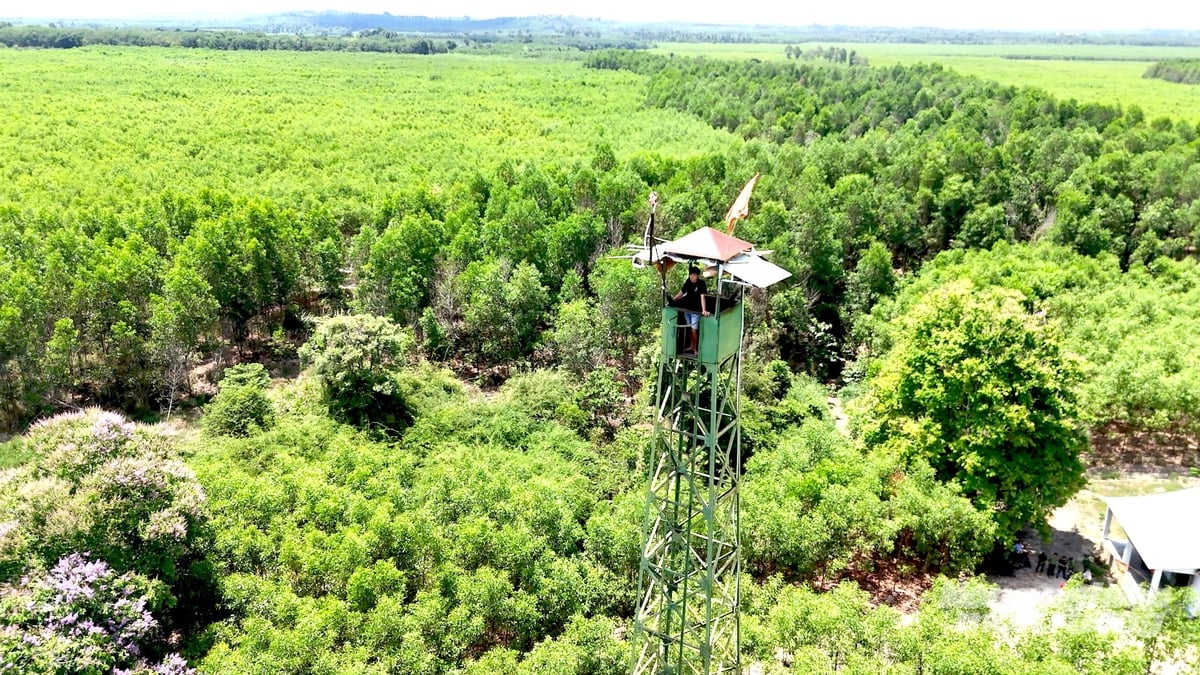
The Xuan Loc Protective Forest Management Board is assigned to manage an area of 10,372 hectares. Photo: Minh Sang.
According to the forest classification plan, the area of protection forests is 5,787.03 hectares, and production forests is 4,584.96 hectares. Most of the forest area managed by the Management Board is planted forest, organized through direct forest planting; contracted forest planting by households; and forest planting partnerships.
According to the Xuan Loc Protective Forest Management Board, every year the unit develops a plan for forest management, protection, and development, which is approved by the Dong Nai Department of Agriculture and Rural Development (now the Department of Agriculture and Environment). From this, a detailed implementation plan is drawn up for each sub-field and contracted household.
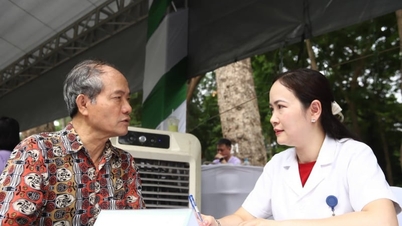
Mr. To The Manh, Deputy Director in charge of the Management Board, said: “Forest protection work is carried out regularly, with core forces at the sub-stations coordinating with local authorities and the Forest Ranger Station of Region 2. We patrol, inspect, and educate each household, ensuring that regulations on forest management, care, and protection are strictly implemented.”
In addition to patrolling, the Management Board also implements diverse forms of propaganda, from banners and slogans, direct meetings, to social media and community forestry groups. As a result, people's awareness of law compliance and understanding of forest management has improved, minimizing violations in logging and forest care.
Within the forest management area, many households that have been contracted to manage the forest have been involved with it for many years, becoming positive contributors to forest protection and care. These contracted households are mainly ethnic minorities facing difficult living conditions and have a direct need for forestry production. The maximum contracted area is 30 hectares per household, 15 hectares per individual, with a contract duration of no more than 20 years. Existing contracts, if properly implemented, will continue to be in effect according to current regulations.
Every year, the Management Board develops a plan for periodic inspections to monitor contract implementation, check records, and assess the current state of the forest, in conjunction with patrolling and monitoring forest protection. Mr. Dang Quoc Vy, a household contracted to plant trees in Xuan Loc, shared: “I have been involved in tree planting since 1984 and have remained dedicated to the forest to this day. Forestry work is always as closely intertwined with us as the ‘love between trees and land.’ Although the income is not high, it provides a stable life.”
Mr. Vy said that during the rainy season, households must actively clear weeds and fertilize, and at the beginning of the dry season, they must prevent forest fires and clean up along the firebreaks from the road surface inward for 15 meters. Planting trees is a whole process of care and investment to ensure sustainable forest development.
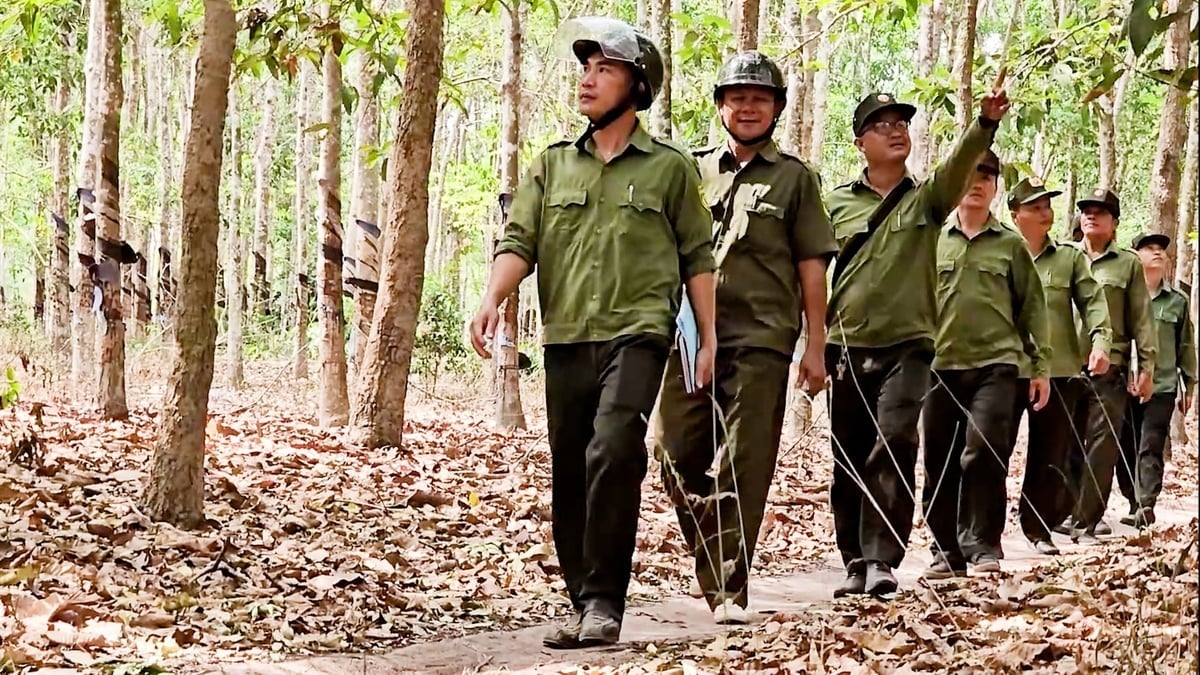
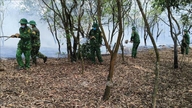
The Xuan Loc Protective Forest Management Board strictly implements patrols and fire prevention and control plans according to the "four on-the-spot" principle during the dry season, preventing forest fires from occurring. Photo: Minh Sang.
Mr. Le Van Hung's family (Xuan Hoa commune) has been contracted to manage over 12 hectares of hybrid acacia and large timber trees since 2014. Mr. Hung said: “After receiving the contract, my family planted, cared for, and protected the forest according to the management board's instructions. The trees are growing well, providing both economic value and contributing to soil and water conservation, creating stable livelihoods for the community. Income from the forest has helped my family improve our lives.”
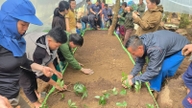

Initially, when he received the contract, Mr. Hung was worried about the planting and care techniques, but after receiving guidance from the Management Board, he mastered the process and committed to strictly adhering to the regulations.
Facing difficulties and overcoming obstacles
The Xuan Loc Protective Forest Management Board currently manages over 3,300 hectares of forest that have been certified by FSC, maintaining sustainable management standards, both enhancing the value of forest products and preserving the forest environment.
Forest fire prevention and control (FFPC) work is implemented systematically, from developing plans and establishing command centers to organizing awareness campaigns and monitoring and managing undergrowth during the dry season. Mr. To The Manh, Deputy Director in charge of the Management Board, emphasized: “Coordination with local authorities and forest rangers is crucial. The coordinating forces organize patrols, awareness campaigns, and on-site monitoring quarterly, ensuring sustainable forest development.”

The Xuan Loc Protective Forest Management Board currently manages over 3,300 hectares of forest that have been certified by FSC, maintaining sustainable management standards, both enhancing the value of forest products and preserving the forest environment. Photo: Minh Sang.
The Management Board has also finalized a plan to rehabilitate degraded land, plant additional large timber trees, maintain density and technical standards, helping trees grow well and improving economic and environmental efficiency. Every year, the forest planting ceremony at the beginning of the rainy season reminds officials, employees of the Management Board, and contracted residents of their responsibility to care for and protect the forest.
In the context of climate change, prolonged and severe dry seasons, proper afforestation techniques, effective management of production forests, and appropriate conversion of forest areas are essential to stabilize community livelihoods, raise community awareness, and protect the environment. Thanks to the synchronized implementation of these measures, the entire forest area under the management of the Management Board has been largely reforested, creating a "green lung" for Dong Nai City. The close coordination between the Management Board, the people, and relevant agencies has helped to achieve high efficiency in forest management, protection, and development, while simultaneously increasing the value of production forests, promoting socio-economic development, and ensuring sustainable environmental protection.
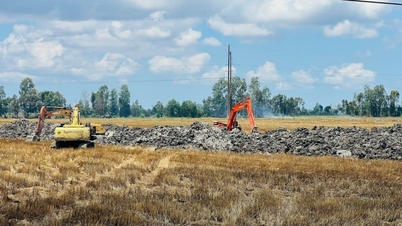
Annually, the Management Board implements comprehensive solutions for forest management and protection across the entire forest area. However, the unit still faces many difficulties. Some households who have been contracted to manage forest land arbitrarily exploit planted forests, build or expand temporary houses, erect fences, and dig water reservoirs on their leased land. In addition, some state regulations on forestry are not consistent with local realities, creating obstacles in management.

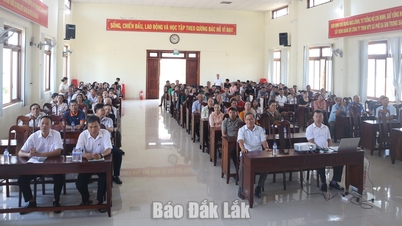
In 2026, the Management Board will strengthen its security forces, conduct continuous patrols, and contact contracted households to disseminate information on forestry and land laws; and promptly detect, prevent, and handle violations. Photo: Minh Sang.
Mr. To The Manh stated: “The violations mainly occurred in sub-areas 204 and 205, and the Tran Tao branch school. The Management Board has compiled dossiers and sent them to the relevant authorities for handling; at the same time, we are consolidating the dossiers to process them according to the contract. Currently, 5 serious violations have been tried by the Court, requiring the violating households to return the land to the Management Board, and the enforcement agency is implementing the judgment.”
In 2026, the Management Board will strengthen its security forces, conduct continuous patrols, and engage with contracted households to disseminate information on forestry and land laws; promptly detect, prevent, and handle violations. Simultaneously, the unit will strictly implement the fire prevention and control plan according to the "four on-the-spot" principle, ensuring no forest fires occur. The forest protection and environmental service provision contracts will also be completed, enhancing the responsibility of contracted households.
Thanks to the synchronized implementation of various solutions, the Management Board strictly adheres to State regulations on land management, use, and forest protection. The entire managed land area is efficiently utilized, used for forestry production purposes, and in accordance with the planning. Forest and forest land management is carried out rigorously, from establishing management records and conducting field monitoring to tracking and updating forest changes. Forest protection activities are regularly strengthened, with strict control over activities within the forest area, preventing disputes, encroachment, or forest fires.



The management board focuses on diversifying planting models, combining many tree species. In particular, native forest tree species and perennial industrial crops account for a large proportion, creating high canopy cover, serving both protective purposes and yielding high economic returns.

All saplings for reforestation are grown in the nursery of the Management Board, have clear origins, and comply with strict technical procedures. Photo: Minh Sang.
The vast majority of households receiving land allocation contracts comply well with State regulations and the contracts with the Management Board. The efficiency of land use is increasingly evident; the area of forests and perennial trees not only contributes to improving protection and ecology, but also provides hundreds of thousands of cubic meters of raw timber, along with many products from industrial and agricultural crops each year.
Through land allocation, the Management Board has mobilized labor and financial resources to protect and develop forests, creating jobs and stable income for households. At the same time, this work contributes to maintaining rural social stability, supporting the construction of new rural areas, and ensuring the role of the "green lung" for the region.
"The process of managing and protecting forests in our unit still faces some obstacles related to forestry laws, especially concerning protective forest land that has been leased to the people. We propose that the competent authorities remove these difficulties so that people can both develop their livelihoods from forest planting and effectively protect the forest, helping the Management Board to successfully complete its assigned tasks," Mr. To The Manh emphasized.
Source: https://nongnghiepmoitruong.vn/giu-la-phoi-xanh-cho-dong-nai-d817468.html