Just over three months after Ho Chi Minh City Party Secretary Tran Luu Quang made a commitment to the voters, the Ho Chi Minh City People's Council approved the investment plan for the urban renovation project in the Ma Lang area and the Ga-Gao Market. Following this, the Party Secretary personally met with citizens and directed the handling of long-standing complaints and petitions related to housing and land. From housing issues to the legitimate rights of citizens, the consistent approach has been to clearly define responsibilities, points of contact, deadlines, and to follow through to the end.
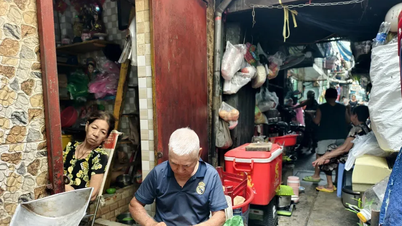
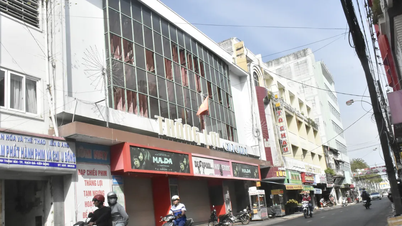
For many years, numerous households in the Ma Lang and Ga-Gao Market areas have lived in cramped, dilapidated houses. Some families of 9-10 people are crammed into houses of only about 10 square meters. The alleys are narrow, lacking light and amenities; fire safety and living conditions are not guaranteed, even though this area is located in the heart of the city. An urban renovation project for this area has been proposed for nearly 26 years, but due to many obstacles, it has not been implemented. At a meeting with voters on March 5, 2026, when voters brought up the project again, the Secretary of the Ho Chi Minh City Party Committee, Tran Luu Quang, expressed his deep concern about the cramped and unsafe living conditions of the people and promised to pay special attention to resolving the issue.
That promise was quickly translated into action. The Standing Committee of the City Party Committee and the People's Committee of Ho Chi Minh City issued decisive directives; departments and agencies promptly coordinated and supported the investor in resolving obstacles and completing the necessary documents. Just over three months later, the Ho Chi Minh City People's Council approved the investment plan for the project. This result demonstrates that when leaders are decisive, the approach to the problem is innovative, and agencies coordinate effectively, long-standing issues can still be resolved.
Notably, the project not only aims to demolish dilapidated houses, improve the landscape, and construct new buildings, but also places the long-term well-being of the people at the center. The policy of on-site resettlement provides residents with more spacious and safer housing while preserving their livelihoods, their children's education, and neighborly relationships. This represents a shift from a mindset focused on land acquisition for the project to one focused on stabilizing people's lives; from the goal of completing the project to ensuring that residents benefit from the development.



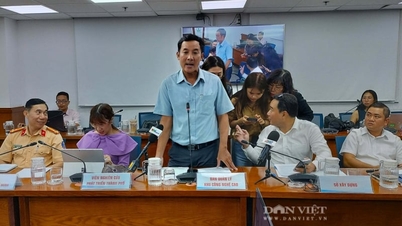
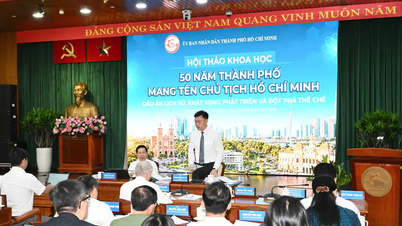
This mindset was further demonstrated by the Ho Chi Minh City Party Secretary's direct meeting with citizens on June 22nd, directing the resolution of long-standing complaints and petitions related to housing and land. People approach government agencies not only to present their requests or receive a promise of "consideration," but also to know clearly which agency is handling their case, the legal basis, the progress, and the final outcome.
Some cases drag on not necessarily because they are too complex, but because files are passed through many agencies, with no single point of responsibility. Avoidance or delay in resolving issues at the grassroots level not only affects the legitimate rights and interests of citizens, but also erodes trust in the public administration.
Therefore, responsibility must be quantified by concrete results: how many cases are resolved completely, how many petitions are answered on time, how many households have safe housing. These are the true indicators for evaluating the effectiveness of an agency's operations, as well as the competence and responsibility of its staff, instead of simply basing it on the number of documents issued or meetings held.
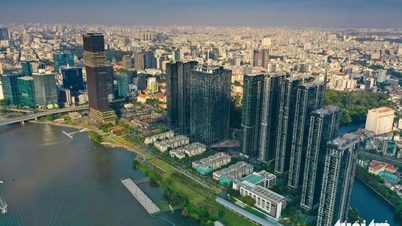
From renovating the Ma Lang area and the Ga-Gao market to resolving long-standing land and housing disputes, the overarching requirement in building a proactive and service-oriented government is to use the results of problem-solving and the satisfaction of the people as the measure of success. The people's trust has been and continues to be built through each case resolved fairly, in accordance with the law, and within the stipulated timeframe.



Source: https://www.sggp.org.vn/giu-loi-cam-ket-voi-dan-post859192.html

![[Image] Ho Chi Minh City: Ma Lang area, Chicken-Rice Market about to change its appearance](https://vphoto.vietnam.vn/thumb/1200x675/vietnam/resource/IMAGE/2026/06/25/1782377698627_ndo_br_m1-jpg.webp)


































![[Image] Schools organize meetings and introduce teaching models to students admitted to grade 10.](https://vphoto.vietnam.vn/thumb/1200x675/vietnam/resource/IMAGE/2026/06/25/1782368077271_ndo_br_z7970052192242-1ec8daeb77a6eed1a4e9f58c564ddd3e-jpg.webp)