Looking at it from the "bright spots"
In recent times, the provincial economy has continued its recovery momentum, with production and business activities showing many positive signs. The prices of commercial electricity and some minerals have remained relatively high, contributing to increased revenue from resource taxes, environmental protection fees, and corporate income tax.
As of May 31, 2026, total domestic revenue in the province reached VND 9,339 billion, equivalent to 53% of the central government's projected target, an increase of 36% compared to the same period in 2025.
Throughout the province, 82 out of 99 communes and wards have achieved or exceeded the average revenue collection target over the implementation period. This result mainly stems from the positive recovery of production and business activities, growth in the non-state enterprise sector, tourism , services, and industry.
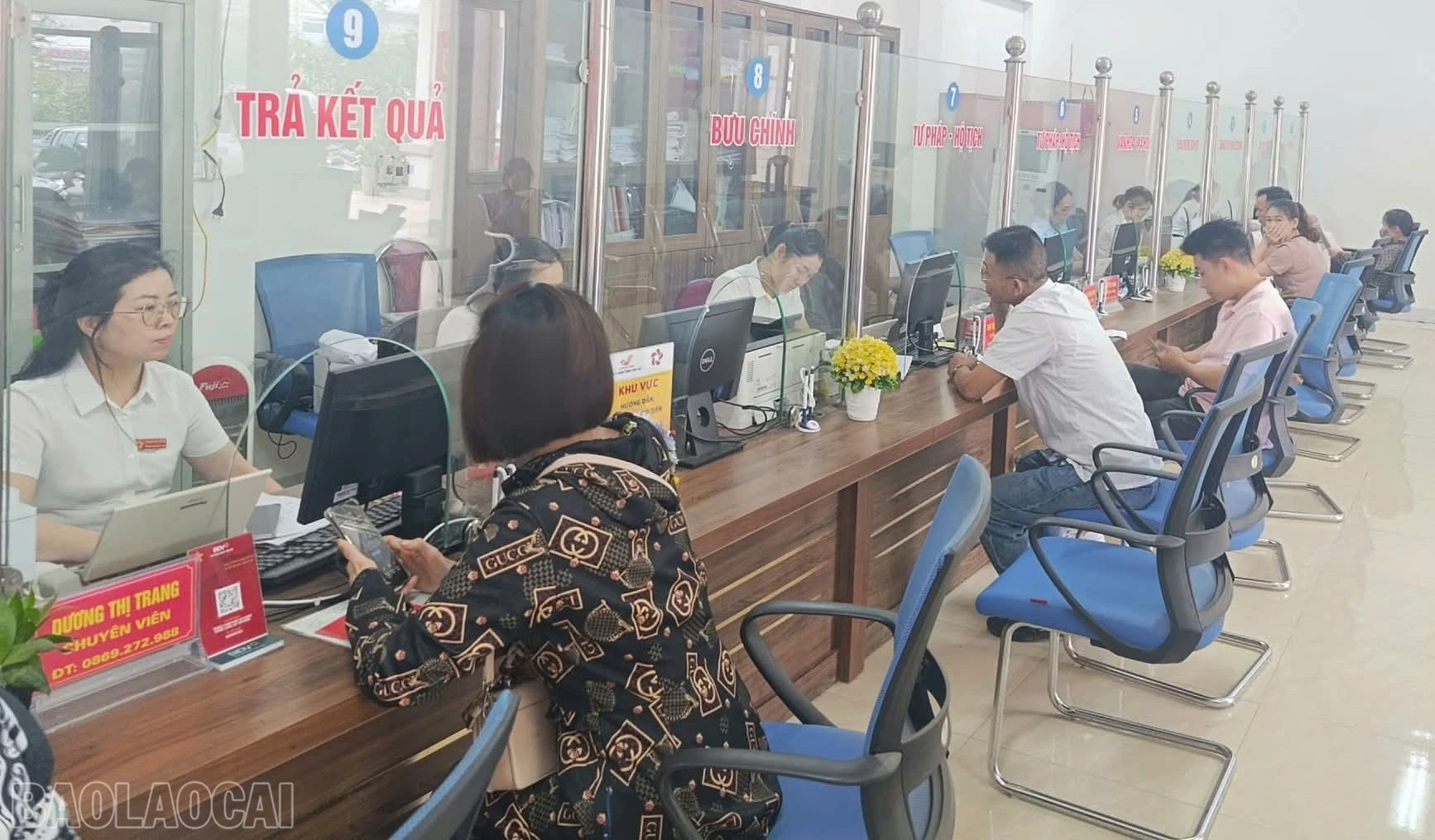
Sa Pa ward is one of the localities with high budget revenue in the province. As of May 21st, the total budget revenue in the ward reached approximately over 521.026 billion VND, equivalent to 14.1% of the plan assigned by the province and the ward.
Several revenue streams achieved high results and were "bright spots" in budget collection, including: revenue from the non-state industrial and commercial sector reaching VND 130.562 billion, equivalent to 47% of the allocated budget and continuing to be the main source of revenue for the locality; land lease revenue reaching approximately VND 39.492 billion, equivalent to 84.6% of the allocated budget...
According to To Ngoc Lien, Secretary of the Party Committee of Sa Pa Ward: “In the coming time, Sa Pa Ward will continue to focus on implementing decisive and comprehensive solutions, striving to achieve the highest possible level of completion of the assigned state budget revenue target for 2026. The ward will continue to closely coordinate with the tax authorities to strengthen revenue management and combat revenue loss; focus on reviewing business, service, tourism, accommodation, trade and individual business households to manage revenue collection correctly and fully according to regulations, striving to exceed the assigned target by approximately 310 billion VND by the end of 2026.”
In Yen Binh commune, revenue collection in the first five months of the year also recorded many positive signs. As of May 18th, total state budget revenue in the area reached over 134 billion VND, equivalent to 23.8% of the provincial plan. Of this, balanced revenue reached over 63% of the projected amount, basically ensuring the set progress.
The main revenue sources are taxes from non-state enterprises, registration fees, other fees and charges, revenue from production, business, and service activities, and some revenue generated within the locality. This result demonstrates the efforts and determination of the entire political system in managing budget revenue; and at the same time reflects positive signals in production, business, trade, services, and investment attraction in the commune.

However, despite the achievements, revenue from land use fees is currently low, reaching only about 6.5% of the annual forecast. This poses a significant challenge to the local government's budget management in 2026.
According to Ngo Bang Viet, Head of the Economic Department of Yen Binh Commune: “The commune will closely coordinate with specialized agencies at higher levels to overcome difficulties and accelerate the completion of legal documents for key land funds; focusing on resolving obstacles related to investment procedures, land clearance, and implementation conditions. In addition, the locality will strengthen tax management for business households, enterprises, and private basic construction activities; intensify efforts to combat tax evasion, minimize missed revenue sources, and handle outstanding tax debts according to regulations.”

A concerted effort to implement key solution groups.
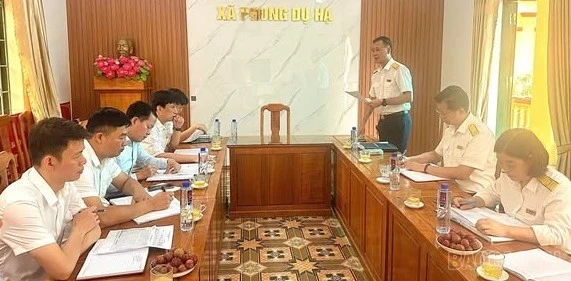
However, revenue collection results vary among localities. Some communes have low collection progress, such as Duong Quy, Ban Ho, Phong Du Ha, and Muong Lai. These are mainly remote and isolated areas with small-scale economies, undiversified revenue structures, and heavy reliance on hydropower and resource exploitation.
To achieve the revenue collection targets for the second quarter and the entire year of 2026, the Provincial People's Committee requires communes and wards to focus on implementing a comprehensive set of solutions. The main focus is on tightening discipline and order in revenue collection management; linking the responsibility of the head of each department to the results of task implementation; and assigning specific targets to each department and responsible officer.
Local authorities need to coordinate closely with tax agencies in reviewing and updating the list of businesses and individuals with new tax obligations, especially those subject to changes in tax declaration methods; strengthen inspections in areas with a high risk of revenue loss such as private construction, transportation, trade, and services; urge timely collection and payment, resolve outstanding debts completely, and limit the accumulation of new debts.
In addition, the Lao Cai Provincial Tax Department is implementing a comprehensive set of key tax management solutions throughout the province. Specifically, the tax authorities are focusing on strengthening communication and promptly disseminating new policies, while simultaneously creating the most favorable conditions for citizens and businesses to fulfill their obligations to the state budget.
The tax sector has also effectively implemented the government's policies on tax and fee exemptions, reductions, and extensions, as well as land rent payments, to support the recovery of production and business activities. Alongside nurturing revenue sources, the analysis, forecasting, and monitoring of revenue collection progress in each locality, sector, and tax category have been tightened to proactively identify potential revenue sources.
In addition, improving risk management efficiency and closely monitoring tax declarations are being implemented simultaneously to detect and severely punish acts of incomplete declaration.
In practice, commune and ward-level authorities are the closest to the people, closely monitoring the population, businesses, and production and business activities in their areas. Revenue from communes and wards in Lao Cai province not only contributes to increasing the scale of local financial resources but also enables local authorities to proactively carry out tasks related to socio-economic development, national defense, security, social welfare, and investment in essential infrastructure.
Source: https://baolaocai.vn/giu-mach-thu-ngan-sach-cap-xa-post900951.html

![[Photo] General Secretary and President To Lam receives Palestinian Ambassador Saadi Salama](https://vphoto.vietnam.vn/thumb/1200x675/vietnam/resource/IMAGE/2026/06/25/1782365384740_a1-bnd-9423-8322-jpg.webp)

![[Image] Ho Chi Minh City: Ma Lang area, Chicken-Rice Market about to change its appearance](https://vphoto.vietnam.vn/thumb/1200x675/vietnam/resource/IMAGE/2026/06/25/1782377698627_ndo_br_m1-jpg.webp)
![[Image] Schools organize meetings and introduce teaching models to students admitted to grade 10.](https://vphoto.vietnam.vn/thumb/1200x675/vietnam/resource/IMAGE/2026/06/25/1782368077271_ndo_br_z7970052192242-1ec8daeb77a6eed1a4e9f58c564ddd3e-jpg.webp)






![[GALLERY] Voidling Bound takes Steam by storm with 94% positive reviews.](https://vphoto.vietnam.vn/thumb/402x226/vietnam/resource/IMAGE/2026/06/25/1782396892878_tua-1-png.webp)