

Double joy
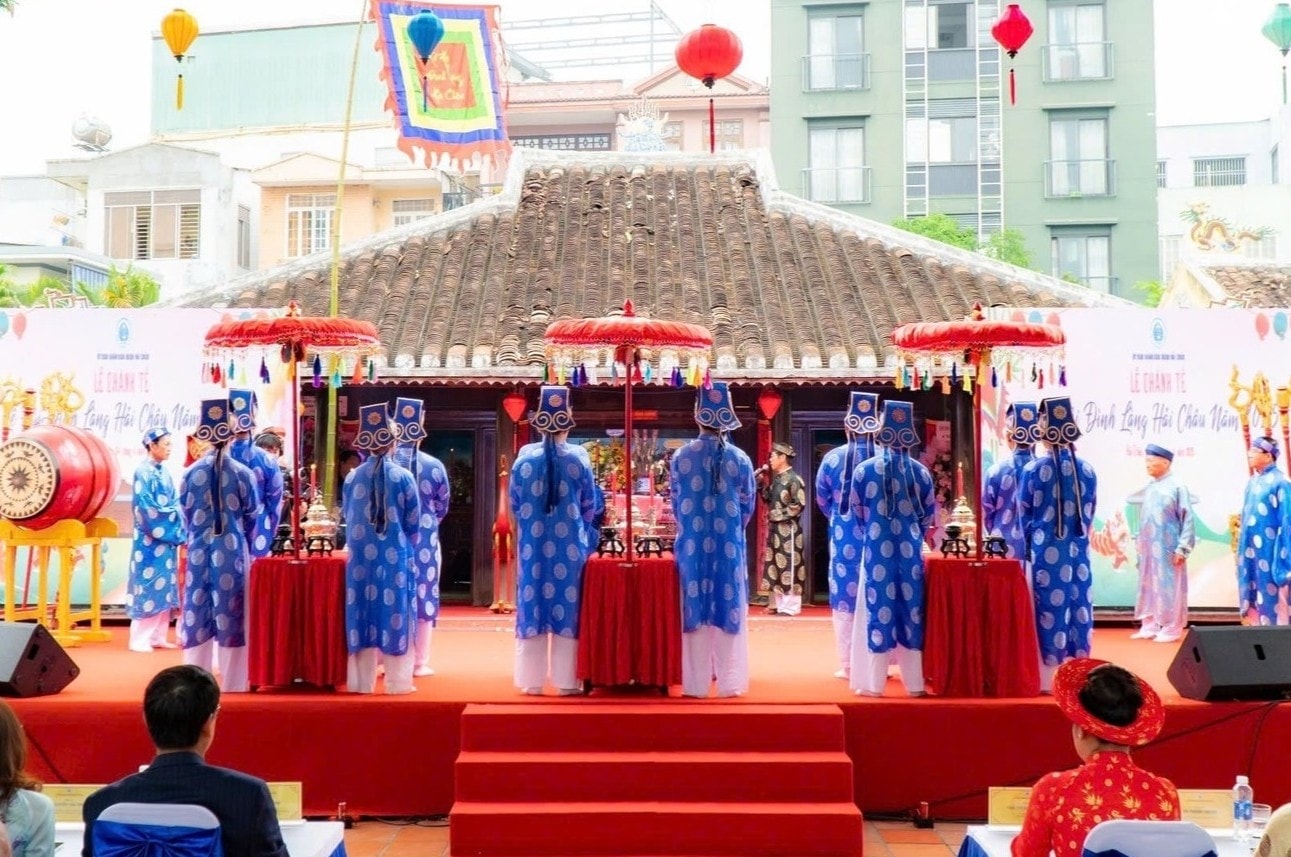
For the residents living around An Ngãi Đông village communal house (Hòa Khánh ward), this August will bring double joy because, in addition to the 15th anniversary of the communal house being recognized as a city-level historical and cultural relic, its restoration and renovation after many years of deterioration has also been completed.
These days, Mr. Nguyen Ba Don, the head of An Ngai Dong village, still regularly visits to open the temple doors so that people can easily come in to offer incense.
According to him, preserving the temple's roof amidst a modern city is difficult enough, but keeping it vibrant and attracting visitors is even harder. Therefore, no matter how busy he is, he always makes time to visit, sweep, clean, and take care of it.
“The villagers now live amidst the hustle and bustle of the city, but every full moon, the first day of the lunar month, or the anniversary of the village's founding, they return to the communal house. Some people even stop by to light an incense stick whenever they pass by,” Mr. Don said after gently closing the newly painted wooden door.
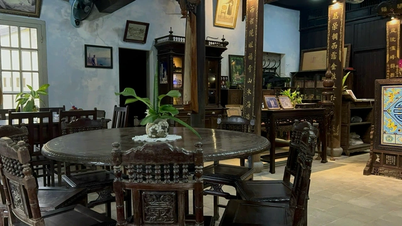
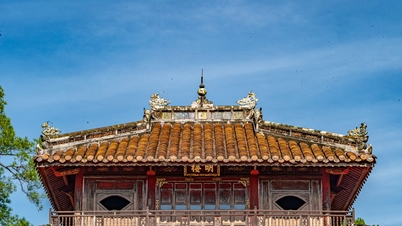
While not as grand as many other communal houses in Da Nang , An Ngai Dong communal house has its own unique and warm charm. The small, three-bay roof nestles under the trees, and in front is a clean, shady courtyard.
The intricately carved wooden panels, rafters, and crossbeams were all carefully preserved after the restoration.
The communal house was built in 1892 (during the 4th year of Emperor Thành Thái's reign) on a flat piece of land in the middle of the village. The front of the communal house faces west, overlooking a field, with the Bà Nà mountain range in the distance.
The main hall measures 9.3m x 9.175m. Its architecture follows the traditional Vietnamese house style with one central bay and two side bays, comprising two truss systems, each with five rows of columns (two main columns, two secondary columns, and one third column; column diameters are 25cm, 22cm, and 20cm respectively). All the columns stand on pumpkin-shaped stone bases.
The inner sanctuary is dedicated to the gods and the ancestors who contributed to the founding and development of the village. This area is decorated with couplets in Chinese characters praising the virtues of the deities and ancestors.
Under the roof of An Ngãi Đông communal house, the old atmosphere remains vibrant because people have not forgotten.
Mr. Don said that preserving the village communal house means preserving the roots, and passing it on to future generations means preserving the soul of the village.
On each ceremonial occasion, he and the elders would guide the younger generation in arranging the offerings, how to clasp their hands in prayer, and how to recite the prayers in a solemn and respectful manner.
"If we don't teach them, the children will easily forget. And if they forget etiquette, the village loses its foundation, and people lose their roots and origins," he said.
Urban life
Culture is always evolving over time. In this flow, communal houses stand as spiritual landmarks, guiding people's hearts back to their roots.
In Da Nang, Hai Chau and Thac Gian are rare communal houses that still preserve many artifacts of exceptional historical and cultural value.
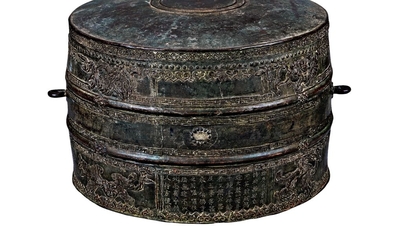
For example, the Hai Chau village communal house is notable for its bronze bell, which is 1.3m high and 0.7m wide at the mouth, carved with the majestic image of two dragons from the Nguyen dynasty, and is currently preserved at the Da Nang Museum.
Three marble steles have also been preserved intact; one was erected in the 14th year of Tu Duc (1861), and the other two date back to the first year of Bao Dai (1926), recording the merits of the people of Hai Chau who contributed labor and resources to the renovation of the communal house.
Inside the temple, there are still six precious horizontal plaques, crafted during the reigns of Gia Long, Minh Mạng, Tự Đức, and others.
Within a spacious 2,000m² area nestled in the heart of the city, for over a decade, Mr. Nguyen Ngoc Nghi, Head of the Ceremony Committee of Thac Gian Village Temple, has diligently copied and translated dozens of imperial decrees and edicts in Han Nom script from the Le and Nguyen dynasties into Vietnamese so that future generations can easily access them.
He said that each royal decree is like an administrative document of the imperial court, proving the historical value and contributions of our ancestors.
Among them, the royal decree conferring the title of tutelary deity of Thac Gian commune, issued during the reign of Emperor Minh Mang (in 1826), is particularly valuable. Each word in it is concise and meaningful, emphasizing the principles of loyalty and filial piety, and the strong bond between the people and the land they inhabit.
“Imperial decree conferring the title of tutelary deity of Thac Gian commune. He rendered meritorious service to the country and helped the people; his virtues shine brightly. He has been worshipped by the villagers. Obeying the command of Emperor Cao Hoang, we have unified the country; the good news is spread to all gods and people,” Mr. Nghi translated.
At nearly 80 years old, Mr. Nghĩ says he is a true temple caretaker. Every day, this man still regularly visits the temple grounds as if it were a habit ingrained in his blood.
Here, he would often sit and reread the imperial decrees, pondering over each word of the Sino-Vietnamese script. On each festival occasion, he would revise the ceremonial texts and instruct the younger generation on how to perform the rituals.
Because, more than anyone else, he understood that if the temple only focused on preserving the roof tiles and pillars, without maintaining reverence and passing on its moral principles to future generations, it would gradually become an empty shell.
"Many people say that now that urban areas are developed, who still cares about village communal houses? But I believe everyone has a place to remember, a place to return to. And the communal house is that place," he said.
Amidst the hustle and bustle of city life, sometimes a fleeting scent of incense under the roof of a small pavilion is enough to remind people of their roots and origins.
Ms. Nguyen Thi Thanh (who lives near Thac Gian communal house) shared that since childhood she has been familiar with the sound of ceremonial drums and the smell of incense smoke during each festival season. As she grew up and became busy with work, there were times when she thought she had forgotten.
But just by passing by the temple and seeing the betel flowers and leaves on the altar, her heart suddenly calmed down. All her excitement returned, as if it were a part of her childhood memories that were always there.
For each resident, preserving the communal house for the town is not just about maintaining a communal house, but about anchoring layers of memories in the land where they were born and raised.
Preserve it, so the town doesn't forget the village. Preserve it, so that future generations will not stray from their roots.
Source: https://baodanang.vn/giu-mai-dinh-cho-pho-3298980.html

![[Photo] General Secretary and President To Lam works with the Party Committee of the Ministry of Health on the work of Vietnamese traditional medicine.](https://vphoto.vietnam.vn/thumb/1200x675/vietnam/resource/IMAGE/2026/05/20/1779294323718_a1-bnd-2978-3319-jpg.webp)
![[Photo] National Assembly Chairman Tran Thanh Man working with the Standing Committee of the National Assembly's Delegation Affairs Committee.](https://vphoto.vietnam.vn/thumb/1200x675/vietnam/resource/IMAGE/2026/05/20/1779294340023_ndo_br_1-1691-jpg.webp)






![[Photo] Crowds of people visiting the birthplace of President Ho Chi Minh](https://vphoto.vietnam.vn/thumb/402x226/vietnam/resource/IMAGE/2026/05/17/1778994498399_img-9900-14-ok-1486-jpg.webp)


























































Comment (0)