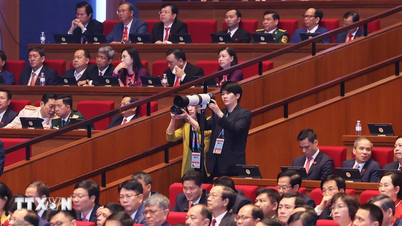
The 101st anniversary of Vietnam's Revolutionary Press Day (June 21, 1925 - June 21, 2026) is being celebrated in the context of the country undertaking strategically significant reform tasks.
Following the organizational restructuring revolution, the two-tiered local government model gradually became stable and effective. Simultaneously, the nationwide press system continued to be organized in a streamlined and professional manner, meeting the development requirements of the new era.
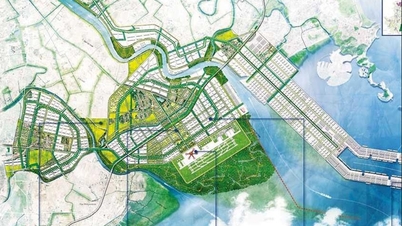
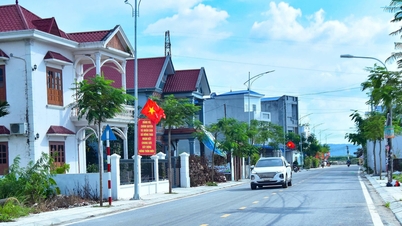
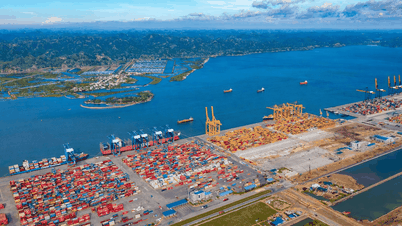
For Hai Phong, this is also a time of many important milestones. The city is entering a phase of accelerating the implementation of development goals according to Resolution No. 45 of the Politburo , affirming its role as a growth pole of the Northern Coastal region and the whole country. A series of strategic infrastructure projects, key projects, industrial parks, and new economic zones are being implemented. The development space continues to expand from the central area to coastal and island areas.
In this process, the press has not remained on the sidelines but has always accompanied the city's development every step of the way. The operation of the two-tiered local government model has brought about many changes in management and administration at the grassroots level.
From handling administrative procedures and providing public services to organizing the administrative apparatus, adjustments are being made to meet new requirements. Any changes that directly affect citizens need to be communicated fully, promptly, and accurately. This is the responsibility of the press.



Through journalistic works, new policies and guidelines from the central government and the city are conveyed to the people in an easily understandable and relatable way. At the same time, concerns and suggestions from the grassroots level are also reflected to the competent authorities.
Many social issues and difficulties encountered in the implementation of new policies have been promptly considered and resolved by relevant agencies through press coverage. Experience also confirms that wherever the press stays close to the grassroots and accurately reflects the pulse of life, social consensus is strengthened, and major policies are implemented more smoothly. This is the value and strength of revolutionary journalism in the current period.
The 2026 commemoration of Vietnam's Revolutionary Press Day marks a significant turning point for the city's press, nearly a year after the merger of key media outlets into Hai Phong Newspaper, Radio, and Television.
This policy aligns with the need to streamline the organizational structure while simultaneously creating conditions for building a modern, multimedia news agency that better meets the public's information needs. The change in organizational model is not merely a rearrangement of departments, but also demands significant innovation in operational methods.
Today's journalists not only write news articles for online or print newspapers but also participate in producing television, radio, digital video , podcasts, and many other new forms of media. Every event taking place in the city needs to be reflected quickly, accurately, and from multiple perspectives across various platforms.
However, no matter how advanced technology becomes, the decisive factor in the quality of journalism remains the human element. This includes political integrity, professional responsibility, and the dedication of journalists to the common good.
In today's diverse information environment, the public can access news from many different sources, but mainstream journalism still plays a crucial role in verifying information, shaping public opinion, and protecting sound values.
For Hai Phong, this need becomes even more urgent as the city enters a new phase of development with ambitious goals and aspirations. From key infrastructure projects, new-generation industrial parks, and marine economic development projects, to the construction of special economic zones, the development of tourism in Cat Ba and Do Son, and digital transformation in state management, the support of the press is essential.



Every good practice at the grassroots level, every effective model, every exemplary group or individual needs to be identified and disseminated. In addition, manifestations of inertia, irresponsibility, and issues affecting the legitimate rights and interests of the people also need to be objectively reflected and constructively addressed to contribute to improving management and administration.
More than a century has passed since Leader Nguyen Ai Quoc founded Thanh Nien Newspaper, and Vietnamese revolutionary journalism has always accompanied the nation through every stage of its history. Continuing that tradition, the team of journalists in Hai Phong today continues to strive for innovation, improve the quality of information, uphold professional ethics, and promote social responsibility and civic duty.
In the journey of building Hai Phong into a modern, civilized industrial city, developing on par with leading cities in Asia, the press will continue to be a bridge between the Party, the government and the people, a reliable forum for all strata of society, and a vanguard force on the ideological and cultural front, contributing to creating social consensus, arousing aspirations for development and working together to build Hai Phong into an increasingly prosperous, civilized, and modern city.
NGUYEN DUONGSource: https://baohaiphong.vn/giu-vung-ngon-hai-dang-thong-tin-545891.html



![[Photo] General Secretary and President To Lam works with the Party Committee of the Government on the work of preventing and combating storms, floods, extreme natural disasters and climate change.](https://vphoto.vietnam.vn/thumb/1200x675/vietnam/resource/IMAGE/2026/06/29/1782729441945_a1-bnd-0385-9454-jpg.webp)
![[Image] A look back at the capital's preparations for the century-long master plan.](https://vphoto.vietnam.vn/thumb/1200x675/vietnam/resource/IMAGE/2026/06/29/1782750453122_quy-hoach-100-nam-minh-duy-1-2118-jpg.webp)