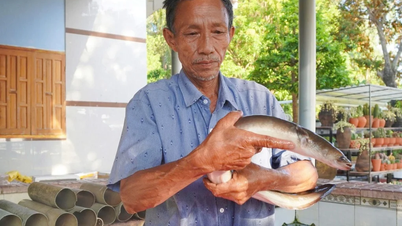
In 2023, Mr. Tan's family transformed their orchard into the Mangosteen Garden Ecotourism Area in Xeo Cao hamlet. Most of the mangosteens are sold locally at prices equivalent to retail prices, benefiting both the orchard owners and allowing consumers to enjoy fresh, delicious mangosteens right from the orchard. By creating products to attract tourists, Mr. Tan's orchard-based tourism model also contributes to boosting the consumption of local agricultural products, creating jobs and income for rural workers. Currently, visitors to the tourist area can not only stroll around the orchard, take photos, and capture beautiful moments with family and friends, but also enjoy mangosteens and other local specialty fruits. Besides mangosteen, Mr. Tan's garden also grows rambutan. Visitors can pick the fruit themselves, go boating, catch fish, and enjoy authentic local dishes such as chicken salad with mangosteen, grilled snakehead fish, snakehead fish porridge, and braised tilapia with star fruit...
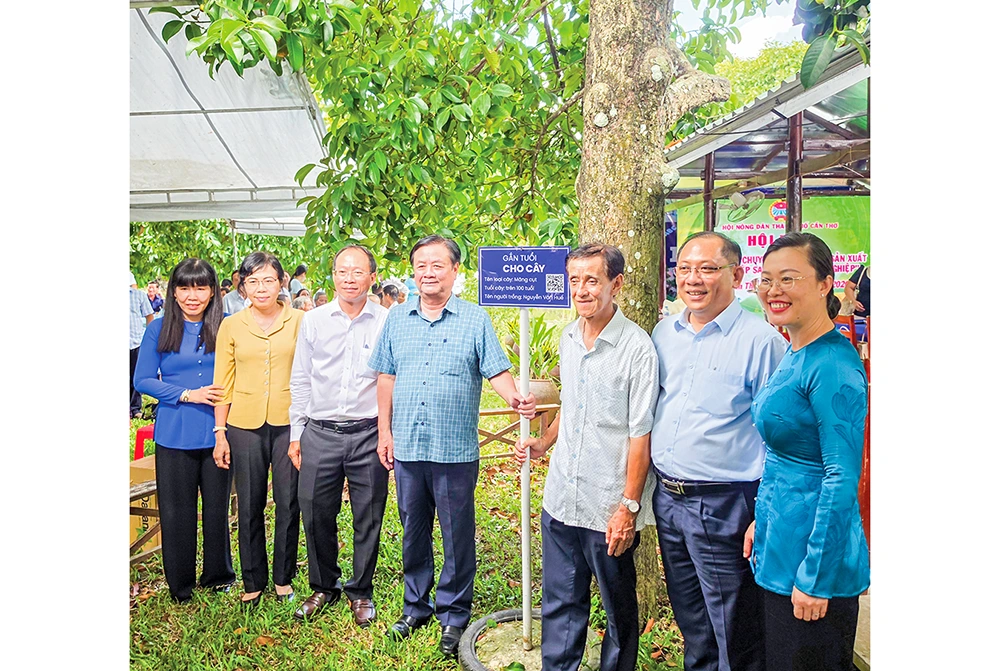
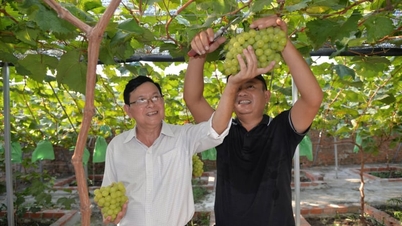
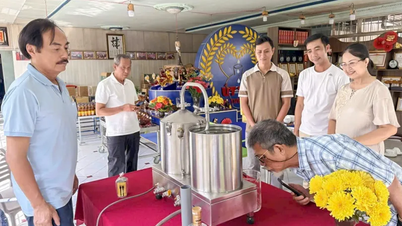
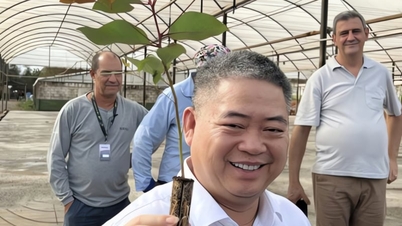
Mr. Le Minh Hoan, former Vice Chairman of the National Assembly, along with leaders of Can Tho City, visited the Mangosteen Garden eco-tourism area owned by Mr. Nguyen Van Tan in Thanh Xuan commune, Can Tho City.


The highlight that attracts visitors to the Mangosteen Garden Ecotourism Area is the presence of two mangosteen trees over 100 years old. These two trees have persistently grown and survived the bombing raids during the two wars of resistance against France and the United States. According to Mr. Tan, around 1920, his maternal grandfather, Mr. Nguyen Van Hue, bought mangosteen saplings from boats selling seedlings from My Tho - Go Cong and planted them in his garden. After nearly 10 years of care, the trees began to bear fruit, and the fruit was very delicious. Therefore, the family took the seeds to propagate the trees throughout the garden and have preserved and developed the orchard to this day. In addition to the two mangosteen trees mentioned above, the garden has more than 200 trees aged 40-50 years and nearly 300 trees that are 5 years old. Mr. Tan said: “Each year, the mangosteen orchard yields about 15 tons of fruit, with a profit of about 300 million VND. Of that, two mangosteen trees over 100 years old produce over 300 kg of fruit per tree per year. Besides selling the fruit, the family also earns additional income from cooking and providing services to tourists.”
Mangosteen is a specialty fruit of Southern Vietnam, but it takes a long time for the tree to bear fruit. With the advantage of being less susceptible to pests and diseases, farmers use minimal pesticides during cultivation, flowering, fruiting, and harvesting. It can be said that mangosteen is a clean fruit, very good for health because it contains many vitamins and nutrients. However, recently, the price of mangosteen has been lower than some other fruits. Every year, the price of mangosteen usually drops sharply during the peak harvest season. In particular, mangosteen must ripen naturally before harvesting; farmers have to select each ripe fruit on the tree, which takes a lot of time and effort. Therefore, many farmers believe that this crop has high labor costs but low economic returns, so they tend to cut down the trees and switch to other crops.
Hopefully, the effectiveness of Mr. Tan's model of combining mangosteen orchard care with tourism exploitation will inspire mangosteen growers to explore new avenues to improve economic efficiency and add value to their orchards. Relevant authorities need to create conditions for mangosteen farmers to strengthen linkages with relevant parties to develop mangosteen exports and increase domestic consumption through tourism.
Text and photos: KHANH TRUNG



Source: https://baocantho.com.vn/phat-huy-hieu-qua-vuon-cay-mang-cut-a208453.html







![[INFOGRAPHICS] Vietnam has made significant progress in the care, education, and protection of children.](https://vphoto.vietnam.vn/thumb/402x226/vietnam/resource/IMAGE/2026/07/01/1782873235469_1782873074.webp)