

 |
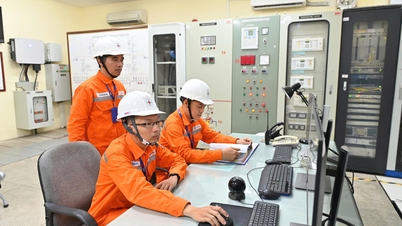
| Workers at Kim Long Motor Joint Stock Company in Hue are welding equipment. Photo: Kim Long Motor |
During the 10th session of the 15th National Assembly, the draft Law on Investment (amended) received significant attention because it directly addressed "bottlenecks" that reduce the competitiveness of the economy . Many delegates pointed out the common situation: projects dragging on for decades, missed development opportunities, and a gradual loss of confidence among businesses. One delegate frankly cited the example: "There are projects that remain unfinished from the time people are in kindergarten until they graduate from university," a clear illustration of the unreasonable delays in procedural implementation.
Representative Nguyen Hai Nam (Hue City National Assembly Delegation) analyzed five main obstacles hindering capital flows and undermining national competitiveness. Firstly, the overlapping of laws such as Investment, Land, Planning, and Housing laws complicates and inconsistencies in the approval process, investor selection, and land allocation and leasing. Secondly, legal inadequacies regarding land, from land use conversion to auctions and land allocation/leasing, have not kept pace with development requirements. Thirdly, attracting strategic investors is difficult due to high legal risks, opaque costs, and the ineffective operation of support funds. Fourthly, there is a "gap" in implementation, where laws are enacted but guiding decrees and circulars are slow to be completed, leading to a situation of "laws waiting below the law." Finally, there are risks related to project timelines, causing many projects to be delayed indefinitely, increasing costs and missing growth opportunities.
Based on the above practical experience, delegate Nguyen Hai Nam proposed four groups of solutions: shortening procedures and clarifying the responsibilities of each agency; synchronizing the relevant legal system; increasing incentives to attract strategic investors; and enhancing accountability in implementation, accompanied by mechanisms for early warning and revocation of slow-progress projects. These proposals are well-founded in the context where investment capital plays a crucial role in economic growth.
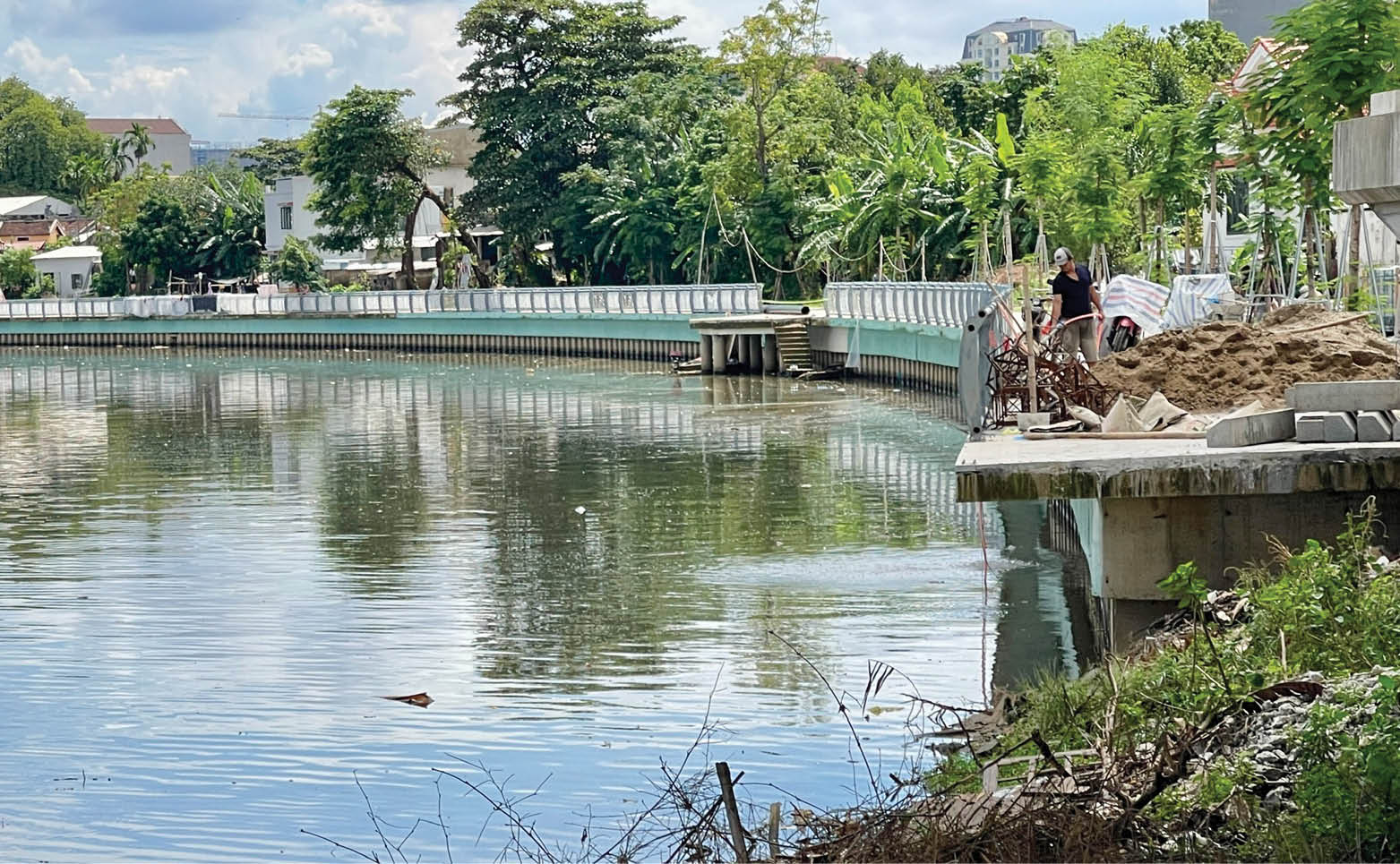 |
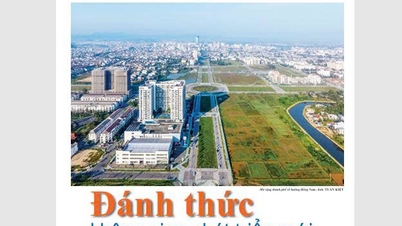
| The projects in the area are being expedited by the relevant authorities. |
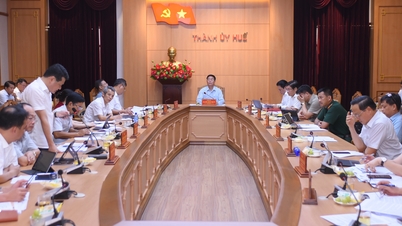
From a local perspective, in its socio-economic report at the regular October meeting, the Hue City People's Committee also identified similar bottlenecks, but in a more specific and realistic way. Businesses continue to face pressure from global economic fluctuations; procedures related to investment and land clearance are still lengthy; coordination between departments and agencies is sometimes not seamless. Some officials are still hesitant to take responsibility in the context of the restructuring of the administrative apparatus according to the two-tiered local government model. At the commune level, the frontline point of contact with businesses and citizens, the quality of officials is still uneven.
In response to this demand, Hue has identified its key tasks for the remainder of 2025 as simultaneously reviewing institutions and accelerating the progress of key projects. Many major infrastructure projects are being promoted, such as the Ring Road 3, the extension of To Huu Street to Phu Bai Airport, the water environment improvement project, and urban renovation and infrastructure projects in the Chan May - Lang Co Economic Zone. In the industrial sector, projects such as the Kim Long Motor production and assembly complex (phases 2 and 3), the Kanglongda factory, and the Creanza high-tech quartz sand processing line are being closely monitored for early commissioning.
These developments show that Hue not only faces the need to accelerate the disbursement of public investment but also must decisively improve the quality of governance. Its small economic scale, lack of impetus for industrial production, sluggish real estate market, and slow implementation of many non-budgetary projects all highlight the need for stronger reforms, in which transparency in planning, streamlining procedures, and creating a stable investment environment are prerequisites.
Broadly speaking, the recommendations of the National Assembly representatives also reflect an urgent need for Hue and many other localities: to break free from the vicious cycle of "procedures waiting for procedures." If the law is not synchronized, if officials are still hesitant to take responsibility, and if the process continues to drag on unreasonably, all efforts to attract investment will remain just expectations. What businesses need is not promises of incentives, but transparent processes, clear timelines, and specific accountability.
During the discussion session of the 10th Session of the 15th National Assembly, delegate Nguyen Hai Nam emphasized: It is time to put an end to the situation where projects drag on from "kindergarten" to "university". It is time for domestic and international capital flows to circulate faster, safer, and more efficiently.
Source: https://huengaynay.vn/kinh-te/go-diem-nghen-de-but-pha-160120.html

![[Photo] The heat at the fireworks display site on the opening night of the Da Nang International Fireworks Festival 2026](https://vphoto.vietnam.vn/thumb/1200x675/vietnam/resource/IMAGE/2026/05/27/1779889741485_ndo_br_z7872039145157-fecaba5112f39e8352544099d7ef4738-5140-jpg.webp)


![[Photo] The courage of new recruits of Brigade 144 on the training ground.](https://vphoto.vietnam.vn/thumb/1200x675/vietnam/resource/IMAGE/2026/05/27/1779881651341_anh-man-hinh-2026-05-27-luc-18-32-52.png)
















































![[Photo] The courage of new recruits of Brigade 144 on the training ground.](https://vphoto.vietnam.vn/thumb/402x226/vietnam/resource/IMAGE/2026/05/27/1779881651341_anh-man-hinh-2026-05-27-luc-18-32-52.png)


















Comment (0)