

If these "bottlenecks" are not removed soon, they will directly affect the progress of projects and the rights of the people.
The most prominent issue is the inadequacy in compensation, support, and resettlement policies. While the application of land price tables and adjustment coefficients has initially standardized the calculation method, the gap between state-determined compensation prices and market prices in many urban areas has led to comparisons and increased complaints.
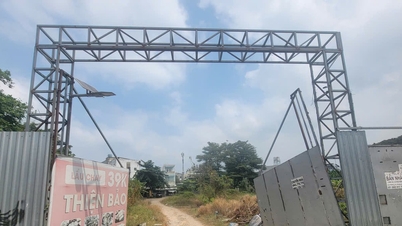
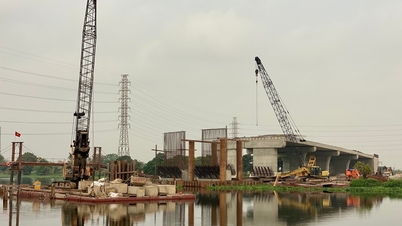
In addition, many projects, even when businesses independently negotiate land clearance and achieve 70-80% completion, remain stalled due to the lack of a clear mechanism for handling the remaining area, leading to project delays.
Similarly, procedures for land subdivision, land consolidation, and land use conversion, although regulated, are subject to differing interpretations across localities, leading to prolonged processing times and increased social costs.
These difficulties necessitate a timely "legal tool" to unify understanding, address inadequacies in application, and create synergy between regulations and practice.
The draft Resolution of the National Assembly on removing difficulties in implementing the Land Law, submitted by the Government on November 18, 2025, is expected to address these bottlenecks. One of the important contents of the draft is clarifying the cases in which the State can reclaim land, especially for national and public interests. This is a sensitive area that requires transparency, strictness, and the prevention of abuse, ensuring a harmonious balance of interests between the State, the people, and businesses. The proposal to reclaim land for projects where a large portion of the area has already been agreed upon will help many projects end their prolonged "stalled" status.
The draft also stipulates shortening the time for posting compensation plans and the time for organizing dialogues, contributing to reducing delays caused by lengthy procedures; it proposes not requiring land subdivision when changing the purpose of use of a portion of a land plot, reducing procedures for people. In addition, clarifying the basis for calculating land use fees, the time of price determination, and the exemption and reduction mechanism will create uniformity and transparency in land finance management...
However, the National Assembly's Economic and Financial Committee emphasized that any impact on people's rights and property needs careful assessment. The removal of restrictions must simultaneously ensure discipline and avoid "loosening" that could lead to legal risks or more complex lawsuits.
For the 2024 Land Law to truly come into effect, decisive and responsible action is required. First, localities need to accelerate the completion of the national land database, ensuring complete, consistent, and interconnected information. Accurate data will make procedures more transparent, significantly reduce processing time, and prevent errors. Along with this, the accountability of leaders in land clearance must be enhanced.
In reality, many projects show that the avoidance of responsibility and a lack of decisiveness are slowing down overall progress. In particular, dialogue with the people must become a mandatory principle in the land acquisition process. Early, open dialogue based on clear information is a prerequisite for building consensus and reducing complaints.
The application of land price tables also requires close supervision. The land valuation council must operate independently, ensuring that land prices are close to market value, avoiding budget losses, and limiting public discontent. Along with this, administrative procedures in the land sector need to be further promoted towards digitalization, which means reducing direct contact, thereby reducing costs and instances of corruption.
And most importantly, it requires the determination of each ministry, sector, and locality; the consensus of the people; and the spirit of the rule of law throughout society, so that land policy truly becomes a driving force for sustainable development.
Source: https://hanoimoi.vn/go-diem-nghen-trong-luat-dat-dai-724083.html
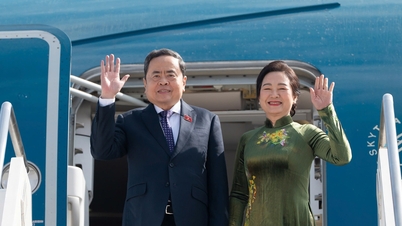
![[Photo] National Assembly Chairman Tran Thanh Man arrives in Türkiye to attend IPU-152](https://vphoto.vietnam.vn/thumb/1200x675/vietnam/resource/IMAGE/2026/04/15/1776261003665_tnk10-jpg.webp)

![[Photo] Mrs. Ngo Phuong Ly meets and exchanges views with Mrs. Peng Li Yuan](https://vphoto.vietnam.vn/thumb/1200x675/vietnam/resource/IMAGE/2026/04/16/1776277858080_phu-nhan-1-jpg.webp)
![[Photo] National Assembly Chairman Tran Thanh Man attends the opening session of IPU-152](https://vphoto.vietnam.vn/thumb/1200x675/vietnam/resource/IMAGE/2026/04/16/1776277863731_ctqh5-jpg.webp)
![[Photo] The General Secretary, President and his wife meet with Vietnamese-Chinese friendship leaders.](https://vphoto.vietnam.vn/thumb/1200x675/vietnam/resource/IMAGE/2026/04/15/1776264829725_vna-potal-tong-bi-thu-chu-tich-nuoc-to-lam-gap-mat-nhan-sy-huu-nghi-viet-nam-trung-quoc-8703641-3130-jpg.webp)
![[Photo] My Son at night: A thousand-year-old heritage site amidst the Milky Way](https://vphoto.vietnam.vn/thumb/1200x675/vietnam/resource/IMAGE/2026/04/15/1776261039184_ndo_br_chon6-jpg.webp)














![[Image] Overview of the Tam Trinh-Giai Phong connecting road section after land clearance is completed.](https://vphoto.vietnam.vn/thumb/1200x675/vietnam/resource/IMAGE/2026/04/15/1776245679644_ndo_br_dji-0195-jpg.webp)
![[Photo] General Secretary and President To Lam and General Secretary and President Xi Jinping meet with youth from both countries.](https://vphoto.vietnam.vn/thumb/1200x675/vietnam/resource/IMAGE/2026/04/15/1776245687540_vna-potal-tong-bi-thu-chu-tich-nuoc-to-lam-va-tong-bi-thu-chu-tich-nuoc-tap-can-binh-gap-go-thanh-nien-hai-nuoc-8702371-jpg.webp)
![[Photo] National Assembly Chairman Tran Thanh Man concludes official visit to Italy, departs for IPU-152](https://vphoto.vietnam.vn/thumb/1200x675/vietnam/resource/IMAGE/2026/04/15/1776253436109_vna-potal-chu-tich-quoc-hoi-ket-thuc-tham-chinh-thuc-italy-len-duong-du-ipu-152-tai-tho-nhi-ky-8702876-7969-jpg.webp)
![[Photo] General Secretary and President To Lam and his wife, along with General Secretary and President Xi Jinping and his wife, attending a tea party.](https://vphoto.vietnam.vn/thumb/1200x675/vietnam/resource/IMAGE/2026/04/15/1776245678527_vna-potal-tong-bi-thu-chu-tich-nuoc-to-lam-va-phu-nhan-cung-tong-bi-thu-chu-tich-nuoc-tap-can-binh-va-phu-nhan-du-tiec-tra-8702812-9829-jpg.webp)
![[Photo] Capturing each moment at the "People We Meet" photography exhibition.](https://vphoto.vietnam.vn/thumb/1200x675/vietnam/resource/IMAGE/2026/04/15/1776245695648_1-8944-jpg.webp)
![[Image] Current status of the land area of over 5.5 hectares that Ho Chi Minh City is considering reclaiming.](https://vphoto.vietnam.vn/thumb/1200x675/vietnam/resource/IMAGE/2026/04/15/1776245690095_1-3102-8409-jpg.webp)













































Comment (0)