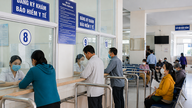
After merging the three commune health stations of Phung Nguyen, Son Vi, and Tu Xa into the Phung Nguyen commune health station, located at the former Tu Xa commune health station headquarters, the work of medical examination, treatment, and healthcare for the people has been maintained stably. On working days, the station is always crowded with people coming for medical examinations, vaccinations, and regular health check-ups.
Despite the expanded service area and significantly increased workload, the medical staff maintained a constant on-call system and effectively implemented community health programs. In the first six months of 2026, the Phung Nguyen Commune Health Station conducted over 9,380 medical examinations; managed over 2,120 people with non-communicable diseases; and effectively implemented expanded immunization programs, disease prevention and control, maternal and child health care, and food safety. No major disease outbreaks, food poisoning incidents, or serious adverse events following vaccinations were recorded in the area.
However, to maintain these results, the grassroots healthcare team is facing many pressures. After the merger, the Phung Nguyen Commune Health Station manages an area of over 41,000 people, spread across 43 administrative zones, while the workforce has not been adequately supplemented. Some specialized positions are still lacking, and the facilities and equipment do not fully meet the requirements of operating under the new model.

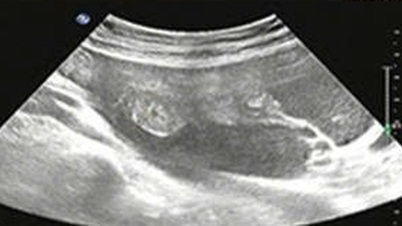
Doctors at Phung Nguyen commune health station check the health of local residents using ultrasound imaging equipment.
Dr. Khong Thi Duong Lieu, Director of the Phung Nguyen Commune Health Station, said: “After the merger, the workload of health workers has increased significantly due to the larger area under management, the larger population, and the increasingly high professional requirements. Meanwhile, some positions are still understaffed, and equipment is not yet standardized. However, the staff of the station always strives to overcome difficulties, maintain good primary healthcare activities, and ensure the right to medical examination and treatment for the people.”

From September 2025, the entire province will reorganize the grassroots healthcare system, reducing the number of commune-level health stations (TYTs) under district-level health centers from 494 to 148, under the management of commune/ward-level People's Committees. During the transition, many difficulties and obstacles arose due to the uneven quality and structure of human resources among the units. In addition, some regulations related to the functions, duties, job positions, and allowances for TYT management staff were issued late or were not in line with practical realities.
Along with institutional difficulties, many commune health stations (TYT) are still operating in cramped conditions with inadequate and outdated equipment. Following restructuring, the health sector transferred 3,900 staff positions and 3,395 TYT officials to the management of commune-level People's Committees. However, given the increasing demand for healthcare from the people, ensuring sufficient qualified personnel for the grassroots healthcare system remains a problem that needs to be solved soon.

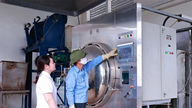
Health station staff in Hy Cuong commune inspect medical supplies and equipment used for healthcare services for the local people.
To address these challenges, the health sector has implemented numerous solutions to strengthen and improve the capacity of the grassroots healthcare system. Professional training and development have been intensified; digital platforms, management software, and online conferencing systems have been widely applied to support leadership and management. Information technology infrastructure continues to be invested in and upgraded to support the digital transformation process in the healthcare sector.
At the same time, the health sector continues to review actual needs in localities, proposing additional personnel, investment in facilities and equipment for commune health stations that are still facing difficulties. This is an important solution to improve the quality of primary healthcare and enhance the effectiveness of the grassroots health network in the new situation.
The reorganization of the grassroots healthcare system is a sound policy aimed at streamlining administrative structures and improving the effectiveness and efficiency of state management. However, for commune health stations to truly fulfill their role as "gatekeepers" of the healthcare system, continued attention and investment in resources are needed, along with improved operational mechanisms and favorable conditions to ensure that grassroots healthcare workers can work with peace of mind.



As challenges related to human resources, infrastructure, and operational mechanisms are gradually overcome, primary healthcare will have more opportunities to improve service quality, better meet the healthcare needs of the people, and contribute to building a strong and sustainable primary healthcare system.
Hong Nhung
Source: https://baophutho.vn/go-kho-cho-y-te-co-so-sau-sap-nhap-255796.htm




![[Photo] "Hanoi Lotus Festival" honors the lotus flower that has been associated with Vietnam for thousands of years.](https://vphoto.vietnam.vn/thumb/1200x675/vietnam/resource/IMAGE/2026/06/27/1782516943048_sen-ha-noi-2026-minh-duy-1-jpg.webp)

























































![[Infographic] 16 fireworks display locations to celebrate the 50th anniversary of Ho Chi Minh City being honored with the name of President Ho Chi Minh](https://vphoto.vietnam.vn/thumb/402x226/vietnam/resource/IMAGE/2026/06/27/1782539591308_man-ban-phao-hoa-ruc-ro-dem-khai-mac-638jpg-17242995540161175940469.jpeg)