

According to the Gia Dinh Thanh Thong Chi (Chronicle of Gia Dinh City), this place was initially just a small canal. To facilitate transportation between Saigon and the Southwestern region, around 1772, General Nguyen Cuu Dam ordered the digging of the Ruot Ngua Canal. In 1819, King Gia Long ordered the canal to be widened and named An Thong Ha (An Thong River), later renamed Tau Hu Canal.
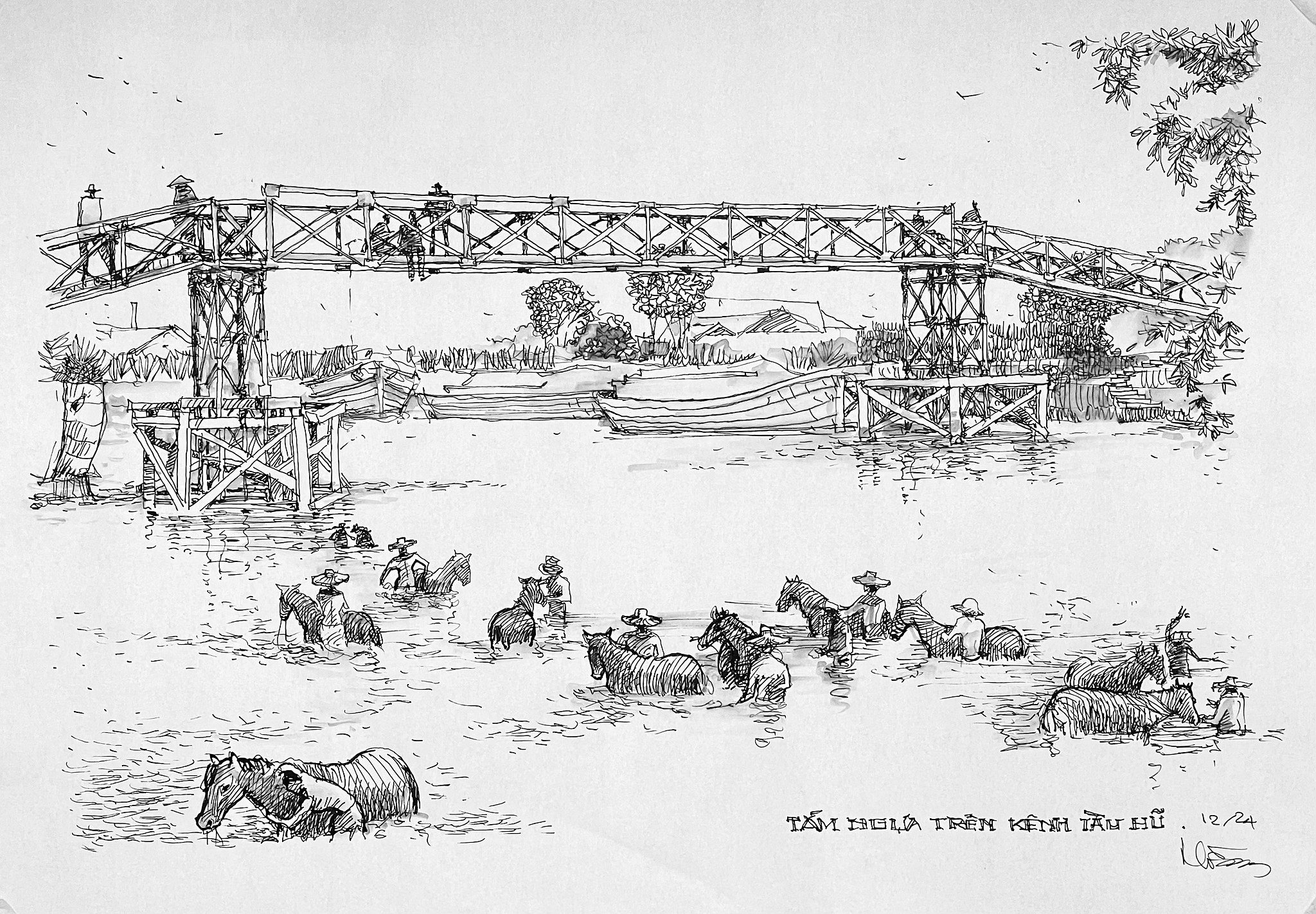
Bathing horses on the Tau Hu Canal in the 19th century - a sketch by architect Tran Xuan Hong.
In the early 19th and 20th centuries, the Tau Hu Canal became a vital waterway for trade. Agricultural products and rice from the Mekong Delta were transported to Saigon, converging at Binh Dong Wharf (also known as Tau Hu Boulevard) or other wharves, depots, and warehouses along the canal, creating a distinctive "on the wharf, under the boat" trading culture characteristic of Saigon at that time.
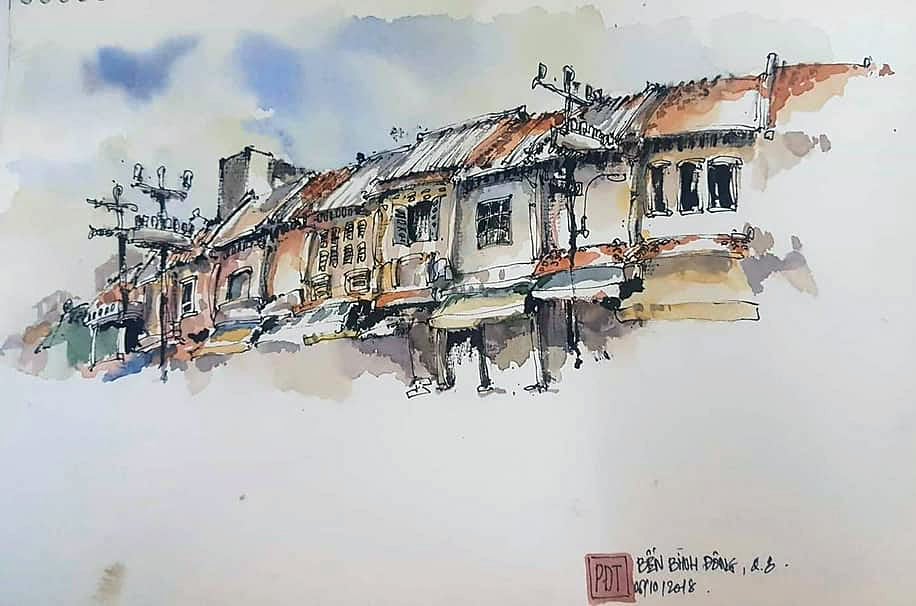
The row of houses on Binh Dong Wharf - a sketch by architect Phan Dinh Trung.
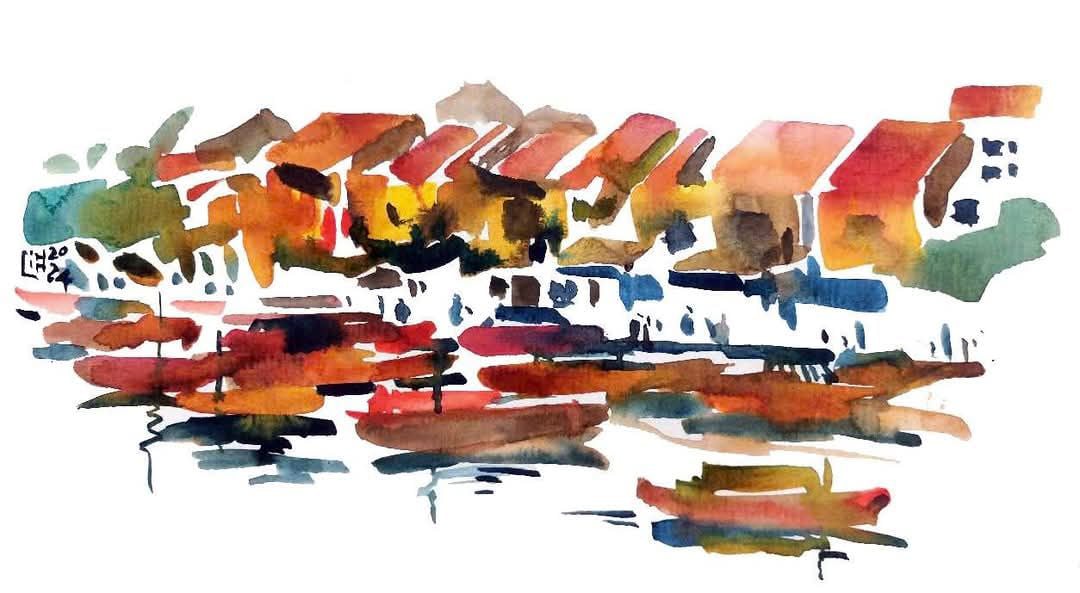
Cultural features of the riverside and dockside - sketches by architect Linh Hoang.

Bustling flower boats on the Tau Hu canal on the eve of Tet - a sketch by fashion designer Le Quang Khanh.

Flower boats on the Tau Hu canal - a sketch by architect Tran Thai Nguyen.
Since the 1950s, the canal has been heavily polluted due to slums built by immigrants encroaching on it, with household waste being dumped directly into it. In 2013, the renovation project of the Tau Hu - Ben Nghe, Doi, and Te canals was completed, making the canal clean again. The current section of the Tau Hu canal is about 6 km long, running along Vo Van Kiet Boulevard (approximately from the Y-shaped bridge in District 8 to the Ruot Ngua and Lo Gom canals in District 6).
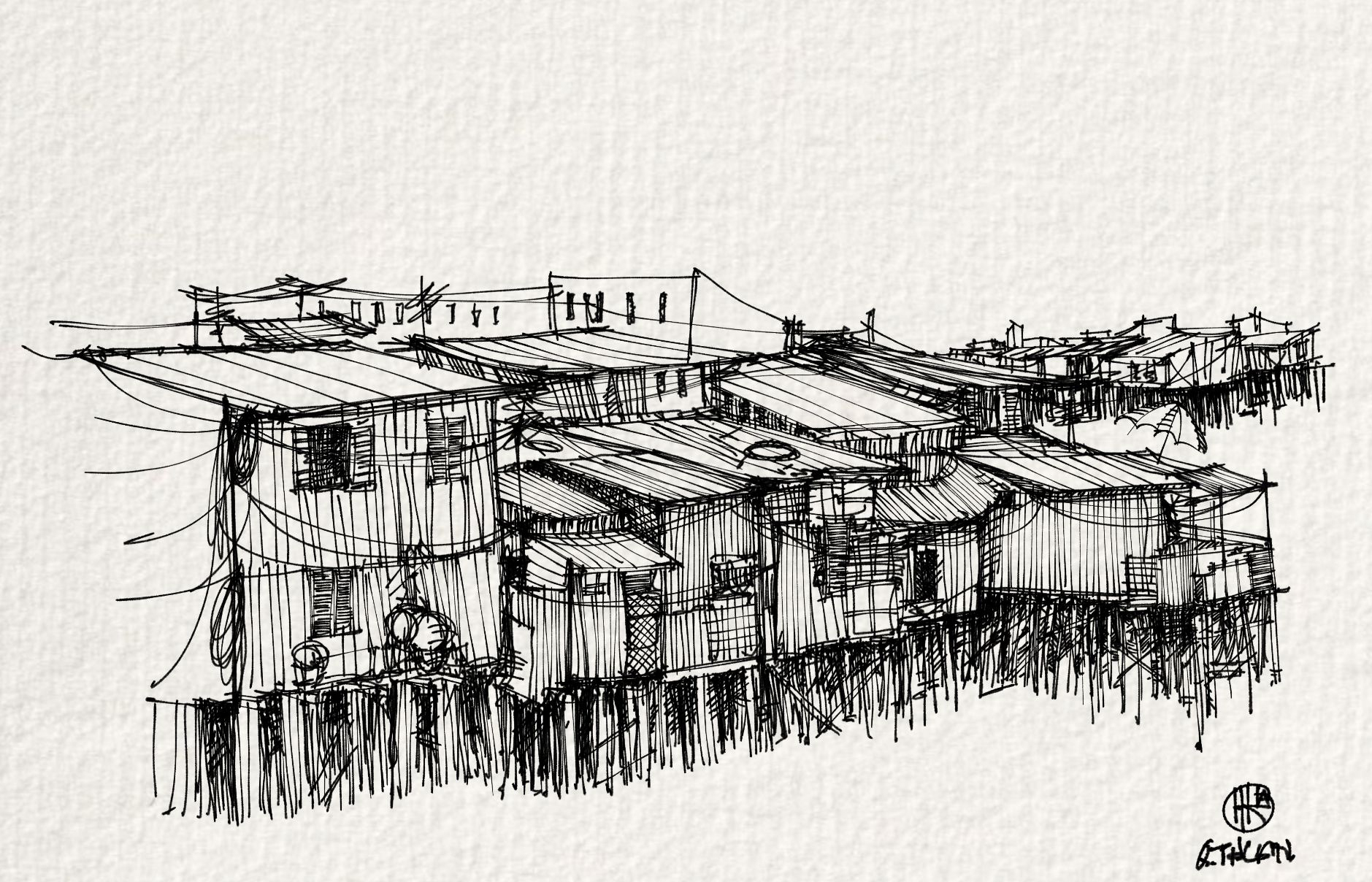
Poor neighborhood along the Tau Hu canal - a sketch by Ngo Quoc Thuan, a student at Nguyen Tat Thanh University.
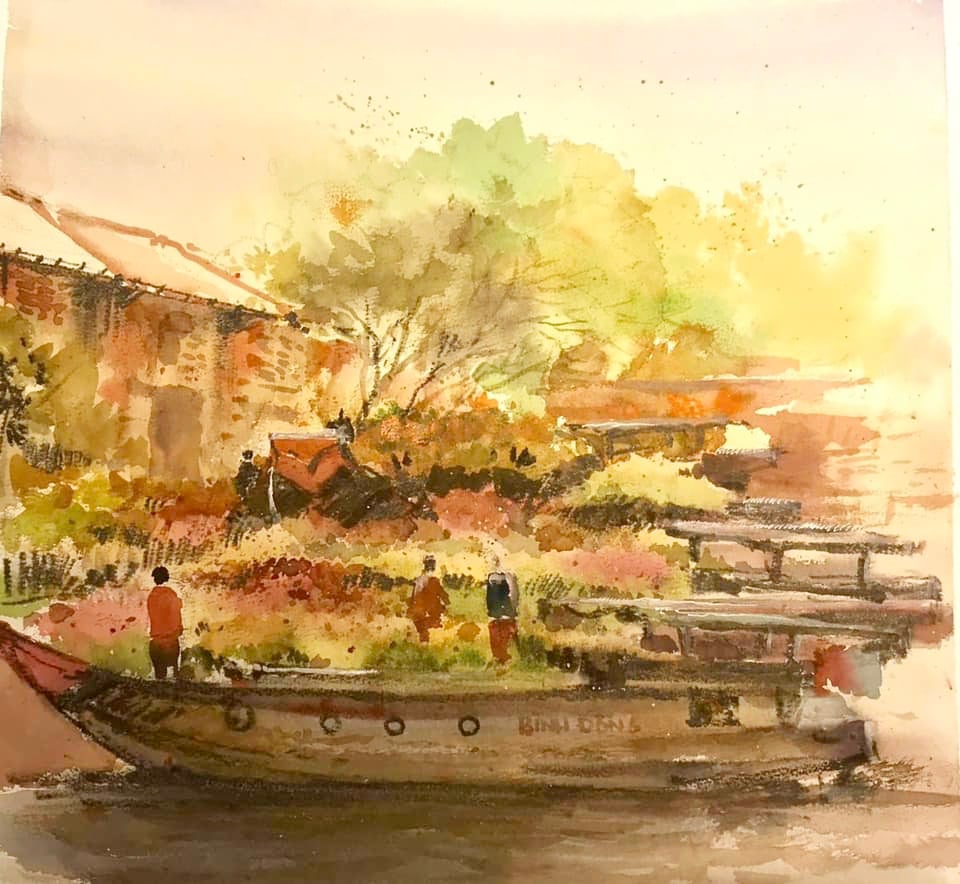
Flower boats arrive at Pingtung during Tet - sketch by architect Phan Dinh Trung
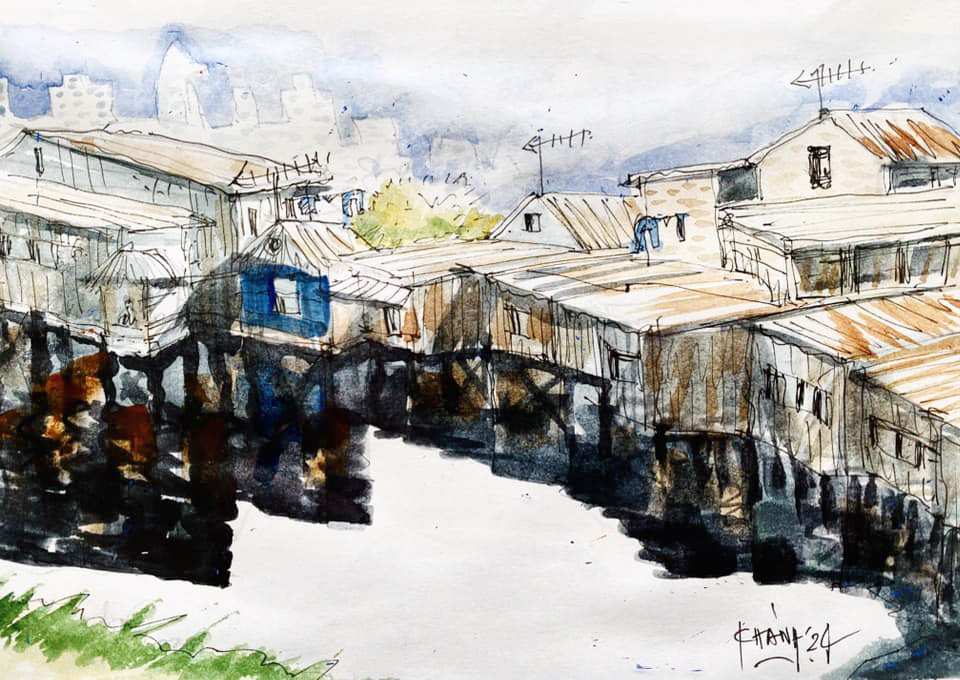
The impoverished neighborhood on the Tau Hu canal before its demolition - a sketch by fashion designer Le Quang Khanh.

The Tau Hu Canal in its less crowded days - painting by architect Phung The Huy
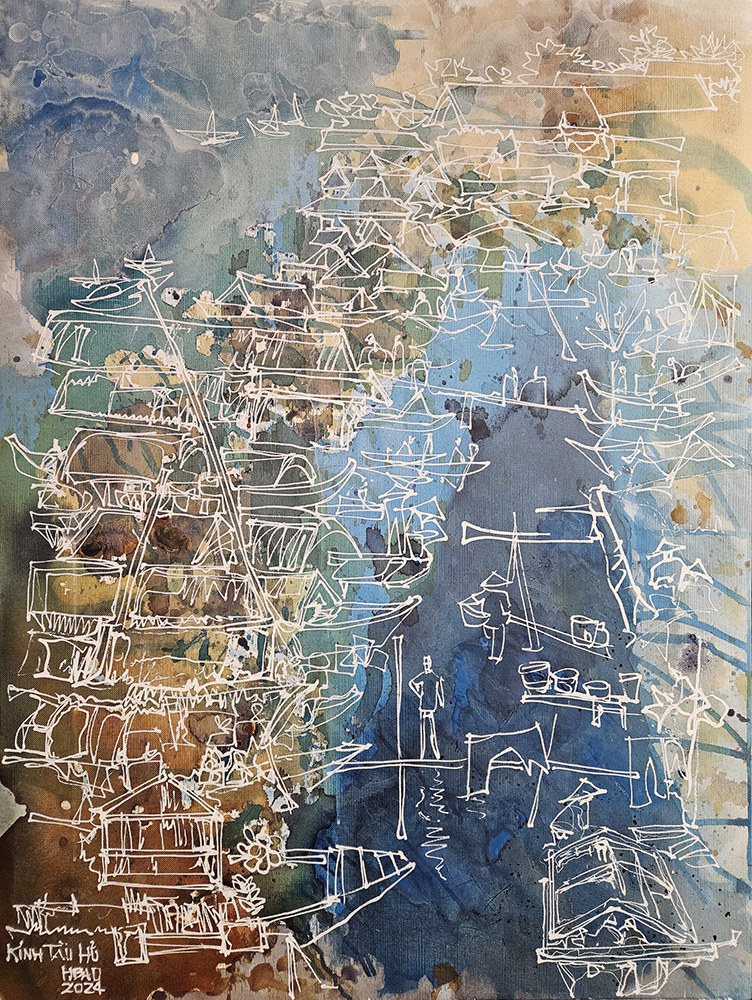
A time of bustling boats and ships - a sketch by architect Bui Hoang Bao.
There are several theories regarding the origin of the name "Tàu Hủ". According to cultural and linguistic scholars Huỳnh Tịnh Của and Trương Vĩnh Ký, "Tàu Hủ" is a mispronunciation of "Tàu Khậu" (*) by the Vietnamese. Meanwhile, according to researcher Bùi Đức Tịnh, "Tàu Hủ" is a mispronunciation of "Cổ Hũ" (because the canal section here widens and narrows like the neck of a jar).

Spring Flower Wharf - a sketch by architect Linh Hoang
(*): In the past, along the Tau Hu canal, there were warehouse areas, which the Teochew people called "Tho Kho" (pronounced "Tau Khau", meaning land and house area).
Source: https://thanhnien.vn/goc-ky-hoa-kenh-tau-hu-tuyen-giao-thuong-huyet-mach-cua-sai-gon-xua-185250104224205956.htm
![[Photo] General Secretary and President To Lam meets with National Assembly delegates from ethnic minorities.](https://vphoto.vietnam.vn/thumb/1200x675/vietnam/resource/IMAGE/2026/04/20/1776696701056_a1-bnd-8331-3342-jpg.webp)

![[Image] National Assembly discusses the implementation of the socio-economic development plan.](https://vphoto.vietnam.vn/thumb/1200x675/vietnam/resource/IMAGE/2026/04/20/1776696707422_ndo_br_img-20260420-185419-jpg.webp)





















































































Comment (0)