

The Saigon of the 1960s was dreamy and full of beautiful women, with a flourishing press, a flood of imported fashion , and the sounds of nightclub music when I was just a child. Therefore, for our generation, Ho Chi Minh City in the 1990s was paradise.
Shoe shops suddenly realized that lace-up dress shoes, which used to have few customers, were selling more than sandals or flip-flops. Clothing shops sprung up in rows along Nguyen Dinh Chieu street, bustling with customers buying counterfeit designer clothes and shirts imported from China and US imports. Motorcycle repair shops thrived, offering training courses for mechanics at prices calculated in gold bars. Construction companies raked in huge profits as demand for building and renovating houses skyrocketed. Private book publishers, many of whom were university professors, became wealthy thanks to regulations allowing collaborative book publishing.
Restaurants gradually became more crowded. Pubs and bars sprang up, revitalizing the city's nightlife after a period of quiet. Passing by a pub, the aroma of grilled meat and beer wafted out, reminiscent of those Saturday evenings twenty years ago when passing by the Anh Hong Seven-Dish Beef restaurant in Phu Nhuan. The Canh Buom pub on Pasteur Street or the Ra Khoi pub near Lac Hong Park poured beer like a flowing river. Dishes previously only found in hotel restaurants before 1975 quickly entered the scene: pizza, spaghetti…
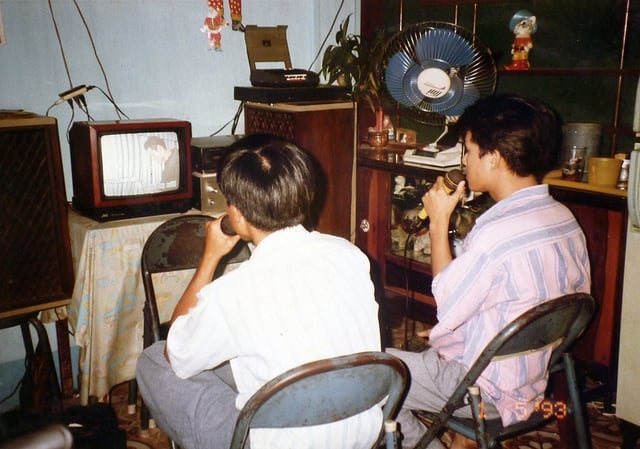
In the 1990s, some families bought karaoke players.
PHOTO: CU MAI CONG
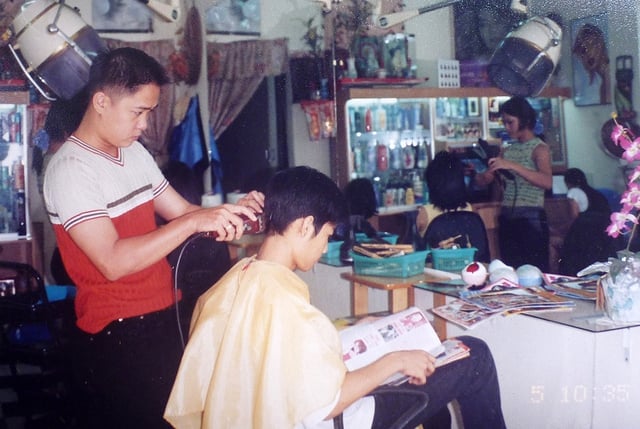
Young people in Ho Chi Minh City paid more attention to their hairstyles and were more fashionable in the 1990s.
PHOTO: CU MAI CONG
In 1992, 1993… sitting with a friend in a café near Vuon Chuoi market, my heart was filled with excitement, enjoying the music emanating from the speakers, with the poignant vocals of Dalida and the warm, whispering voice of Alain Delon in Paroles , or the deep, resonant voice of Joe Dassin singing Et Si Tu N'existais Pas or L'Été indien . The owner, in a burst of enthusiasm, would turn on the record player, specifically playing songs by the 1950s Black band The Platters, such as Only You, And You Alone , and You'll Never Know , captivating me with the incredibly deep voice of the talented Herbert Reed, the ugliest but longest-living singer in the group. Around us, everyone laughed and chatted loudly. That's when CDs appeared, bringing delightful sound to the Phuong Cac café.
Responding to the needs of music lovers, along Le Van Sy Street, from the Tran Quang Dieu gas station to the Ba Chuong church, there are many shops that convert music from CDs to cassettes and cafes that play CD music. Tuan Ngoc Cafe at the corner of Hoang Van Thu and Ut Tich streets specializes in playing songs by this singer. Although a goldmine of music was discovered from overseas video and CD tapes with voices like Tuan Vu, Kieu Nga, and Ngoc Lan, Vietnamese pop music was equally attractive thanks to the "Green Wave" program, with songs that created a new wave for Vietnamese pop music, songs that still evoke fond memories: "Oh, sometimes I long like the wandering wind / Living a life of wandering, roaming through mountains and forests" or "The raindrops have erased your image / Tears remain, mingling with longing / On the green road / I've become familiar with your footsteps…" .
In dance halls and dance clubs, young men and women are still accustomed to dancing the "Saigon style" with even steps while dancing pasodoble or parts of tango, and moving up and down while dancing rumba or cha-cha-cha, a style passed down from dance instructors like Phi Ngan, Thanh Tung, Hoang Thong, or Teacher Nhon… but there are now glimpses of people doing tango with strong head shakes and long strides, dancing rumba with hip shakes and sideways steps, or dancing slow waltz with slow high jumps and low low jumps… called "international steps".
Motorbikes were more common on the roads, and before helmets were required, it was easy to spot a beautiful person on the street – a familiar couple, an artist on their way to a performance, and an ex-girlfriend with her arm around her husband's waist on the back of a motorbike. The roads weren't crowded, women weren't wearing sun protection, and no one felt the need to wear masks… allowing one to admire long, lustrous hair and fashionable outfits worn by both men and women. A musician from Da Nang , on a business trip, exclaimed, "In Saigon, just sitting in a cafe every day admiring beautiful people is enough to make me happy!"
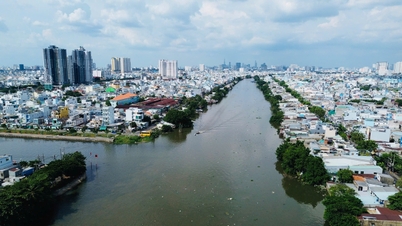
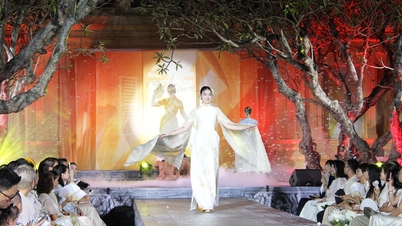
It was a Ho Chi Minh City that was surprisingly reviving after more than fifteen years of living under rationing and rice ration books. The 33-story Saigon Trade Center on Ton Duc Thang Street, completed in 1997, stood as a promising symbol of development. Female office workers were happy because their male colleagues wore leather shoes and tucked-in shirts, like the studious Saigon girls they had once dreamed of. The ideal of beauty for these men was female bank employees, postal workers, and hotel receptionists, who were among the first to abandon their short uniforms to wear elegant, figure-hugging ao dai (traditional Vietnamese dress). Going out suddenly felt more cheerful. A few air-conditioned art galleries opened up, becoming overly luxurious, with prices only affordable for overseas Vietnamese and foreigners, along with a few restaurant owners embracing the Doi Moi (Renovation) era.
It was a joyful and emotionally charged experience to fully live the 1990s in a city undergoing a revival, seeking to regain its former glory after a long period of decline.
Source: https://thanhnien.vn/tphcm-nhung-nam-1990-hoi-sinh-185260314204111877.htm
























































































Comment (0)