


The procession of the palanquin during the Ky Phuc festival in Hoang Tien commune.
If there is one activity powerful enough to "bring people together, connect them in a cultural origin, take them back to the past, and bridge gaps," it is festivals. Festivals "profoundly reflect the multicultural nature of the country, the fantastical nature of legends blended with historical reality." Among them, the Ky Phuc ceremony is considered the "grand ceremony," a crucial event for the village and commune.
Following the spring festival, we return to Beo Village to better understand this land steeped in unique historical and cultural values. According to the "History of the old Vinh Long Commune," now Tay Do Commune, the name Beo Village dates back to the early 20th century. Before that, the village was called Bao Hamlet, belonging to Giang Bieu Commune, Binh But District. It boasts picturesque natural scenery, a meeting point of mountains and water, and a prosperous village life. Ancient folk songs still circulate today: "Nature bestowed a lovely beauty / No scenery surpasses that of Beo Village / Mountains rise high, trees flourish / The river curves its neck, its water crystal clear..."
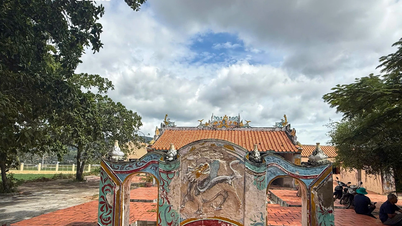
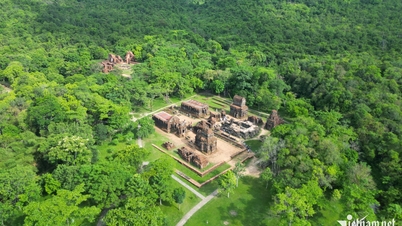
Located right at the foot of the Ho Dynasty Citadel – a World Heritage Site – Beo Village, an ancient village, serves as both a "historical witness" and a repository of unique cultural values and numerous representative relics. In the past, the village had three shrines: the main shrine, dedicated to the village's tutelary deity, the Grand Marshal Trinh Phu Quan; the upper shrine, built on the summit of Beo Mountain, dedicated to the Water Kingdom's Dragon King; and the main shrine, dedicated to Princess Tu Hoa. The village also has a pagoda, Thai Binh Tu, a place of spiritual activity for many villagers and residents. The village boasts a five-bay communal house with a tiled roof, featuring intricate carvings of the four mythical creatures, adding to the architectural and artistic beauty of the structure.
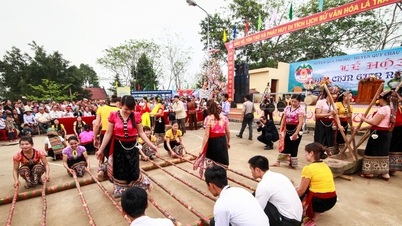
Associated with historical sites, Beo village has many traditional festivals, among which the Ky Phuc festival is the largest, held over three days (January 9th, 10th, and 11th) every year. The festival features solemn rituals and ceremonies such as offerings and processions. The festive part is lively with many folk games and performances such as fireworks, human chess, and card games like To Tom.
With the passage of time and the vicissitudes of history, the ancient shrine system of Beo village has disappeared. Over a long period, the Ky Phuc festival of Beo village also faded into obscurity, leaving behind a deep sense of worry and concern in the hearts of generations of villagers. The greatest aspiration of the descendants of Beo village is to restore the shrine and the Ky Phuc festival. And so, from this deep concern and worry, generations of the village have joined hands, contributing their efforts and donations to rebuild the village shrine into a magnificent place of worship for the three village guardian deities. Along with this, Beo village has revived the Ky Phuc festival with traditional rituals and ceremonies, along with many festive activities such as traditional opera performances, folk games, and sports exchanges.
Continuing the joyful spirit of spring during the warm days of January and February, a large number of people from Hoang Tien commune and tourists once again immersed themselves in the festive atmosphere of the Ky Phuc festival held at the historical and cultural architectural site of To Hien Thanh Temple, offering incense and expressing their reverence to the merits of their ancestors and patron deities who contributed to supporting the king and the country, establishing the village, and passing on skills so that the people could have a prosperous life...
In a sacred and solemn atmosphere, after the ritual of offering sacrifices to the gods, the procession of the palanquin of Saint Dai Giang is performed. The people of the commune, along with various clans and associations, will offer trays of offerings and accompany the procession to the To Hien Thanh temple to begin the festival – a ceremony with profound sacred significance from ancient times to the present day. Following the rituals and the procession, the festival continues with many traditional folk games, cultural performances, and other activities.
The Ky Phuc Festival in Hoang Tien commune is a beautiful cultural and religious tradition passed down through generations, expressing deep gratitude to the ancestors who contributed to building and protecting the homeland; it also creates excitement at the beginning of spring, strengthens solidarity among the people, and continues to nurture and preserve the beauty of the local festival.
The Ky Phuc festival has always been a bridge between the past and the present, becoming an indispensable part of the Vietnamese psyche. It is not only a belief in a prosperous new year, but also a reminder for future generations to cherish traditional values, a solid spiritual foundation, and a source of strength on their journey into a new era.
Text and photos: Dang Khoa
Source: https://baothanhhoa.vn/gui-gam-uoc-vong-xuan-280495.htm






































































Comment (0)