

1. The rattan basket of Mrs. Alang Thi Bap (53 years old), which seemed so familiar when peeking from the hillside and fields in her hometown of Dong Giang (Quang Nam), became strangely unfamiliar when she brought it down the mountain and placed it on the sidewalk of the An Thuong Western Quarter (Ngu Hanh Son District, Da Nang City). Camille Laurent, upon seeing the basket, kept touching it and asking all sorts of questions. Through an interpreter, Mrs. Bap explained to the French tourist how the rattan material is harvested, the weaving art of the Co Tu people, and its function of carrying things on her back while working in the fields… Thus, stories about the life and culture of the Co Tu people, which one might think could only be heard in remote villages, came to Camille Laurent naturally and intimately right here in Da Nang.
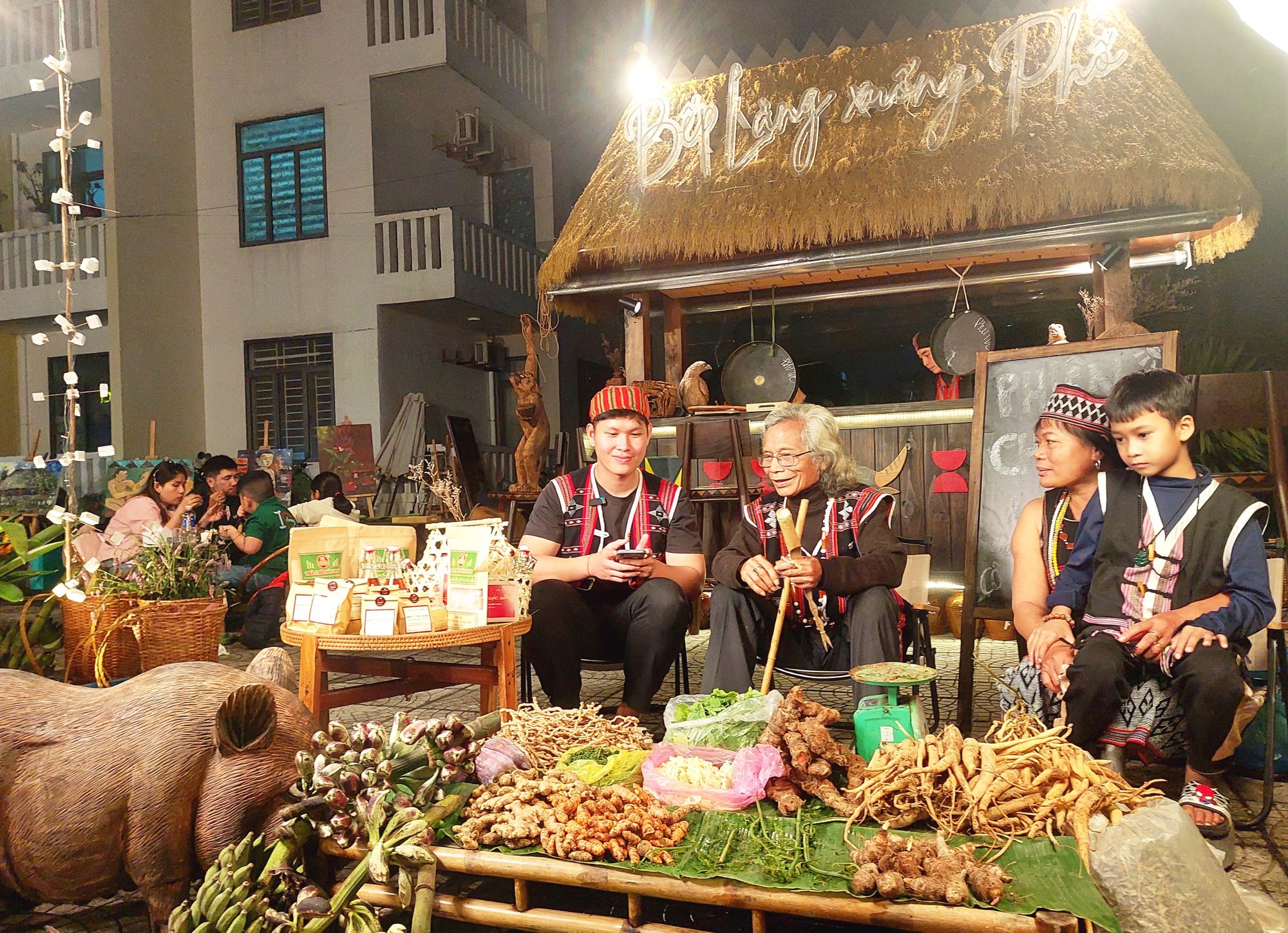
Agricultural products from the mountains and forests are brought down to the city by the Co Tu people.
PHOTO: HOANG SON
It's no coincidence that traditional items, agricultural products, and even the ceremonial pole – a cultural symbol of the Co Tu people – are present in this bustling tourist area. This is part of the "Village Kitchen on the Street" project organized by the Toom Sara Village tourist area (in Hoa Phu commune, Hoa Vang district, Da Nang) to bring Co Tu culture to the city. "We want city dwellers to taste the flavors of the village," said Huynh Tan Phap, the project's leader, adding: "To allow locals and tourists to better experience the essence of the mountains and forests, the space must be designed with a strong Co Tu character, from the trays and tables to the fireplaces and ceremonial poles… Dishes like sticky rice cooked in bamboo tubes, grilled meat in bamboo tubes, frog stew, and grilled eel in a traditional style… prepared by local chefs are equally special."
Since joining the village kitchen, Ms. Alang Thi Bap no longer worries about finding buyers for her mountain produce such as fern shoots, bamboo shoots, pepper, and turmeric. She simply brings them to the kitchen, arranges them, and within a few dozen minutes, both Vietnamese and foreign tourists buy them all up. She is also happier because she gets to interact with and introduce the culture of her people to visitors. Wearing traditional brocade clothing, Mr. Dinh Xuan Lai (36 years old, residing in Ba commune, Dong Giang district, Quang Nam province) is standing by the grill, introducing tourists to traditional rice wine and herbal infused wines such as those made with ginseng and other herbs. "Seeing the rustic way of preparing the food, tourists start chatting with me. The best part is when everyone praises the food during the meal," Mr. Lai shared.
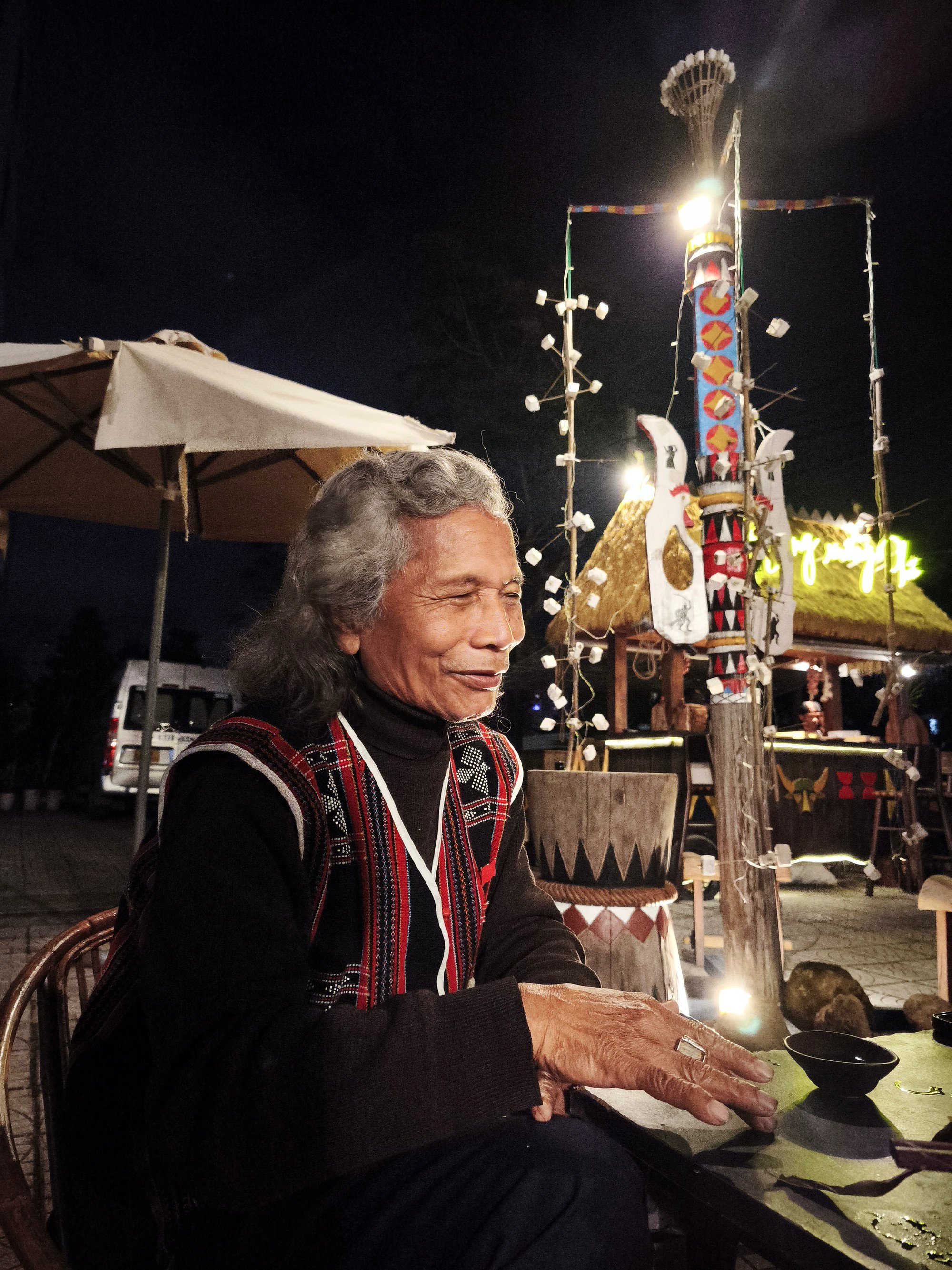
Elder Bhríu Pố speaks about the sacredness surrounding the ceremonial pole used to worship the gods.
PHOTO: HOANG SON
2. Those diners present on the day that provincial-level village elder Bhríu Pố (residing in Lăng commune, Tây Giang district, Quảng Nam province) "descended from the mountains" to visit the "Village Kitchen on the City" project will likely never forget the image of a truly traditional village elder. He was a Cơ Tu man nearing eighty, possessing profound knowledge and skilled in playing various musical instruments… After a warm greeting, Elder Pố picked up a forest leaf and placed it to his lips. Suddenly, the sounds of birds echoed from somewhere, sometimes chirping, sometimes startled, making listeners feel as if they were lost in a deep, dark forest in the Trường Sơn Mountains. The lively crowd of diners fell silent. Only when Elder Pố removed the leaf from his lips and smiled did everyone realize the sound had come from his leaf-shaped horn.
"We Co Tu people use leaves to make horns that mimic the sounds of birds calling to each other, for entertainment after tiring hours in the forest. Many young people who know how to play the flute also often bring them to the forest to play love songs," Elder Po recounted. After introducing the musical instruments, the elder led everyone to stories about customs, traditions, and the spiritual world … using vivid examples readily available in the village kitchen. The most familiar were the banana leaves placed in front of everyone. "The Kinh people usually consider the sun-facing side of the banana leaf as the 'upper side.' Conversely, we consider it the 'downward side,' reserved only for offerings to the deceased. According to the Co Tu people's belief, when serving guests, the banana leaf must be placed with the 'upper side,' meaning the midrib is facing upwards," Elder Po explained.
Elder Pố dislikes sloppiness and carelessness when performing rituals related to worshipping the gods. Therefore, Mr. Huỳnh Tấn Pháp felt reassured when the elder visited, observed, offered suggestions, and personally adjusted the spaces. For example, during the reenactment of the Bhuôih Ca Coong festival – a thanksgiving ceremony to the mountain and forest gods at Toom Sara – Elder Pố prevented the young people from erecting the ceremonial pole without first carving the bamboo flowers. He said that was a taboo in Cơ Tu culture. "It's better to erect a pole than to erect a ceremonial pole; it's absolutely essential to have all the sacrificial offerings. Otherwise, it would be disrespectful to the gods and would lead to the loss of our culture…," Elder Pố said.

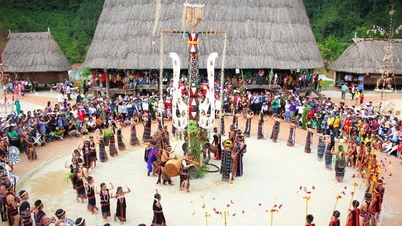
Toom Sara village is picturesque and home to many innovative ideas for preserving the Co Tu culture.
PHOTO: HOANG SON
3. Recreating the Bhuôih Ca Coong festival is part of another project by Toom Sara called "Forest, Breathe!", aimed at improving the livelihoods of the Co Tu people through reforestation tourism on 75 hectares right in the village. The project's launch concert, themed " Breath of the Forest, " was designed by Huynh Tan Phap and also had a distinctly Co Tu flavor. There, the writer met Huynh Ha, a 24-year-old Co Tu rapper residing in Song Kon commune, Dong Giang district (Quang Nam).
Starting his rap career in 2022, Huynh Ha uses the pure Co Tu language to tell stories about life and culture in his hometown. From his debut song , "Mnui Co Tu" (The Co Tu People), to "How ve broanh" (Never Enough), Ha delights listeners with his gentle rap style and profound lyrics. For example, the line in "How ve broanh "—"How can one chicken be enough for my family?"—evokes the sorrow of many who, due to the harsh custom of demanding a dowry, were unable to marry the woman they loved. Through these lyrics, Ha wants to convey the message that today, love should be based on emotions, not on material possessions.
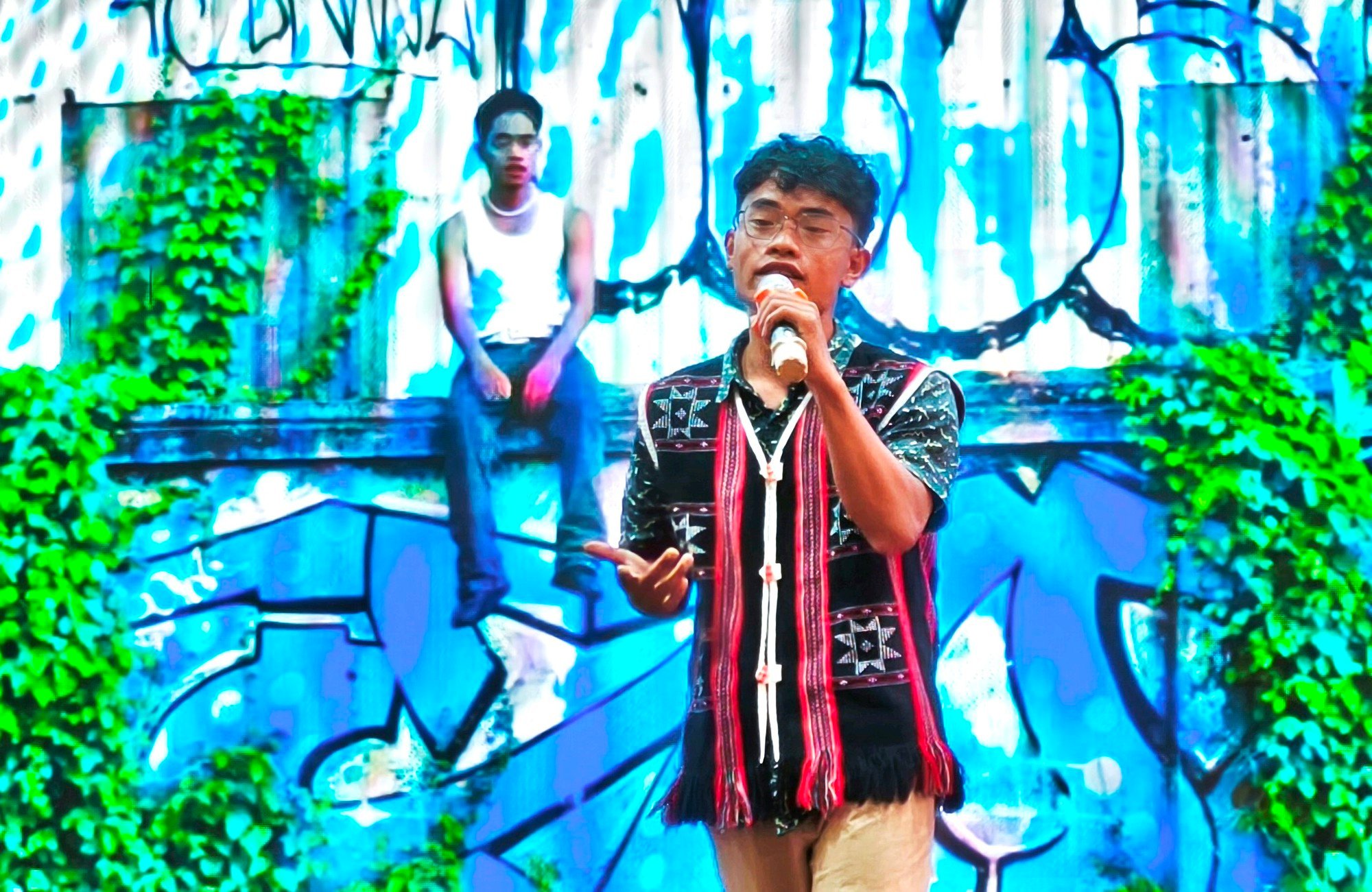
Rapper Huynh Ha inspires the preservation of the Co Tu language through her songs.
PHOTO: HOANG SON
Ha recounted that even though he dropped out of school in 10th grade and has been working in Da Nang for the past seven years, he has never stopped missing his hometown. He is also saddened to see that in many places that were once the long-standing home of the Co Tu people, the younger generation cannot speak or understand their mother tongue. "Many people who come to the city are hesitant to speak Co Tu with each other. I don't want my mother tongue to be forgotten, so I use music to maintain and contribute to its preservation," Ha shared. Interestingly, thanks to his gentle rap lyrics, Ha's songs are easily adapted to international beats. He sang in Co Tu to the tune of the song "People ," which was warmly received by international tourists visiting Toom Sara village.
Ha chose to rap in the Co Tu language to connect more closely with young people. "I see on TikTok that people are using my music to promote brocade fabrics, local specialties, and mountain and forest tourist destinations... I'm happy that rapping in the Co Tu language also spreads other cultural values," Ha said excitedly.
Source: https://thanhnien.vn/gui-van-hoa-co-tu-xuong-pho-185250619020632552.htm
![[Photo] General Secretary and President To Lam presides over a working session with the Central Policy and Strategy Committee on the development of the materials industry.](https://vphoto.vietnam.vn/thumb/1200x675/vietnam/resource/IMAGE/2026/05/21/1779359935432_a3-bnd-3129-1412-jpg.webp)



![[Photo] National Assembly Chairman Tran Thanh Man working with the Standing Committee of the Law and Justice Committee](https://vphoto.vietnam.vn/thumb/1200x675/vietnam/resource/IMAGE/2026/05/21/1779378929214_ndo_br_1-4610-jpg.webp)











































































Comment (0)