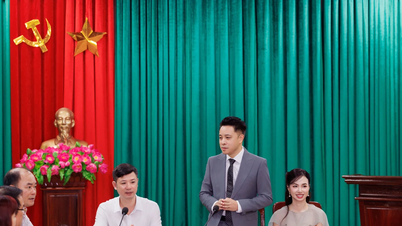
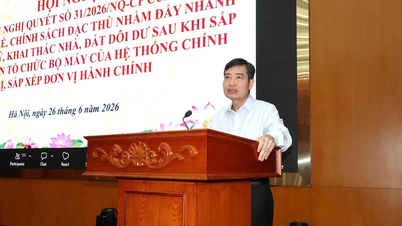
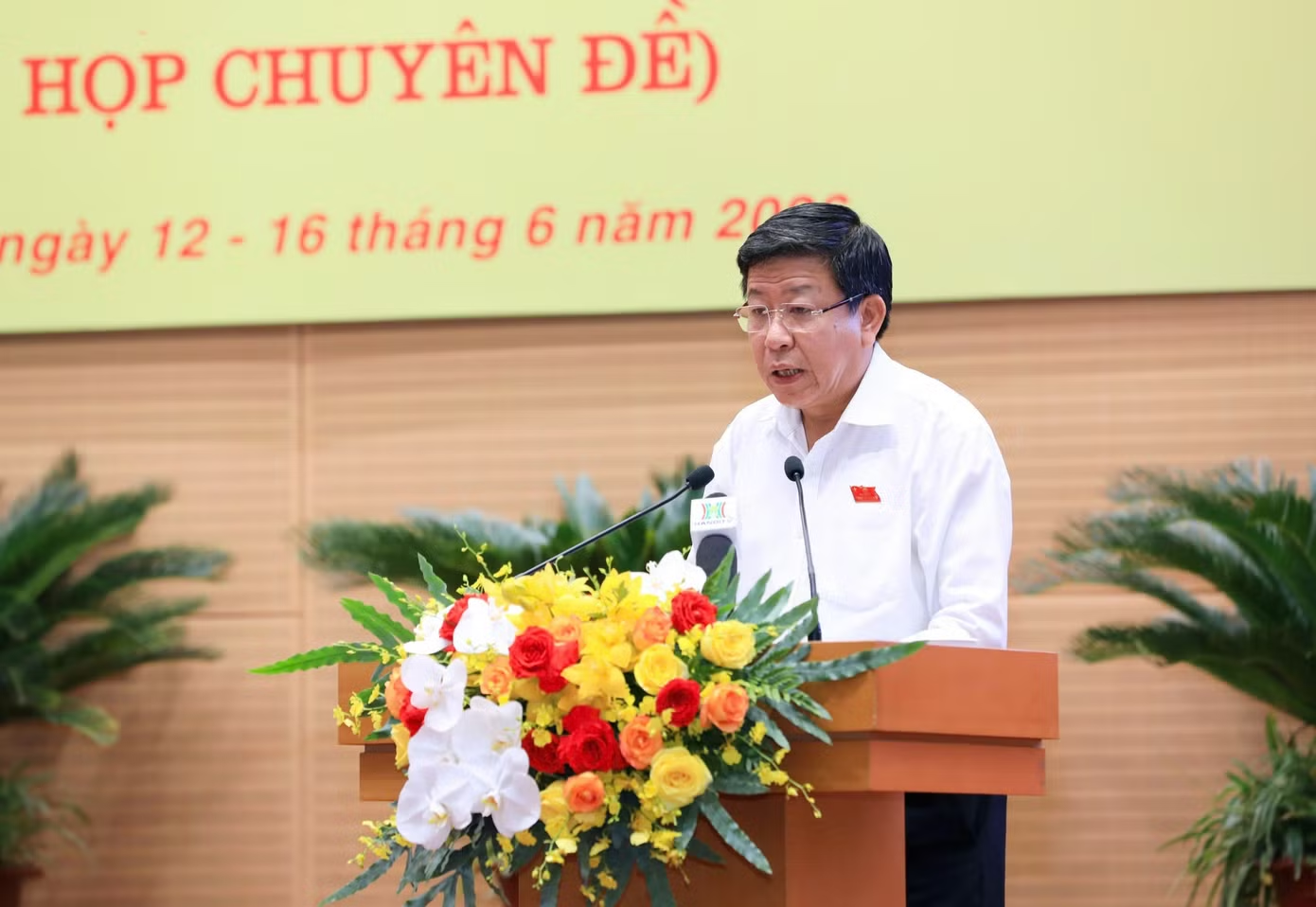
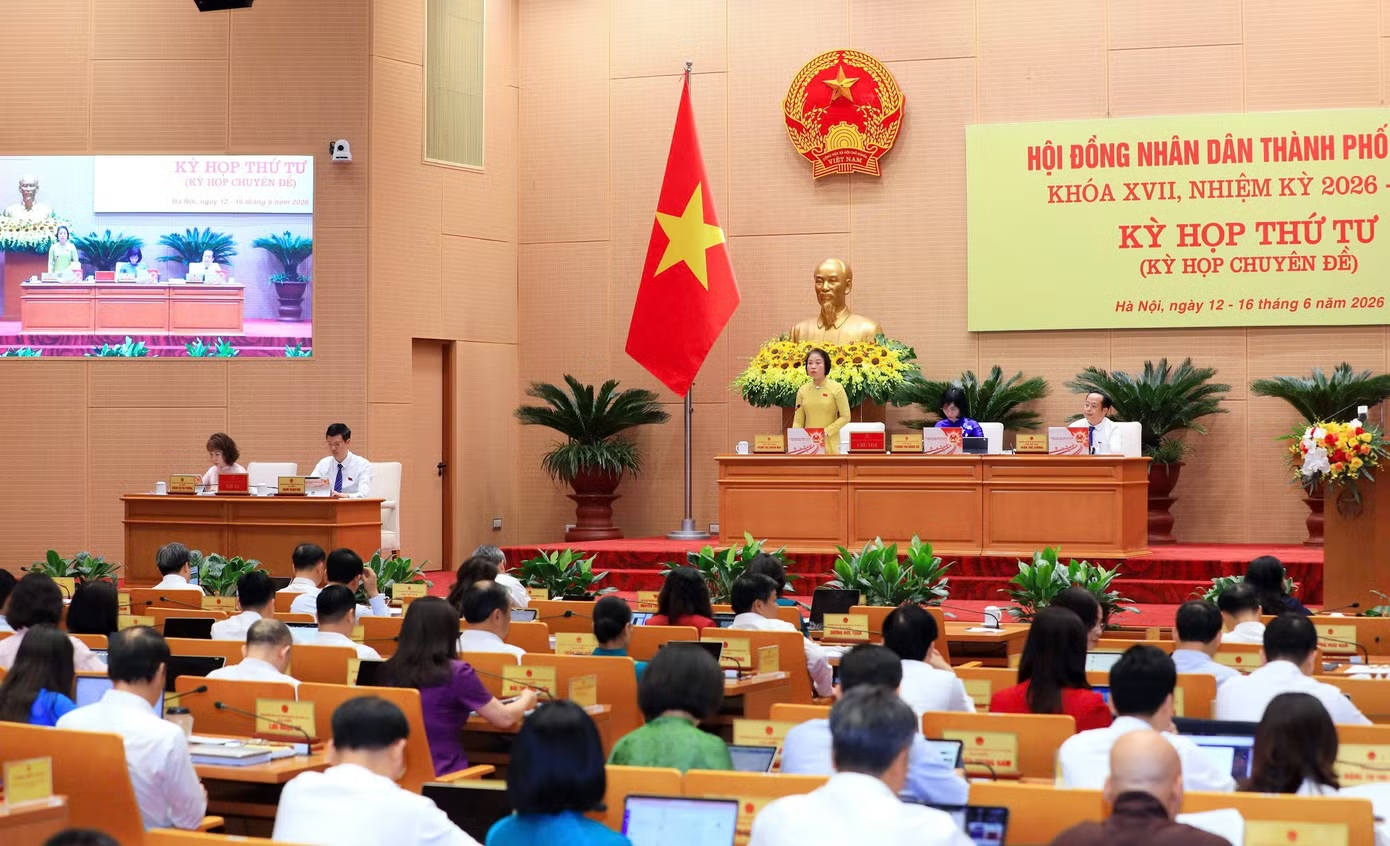
On the morning of June 15th, at the fourth session (special session) of the 17th Hanoi City People's Council, the Standing Vice Chairman of the Hanoi City People's Committee, Duong Duc Tuan, on behalf of the City People's Committee, reported on the acceptance and explanation of delegates' opinions regarding draft resolutions in the field of legislation.
Regarding the reduction in the number of People's Committee members at all levels compared to current regulations, according to Mr. Tuan, based on the development requirements of the Capital City, the City People's Council will consider and decide specifically on the number and structure of City People's Committee members for each term.
Furthermore, expanding the organizational structure does not result in an increase in allocated personnel; it clearly demonstrates a flexible organizational structure with strong decentralization, allowing for the arrangement of the number of departments and specialized divisions under the People's Committees at the commune level to suit the workload and development requirements of the Capital in the coming time... The city implements the principle of transferring and rearranging existing personnel from agencies and units that are performing dual roles or have similar functions. This process is closely linked to restructuring the staff of officials and civil servants according to approved job positions.
Previously, the Hanoi City People's Committee submitted a proposal to the City People's Council regarding regulations on the number, establishment, reorganization, and dissolution of specialized agencies and other administrative organizations; and the number and structure of members of the City People's Committee and members of the commune-level People's Committees under the management of Hanoi City.
Firstly, the draft Resolution stipulates the number of administrative organizations under the City based on the socio -economic development needs of Hanoi, thereby increasing the number of organizations compared to the current Government regulations. Regarding the number of specialized agencies, the proposed framework stipulates a maximum of 18 departments (an increase of 3 departments, corresponding to a 20% increase in the number of organizations compared to the current 15 departments).


Currently, relevant agencies and units are reporting to the City People's Committee for consideration of options to establish a Food Safety Department in accordance with the central government's policy; the remaining additional departments will be implemented when truly necessary, at the request of competent authorities and in line with the goals and development situation of the City in each stage.
For other administrative organizations, the proposed framework stipulates a maximum of 3 organizations to be established (an increase of 1 unit compared to the current 2 administrative organizations, including the Public Administrative Service Center and the Management Board of High-Tech and Industrial Parks of the City). An additional organization will provide sufficient flexibility to handle emerging issues such as smart city management, digital economy, and circular economy, meeting the requirements of the city's large population and rapid urbanization rate.
A commune may have no more than 5 specialized agencies.
Secondly, the number of administrative organizations at the commune level is stipulated to be increased to a maximum of 5 specialized agencies and a maximum of 2 administrative organizations.
Five specialized agencies were established, including: the People's Council and People's Committee Office at the commune level; two specialized departments in the field of Culture and Social Affairs ; and two specialized departments in the field of Economy, Infrastructure, and Urban Development. Two other administrative organizations were also established, including the Commune-level Public Administrative Service Center; and one additional organization was added when truly necessary, in line with the city level and meeting the operational requirements of the two-tier government model.
The compatibility between the number of organizations and the socio-economic development needs will help the guidance and management of the commune-level People's Committees to be smoother. Clearly defining the functions and tasks of each organization within the regulatory framework will help local governments operate effectively, reduce overlap, and best serve the people and businesses in the city.



Thirdly, the regulation reducing the number of members of the Hanoi People's Committee (heads of specialized agencies in charge of the fields of: Office, Finance, Justice, Internal Affairs, and the Commander of the Hanoi Capital Command, and the Director of the Hanoi City Police) facilitates discussion and consultation among the collective members of the Hanoi People's Committee; ensuring centralized decision-making.
Members of the City People's Committee, as proposed in the Resolution, will focus on key areas; and at the same time, link socio-economic development with the task of protecting security and social order in the City...
Source: https://tienphong.vn/ha-noi-du-kien-thanh-lap-hai-so-moi-post1851448.tpo

![[Photo] "Hanoi Lotus Festival" honors the lotus flower that has been associated with Vietnam for thousands of years.](https://vphoto.vietnam.vn/thumb/1200x675/vietnam/resource/IMAGE/2026/06/27/1782516943048_sen-ha-noi-2026-minh-duy-1-jpg.webp)