

The Hanoi People's Committee has just completed the overall plan for rearranging district and commune-level administrative units for the period 2023-2025. In this plan, the city has one district-level unit (Hoan Kiem District) and 173 commune-level administrative units slated for merger due to not meeting the criteria regarding area and population.
According to the National Assembly Standing Committee's regulations, a district must have a minimum area of 35 km2 and a population of 150,000. Hoan Kiem meets the population criteria, but only has 15% of the required area (5.35 km2). Despite this, Hanoi argues against merging Hoan Kiem district for eight reasons.
Specifically, Hoan Kiem is the central administrative, political , economic, and cultural district of Hanoi. The district has stable administrative boundaries, established before 1945, and possesses a rich history, culture, religion, beliefs, customs, and geographical location, closely linked to the historical formation of Dai La, Thang Long, and Dong Do, and to Hanoi, the thousand-year-old capital of Vietnam.
The Old Quarter comprises 10 wards with long-standing historical and cultural traditions that need to be preserved and protected, including: Hang Dao, Hang Bac, Hang Gai, Hang Bo, Hang Bong, Hang Buom, Hang Ma, Cua Dong, Dong Xuan, and Ly Thai To, associated with the formation of the 36 streets and wards, with 5 city gates from the beginning of the 20th century.
Most wards in Hoan Kiem district have their own tutelary deity worship practices, with names that have existed for hundreds of years. Hanoi's Old Quarter has been classified as a "National Historical Monument"; it includes two special national monuments: Bach Ma Temple and the historical and scenic site of Hoan Kiem Lake and Ngoc Son Temple.
The district's name is associated with the legend of "returning the sword" after King Le Thai To's war of national liberation, reflecting the Vietnamese people's aspiration for peace.
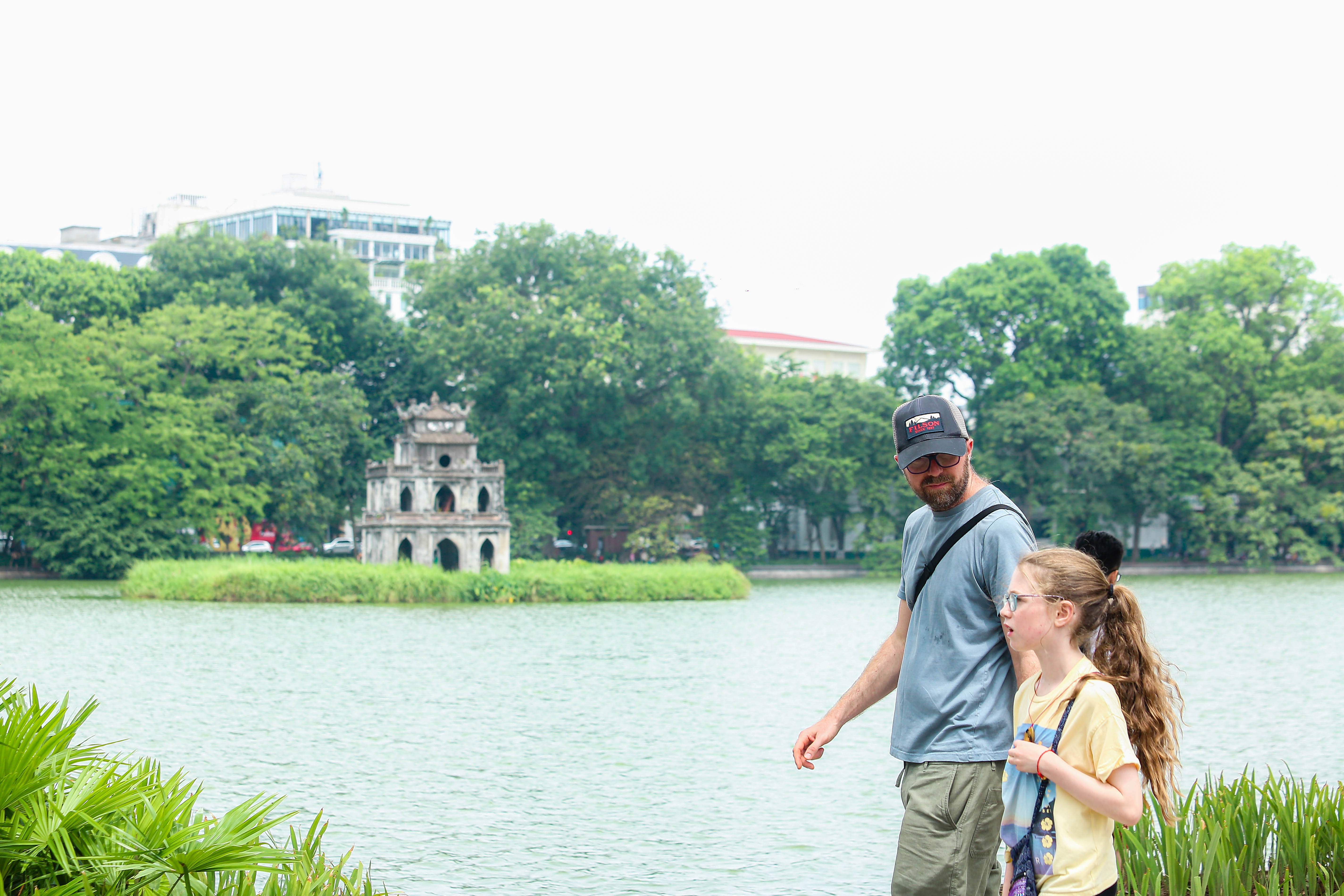
Hoan Kiem District is the administrative, political, economic, and cultural center of Hanoi City.
Furthermore, the planning around Hoan Kiem Lake is a unique entity, inheriting history, culture, and architecture, divided into three main areas: the Old Quarter, the area around Hoan Kiem Lake and its surroundings, and the Old Quarter, which has maintained a stable form from 1990 to the present.
The economy of Hoan Kiem district has experienced consistently high and sustainable growth in recent years; its economic structure is primarily based on trade, tourism, and services (since 2019, this sector has accounted for over 98%). State budget revenue in the district has consistently exceeded the city's assigned targets each year (reaching over 14,000 billion VND in 2021 and 2022).
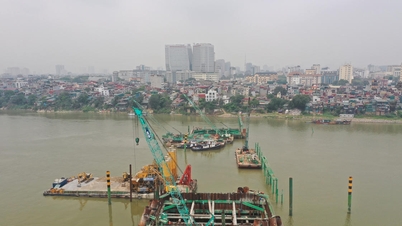
In addition, the City People's Committee is directing the development of major and important projects, such as: preserving, restoring, and promoting the historical and cultural value of the old town into a heritage area; developing the sandbars in the middle and along the Red River into a multi-functional cultural park; researching and proposing solutions to exploit and promote the value of sidewalks and roadways on some streets in the district...
Last August, at a dialogue with the Vietnam Fatherland Front at all levels in Hanoi on issues of public concern, Hanoi Party Secretary Dinh Tien Dung stated that the city would seriously implement the Central Committee's policy on administrative unit reorganization, but Hoan Kiem district is very unique, so the principle is to keep it as is .
Source


















































![[Video] Sunset at Lap An Lagoon – Where the sun sets over the fishing nets](https://vphoto.vietnam.vn/thumb/1200x675/vietnam/resource/IMAGE/2026/05/31/1780192137701_beach-landscape-sea-water-nature-grass-745871-pxhere-com.jpeg)





























Comment (0)